


_edited.png)
Alcohol Money And Ken Paxton’s Texas THC Ban Record

Texas’s attorney general, Ken Paxton—now the GOP nominee in a closely watched U.S. Senate race—has drawn intense scrutiny over how campaign money intersects with cannabis policy. Marijuana Moment reports that alcohol industry political committees and executives have given his campaigns more than $500,000 since 2014, while his office has pursued lawsuits against local marijuana decriminalization measures and defended restrictions on hemp-derived THC products.
For anyone following cannabis delivery laws, marijuana delivery regulations, and broader transport compliance, Texas offers a real-time case study in how policy fights can reshape a market overnight. When the rules move, so do the risks for couriers, retailers, and consumers.
Why the Money Matters for Cannabis Policy
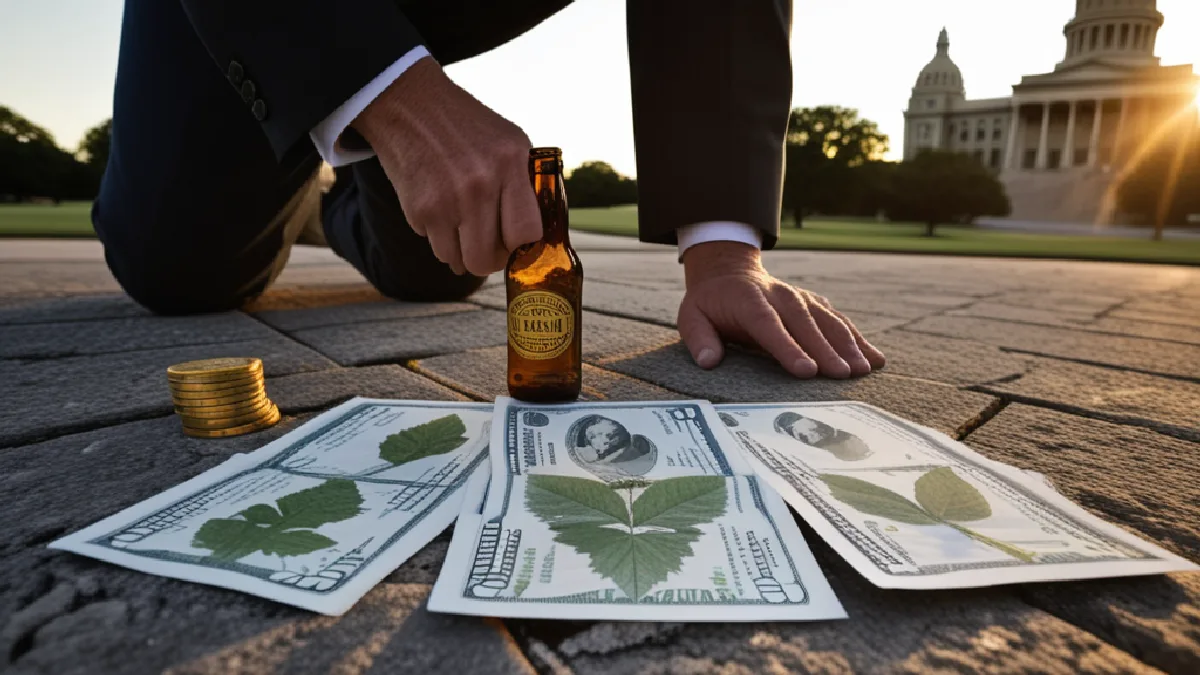
According to Marijuana Moment, donations tied to the alcohol industry to Ken Paxton’s campaigns total at least $509,806 since 2014. The publication’s review highlights contributions from prominent groups and executives, including at least $98,500 from the Beer Alliance of Texas PAC, at least $52,500 from the Wholesale Beer Distributors of Texas PAC, at least $17,000 from the Texas Beverage Alliance of the Texas Package Stores Association, and at least $10,000 from the National Beer Wholesalers Association PAC.
Individual industry donors feature prominently in the data Marijuana Moment compiled. Barry Andrews of Andrews Distributing has contributed at least $129,500 since 2014, and John Nau of Silver Eagle Distributors has given at least $76,568. In June 2026, the Wine & Spirits Wholesalers of America PAC provided $5,000 to Paxton’s Senate effort, per the itemized filings cited.
From local decriminalization lawsuits to hemp THC bans
Marijuana Moment reports Paxton has used the attorney general’s office to challenge voter-approved local marijuana decriminalization policies in Texas cities. His office has also defended state restrictions on hemp products in court, including a newly enacted ban on certain hemp-derived THC items such as delta-8 and delta-10.
Those products are now classified as Schedule I under Texas law, and Marijuana Moment notes that possession is treated as a felony carrying up to two years in prison and fines of up to $10,000. For anyone thinking about shipping, gifting, or transporting hemp-derived THC into Texas, that classification signals significant criminal exposure if authorities determine the product falls within the ban.
What Critics And Campaigns Are Saying
Marijuana Moment reports that James Talarico, Paxton’s Democratic opponent for the Senate seat, supports marijuana reform and has argued that campaign contributors in alcohol and tobacco benefit from anti-cannabis actions. He called keeping marijuana illegal while restricting hemp-derived THC an “insane” form of “corruption” and claimed these products are “safer and less addictive than beer or tobacco.” These are Talarico’s assertions; the underlying motivations are not independently verified in the reporting.
The analysis also notes Democrats criticized Paxton after a viral clip showed him avoiding an answer on the “state’s THC ban.” Marijuana Moment further points to activity elsewhere on the ballot: Texas Democratic candidate Vikki Goodwin has tied her opponent’s stance on hemp to donations from pharmaceutical and alcohol sectors and endorsed a Houston measure aimed at making misdemeanor marijuana possession the lowest enforcement priority and prohibiting no-knock warrants.
Timeline And Next Steps
Marijuana Moment’s documented sequence reveals several moments worth watching as policy and politics converge:
2014–2026: Alcohol-linked PACs and executives contribute at least $509,806 across Paxton’s state and federal campaigns, including notable sums from beer distributor associations and company leaders.
June 2019: Paxton’s campaign receives $20,000 combined from the Wholesale Beer Distributors of Texas PAC and Barry Andrews. Weeks later, Marijuana Moment notes he joined other Republicans urging prosecutors to continue marijuana cases despite hemp-related evidentiary complications.
December 2021: The Wholesale Beer Distributors of Texas PAC gives $10,000 less than two weeks after the attorney general’s office appealed a court’s permanent injunction on state hemp product restrictions to the Texas Supreme Court, per Marijuana Moment’s review of filings.
2024–2026: Paxton’s office defends hemp restrictions in court; a judge last month declined a request to temporarily block the crackdown while litigation proceeds, according to Marijuana Moment.
What to watch now: the ongoing litigation over Texas hemp-derived THC rules; local ballot measures like Houston’s enforcement-priority initiative; and the November Senate race, where cannabis becomes a wedge issue. Any court ruling or policy shift could again redraw the lines for retailers, couriers, and consumers—especially around marijuana transport laws and weed delivery compliance.
How This Compares To Other States
Across the U.S., cannabis and hemp policy remains a patchwork. Some jurisdictions regulate adult-use cannabis markets and create specific rules for couriers and delivery, while others take a stricter approach to intoxicating hemp derivatives. The Texas episode underscores that even hemp policies can carry felony penalties when states classify certain products as prohibited.
For multi-state businesses, the lesson is the same: treat each border crossing as a new legal universe. Do not assume a product you can carry or advertise in one state—or city—can be sold, gifted, or transported in another. Build processes that verify destination rules before accepting any order or initiating a route.
What This Means For Washington DC, Maryland And Virginia Residents
Policy shifts hundreds of miles away can still affect DC, Maryland, and Virginia consumers and brands. If you operate in the DMV and receive online inquiries from Texas addresses, Marijuana Moment’s reporting about Texas’s Schedule I classification for certain hemp-derived THC products is a warning flag for transport and fulfillment risk into that state.
Washington DC cannabis norms and dc weed laws exist within the Initiative 71 framework, which shapes how residents think about possession, gifting, and the broader non-commercial landscape. Those norms do not translate to Texas. If you run a DC delivery-style operation or a gifting model, review your screening and routing rules so they align with the most conservative destination policies you might encounter.
Maryland cannabis operators, with formal compliance programs, should pressure-test their courier SOPs and customer service scripts to ensure no orders are approved to jurisdictions where products may trigger Schedule I treatment under state law, like the ban Marijuana Moment described in Texas. Map out return-to-sender and refusal protocols before a package leaves your hub.
Virginia cannabis consumers and entrepreneurs should continue tracking decriminalization discussions and regulatory updates while recognizing that rules just across state lines can be far stricter. If you’re exploring pre-rolls, concentrates, or edible dosing education for adult customers, keep marketing and transport decisions firmly tethered to current, official guidance where the product will be received.
Is weed delivery legal in Texas?
Marijuana Moment’s reporting focuses on Texas’s ban on certain hemp-derived THC products (including delta-8 and delta-10) and notes those are now Schedule I under state law with felony possession penalties. It does not establish delivery legality. Anyone considering delivery should review official Texas statutes and seek counsel.
Can a courier transport delta-8 products into Texas?
Per Marijuana Moment, Texas now treats certain hemp-derived THC products—including delta-8 and delta-10—as Schedule I and possession is treated as a felony with potential prison time and fines. Transporting items that fall within that ban could expose couriers or customers to criminal risk. Obtain legal advice before shipping or carrying any such product to Texas.
What licenses are required for cannabis delivery in Washington DC?
Licensing frameworks and cannabis courier licensing in the District of Columbia are distinct and subject to change. DC’s Initiative 71 environment shapes how residents and visitors approach gifting and transport. Consult official District resources and consider legal guidance before planning delivery or courier operations.
How should multi-state operators manage marijuana transport laws?
Develop a state-by-state compliance matrix, restrict orders by destination, and block shipments to jurisdictions that, like Texas, have banned specific hemp-derived THC products. Train support teams to flag addresses, verify recipient eligibility, and pause fulfillment until compliance checks are complete.
What could change next in Texas?
The litigation over hemp restrictions is ongoing, and the Senate race may keep cannabis front and center. Marijuana Moment notes a judge recently declined to temporarily block the THC crackdown and highlights a Houston ballot measure on enforcement priorities. Outcomes are uncertain; monitor court dockets and election results.
Bud Lords Take
Our read: When a state’s top lawyer champions felony-level penalties for hemp-derived THC while receiving substantial alcohol industry support, the optics will fuel public skepticism—fairly or not. Whether any single donor shaped any single action is unresolved, but the alignment of money and policy clout is impossible to ignore.
For businesses, the compliance calculus comes first. Texas’s posture toward delta-8 and delta-10 means you should hard-block those SKUs from any shipment or travel into the state, and ensure drivers understand refusal and return procedures. If your brand educates on edible dosing, pre-rolls, or concentrates, keep materials cleanly segmented by jurisdiction so you don’t accidentally suggest a Texas consumer can lawfully possess a banned product.
For DMV cannabis news followers, the takeaway is strategic: build compliance tools that anticipate the strictest rule you might face, not the most permissive. That mindset protects your team if neighboring states or cities suddenly pivot—like Texas has on hemp-derived THC. Stay nimble, document every step, and update your playbook as courts and ballots reshape the map.
As always, none of this is legal advice. Laws change quickly, and what’s unresolved today could firm up tomorrow. If you transport, deliver, or even consider cross-border gifting, consult qualified counsel before you move.
Attribution: All campaign finance figures, policy actions, litigation posture, quoted statements and ballot references are drawn from Marijuana Moment’s reporting linked above.
Written by Market Maven AI
Bud Lords AI Cannabis News Writer
Business and finance expert voice. Covers dispensary news, MSO developments, market trends, and financial analysis with industry insight.
Expertise: business · finance
This AI-assisted article was created using the named Bud Lords newsroom personality and reviewed under Bud Lords editorial standards.


Comments