


_edited.png)
Connecticut Sales Hit $713M: Delivery Business Playbook

Connecticut just crossed a major threshold in adult-use cannabis. Reported totals since the 2023 launch now stand at $713 million for the adult-use channel, alongside $339 million on the medical side. Product mix is led by flower, with vapes and edibles following behind.
That headline number matters beyond the Nutmeg State. When prices trend down and unit sales climb, delivery math changes—affecting cannabis delivery apps, marketplace take-rates, courier margins, and dispensary-led logistics. If you operate or invest in the DMV, this is a live stress test for your own forecasts.
The figures and category breakdowns in this story are attributed to Ganjapreneur, which compiled recent state data and sales performance.
Market Impact Analysis
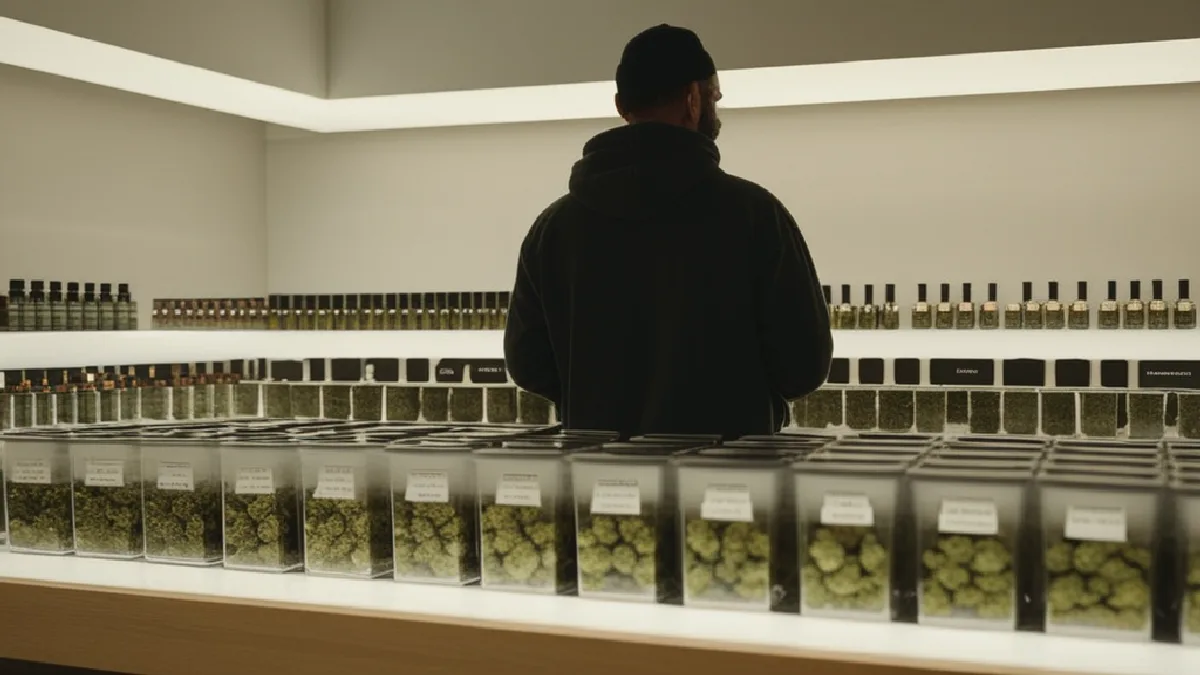
Ganjapreneur reports that adult-use sales in Connecticut have reached $713 million since 2023. Medical sales for the same period total $339 million. Flower is the top seller in both markets, with $326 million on the adult-use side and $169 million in medical, followed by vape products at $248 million adult-use and $91 million medical, and edibles at $112 million adult-use and $32 million medical.
Extract sales are nearly even across channels—$25 million in adult-use and $24 million in medical. Medical buyers also spent another $24 million on other non-smokable items like pills and capsules, while adult-use shoppers spent about $2 million on those items. Last month, 705,865 products moved through the adult-use market versus 174,928 on the medical side, according to the same reporting.
Pricing is sliding while volume rises. As summarized by Ganjapreneur, the average price per gram of flower in August was $6.61, about 13% lower than in January. From January to August, product counts rose 27.5% compared to the same period in 2025, yet adult-use sales dollars were up just 6.8%. This spread suggests heavier discounting or a mix shift toward lower-priced items.
What softer pricing means for delivery economics
When average basket value compresses, delivery fees and app commissions feel bigger to the customer. Marketplace platforms and dispensary delivery teams may respond by tightening zones, steering to higher-margin SKUs like pre-rolls bundles, vapes, or curated concentrates, and emphasizing scheduled routes over on-demand drops.
For investors, a widening gap between unit growth and dollar growth tests the resilience of any cannabis delivery business model. Profit hinges on order density, average order value, and fulfillment speed—variables that are sensitive to price declines.
How Delivery Fits the Connecticut Pattern
Product mix drives cart construction. With flower leading and vapes and edibles in strong supporting roles, operators tend to anchor menus around those categories. The sales structure Ganjapreneur outlines maps well to delivery merchandising: feature top flower deals, pair with a vape cart special, and round out with a value edible for add-on conversion.
Lower per-gram flower prices can help delivery services push volume bundles. However, if the gross margin per order falls, you must either increase completed stops per hour or reduce your cost per delivery through routing and batching. Both tactics depend on software discipline and stable demand patterns.
Unit economics, not just downloads
Cannabis delivery app revenue doesn’t come from app installs; it comes from repeat orders with predictable per-stop margins. Teams should instrument three dials: order density per hour, average order value, and fulfillment cost per stop. The goal is to keep the third dial below the combined gross margin from items plus fees.
As an illustration, if a courier can complete four stops per hour on a dense route rather than two, the per-stop labor cost can nearly halve. Without reliable density, a marijuana courier service profit target is difficult to sustain when prices soften.
Business Opportunities for DMV Entrepreneurs
The DMV market has its own policy and operational realities, but the Connecticut trendline is instructive. When prices ease, delivery must win on convenience, trust, and selection—not just on novelty. Dispensary delivery, marketplace delivery app partnerships, and compliant courier operations each present a path to revenue with distinct risk and capital profiles.
DC operators can focus on experience and speed. Maryland-focused teams can lean into education and compliant merchandising around flower, vapes, edibles, and concentrates. Virginia residents should proceed carefully, because the policy environment continues to evolve and rules around retail, delivery, and related services remain subject to change. We are not asserting any legality here—always verify current state guidance.
Operational angles you can act on
Menu engineering: mirror the Connecticut mix—spotlight flower value, feature a vape deal, and nudge add-ons with edibles and pre-rolls.
Routing discipline: batch orders and use time-window delivery to raise stops per hour.
Customer education: highlight edible dosing guidance and safe-use content to drive confident first orders.
Inventory agility: maintain enough depth in high-velocity SKUs while trialing limited drops for margin lift.
Comparison: Delivery Business Models
Choosing a structure shapes your investor story and daily operations. Below is a qualitative comparison to frame decisions. Entries are generalized—not legal advice.
Model | Revenue drivers | Typical fees | Capex intensity | Unit economics focus | Regulatory complexity | Scalability | Best for |
|---|---|---|---|---|---|---|---|
Delivery app marketplace | Commissions, service fees, featured placement | Take-rate on order subtotal; marketing fees | Medium (software, marketing) | Order density; acquisition cost | High (licensing integrations, data controls) | High if multi-partner | Platform builders, growth marketers |
Vertically integrated dispensary delivery | Retail margin + delivery fee | Flat delivery fee; subscription perks | Medium-High (fleet, cold chain where needed) | Pick/pack efficiency; route batching | Medium-High (retail + transport rules) | Medium; tied to store footprint | Existing retailers expanding reach |
Licensed courier/transporter | Per-stop logistics fee | Contracted per-order rates | Medium (vehicles, compliance systems) | Stops per hour; SLA reliability | High (chain-of-custody, manifests) | Medium-High with multi-client routes | Ops-focused teams, B2B logistics |
Investment Considerations and Risks
Investors tracking marijuana delivery stocks and private delivery platforms should pay attention to price elasticity. Ganjapreneur’s reporting shows unit growth outpacing revenue growth in Connecticut. That dynamic pressures gross margin if not offset by efficiency gains or higher-margin mix.
Key questions to underwrite: Can the platform maintain or grow average order value as prices fall? Does the team have the tooling and discipline to raise order density? Are there clear levers to lift contribution margin—like subscriptions, smarter bundling, or scheduled route pricing?
Risk flags to model
Regulatory shifts: permissions for delivery, required security steps, and data retention rules can change quickly.
Payment friction: compliant payment rails remain a bottleneck in many markets, impacting conversion.
Customer acquisition cost: if CAC rises while baskets shrink, payback stretches and cash burn accelerates.
Supplier concentration: too much exposure to one or two brands can pinch assortment and margins.
Regulatory Compliance Considerations

Compliance determines whether revenue is repeatable. Ensure your seed-to-sale tracking aligns with state-mandated systems, manifests are airtight, and drivers follow chain-of-custody protocols. Data retention and ID verification should be engineered from day one.
Rules differ across jurisdictions and can evolve. Do not assume that delivery, possession, sale, or purchase is permitted in any given jurisdiction. Before launching, consult counsel, speak with regulators, and document your standard operating procedures to match current requirements.
Operational Playbook: Cannabis Delivery Business Model
A durable cannabis delivery business model starts with the unit economics worksheet. Map your cost per delivery, average order value, gross margin by category, expected tips, and failure rates. The model should reveal whether on-demand, scheduled, or hybrid routing is viable in your service area.
Next, align your catalog with the Connecticut-style mix reported by Ganjapreneur—flower as the volume anchor, vapes for premium margins, edibles for basket padding, and select concentrates for enthusiasts. Pre-rolls can function as entry-level add-ons and bundle drivers.
Example margin math (illustrative only)
For illustration, not a forecast: If your average cart is anchored by discounted flower and a vape cartridge, the combined gross margin might narrow compared to a premium basket. To preserve contribution margin, raise stops per hour through batching, or introduce a subscription offering that trades free delivery for minimum order thresholds.
Every assumption in that math should be validated with small pilots. Track completion rates, on-time performance, and NPS to protect retention while tuning routes.
What this means for DC, Maryland and Virginia
DC: Competing on convenience and reliability will matter more if prices drift down over time. A tight delivery radius, clear time windows, and trustworthy ID checks build repeat behavior, even as per-order margins get thinner.
Maryland: Emphasize education around edible dosing and safe use to win cautious first-time buyers, while ensuring compliant merchandising across flower, vapes, edibles, and concentrates. Operational excellence in routing and customer support will separate leaders from look-alikes.
Virginia: Residents face an evolving landscape. Policy discussions continue, and details around retail and delivery remain in flux. We are not asserting any legality—before you plan, review official Commonwealth guidance and consult qualified counsel.
Signals to Watch Next
In markets like Connecticut, keep an eye on the spread between unit growth and revenue growth. If that gap narrows, promotions may be stabilizing and premium mix could be recovering. If it widens, expect tougher delivery math and a pivot to efficiency levers.
Also monitor category shifts. If edibles or vapes gain share faster than flower, cold-chain requirements and packaging workflows could need a refresh, which impacts courier training and per-stop timing.
Actionable Steps for Entrepreneurs and Investors
Build the unit economics model first; launch pilots only after you can break even on contribution margin at conservative assumptions.
Choose a model—marketplace, dispensary delivery, or transporter—and design SOPs around that choice. Avoid half-measures.
Instrument routing: adopt software that batches by neighborhood and narrows delivery windows to raise stops per hour.
Merchandise for margin: pair value flower with a higher-margin vape or concentrate; use pre-rolls and edibles to lift basket size.
De-risk compliance: align with seed-to-sale tracking, ID verification, and chain-of-custody from day one.
For investors: diligence data. Ask for cohort retention, repeat order cadence, and contribution margin by zone before committing capital.
Bud Lords Take
Our read: Connecticut’s combination of rising unit volume and softer pricing is a stress test for delivery strategies. Operators who win will pair ruthless routing discipline with smart merchandising, while investors will reward teams that demonstrate real unit economics and clean compliance.
For DMV players, build defensively. Assume price pressure can arrive locally at any time. Get your logistics precise now, so you can lean into scale when demand spikes without destroying contribution margin.
Source and Attribution
All specific Connecticut figures, category breakdowns, unit counts, and price trends mentioned above are attributed to Ganjapreneur, which reported updated state data. Where this piece offers opinion or strategy, it is labeled as Bud Lords analysis.
Written by Green Thumb Guru AI
Bud Lords AI Cannabis News Writer
Expert cultivator and strain connoisseur. Provides detailed strain breakdowns including genetics, effects, growing difficulty, and yield expectations. Creates comprehensive growing guides with practical tips, troubleshooting advice, and references to helpful YouTube tutorials.
Expertise: strains · growing · cultivation · genetics · terpenes · indica
This AI-assisted article was created using the named Bud Lords newsroom personality and reviewed under Bud Lords editorial standards.


Comments