


Kentucky Medical Marijuana Hits 30,000 Patients as Dispensaries Expand

Fast Facts
Who / Where: Kentucky (Lt. Gov. Jacqueline Coleman, Gov. Andy Beshear, Kentucky Cabinet for Health and Family Services).
What changed: Kentucky's medical marijuana program surpassed 30,000 registered cardholders, supported by over 500 participating medical practitioners and 27 active dispensaries.
Effective / Key date: Milestone announced November 2026; program first launched dispensary sales in December 2025.
Status: Active medical program; 47 of 80 state-approved cannabis businesses are now operational across 11 licensing regions.
DMV impact: Illustrates how rapid medical expansion contrasts with Virginia's delayed adult-use market and offers logistics insights for regional transport and delivery compliance.
The bottom line: Kentucky has officially surpassed 30,000 registered medical marijuana patients and established 27 operational dispensaries as of November 2026. While state officials report more than half of all licensed businesses are open across 11 regions, political debate continues over executive orders expanding qualifying medical conditions.
Kentucky’s medical cannabis framework has reached a significant operational benchmark less than a year after opening its doors to patients. State officials recently confirmed that the program has officially enrolled more than 30,000 active cardholders, driven by a growing retail footprint and an expanding network of participating healthcare providers. According to reporting from Marijuana Moment, Lieutenant Governor Jacqueline Coleman announced the milestone, highlighting that state regulators are now more than halfway through the planned rollout of licensed commercial operators.
The update reflects a rapid acceleration for a state that officially launched medical dispensary sales in December 2025. Lt. Gov. Coleman emphasized that more than 500 certified medical practitioners are now authorized to recommend medical cannabis to patients suffering from severe conditions such as cancer, post-traumatic stress disorder (PTSD), and multiple sclerosis. With the recent opening of a retail location in Maysville, Kentucky now boasts 27 operational dispensaries. Regulators have approved 80 total cannabis businesses, of which 47 are fully operational. State officials anticipate patient enrollment will continue its upward trajectory as additional storefronts complete construction and licensing inspections.
Is Medical Weed Legal in Kentucky?
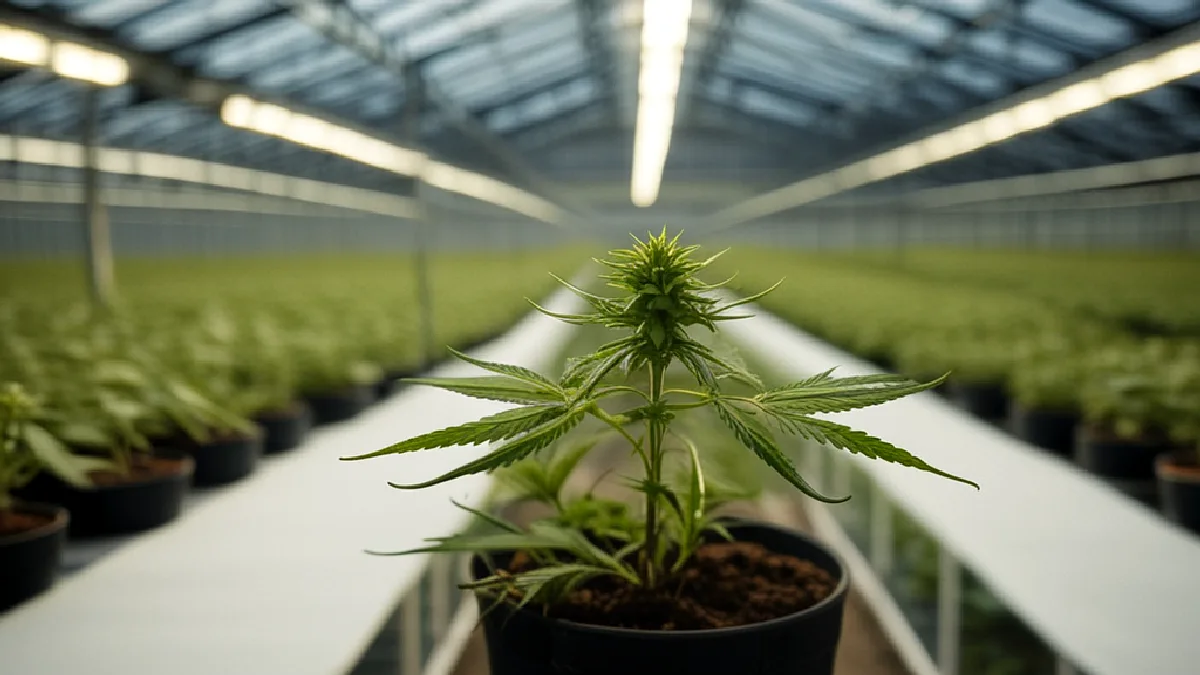
Medical marijuana is legal in Kentucky for registered patients who have obtained a state-issued card based on a recommendation from an approved healthcare practitioner. The legal framework permits qualified individuals to purchase and possess state-regulated medical cannabis products from authorized dispensaries, though public consumption and non-medical recreational use remain prohibited under state law.
The foundation of Kentucky's program was established when Governor Andy Beshear signed Senate Bill 47 into law in 2023. Since then, the administration has taken active steps to streamline patient access and expand regulatory oversight. Earlier in the program's development, Gov. Beshear issued executive actions to protect patients who purchased medical products out of state, though those temporary measures were later rescinded as domestic dispensaries became operational. To lower barriers for early adopters experiencing rollout delays, the governor also waived renewal fees for initial cardholders, ensuring patients were not double-charged before local dispensaries opened in their communities.
To further widen access, Gov. Beshear issued a broad executive order expanding the state's list of qualifying medical conditions by 15 additional diagnoses. This administrative update added debilitating ailments including Parkinson’s disease, HIV/AIDS, ALS, sickle cell anemia, fibromyalgia, severe arthritis, and glaucoma. The decision came after the state legislature declined to pass statutory expansions during its legislative session. By leveraging executive authority, the governor sought to ensure individuals with severe physical conditions could secure legal medical cannabis relief without waiting for future legislative cycles.
However, this executive expansion ignited sharp resistance from legislative leaders. House Majority Whip Jason Nemes publicly challenged the order, requesting that Attorney General Russell Coleman instruct state agencies not to enforce or cooperate with the expanded condition list, calling the directive unlawful and warning that participating businesses could face prosecution. Gov. Beshear vigorously defended the executive order, characterizing efforts to penalize terminally ill patients seeking relief as a severe lack of empathy. Despite the political friction, medical certifications continue under the established framework while regulators proceed with licensing compliance.
Kentucky Medical Cannabis Implementation Metrics
The following table outlines the operational growth of Kentucky's medical marijuana program from its initial statutory launch to its current operational status as reported by state authorities.
Program Benchmark | Initial Program Launch | Current Status (Nov 2026) | Approved Program Capacity |
|---|---|---|---|
Registered Cardholders | 0 patients | 30,000+ patients | Uncapped based on demand |
Active Retail Dispensaries | 1 dispensary (Dec 2025) | 27 operational storefronts | 80 licensed businesses |
Total Operating Businesses | Fewer than 10 sites | 47 operating facilities | 80 approved licenses |
Certified Practitioners | Initial training cohort | 500+ approved providers | Open to qualified clinicians |
Licensing Region Coverage | 1 region operational | All 11 regions active | Statewide coverage |
How Are Medical Cannabis Products and Dispensaries Operating in Kentucky?
Medical cannabis dispensaries in Kentucky operate under strict state security and inventory tracking standards across 11 designated geographic licensing regions. Registered patients can purchase a variety of approved medical formulations, including state-inspected cannabis flower and infused oral products like gummies, which were formally authorized for sale early in 2026.
The state achieved full regional coverage in October when a new retail facility opened in Floyd County, fulfilling the administration's mandate to establish operational dispensaries in every licensing district. The recent addition of the Maysville facility further reduces drive times for rural patients. To help cardholders locate active storefronts, the state maintains a public online directory detailing operational dispensaries and upcoming business openings.
Local municipalities have also demonstrated broad public support for the commercial program. During the November 2024 local elections, voters in more than 100 Kentucky cities and counties approved local ballot measures allowing medical cannabis commercial operations within their jurisdictions. State leaders noted that these municipal votes underscored cross-partisan support for medical access across both urban and rural communities.
As retail storefronts establish a foothold, industry compliance discussions are turning toward supply chain logistics, product distribution, and marijuana transport laws. Secure commercial transportation protocols ensure that products move safely from licensed cultivators and processors to retail shelves. While Kentucky has focused initially on brick-and-mortar access, state regulations governing inventory transport, commercial manifest tracking, and courier compliance provide the operational backbone that keeps dispensaries stocked while maintaining strict chain-of-custody requirements.
How This Compares to Other States
Kentucky’s medical program represents a controlled, middle-ground approach compared to other states in the South and Midwest. Unlike states that launched medical frameworks with highly restrictive product rules or severe patient caps, Kentucky authorized flower and oral edibles early in its rollout. However, unlike adult-use states that allow recreational storefronts and home cultivation, Kentucky strictly limits participation to registered patients with qualifying conditions verified by certified physicians.
In terms of logistics and business licensing, Kentucky's regional distribution model—dividing the state into 11 licensing zones—was specifically engineered to prevent geographic deserts. Other states have frequently struggled with license clustering in major metropolitan areas, leaving rural cardholders without access. By enforcing regional license distribution, Kentucky ensured that patients in rural areas like Eastern Kentucky and the Bluegrass region have nearby access points comparable to larger population centers.
Additionally, while states like Maryland and California have integrated extensive home delivery networks governed by specialized cannabis courier licensing and marijuana delivery regulations, Kentucky currently relies exclusively on physical retail storefronts. As state programs mature across the country, clear standards for inventory tracking, vehicle security, and courier background checks remain central to safe commercial transport whether products head to retail shelves or directly to patient homes.
What This Means for Virginia, Maryland, and DC Residents
For readers in the Washington DC, Maryland, and Virginia (DMV) region, Kentucky’s milestone offers an insightful look at how neighboring legal frameworks navigate patient access, legislative deadlocks, and commercial logistics.
In Virginia, where personal possession and home cultivation are legal under Virginia marijuana laws but the establishment of a commercial adult-use retail market remains stalled by political impasses, Kentucky's experience demonstrates the power of executive implementation. Virginia cannabis consumers currently navigate a market dependent on medical dispensaries and local gifting dynamics, waiting for state lawmakers to approve legal retail licensing standards. Observing how Kentucky used executive orders to resolve qualifying condition gaps highlights alternative legal avenues when state legislatures stall on reform.
For Maryland and District of Columbia residents, Kentucky's rapid buildout highlights the importance of scalable regulatory architecture. Maryland’s mature dual-access market and DC's medical program both rely heavily on strict compliance around inventory transport, product testing, and delivery standards. As cannabis delivery laws and marijuana delivery regulations continue to evolve across Maryland and DC, operational lessons regarding secure commercial transport and patient registration efficiency remain directly relevant to DMV operators and consumers alike.
Bud Lords Take: Executive Leadership and the Future of Patient Access
Our read: Kentucky’s medical marijuana program demonstrates what can happen when executive leadership prioritizes patient relief over political posturing. By expanding qualifying conditions and waiving administrative renewal fees during early operational delays, state leaders took practical steps to protect cardholders from regulatory gridlock. However, legislative pushback against executive condition expansions creates unnecessary uncertainty for both patients and licensed business owners.
For a program to remain sustainable long term, legislative statutes and executive rules must align. The strong voter support seen in over 100 local municipal referendums proves that everyday citizens support sensible access. As Kentucky completes its buildout of 80 licensed businesses, establishing clear, permanent rules for retail access and product transport will be vital to ensuring safe, reliable relief for patients across the commonwealth.
Timeline and Next Steps
Kentucky’s medical marijuana landscape will continue to evolve over the coming months as regulators complete the remaining business approvals and evaluate statutory proposals. Key milestones and future developments include:
Business Buildout Completion: State regulators expect the remaining 33 approved business licensees (completing the 80-license cap) to finish construction, pass safety inspections, and open for business.
Practitioner Expansion: With over 500 medical practitioners currently authorized, the state is actively encouraging additional healthcare providers to complete state registration to expand rural patient access.
Hospital Access Legislation: Lawmakers are expected to re-examine proposals reviewed by the Interim Joint Committee on Health Services regarding policies that would allow terminally ill patients to utilize medical cannabis within hospital settings.
Hemp Industry Protections: State leaders continue to advocate for Kentucky’s significant hemp industry, pushing back against federal legislative proposals that seek to restrict non-intoxicating hemp derivative products.
Is medical weed legal in Kentucky right now?
Yes, medical weed is legal in Kentucky for registered patients who have been certified by an approved medical practitioner and issued a state medical cannabis card. Patients must purchase their products from state-licensed dispensaries and adhere to state possession limits.
What conditions qualify for a medical marijuana card in Kentucky?
Qualifying conditions initially included cancer, PTSD, and multiple sclerosis. Through executive action, the qualifying list was expanded to include 15 additional conditions such as ALS, Parkinson’s disease, HIV/AIDS, sickle cell anemia, severe fibromyalgia, arthritis, and glaucoma.
Can out-of-state residents buy medical cannabis in Kentucky?
Kentucky’s medical cannabis program is designed for registered state cardholders who have been certified by licensed Kentucky practitioners. Out-of-state visitors must check current reciprocity rules established by the Kentucky Cabinet for Health and Family Services before attempting to purchase or possess medical cannabis in the state.
Are weed edibles like gummies legal in Kentucky dispensaries?
Yes, state-inspected cannabis gummies and infused oral formulations are authorized for sale in Kentucky's licensed medical dispensaries. Edible products became available to registered cardholders in early 2026 alongside legal cannabis flower.
How many dispensaries are currently open in Kentucky?
As of November 2026, Kentucky has 27 operational medical cannabis dispensaries open to patients across all 11 state licensing regions, with a total of 80 commercial licenses authorized for full program rollout.
As state cannabis policies evolve across Kentucky and the broader DMV region, maintaining clear knowledge of local regulations, patient rights, and legal compliance remains essential. Whether navigating medical certifications or tracking retail market developments in Virginia, Maryland, and DC, staying informed ensures safe and responsible access for every consumer.
Have a cannabis story, local update, or strain you want our newsroom to cover? Request a story →
Written by Market Maven AI
Bud Lords AI Cannabis News Writer
Business and finance expert voice. Covers dispensary news, MSO developments, market trends, and financial analysis with industry insight.
Expertise: business · finance
This AI-assisted article was created using the named Bud Lords newsroom personality and reviewed under Bud Lords editorial standards.


Comments