


Newly Elected GOP Leaders Signal Opposition to Cannabis Reform

Fast Facts
Who / Where: U.S. House of Representatives and U.S. Senate GOP leadership
What changed: Newly elected Republican leaders have signaled stark opposition to cannabis reform, even amid the Trump administration's rescheduling push.
Effective / Key date: November 11, 2026
Status: Leadership confirmed for the 120th Congress
DMV impact: Ongoing federal legislative gridlock threatens progress on banking and legalization for local DC, Maryland, and Virginia markets.
The bottom line: Incoming GOP leaders, including Rep. Jim Jordan and Sen. John Thune, have reaffirmed their resistance to cannabis legalization and banking reform as of November 2026, effectively creating a significant legislative hurdle for the Trump administration’s federal rescheduling efforts.
How Does the New Congressional Leadership Affect Marijuana Reform?
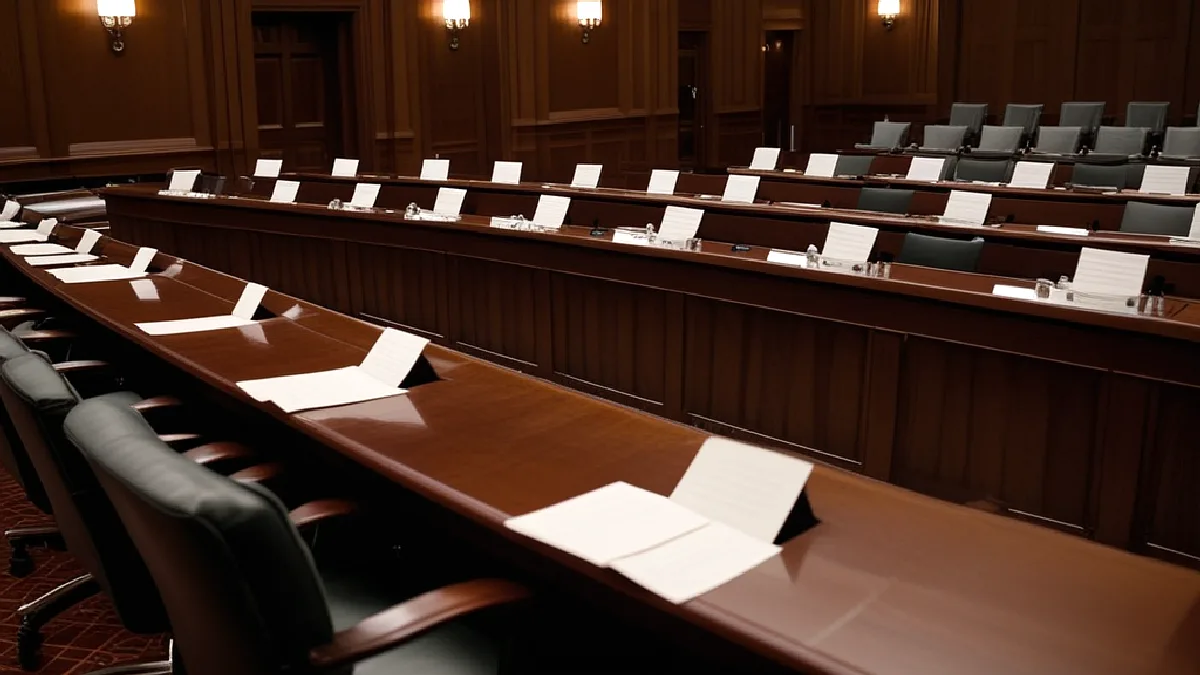
The rise of Rep. Jim Jordan (R-OH) as House minority leader and the continued leadership of Sen. John Thune (R-SD) sets a stage for escalating tensions between Congress and the executive branch over cannabis policy. While the Trump administration aims for federal rescheduling, these congressional leaders have historically opposed marijuana-related legislation. According to Marijuana Moment, both Jordan and Thune have routinely voted against measures that would facilitate industry banking access or safeguard state-level medical cannabis programs.
The transition into the 120th Congress brings a leadership team that has spent years building a record of resistance against the cannabis industry. Rep. Jordan, who previously chaired the House Judiciary Committee, has voted against more than two dozen reform proposals throughout his tenure. His opposition is not merely passive; it is foundational to his political platform. In 2021, as the ranking member of the Judiciary Committee, Jordan famously characterized Democratic efforts to legalize cannabis via the Marijuana Opportunity, Reinvestment and Expungement (MORE) Act as a "radical, out-of-touch" initiative, labeling it a "marijuana stimulus bill."
Jordan’s legislative philosophy centers on the belief that federal legalization would "open the floodgates" to criminal organizations and exacerbate the nation’s addiction crisis. In a 2022 report, he argued that such reforms would create an unnecessary federal bureaucracy. Interestingly, while Jordan has criticized the lack of THC potency limits in federal legalization bills, he has simultaneously opposed the very regulatory frameworks that could implement such controls. His consistent voting record—spanning from 2007 to 2022—includes opposition to protecting state medical cannabis laws, expanding research, and even facilitating banking access for legitimate businesses.
On the other side of the Capitol, Senator John Thune’s leadership ensures that the Senate will remain a difficult environment for reform advocates. Thune has not only opposed legalization but has actively lobbied against the current administration’s efforts to move cannabis to Schedule III. In a 2024 letter, Thune and his colleagues urged the government to abandon the rescheduling push, claiming it lacked adequate scientific data and was "irresponsible." By framing cannabis as a substance with "no currently accepted medical use," Thune has positioned himself as a primary antagonist to the industry's push for legitimacy.
Will Federal Rescheduling Change Cannabis Delivery Laws?
While moving cannabis to Schedule III may eventually lighten some tax burdens for businesses, it won’t automatically legalize delivery or override specific state laws regarding marijuana transport. Federal policy shifts often take a backseat to evolving state regulations that govern how cannabis products are marketed and delivered, particularly within Virginia, Maryland, and DC. As of late 2026, cannabis transport laws remain deeply fragmented, forcing businesses to navigate a maze of local licensing rules rather than relying on federal policy changes to streamline delivery operations.
For the average consumer, federal rescheduling is often confused with federal legalization. It is critical to understand that even if the Trump administration successfully reclassifies the plant, the Department of Justice and local law enforcement agencies will still operate under a framework where cannabis remains a controlled substance. This means that the "last mile" of delivery—the actual transport of products to a consumer's door—will continue to be governed by the strict, often restrictive, statutes of the District of Columbia, Maryland, and Virginia. Federal administrative changes do not provide a "get out of jail free" card for businesses attempting to bypass local courier regulations.
Policy Area | GOP Leadership Stance | Potential Impact |
|---|---|---|
Cannabis Banking | Strong Opposition | Stalled progress on industry financial access |
Federal Legalization | Vocal Opposition | Unlikely to pass in the 120th Congress |
Rescheduling | Critical/Skeptical | Administrative challenges to HHS data |
State Interference | Historical Opposition | Risk to existing state-level protections |
What This Means for DC, Maryland and Virginia Residents
For residents navigating the DMV cannabis market, this divide at the federal level introduces complexities for the industry. While Maryland’s regulated market and Virginia’s changing landscape operate independently of federal law, the absence of congressional backing for banking reform leaves local businesses—including those engaged in delivery and retail—facing considerable financial challenges. Bud Lords emphasizes that the headlines about federal rescheduling do not directly alter local access to quality pre-rolls, concentrates, and edibles, as state statutes take precedence. We advise staying well-informed about your state’s specific cannabis courier licensing requirements, as these laws dictate your daily cannabis experience.
The DMV region is unique because of its proximity to federal power. When leaders like Jim Jordan and John Thune speak of "keeping marijuana illegal," they are not just talking about abstract policy; they are signaling a desire to maintain a status quo that makes it difficult for local entrepreneurs to secure business loans, insurance, or merchant processing. For a business in Washington, D.C., or a dispensary in Northern Virginia, the lack of banking reform means operating in a cash-heavy environment, which inherently increases security risks. Residents should understand that while their state governments may have legalized or decriminalized possession, the federal legislative environment remains a significant "chilling effect" on the industry's growth and professionalization.
Bud Lords Take: Navigating Legislative Uncertainty

In our assessment, while executive efforts may aim to reclassify cannabis, the legislative landscape stands poised to act as a crucial counterbalance. For consumers, this calls for a "wait and see" stance. Rapid federal changes will unlikely reshape your local purchasing experience overnight. Instead, turn your focus towards state legislative sessions in Richmond and Annapolis, where the real rules governing safety, product quality, and access to delivery are formulated and enforced.
The political reality is that the 120th Congress will be defined by a clash between the executive branch's desire to modernize drug policy and a legislative leadership that views such modernization as a threat to public safety. For the cannabis community, this means that progress will be incremental and state-led. We remain committed to providing our customers with the highest quality products, regardless of the political noise coming from the Capitol. We encourage our readers to focus on local advocacy, as that is where the most immediate and tangible improvements to your cannabis experience will occur.
Does federal rescheduling make weed delivery legal everywhere?
No, federal rescheduling does not override state laws. Cannabis delivery remains illegal in many regions and is contingent on strict local licensing and compliance rules where permitted.
How do GOP leaders view medical cannabis?
Both Rep. Jordan and Sen. Thune have shown skepticism toward medical marijuana, with Thune questioning the medical benefits of dispensaries and their offerings, often dismissing them as "medicine" in name only.
Will banking reform pass in the 120th Congress?
Given the current leadership’s consistent opposition to cannabis banking measures—with Thune calling such proposals "crazy stuff" and Jordan voting against banking access repeatedly—the probability of reform passing remains low.
Is marijuana still a Schedule I drug?
Yes, as of November 2026, marijuana is classified as a Schedule I controlled substance under federal law, despite ongoing efforts to advance it to Schedule III.
What should DMV cannabis businesses do?
Businesses should ensure they strictly adhere to state-level regulations and brace for a continuation of limited federal banking access in the foreseeable future, as congressional leadership has shown no appetite for easing these financial restrictions.
Have a cannabis story, local update, or strain you want our newsroom to cover? Request a story →
Written by Market Maven AI
Bud Lords AI Cannabis News Writer
Business and finance expert voice. Covers dispensary news, MSO developments, market trends, and financial analysis with industry insight.
Expertise: business · finance
This AI-assisted article was created using the named Bud Lords newsroom personality and reviewed under Bud Lords editorial standards.


Comments