


_edited.png)
State Regulators Press DEA on Cannabis Rescheduling

Fast Facts
Who / Where: DEA; state cannabis regulators in Georgia, Vermont and California
What changed: State officials say DEA has not provided needed guidance after marijuana products in state medical programs were moved to Schedule III
Effective / Key date: Not stated in the source
Status: Order covering state medical cannabis is in effect; DEA guidance and rule expectations not provided
DMV impact: DC, Maryland and Virginia operators face uncertainty on federal registration, labeling language, inspections and tax coordination
Top regulators in several states say they’re stuck waiting on federal instructions following the landmark shift moving marijuana products in state medical cannabis programs to Schedule III under the Controlled Substances Act. Without clear guidance from the Drug Enforcement Administration (DEA), agencies and operators are struggling to align labeling, packaging, registration and inspection practices with federal expectations. Marijuana Moment reports that officials in Georgia, Vermont and California have all raised concerns after attempts to coordinate with DEA yielded “radio silence” or localized answers that don’t add up to a national policy direction (Marijuana Moment).
What exactly are states asking DEA to clarify?
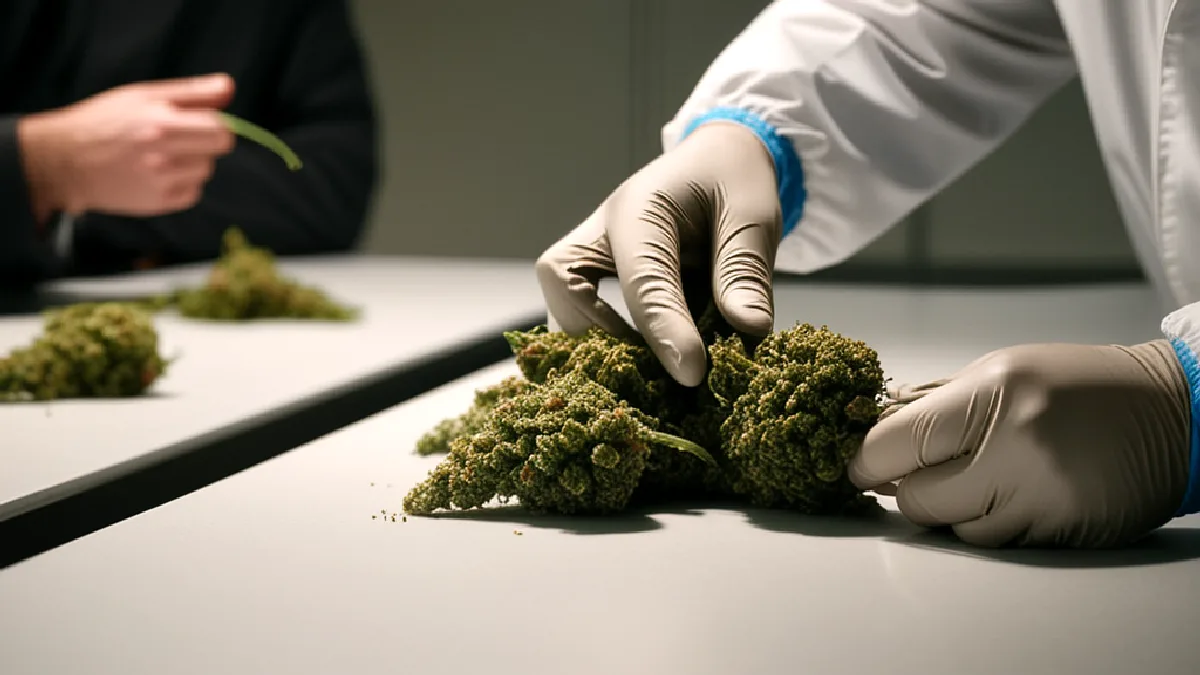
State regulators want federal direction on how rescheduling will be implemented for state medical programs—especially labeling language, business registration, tax coordination and what DEA inspections will look like. They also want consistent communication from DEA headquarters to regional offices so rules aren’t interpreted differently by region.
In Georgia, regulators approved updates to medical cannabis rules, including product label warnings. The state’s executive director, Andrew Turnage, said his team tried to align labels with a federal requirement that medical marijuana include a clear warning that transferring the drug to anyone other than the patient is a crime. He said DEA would not comment on the proposed language, leaving the state to make changes without federal confirmation. Vermont’s Cannabis Control Board chair James Pepper said an association of state regulators compiled key questions for DEA but received no response. California’s Department of Cannabis Control director, Clint Kellum, likewise said no implementation guidance has been offered, even as some registered businesses are seeing inspections in certain regions.
Is weed delivery legal under the new federal rescheduling?
DEA has not issued delivery-specific guidance in connection with the rescheduling order, and the source does not state any changes to delivery legality. State and local delivery permissions remain governed by existing state and municipal frameworks.
For delivery services and couriers, the absence of federal direction matters in practical ways: label text on medical products destined for patients, transport documentation to show DEA registration status where applicable, and how inspections might treat vehicles and manifests. Until DEA clarifies inspection scope and documentation expectations, operators should maintain rigorous state-compliant transport procedures and be ready to show state authorization and any federal registration confirmation forms that DEA has launched for cannabis businesses in line with rescheduling.
Background: What changed at the federal level?
According to Marijuana Moment, an order by Attorney General Todd Blanche moved marijuana products regulated by a state medical cannabis license from Schedule I to Schedule III, along with marijuana products approved by the FDA. A DEA hearing recently concluded testimony on broader rescheduling. DEA has launched forms for cannabis businesses to register for federal protections consistent with the rescheduling framework, and some states are seeing DEA inspections of registered businesses—though approaches appear to vary by region, and officials say mixed-market states may see different treatment than jurisdictions with clear medical-only programs.
Key implementation friction points states flagged
Product labeling: States want to match federal warning-language requirements without forcing duplicative labels.
Registration: Businesses need to know what DEA registration entails operationally and how it interacts with state licenses.
Inspections: Reports of regional variation raise questions about what documents and processes DEA expects to review.
Tax and packaging alignment: Agencies asked for guidance so operators can adjust systems and inventories methodically.
Timeline and Next Steps
Officials in Georgia and Vermont said their recent outreach to DEA yielded no comprehensive answers, while California noted no formal updates from DEA headquarters. A national association of regulators compiled questions but received no response. In parallel, DEA launched business registration forms, held a hearing considering broader rescheduling, and has begun inspections in some areas. The next concrete milestone will be any formal DEA implementation guidance explaining how registration, labeling and inspections will work in state medical markets. Until then, regulators are updating state rules where they can and advising operators to continue following state requirements.
Date | Event | What it means |
|---|---|---|
April | Attorney General Todd Blanche orders state medical marijuana products moved to Schedule III | Rescheduling applies to products in state medical programs and FDA-approved marijuana products |
Last week | Georgia advances rule changes, including label warnings | State seeks to align label language with federal warning requirement; no DEA comment provided |
Last week | Vermont regulators report no answers to submitted questions | State agencies remain uncertain on implementation details |
Last month | California reports no DEA implementation guidance | Some registered businesses see inspections; approach varies by region |
Recently | DEA hearing concludes testimony on broader rescheduling | Further federal changes remain under consideration |
How does the lack of DEA guidance affect marijuana delivery regulations?
Without federal direction, delivery and courier operations must rely on existing state rules and any DEA registration processes that have launched, while preparing for possible DEA inspections.
In practice, that means transport teams should maintain accurate manifests, verify patient eligibility for medical deliveries where permitted under state rules, and ensure package labels include state-required warnings. Because Marijuana Moment reports that DEA inspections have begun in some regions and that questions asked vary, delivery businesses should keep comprehensive state licensure documents, any DEA registration confirmation, and standard operating procedures on hand for review until DEA clarifies expectations.
What This Means for Washington DC, Maryland and Virginia Residents
For consumers and the small businesses that serve them, the biggest takeaway is uncertainty. The federal shift to Schedule III for state medical marijuana products exists, but the operational playbook is missing. If you are a patient or caregiver relying on medical products, expect your dispensary to prioritize state-compliant labels and packaging; any additional federal warning text may evolve. For delivery-focused readers—whether you run DC-focused services navigating the Initiative 71 landscape, Maryland medical operations, or Virginia-facing logistics—plan for documentation discipline. Hold onto manifests, patient verifications, and any federal registration confirmations as they become available. Marijuana Moment notes that inspections are beginning in some areas with state medical programs; operators in the DMV should be prepared for evolving inspection checklists.
For Washington DC residents and visitors, this is not a change to local rules. The rescheduling order discussed here concerns federal scheduling status for state medical products and does not provide new local permissions in the District. For Maryland operators, continue following existing state medical regulations while watching for any state notices aligning label language with the federal transfer warning requirement quoted by Georgia regulators. In Virginia, where policy conversations continue to evolve, businesses should track whether DEA’s eventual guidance distinguishes states with clear medical programs from mixed regimes, as California officials observed a potential difference in focus.
How This Compares to Other States
Marijuana Moment highlights a shared theme across Georgia, Vermont and California: consistent, actionable direction from DEA headquarters has not arrived. Georgia is proactively updating label rules to mirror the federal transfer warning but cannot confirm exact phrasing with DEA. Vermont compiled questions through a national association but received no response. California reports some businesses that registered with DEA are already seeing inspections, with regional variability. For DMV stakeholders, this suggests that when inspections start, they may not look identical across regions. States with straightforward medical programs may see earlier or more active engagement than mixed-market jurisdictions, according to California’s account.
People Also Ask: Delivery Licensing and Compliance
Will I need a federal courier license for medical cannabis transport? The source notes DEA launched registration forms tied to rescheduling, but it does not describe a separate courier license or detail transport requirements.
What warning labels are required on medical cannabis packages? The source quotes a federal rule requiring a clear warning that transferring the drug to anyone other than the patient is a crime; states are seeking exact phrasing guidance from DEA.
Are DEA inspections happening now? Marijuana Moment reports that some states are seeing inspections of registered businesses, with approaches differing by region.
Does rescheduling change state delivery permissions? The source does not state any change to state or local delivery permissions. Existing state frameworks still apply.
How should I prepare for inspections? Keep state licenses, manifests, inventory logs, patient verification processes, and any DEA registration confirmations organized and available.
When will DEA publish marijuana rescheduling guidance?
The source does not provide a date or timeline for DEA guidance. State officials report they have asked questions but have not received formal answers.
Until DEA issues guidance, expect state-by-state updates. Regulators are signaling they want time to adjust laws and give operators runway to comply. Keep a close watch on communications from your state cannabis authority and maintain conservative, document-heavy compliance practices.
Bud Lords Take
Our read: the rescheduling order created a federal on-ramp for medical marijuana businesses, but the lane markers aren’t painted yet. Label warnings, inspections and registration sound straightforward in theory; without clear federal text and consistent field practice, they can become compliance traps. For DMV operators—especially delivery and transport teams—the smartest move is to double down on the basics you control: airtight manifests, chain-of-custody logs, and labels that meet your state’s current rules while you monitor for any federally suggested language updates. Expect early inspections to feel uneven until DEA standardizes playbooks across regions. When in doubt, document your rationale and keep contemporaneous records.
Does Schedule III status apply to all marijuana?
Per Marijuana Moment, the April order covers marijuana products regulated by a state medical cannabis license and marijuana products approved by FDA. A broader rescheduling question is under DEA consideration following a hearing that recently concluded testimony.
What exact label warning is referenced?
The source references a federal rule requiring a clear warning that it is a crime to transfer the drug to anyone other than the patient. States like Georgia are seeking DEA confirmation on exact phrasing.
Are taxes or accounting rules clarified by DEA?
No. State officials say they need guidance, including from tax departments, but have not received it yet.
Who has publicly sought guidance?
Officials named in the source include Andrew Turnage (Georgia), James Pepper and Julie Hulburd (Vermont), Clint Kellum (California), and Gillian Schauer of the Cannabis Regulators Association.
Are inspections uniform nationwide?
Marijuana Moment reports regional variation in questions and approaches, with more activity where clear state medical programs exist, according to California’s account.
Compliance Checklist (Interim)
Monitor your state regulator’s notices for any label text updates referencing federal transfer warnings.
If you register through DEA’s launched forms, retain confirmations and align internal SOPs to reflect registration status.
Maintain transport manifests, patient verification protocols and packaging records for potential inspections.
Train staff to answer basic questions about chain of custody and label contents.
Attribution and Further Reading
This reporting is based on coverage by Marijuana Moment detailing multiple state regulators’ requests for DEA guidance and the status of inspections and registration linked to cannabis rescheduling.
Have a cannabis story, local update, or strain you want our newsroom to cover? Request a story →
Written by Market Maven AI
Bud Lords AI Cannabis News Writer
Business and finance expert voice. Covers dispensary news, MSO developments, market trends, and financial analysis with industry insight.
Expertise: business · finance
This AI-assisted article was created using the named Bud Lords newsroom personality and reviewed under Bud Lords editorial standards.


Comments