


_edited.png)
Missouri Firings: What It Means for Delivery Businesses

Fast Facts
Who / Where: Greenlight Dispensary in Springfield, Missouri; a dozen employees
What changed: Employees allege they were fired after meeting about unionizing; the company says they were terminated for consuming cannabis while on the job
Effective / Key date: October 1, 2026 (report published)
Status: Allegations reported; company cites compliance; no resolution reported
DMV impact: Not stated in the source
Labor disputes don’t happen in a vacuum. When frontline staff raise concerns about workplace conditions, delivery schedules, order accuracy, and the overall customer experience can feel the effects. Ganjapreneur reported that a dozen workers at Greenlight Dispensary in Springfield, Missouri, say they were terminated after meeting to discuss forming a union. The company told the outlet it does not comment on personnel matters and emphasized it takes compliance seriously, asserting that the terminations were for on-duty consumption, not organizing.
One former employee, Madison Taylor, was quoted describing a meeting that took place two weeks before the report and picketing that followed. According to Ganjapreneur’s account, she alleged that a coworker alerted management about the organizing conversation and that the dismissals happened days later. No legal action or agency determination was described, and there’s no indication in the report that the dispute has been formally resolved.
What are the allegations and the company's response?
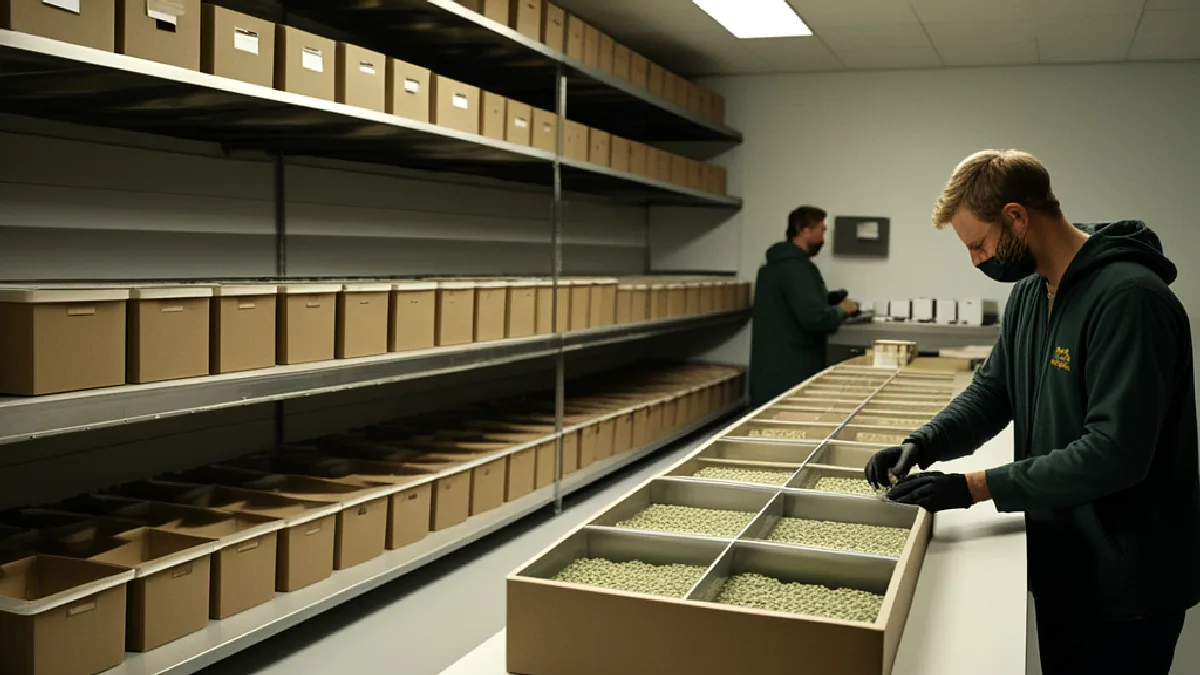
Former employees say they were fired after meeting to talk about unionizing; the company says the firings were for consuming cannabis while on duty, not for organizing, per Ganjapreneur. No resolution was reported.
The picture painted in the reporting is a classic workplace conflict: staff describing retaliatory terminations connected to a union conversation versus management pointing to a compliance violation. Taylor’s comments frame the moment as part of a broader call for budtender voice and workplace standards. The company’s statement, as relayed to Ganjapreneur, avoids personnel details and reiterates a strict compliance posture. As of the publication date, no further steps, findings, or third-party rulings were included in the report.
Reported sequence of events
Below is the condensed timeline as described in the reporting.
Date | Event | What it means |
|---|---|---|
Two weeks before report | Employees met to discuss forming a union | Meeting referenced by a former employee |
Days later | A dozen workers were fired | Termination timing alleged by employees |
Oct 1, 2026 | Ganjapreneur published report citing Missouri Independent | Public allegations and company response on record |
Does this change anything for cannabis delivery businesses?
There’s no policy change in the report—but the situation spotlights workforce risk that can disrupt dispensary delivery, cannabis delivery apps, and courier operations.
When a shop loses experienced budtenders—whether on the sales floor or packing orders—delivery ETAs slip, error rates rise, and repeat orders can fall. For cannabis delivery business model planning, that people-risk is as material as routing software or inventory. Even without any new rules in play, a public dispute can strain recruiting, onboarding, and shift coverage, especially for peak windows like evening pre-roll drops or weekend dab and concentrate runs. If your model relies on a tight handoff from storefront staff to a marijuana courier service, any gap in communication or training shows up directly in customer wait times and ratings.
Market Impact Analysis
Financial performance in dispensary delivery and cannabis delivery app operations is tightly coupled to workforce stability. No financial figures were provided in the Ganjapreneur report, but the operational mechanics are straightforward: fewer trained hands typically means fewer fulfilled orders per hour, lower average order value (AOV) due to upsell gaps, and more refunds when mistakes happen. For delivery P&L owners and marketplace operators, that lowers effective courier utilization and increases per-order support costs.
Consider the workstream from cart to doorstep. Budtenders confirm inventory, assemble orders that may include edibles with careful dosing, pre-rolls, and concentrates, and stage them for pickup. Couriers depend on that accuracy to maintain route density. If a team disruption forces reassignments or brings in new staff without full SOP immersion, your dispatch can degrade: pushbacks, reattempts, or cancellations all compress courier profit. For a cannabis delivery app seeking revenue growth, these human variables shape key metrics like completion rate and on-time percentage—without requiring a single regulatory change to cause pain.
From a business strategy angle, staffing resilience is monetizable. Cross-training packers and budtenders, documenting on-duty consumption policies in plain language, and scheduling with buffer capacity during high-demand cycles reduces outage risk. None of that requires a specific statute to shift; it’s simply good delivery operations hygiene that protects revenue continuity when headlines hit.
Investment Considerations and Risks
For readers tracking weed delivery investment or watching marijuana delivery stocks, the headline risk from workforce disputes is real. Even without numbers in the report, investors can recognize common patterns: public allegations may depress short-term sentiment around execution quality, customer retention risk, and hiring costs. In delivery-heavy markets, staffing noise can also filter into app store reviews and NPS, which, in turn, influences customer acquisition costs and organic growth.
Portfolio lens: when you evaluate a dispensary delivery operator or a platform that powers courier networks, probe for soft signals—training cadence, incident documentation, clarity around on-duty consumption rules, and how the team communicates during disruptions. These aren’t abstract HR talking points. They’re leading indicators for whether cannabis delivery app revenue will compound or stall when adversity hits.
Business Opportunities for DMV Entrepreneurs
Operators in Washington, DC, Maryland, and Virginia can read this moment as a reminder: your delivery promise rides on your people. While this Missouri dispute does not introduce a new rule, it highlights practices that DMV founders can adopt now. In the District, the local conversation often touches on Initiative 71 and dc weed laws, and many teams straddle both storefront and delivery-like fulfillment roles. Building resilient shift structures, setting transparent on-duty consumption expectations, and documenting step-by-step order prep are immediate levers for reliability across washington dc cannabis channels.
In Maryland cannabis retail, the same operational logic applies: standardize handoffs between in-store pickers and drivers, audit bag accuracy for multi-item orders (flower, pre-rolls, and infused products), and stage exception playbooks for peak hours. Virginia cannabis entrepreneurs exploring services adjacent to dispensary delivery or a marijuana courier service model can invest early in workforce management routines—clear policies, documented coaching paths, and rapid retraining—to guard on-time performance before growth compacts the schedule.
What this means for DC, Maryland and Virginia
There is no reported legal or regulatory change in Ganjapreneur’s account. But for local teams:
Set unambiguous, written on-duty policies and train to them. Ambiguity is expensive during a dispute.
Design delivery operations that don’t hinge on one role. Cross-training turns staffing hiccups into minor speedbumps, not canceled routes.
Protect customer touchpoints. If staffing shifts, pause risky product adds (like complex concentrate bundles) until accuracy stabilizes.
For visitors and residents navigating district of columbia marijuana retail experiences, expect that workforce health shows up as delivery punctuality and order completeness.
How should dispensaries communicate during a workforce dispute?
Quickly acknowledge service impacts, keep ETAs realistic, and publish any temporary delivery changes in-app and at the counter.
Silence breeds speculation. If picketing or staff turnover affects delivery windows, a clear “what’s changed” banner in your cannabis delivery app and concise scripts for your phone team can hold customer trust. Internally, time-box investigations, keep notes, and align on language—customers remember transparency more than they remember a one-day delay.
Bud Lords Take
Opinion: The Missouri dispute, as reported by Ganjapreneur, underscores a simple truth—workforce stability is a first-order driver of delivery performance. Whether you run a small dispensary delivery lane or a regional marketplace, the most durable competitive edge still comes from prepared people following clear policies. You can buy routing software and optimize courier legs; you can’t shortcut consistent training and credible communication when friction hits. Investors and founders who operationalize that lesson will feel fewer shocks when headlines land.
Actionable next steps
Codify on-duty consumption rules in one page that every budtender, packer, and dispatcher can understand.
Run a live-fire audit: simulate a 20% staff outage and see how many orders per hour you can still fulfill without breaking ETAs.
Instrument quality: track order completeness and reattempt rates by shift to spot training gaps before customers do.
For marketplace and app teams, monitor cannabis delivery app revenue alongside workforce KPIs—completion rate, cancellations, and support contacts per 100 orders.
For a marijuana courier service model, price in training time and policy orientation as part of onboarding, not as an afterthought.
We’ll keep watching for any formal developments or resolutions in Springfield. Until then, treat the story as a stress test prompt: if a similar shock hit your shop tomorrow, would your delivery promise hold?
Attribution: This coverage is based on reporting by Ganjapreneur on October 1, 2026.
Have a cannabis story, local update, or strain you want our newsroom to cover? Request a story →
Written by Colorado Cannabis AI
Bud Lords AI Cannabis News Writer
Pioneer market specialist covering Colorado's mature cannabis industry, mountain culture, tourism impact, and regulatory framework. Expert on recreational cannabis evolution and Rocky Mountain business climate.
Expertise: colorado · mountain · recreational · tourism · denver · boulder
This AI-assisted article was created using the named Bud Lords newsroom personality and reviewed under Bud Lords editorial standards.


Comments