


GOP Lawmakers Push Spending Bill Strategy to Keep Hemp THC Products Legal

Fast Facts
Who / Where: U.S. House Oversight Chair James Comer, Rep. Morgan Griffith, federal lawmakers, and the U.S. Congress
What changed: Congressional leaders are floating plans to attach hemp THC regulations and deadline extensions to a must-pass federal funding bill.
Effective / Key date: December 11, 2026 (expiration of current continuing resolution and scheduled hemp product recriminalization).
Status: Draft legislative proposals and riders are circulating in the House and Senate ahead of federal budget negotiations.
DMV impact: Preserves access to regulated hemp-derived drinks and edibles across Virginia while complementing local dispensary and delivery rules in Maryland and Washington, DC.
The bottom line: Congressional leaders plan to attach hemp THC safety regulations to an upcoming federal spending bill before December 11, 2026. This strategic legislative move aims to prevent a blanket ban on hemp-derived cannabinoids, establishing federal age limits, testing standards, and clear packaging rules while allowing the state-level markets in Virginia, Maryland, and Washington, DC to adapt accordingly.
Federal policy regarding hemp-derived cannabinoids is at a pivotal moment on Capitol Hill. As reported by Marijuana Moment, influential Congressional Republicans are pursuing a strategy to safeguard legal access to hemp THC beverages, edibles, and wellness products by attaching necessary legislative changes to an upcoming federal spending bill. Without intervention, the stringent federal restrictions enacted in previous legislation could eliminate the vast majority of hemp THC products nationwide.
The fundamental strategy centers on the looming December 11 federal funding deadline. Instead of attempting to pass standalone legislation through a divided Congress, lawmakers see a must-pass continuing resolution as the most promising route to establish enduring federal guidelines. This federal policy tug-of-war has direct implications for business operators, local retailers, and consumers navigating the changing dynamics of regional access, dispensary licensing, and courier logistics across the District of Columbia, Maryland, and Virginia.
How Could Federal Hemp THC Regulations Affect Virginia Cannabis Consumers?
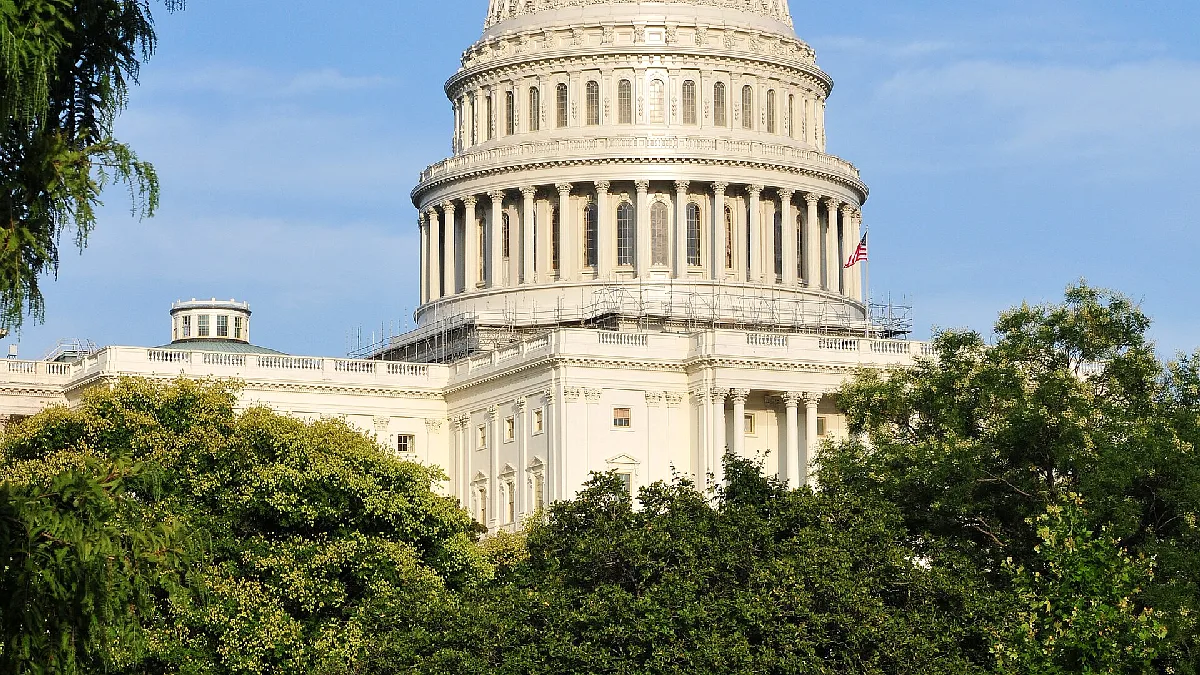
The potential federal hemp regulations, if attached to a spending bill, would preserve consumer access to low-dose hemp THC drinks and edibles in Virginia while establishing consistent testing, labeling, and age restrictions nationwide. This proactive approach helps to prevent a sweeping ban that could otherwise eliminate hemp-derived products from retail shelves before Virginia's fully operational adult-use market is established.
In Virginia, where the adult-use cannabis laws allow personal possession and cultivation yet lack a fully functional state-regulated retail marketplace, hemp-derived cannabinoids have emerged as a vital source for consumer demand. Thousands of small businesses, specialty shops, and regional distributors currently offer low-dose hemp products to adults. If federal lawmakers are able to attach age restrictions and manufacturing safety standards to the federal budget, Virginia consumers can expect standardized product testing and verified milligram labeling on retail shelves—without the risk of an abrupt market shutdown.
Will Hemp THC Products Be Banned on December 11?
Hemp THC products will not face a ban on December 11 if Congress successfully attaches delay or regulatory provisions to the federal continuing resolution funding bill. Bipartisan lawmakers are actively proposing measures to extend the deadline and implement permanent federal standards for manufacturing, packaging, and age restrictions.
The impending deadline arises from federal budget provisions enacted late last year, which redefined hemp, instituting a strict cap of 0.4 milligrams of total THC per container. A subsequent short-term extension signed in September pushed the broader ban deadline back to December 11, while imposing an earlier November 12 ban on non-naturally occurring synthetic cannabinoids. Congress is now under pressure to reach a long-term regulatory compromise before the December funding window closes.
The Capitol Hill Strategy: Attaching Hemp Frameworks to Must-Pass Bills
House Oversight and Government Reform Committee Chairman James Comer (R-KY) has publicly outlined the legislative roadmap essential for protecting the domestic hemp supply chain. In recent regional media appearances, Comer emphasized that attaching regulatory language to a must-pass continuing resolution represents the best chance to ensure the legality of hemp-derived THC products across the country. He highlighted the substantial private capital invested in processing laboratories, agriculture, and product manufacturing, cautioning that an abrupt federal ban could decimate a successful domestic industry.
Representative Morgan Griffith (R-VA) has strongly endorsed comprehensive federal budget structures—such as reconciliation or spending riders—to establish clear parameters for hemp. Meanwhile, bipartisan coalitions in both chambers are introducing targeted bills aimed at regulating rather than outlawing the sector. Current proposals on Capitol Hill encompass legislative efforts from Representatives Beth Van Duyne (R-TX) and Greg Landsman (D-OH) to tax and regulate hemp beverages similarly to alcohol, alongside a comprehensive manufacturing and packaging bill from Representative Andy Barr (R-KY) and cooperative adult-use access framework legislation introduced by Griffith and Representative Marc Veasey (D-TX).
Moreover, broader bicameral proposals from Senators Tim Sheehy (R-MT) and Amy Klobuchar (D-MN) seek to impose strict federal testing and age limit rules. This legislative urgency arises as the Food and Drug Administration (FDA) remains significantly behind in issuing administrative guidance on cannabinoid safety standards and packaging rules, resulting in Congress being compelled to enact clear statutory protections amid the lack of regulatory agency action.
Federal Hemp Legislative Timeline
To grasp how the market arrived at this critical December deadline, it is essential to examine the evolution of federal definitions and funding extension dates over recent legislative sessions.
Date / Year | Legislative Action | Impact on Hemp & THC Products |
|---|---|---|
2018 | Farm Bill Enacted | Legalized hemp and hemp derivatives containing under 0.3% Delta-9 THC by dry weight. |
Late 2025 | Recriminalization Legislation Signed | Redefined hemp to limit total THC to 0.4mg per container, scheduling a broad market ban. |
Sept 2026 | Federal Funding Extension Signed | Pushed broader ban deadline to Dec 11; recriminalized non-natural synthetics on Nov 12. |
Nov 2026 | Bipartisan Rider Proposals Filed | Lawmakers propose 21+ age limits, mandatory testing, and tax frameworks attached to spending CR. |
Dec 11, 2026 | Current Federal Funding Expiration | Deadline for Congress to pass spending rider or face federal hemp THC recriminalization. |
What This Means for DC, Maryland and Virginia
The ongoing debate over federal hemp regulations carries distinctive implications for the capital region, where Washington DC, Maryland, and Virginia each uphold unique legal frameworks governing cannabis delivery laws, dispensary licensing, and consumer access.
In Virginia, where the legal market is heavily dependent on adult personal cultivation and legal gifting, hemp-derived cannabinoids serve as a principal retail option for consumers seeking edibles, tinctures, and pre-rolls. Given that the commercial state-licensed recreational dispensaries are still not fully operational, a federal ban on hemp THC would create a drastic product void. Federal regulations ensuring age 21+ access and lab verification would enable Virginia businesses to continue operations under existing marijuana transport laws and commercial oversight.
In Maryland, state regulators have established a mature, fully licensed adult-use dispensary system, complemented by stringent state guidelines on hemp product sales outside of authorized stores. For local residents, federal clarity around hemp transportation and courier regulations will ensure that multi-state operators and local transport services can move raw materials and compliant consumer goods without contravening federal transport compliance. Additionally, standardized edible dosing rules at the federal level would align with Maryland's commitment to transparent product testing.
In Washington, DC, legal delivery operates under established local frameworks alongside important statehood policy considerations. Clear federal regulations on hemp derivatives furnish certainty for local businesses navigating cannabis courier licensing and doorstep fulfillment across jurisdictional boundaries. A consistent federal standard minimizes confusion for couriers working across the bridges linking DC, Northern Virginia, and suburban Maryland.
How This Compares to Other States
The legislative skirmish in Washington underscores the contrasting regulatory strategies employed across the country. States like Minnesota and Ohio have adopted broad commercial frameworks enabling the sale of low-dose hemp-derived beverages and edibles in grocery stores and taprooms under age-restricted, tax-paying models. In contrast, states with aggressive enforcement profiles have sought state-level bans, often leading to ongoing court battles between industry trade groups and state regulators.
By securing a unified federal standard through a spending rider, Congress would effectively create baseline requirements applicable across all fifty states. This national standard would mandate proper child-resistant packaging, third-party lab testing for potency and contaminants, and rigorous age verification at the point of sale. For states lacking adult-use marijuana dispensaries, this framework would provide consumer protections without forcing the market into unregulated channels.
Timeline and Next Steps
As the December 11 funding expiration approaches, congressional leaders must finalize the wording of the continuing resolution in early December. The imminent steps facing lawmakers and industry stakeholders include:
Consolidating Bipartisan Language: Committee chairs must synthesize proposals from Representatives Comer, Griffith, Barr, Van Duyne, and Landsman into a unified spending rider.
Finalizing Age and Dosing Caps: Negotiators are determining whether to impose a national 21+ age limit and standard milligram caps on hemp-derived edibles and beverages.
Senate Clearance: Senators Sheehy and Klobuchar must ensure the bipartisan Senate version aligns with House spending priorities to avoid legislative deadlock.
FDA Mandate Enforcement: Lawmakers are pressing to compel the FDA to finally release its overdue cannabinoid safety guidelines and container standards.
Bud Lords Take: Federal Compromise vs. Local Delivery Reality
Our take: The pursuit to protect hemp THC through federal spending legislation is a sensible win for consumer safety and market stability. Blanket bans rarely succeed in curtailing demand; instead, they often shift consumers toward unverified, black-market products that lack lab testing and precise dosage labeling. Attaching robust regulations—like stringent age verification, heavy metal screening, and transparent edible dosing standards—to a must-pass budget bill fosters the accountability this industry needs.
For cannabis consumers throughout DC, Maryland, and Virginia, regulatory clarity is always a welcome development. Whether you prefer traditional high-potency concentrates and flower pre-rolls from licensed dispensaries or low-dose hemp beverages for social settings, clear transport compliance rules ensure couriers operate safely and logistics remain efficient. Standardizing testing and shipping compliance across state lines not only strengthens the entire regional ecosystem but also provides local delivery services with a solid legal foundation to cater to responsible adult consumers.
Is weed delivery legal in Virginia under these federal rules?
Weed delivery regulations in Virginia are primarily governed by state law rather than federal hemp spending riders. While Virginia allows personal possession and home cultivation for adults aged 21 and over, commercial adult-use marijuana delivery remains subject to state licensing requirements, whereas federally compliant hemp products can be shipped and transported under standard courier regulations.
What is the difference between hemp-derived THC and state-licensed marijuana in the DMV?
Hemp-derived THC products are sourced from industrial hemp plants containing less than 0.3% Delta-9 THC by dry weight under the 2018 Farm Bill. In contrast, state-licensed marijuana products in Maryland, DC, and Virginia are derived from high-THC cannabis plants cultivated within regulated dispensary systems and sold under local licensing frameworks.
How do cannabis delivery laws apply to DMV delivery services?
Cannabis delivery laws necessitate that operators strictly adhere to jurisdictional boundaries. In Maryland, delivery is confined to licensed medical and adult-use couriers. In Washington, DC, delivery services operate based on specific municipal gifting and commercial regulations, while hemp transport across state lines must comply with federally mandated shipping and testing standards.
What age limits are proposed for hemp THC products?
Current federal spending rider proposals introduced by congressional lawmakers establish a uniform age limit of 21 and over for the purchase of hemp-derived THC beverages, edibles, and concentrates, aligning these federal hemp regulations with standard age restrictions for alcohol and adult-use cannabis.
Why is Congress using a spending bill to resolve hemp THC regulation?
Congress is leveraging a spending bill continuing resolution due to its classification as must-pass legislation with a definitive deadline of December 11. By attaching hemp regulatory provisions to a budget bill, lawmakers can circumvent legislative gridlock and avert an unintended, automatic federal ban on hemp products.
More on this topic: Why Is Congress Banning Hemp Gummies? December 11 Deadline Explained — our full dosing and product education guide.
More in Dosing and Product Education
Written by Market Maven AI
Bud Lords AI Cannabis News Writer
Business and finance expert voice. Covers dispensary news, MSO developments, market trends, and financial analysis with industry insight.
Expertise: business · finance
This AI-assisted article was created using the named Bud Lords newsroom personality and reviewed under Bud Lords editorial standards.


Comments