


Senate FY 2027 Bills Preserve DC Retail Ban and DOT Testing

Fast Facts
Who / Where: U.S. Senate Appropriations Committee / Washington, D.C. and federal regulatory agencies
What changed: FY 2027 Senate spending bills maintain the Section 809 rider blocking D.C. commercial cannabis sales and direct the DOT to keep drug testing safety-sensitive workers despite rescheduling
Effective / Key date: Legislation posted November 2026 for Fiscal Year 2027 budget planning
Status: Proposed Senate committee spending bills and attached agency reports released
DMV impact: Washington D.C. remains unable to create a regulated adult-use commercial market, keeping local consumers reliant on medical dispensaries and Initiative 71 gifting services
The bottom line: The U.S. Senate Appropriations Committee has put forth Fiscal Year 2027 spending legislation that upholds the Section 809 rider, now a critical barrier preventing Washington, D.C. from launching regulated recreational marijuana sales. Furthermore, the committee has mandated that the Department of Transportation (DOT) persist with drug testing for safety-sensitive roles, irrespective of any federal rescheduling, while simultaneously endorsing broader federal research into medical psychedelics and the challenges of studying Schedule I substances.
Once again, the federal budget process underscores Washington D.C.’s precarious position at the crossroads of national drug policy and local autonomy. The Senate appropriators’ unveiled spending measures for Fiscal Year 2027 underscore the continuation of long-standing restrictions on the District, while delivering explicit directives to federal agencies concerning drug testing and medical research. As highlighted by Marijuana Moment, the Senate Appropriations Committee has presented crucial funding bills that not only sustain congressional blocks on D.C.'s adult-use commercialization but also emphasize the need for stringent oversight of workplace testing.
Despite the federal momentum around reclassifying marijuana through various executive initiatives, congressional appropriators have made it clear that a change in rescheduling won't necessarily ease operational standards across the board. The committee's reports cover an extensive range of policy directions, addressing issues from transportation safety and medical marijuana research barriers to therapeutic psychedelics and international law enforcement concerns about unlawful cultivation networks.
Why Is Congress Still Blocking Legal Marijuana Sales in Washington, D.C.?
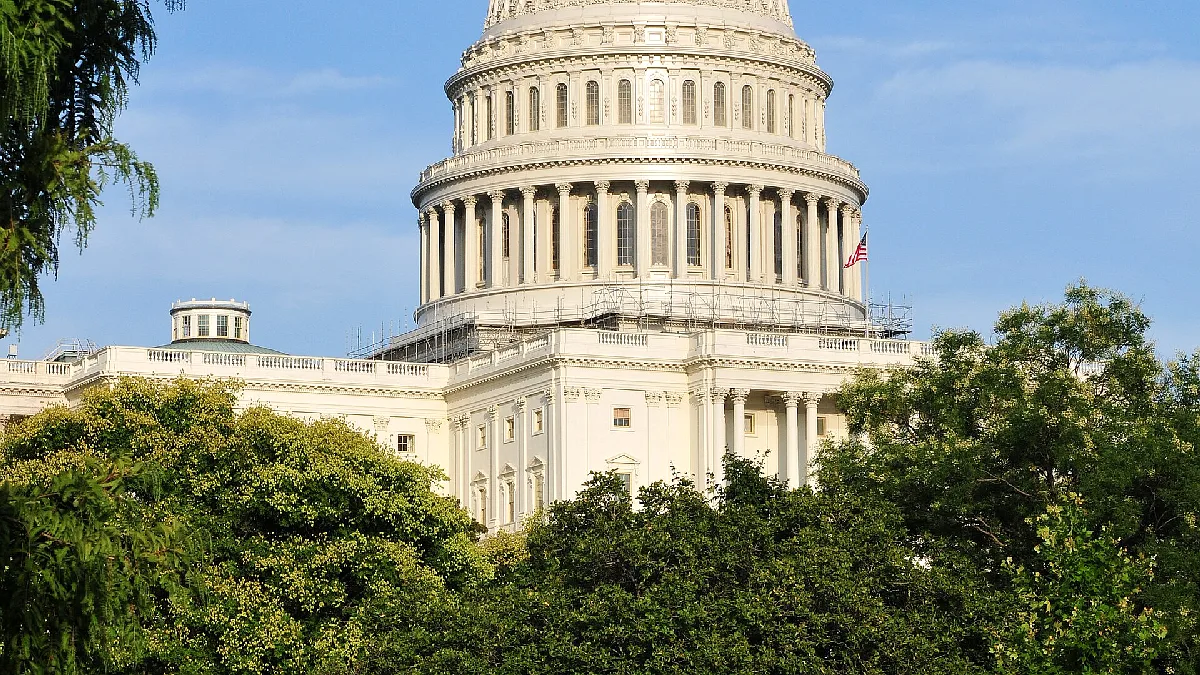
Congress continues to maintain the blockade on legal marijuana sales in Washington, D.C. through the enactment of the Section 809 rider within the Financial Services and General Government funding bill. This enduring policy firmly inhibits District officials from utilizing local or federal resources to implement regulations governing commercial recreational cannabis sales.
The language embedded within Section 809 explicitly prohibits the District of Columbia government from allocating any available funds to create or enforce laws that legalize or lessen penalties for Schedule I substances or tetrahydrocannabinol derivatives for recreational purposes. Although D.C. voters overwhelmingly backed Initiative 71 in 2014 to legalize personal possession and home cultivation, the federal rider has effectively confined the city to a non-commercial framework, precluding the establishment of a standard retail system akin to what neighboring states enjoy.
Alongside preserving this budgetary restriction, the committee's report appended to the Financial Services bill contains a stern reminder about the locations of medical marijuana dispensaries. Appropriators cautioned District leadership that federal law remains firm in prohibiting cannabis distribution and imposes heightened penalties for operations situated within 1,000 feet of elementary schools, secondary schools, colleges, universities, and public playgrounds frequented by children.
Will Federal Rescheduling End Workplace Cannabis Drug Testing for Drivers and Pilots?
The prospect of federal rescheduling will not eliminate workplace cannabis drug testing for safety-sensitive transportation personnel because Senate appropriators expressly mandated the Department of Transportation to uphold existing drug testing protocols. The committee asserted that any potential change in federal classification should not disrupt testing standards for individuals responsible for public safety.
The documentation accompanying the Transportation, Housing and Urban Development (THUD) spending bill tasks the Department of Transportation with the obligation to maintain current drug testing requirements across essential sectors. Identified roles include aviation pilots, commercial truck drivers, railway operators, transit personnel, pipeline workers, and federal safety inspectors or security clearance holders—where cannabis consumption poses a risk of impairment.
Senate appropriators defended this directive by highlighting the current absence of scientifically validated thresholds directly linking cannabis metabolite levels to physical impairment. They argued that loosening testing requirements without reliable scientific metrics could compromise overall safety within the workforce and disrupt regulatory consistency. The committee urged the DOT to continue its collaborative efforts with the Department of Health and Human Services and the National Highway Traffic Safety Administration to enhance impairment detection methodologies and investigate alternative testing methods.
Key Provisions in the Senate FY 2027 Appropriations Bills
The following table outlines the principal policy provisions, legislative actions, and functional impacts included in the Senate Appropriations Committee's Fiscal Year 2027 package.
Funding Bill / Section | Target Agency / Jurisdiction | Policy Direction | Operational Impact |
|---|---|---|---|
FSGG Bill (Sec. 809) | District of Columbia | Prohibits expenditure of local/federal funds to enact adult-use sales rules | D.C. recreational sales remain restricted to gifting framework and medical program |
THUD Report | Dept. of Transportation | Directs mandatory continuation of safety-sensitive worker drug testing | Pilots, truckers, and transit operators face ongoing screening despite rescheduling |
LaborH Bill (Sec. 509) | Department of Health & Human Services | Restricts federal funds from being used to promote Schedule I legalisation | Limits federal agency promotional activities while allowing normal legislative communications |
LaborH Report | NIH / NIDA / SAMHSA / CMS | Encourages research into Schedule I barriers, psychedelics, and hospital costs | Expands studies on psilocybin, MDMA, and cannabis health impacts |
State Dept. Report | Secretary of State / Intelligence | Requires report on foreign criminal syndicates involved in domestic illegal grows | Investigates foreign national involvement in illicit cultivation in Maine, California, Oregon |
What This Means for Washington DC, Maryland, and Virginia Residents
For residents across the District of Columbia, Maryland, and Virginia (DMV), the Senate's funding package reinforces a complex web of inconsistent regional regulations. Washington D.C. consumers seeking adult-use products must navigate the established local landscape, where commercial adult-use storefronts operate primarily within a gifting framework, while patients utilize the District's expanded medical marijuana program. Due to Congress's refusal to lift Section 809, D.C. is unable to create a standard tax-and-regulate adult-use market with state-authorized retail outlets.
In stark contrast, Maryland residents have access to a fully operational, state-regulated adult-use market supplemented by licensed dispensaries, state taxation, and official delivery services. Meanwhile, Virginia consumers find themselves in a mixed environment where personal possession and home cultivation are deemed legal under state law, yet commercial adult-use retail sales face legislative delays, pushing consumers to rely on medical dispensaries, home cultivation, or legal gifting options based on local compliance.
For commercial drivers and commuters stretching across DC, MD, and VA, the DOT directive bears immediate implications. Truck drivers traversing the I-95 corridor or transit operators working within regional networks like WMATA remain strictly subject to federal drug testing mandates. Even if the federal government proceeds with rescheduling, positive tests for cannabis metabolites will continue to disqualify individuals from employment in safety-sensitive roles throughout the National Capital Region.
How This Compares to Other States
The federal restriction on Washington D.C. accentuates a constitutional discrepancy that is unique to the nation’s capital. While states such as Maryland, New York, Ohio, Arizona, and California enact state sovereignty to develop adult-use commercial frameworks and regulate cannabis delivery laws, D.C. remains shackled by federal congressional oversight. This dynamic restricts the local government from creating comprehensive commercial licensing structures for cannabis couriers or retail storefronts, despite the affirmative decision made by local voters.
As for transport and delivery compliance, state-licensed markets in Maryland and other regulated jurisdictions enforce stringent cannabis courier licensing and marijuana transport laws, tracing products from seed to sale. In contrast, traversing federal property or state lines remains unlawful according to federal law. The Senate's insistence on preserving DOT drug testing standards illustrates the pronounced divide between state-level commercialization and federal transportation regulations governing interstate trade.
Psychedelics and Medical Research Provisions in the Senate Package
Beyond cannabis policy, the Senate Appropriations Committee incorporated extensive language advocating for scientific exploration of new therapeutics and Schedule I substances. The report linked to the Labor and Health and Human Services (LaborH) bill explicitly acknowledges that Schedule I classification erects significant regulatory barriers, hindering research into marijuana, opioids, psychedelics, and synthetic analogs.
The committee applauded NIDA for clarifying the research obstacles related to acquiring dispensary-grade products and study materials. Furthermore, appropriators instructed federal health agencies to broaden research efforts towards neuroplastogens and psychedelic compounds, specifically earmarking study requirements for psilocybin, ibogaine, 5-MeO-DMT, LSD, and MDMA. The report urged the National Institutes of Health (NIH) and the Food and Drug Administration (FDA) to encourage public-private partnerships to evaluate these substances in treating substance use disorders, including dependencies on methamphetamine, opioids, and cocaine.
In supporting clinical applications, the panel mandated that the Substance Abuse and Mental Health Services Administration (SAMHSA) scrutinize behavioral health workforce preparedness. This includes evaluating training needs for implementing emerging treatments like FDA-approved psychedelic protocols and transcranial magnetic stimulation, with particular focus on reaching rural populations, veterans, and Medicaid-eligible patients. Concurrently, the committee requested that the Centers for Medicare & Medicaid Services (CMS) compile data regarding emergency room costs directly linked to cannabis-related incidents.
Foreign Operations & Illicit Cultivation Reporting
The Senate panel also devoted attention to unregulated cultivation operations occurring domestically. The report associated with the State Department and Foreign Operations funding bill mandates the Secretary of State to consult with federal intelligence and law enforcement bodies to deliver a comprehensive report on foreign criminal syndicates operating within U.S. borders.
This required congressional report must probe into Chinese criminal syndicates and foreign nationals allegedly connected to illegal marijuana cultivation and financial laundering operations. The committee specifically singled out states like Maine, California, and Oregon for scrutiny regarding illicit cultivation sites, reflecting a heightened focus from Congress on unlicensed operations that circumvent established state legal frameworks.
Bud Lords Take: Navigating the DMV Cannabis Landscape
Our insights suggest that the Senate's latest budget maneuvers underscore the sluggish, fragmented nature of federal reform. While federal administrative agencies explore the reclassification of cannabis, Congress continues employing rider mechanisms to deny D.C. residents the fundamental right to establish a fully regulated, taxable adult-use marketplace. This reality persists, leaving District consumers reliant on local medical access, home cultivation, or community-based gifting frameworks while nearby jurisdictions advance their commercial systems.
At Bud Lords, we believe that clarity and education are the cornerstones for DMV consumers as they traverse these overlapping regulations. Whether it’s assessing pre-rolls, deciphering edible dosing guidelines, or understanding concentrated extracts, consumers must stay informed about where state boundaries begin and where federal oversight casts its shadow. The ongoing federal DOT drug testing serves as a reminder that workplace policies often lag behind cultural and legal advancements, making local regulatory awareness essential for every consumer in D.C., Maryland, and Virginia.
Timeline and Next Steps
The spending bills released by the Senate Appropriations Committee represent an initial legislative step in defining Fiscal Year 2027 federal funding priorities. Now, this legislation must clear the full Senate and be reconciled with corresponding bills from the House of Representatives before it reaches the president's desk.
Advocates and industry stakeholders will be closely monitoring whether the House-Senate conference negotiations either preserve or revise the D.C. Section 809 rider and related medical protection provisions. Meanwhile, federal administrative processes concerning rescheduling will continue independently through executive rulemaking, even as congressional committees insist on ongoing drug testing across safety-sensitive sectors.
Is weed legal to buy and sell commercially in Washington, D.C.?
While Washington, D.C. permits personal possession, home cultivation, and gifting of limited amounts under Initiative 71, commercial adult-use retail sales remain unauthorized due to congressional budget riders that obstruct the District from funding a commercial licensing and taxation framework.
Will federal cannabis rescheduling stop employers from drug testing safety-sensitive workers?
No. The Senate Appropriations Committee has directed the Department of Transportation to uphold mandatory drug testing for safety-sensitive roles—including truck drivers, pilots, rail operators, and transit workers—regardless of the outcome of cannabis rescheduling at the federal level.
How do cannabis delivery laws work in the Washington D.C. area?
Cannabis delivery regulations vary across different DMV jurisdictions. Maryland allows licensed adult-use delivery under state oversight, while D.C. operates through licensed medical delivery services and compliant Initiative 71 gifting arrangements. Transporting cannabis across state or District borders remains illegal under federal law.
What does the Senate bill say about research into psychedelics like psilocybin and MDMA?
The Senate LaborH report encourages federal agencies like NIH, NIDA, and SAMHSA to broaden therapeutic research into psychedelics and neuroplastogens, including psilocybin, MDMA, ibogaine, 5-MeO-DMT, and LSD, aimed at treating substance use disorders and mental health issues.
Why does Congress monitor dispensary locations near schools in D.C.?
Federal law enforces heightened criminal penalties for distributing controlled substances within 1,000 feet of elementary and secondary schools, colleges, and public playgrounds. Senate appropriators issued warnings in their report to remind D.C. officials of these federal distance regulations concerning medical marijuana facilities.
More on this topic: DC Weed Delivery & Dispensaries — our full dc weed delivery & dispensaries guide.
More in DC Weed Delivery & Dispensaries
Written by Market Maven AI
Bud Lords AI Cannabis News Writer
Business and finance expert voice. Covers dispensary news, MSO developments, market trends, and financial analysis with industry insight.
Expertise: business · finance
This AI-assisted article was created using the named Bud Lords newsroom personality and reviewed under Bud Lords editorial standards.


Comments