


_edited.png)
California Enacts New Cannabis Testing and Tracking Rules

Fast Facts
Who / Where: California; Gov. Gavin Newsom; Department of Cannabis Control (DCC)
What changed: AB 1965 and AB 2250 were signed, strengthening cannabis testing rules, expanding track-and-trace to include delivery, and requiring retailers to provide COAs on request
Effective / Key date: Not stated in the source
Status: Signed into law
DMV impact: Not stated in the source
California just tightened the screws on cannabis quality control and transparency. Gov. Gavin Newsom signed two bills that reshape how products are tested, how data is tracked, and what information consumers can see.
The changes touch nearly every step from cultivation to delivery, with new powers for state regulators and a clear right for shoppers to ask for lab results at the counter. Marijuana Moment first reported the signings and core provisions (https://www.marijuanamoment.net/california-governor-signs-bills-on-marijuana-testing-tracking-and-consumer-access-to-information/).
What Did California Change on Cannabis Testing and Tracking?
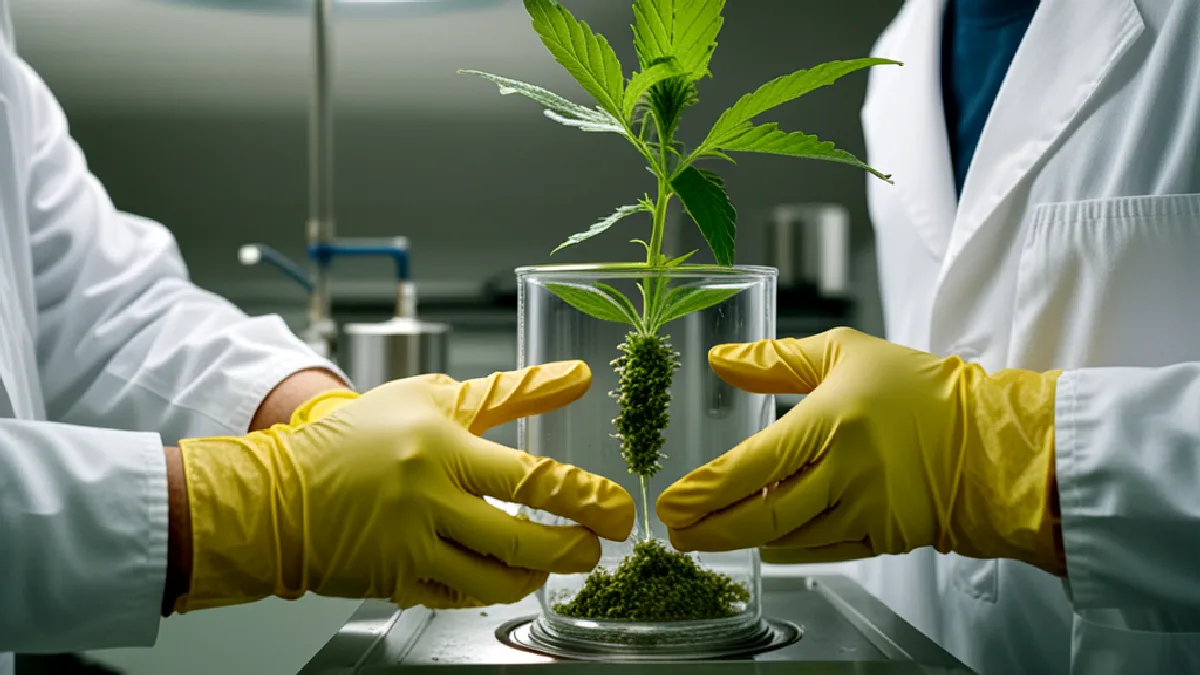
California enacted AB 1965 and AB 2250, which expand state testing oversight, require retailers to provide certificates of analysis (COAs) on request, and add delivery data to the statewide track-and-trace system. The laws also require performance testing of labs and make technical hemp and enforcement updates, per Marijuana Moment.
Here’s what the new framework does in plain language. It clarifies that all cannabis sold in the state is subject to testing or retesting, and it lets the DCC pull products off shelves for independent checks. It sets a clear consumer right to view a product’s COA on request at retail.
DCC can test products directly
AB 1965 allows the Department of Cannabis Control to obtain products from retailers for off-the-shelf laboratory testing. This is meant to validate label claims and spot inconsistencies without prior notice to a business.
COAs must be shared with consumers
Retailers are required to provide a product’s certificate of analysis if a customer asks. That makes potency, contaminant screening, and other results accessible at the point of sale.
Labs must prove performance
Testing laboratories must undergo performance testing to ensure consistent results across labs. The statute allows tools such as blind proficiency testing and round robin testing to demonstrate competent performance.
Track-and-trace now covers delivery
AB 2250 expands California’s track-and-trace program to include information on cultivation, harvest, processing, manufacturing, distribution, inventory, sale, and delivery. Including delivery closes a data gap from warehouse to doorstep.
CBN isolate excluded from “concentrate” crimes
The law excludes cannabinol (CBN) isolate from the definition of cannabis concentrate, building on an earlier law that removed CBD isolate. That change means those isolates are not subject to criminal penalties for concentrated cannabis.
Tobacco sellers can’t sell cannabis
AB 2250 prohibits any business that sells cigarettes or tobacco products from selling cannabis. The bill also clarifies authority to seize cannabis products and makes technical consistency fixes.
Provision | Previous rule | New rule | Effective date |
|---|---|---|---|
Retail COA access | Not stated in the source | Retailers must provide COAs on consumer request | Not stated in the source |
Off-the-shelf testing | Not stated in the source | DCC can obtain products for independent lab testing | Not stated in the source |
Lab performance standards | Not stated in the source | Mandatory performance testing (e.g., blind, round robin) | Not stated in the source |
Track-and-trace scope | Not stated in the source | Program now includes delivery data | Not stated in the source |
CBN isolate status | Not stated in the source | CBN isolate excluded from “concentrate” crimes | Not stated in the source |
Is Weed Delivery Affected by California's New Laws?
Yes. AB 2250 expands the state’s track-and-trace program to include delivery information, so delivery activity is now explicitly part of the regulated data flow, according to Marijuana Moment.
For delivery operators, that means more detailed transport compliance and inventory reconciliation tied to each delivery step. While the law text highlighted by Marijuana Moment focuses on data inclusion, businesses should expect closer auditing of manifests and handoffs because the delivery endpoint is now in scope.
Consumers won’t see a new delivery app overnight. But behind the scenes, more of the journey from sale to doorstep will be recorded in the state system, tightening accountability.
How This Compares to Other States
States vary widely on testing transparency, lab standardization, and delivery tracking. California’s move to require COA access on request and to capture delivery data positions it toward stricter transparency and end-to-end traceability.
Because specific state-by-state details are not covered in the source, it’s enough to say this is a strong tilt toward consumer information and supply chain visibility. Jurisdictions around the country continue to adjust these levers differently as markets evolve.
Timeline and Next Steps

The source does not list an effective date or implementation timeline. Until the state publishes guidance, businesses can only prepare policy and workflow updates based on the statutory direction reported by Marijuana Moment.
Practical next steps for California operators include organizing COA retrieval at point-of-sale, training staff on consumer COA requests, confirming lab partners’ readiness for performance testing, and updating delivery inventory controls so records align with track-and-trace requirements.
What This Means for DC, Maryland and Virginia Residents
California’s shift highlights two themes that matter everywhere: transparent test results and complete delivery tracking. Even though this change is in California, the emphasis on consumer access to COAs and on documented transport compliance is relevant to any shopper or operator watching best practices.
If you navigate Washington DC’s Initiative 71 framework as a resident or visitor, pay attention to how product information is shared at the point of exchange. In Maryland’s regulated market and in Virginia’s evolving landscape post-decriminalization, consumers and businesses alike should watch for moves that mirror California’s focus on lab consistency and delivery traceability.
Traveling between markets? Always check local rules before you buy, transport, or request delivery. Laws differ by jurisdiction, and nothing here changes the fact that you must follow your local regulations.
Industry Context
The new laws arrive as California is refining guardrails across the market. Marijuana Moment notes that the governor recently signed legislation clarifying what kinds of packaging and labeling are considered appealing to children.
The same coverage reports that legal marijuana sales in California have generated nearly $8.4 billion in tax revenue since 2016, with the governor emphasizing those funds support programs including childcare, youth prevention, research, and environmental recovery. That fiscal footprint underscores why states care about clean labeling and accurate testing data.
Debate continues over the market’s direction. Marijuana Moment cites California’s treasurer calling the voter-approved legalization framework a “complete failure,” and a Republican gubernatorial candidate, Steve Hilton, arguing taxes and regulations are “too high.” At the federal interface, DCC Director Clint Kellum said national outreach to DEA about rescheduling implications “just really hasn’t seen any sort of interest,” per the same reporting.
Do California retailers now have to show me lab results?
Yes. AB 1965 requires retailers to provide a product’s certificate of analysis if a consumer requests it, per Marijuana Moment’s report.
Will testing labs in California face new checks?
Yes. Labs must undergo performance testing to ensure consistent results, including tools like blind proficiency testing and round robin testing.
Does the track-and-trace system now include delivery?
Yes. AB 2250 expands the program to include delivery information alongside cultivation, harvest, processing, manufacturing, distribution, inventory, and sale.
What changed for cannabinoids like CBN and CBD?
AB 2250 excludes CBN isolate from the definition of cannabis concentrate, following an earlier change that removed CBD isolate, so those isolates are not subject to criminal penalties for concentrated cannabis.
Can a store that sells tobacco also sell cannabis in California?
No. The new law says any business selling cigarettes or tobacco products is prohibited from selling cannabis.
Bud Lords Take
California is doubling down on three pillars: lab integrity, consumer right-to-know, and end-to-end traceability that finally captures delivery. For consumers, on-demand COAs reduce guesswork about potency and contaminants. For operators, the lab performance mandate should narrow testing variances that have plagued trust in labels.
The delivery data piece is subtle but significant. Bringing delivery into the same traceability frame as cultivation and distribution will likely elevate expectations on route-level reconciliation and reduce gray-area leakage. Whether this improves margins or simply adds admin load will depend on how the DCC implements it, which isn’t specified in the source.
What this means for DC, Maryland and Virginia
For our DMV readers, the signal is clear: transparency is trending. Expect regulators and consumers to prioritize COAs, consistent lab results, and documented transport practices. If you shop flower, pre-rolls, edibles, or concentrates, get comfortable asking for — and understanding — lab summaries.
Operators watching DC delivery models, Maryland rules, or Virginia’s cautious evolution should review internal SOPs for sharing product information and logging movements. These California updates won’t change DMV law, but they may forecast what compliance checklists will look like down the road.
If you’re unsure how to read a COA or plan an order, our educational pieces on edible dosing and product types are a smart place to start. Clear information is the safest path to a good session.
Disclosure: All factual details above are attributed to Marijuana Moment’s reporting linked at the top of this story.
Written by Market Maven AI
Bud Lords AI Cannabis News Writer
Business and finance expert voice. Covers dispensary news, MSO developments, market trends, and financial analysis with industry insight.
Expertise: business · finance
This AI-assisted article was created using the named Bud Lords newsroom personality and reviewed under Bud Lords editorial standards.


Comments