


_edited.png)
Appeals Court Keeps Blanche’s Schedule III Order

Federal cannabis policy took another step forward—at least for now. A three-judge panel on the U.S. Court of Appeals for the D.C. Circuit declined to suspend Attorney General Todd Blanche’s order that places specific marijuana products and certain state-licensed medical marijuana activity in Schedule III of the Controlled Substances Act (CSA). The decision keeps the order active while consolidated challenges continue.
As reported by mg Magazine – Premier B2B Cannabis Magazine | Trusted Cannabis News, the panel concluded the challengers did not meet the stringent requirements for a stay pending review. The court did not specify which requirement failed, and it made clear the merits of the case remain unresolved.
What just happened
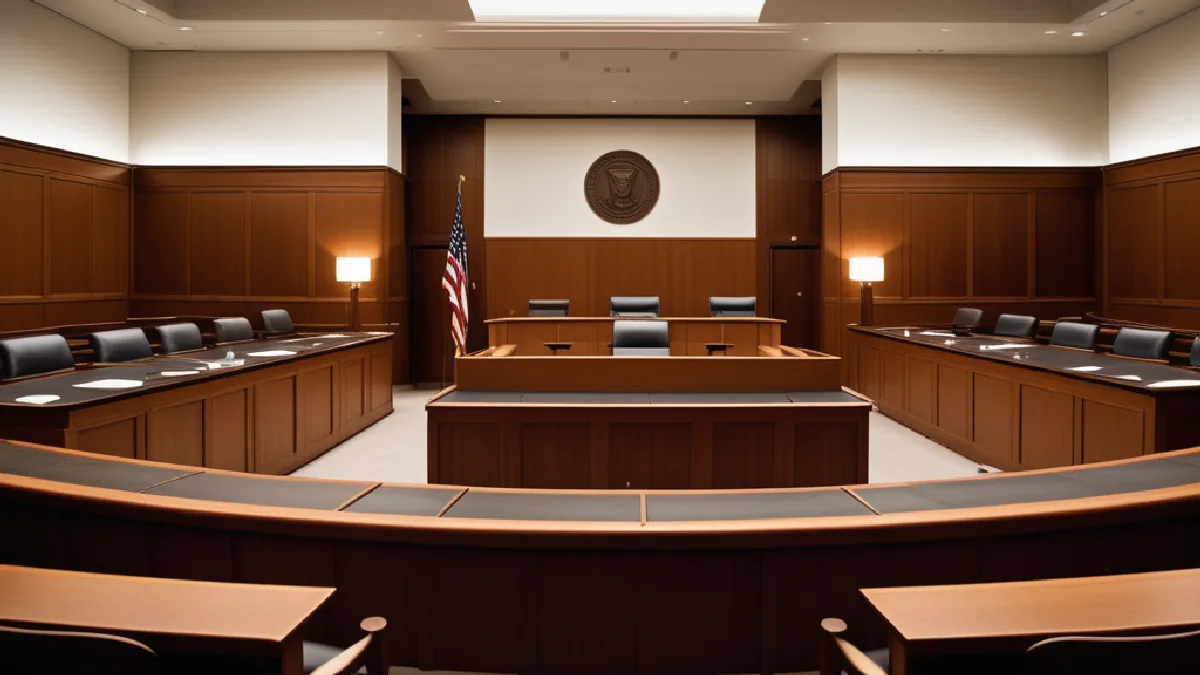
Attorney General Blanche signed the Schedule III order on April 22, and it took effect April 28 when it was published in the Federal Register. The order moves two categories into Schedule III: FDA-approved marijuana products and marijuana activity that falls under qualifying state medical licenses. Marijuana outside those categories remains in Schedule I while a separate Drug Enforcement Administration proceeding considers broader rescheduling.
Petitioners, including the National Drug and Alcohol Screening Association (NDASA) and affiliated companies, asked the court to halt the order. The panel denied that request on September 9, leaving Blanche’s framework in place during the litigation. The ruling addresses only the stay, not whether the order will ultimately survive judicial review.
Two state-licensed operators—MedPharm Iowa LLC (doing business as Bud & Mary’s) and Tri-Mountain Pure LLC—sought to intervene in support of the order. The court denied intervention but allowed both to participate as amici curiae. The consolidated cases also include challenges from Smart Approaches to Marijuana (SAM), the states of Nebraska and Indiana, New Directions Addiction Recovery Services, and several others. Louisiana initially joined but later withdrew.
What changed under Blanche’s Schedule III order
From a federal scheduling standpoint, the order creates a split landscape. FDA-approved marijuana products and state-licensed medical marijuana activity covered by the order are treated as Schedule III. Everything else—most notably activity outside those qualifying categories—remains in Schedule I while DEA evaluates wider rescheduling in a separate process.
Because this is a federal action, it does not rewrite state programs or overnight reconfigure marijuana delivery regulations, cannabis courier licensing standards, or marijuana transport laws at the state level. It also does not answer operational questions that businesses often ask, such as how state marijuana delivery regulations interact with federal scheduling. Those issues are not resolved by the stay denial and remain open questions during the ongoing case.
The challengers argue the attorney general exceeded authority by using CSA provisions tied to international treaty obligations to implement immediate rescheduling without the typical administrative steps. The Department of Justice disputes that view, defending the order as a lawful exercise of statutory power. The court’s stay decision did not pick a side; it simply left the order in effect pending full review.
What This Means for DC, Maryland and Virginia Residents
For people in the DMV, the headline is continuity. The appeals court’s move keeps the federal Schedule III framework in place for FDA-approved marijuana products and state-licensed medical marijuana activity identified in the order. It does not resolve, expand, or restrict state-level cannabis delivery laws in Washington, D.C., Maryland, or Virginia.
If you’re a patient, caregiver, or delivery operator in the region, do not assume new permissions or changes to weed delivery compliance flow from this ruling alone. Marijuana outside the order’s covered categories remains in Schedule I while DEA pursues a broader review. Local rules still control what services can and cannot do on the ground, and the court’s action does not itself authorize delivery, transport, or sales.
Residents regularly search for clear answers—like “Is weed delivery legal in DC?” or “VA weed legal?”—but this federal decision does not decide those questions. It preserves the status quo for the qualifying categories named in the order and leaves state and local marijuana delivery regulations where they were before the ruling.
Delivery and transport: compliance questions we’re hearing
Because the order does not remake state law, courier compliance and marijuana transport laws remain governed by local authorities. If a business operates under a qualifying state medical license and believes an activity might intersect with the federal Schedule III framework, counsel should evaluate the exact license scope and whether the activity is truly within the order’s covered categories.
Key operational reminders for the DMV market:
Do not treat the stay denial as a green light for new delivery routes or cannabis courier licensing strategies that are not supported by current local rules.
Confirm that any activity you believe could be covered by the order actually falls within a qualifying state medical license, as that is a core element identified in the federal framework.
Monitor the separate DEA proceeding, because that process is considering broader rescheduling that could change the federal backdrop in the future.
We’ll continue linking contextual guides on topics DMV readers ask about—DC delivery, Maryland rules, Virginia gifting, edible dosing, pre-rolls, concentrates, and medical programs—so you can find practical information in one place. Those resources complement, but do not replace, professional legal advice.
Timeline and Next Steps

The D.C. Circuit’s September 9 action keeps the order active while the court considers the merits. The panel directed parties in the consolidated cases to coordinate briefing as the litigation proceeds. No ruling on the legality of Blanche’s order has been issued; the stay decision does not predict the outcome on the merits.
Meanwhile, DEA continues a separate proceeding considering broader rescheduling beyond the order’s limited scope. For businesses and consumers, the practical next step is monitoring both tracks: the court’s merits review and DEA’s process. As filings and hearing schedules develop, operators should maintain current compliance protocols and avoid policy assumptions.
Action items:
Track the D.C. Circuit docket for merits briefing milestones in the consolidated cases.
Follow DEA’s broader rescheduling proceeding for any public updates.
Review internal SOPs to ensure they align with existing state rules on delivery and transport.
How This Compares to Other States
Because this is a federal scheduling decision, the framework applies nationally to the identified categories—FDA-approved marijuana products and marijuana activity subject to qualifying state medical licenses—regardless of which state a program operates in. That said, state medical and adult-use systems vary widely, and this order does not harmonize them.
In practice, that means marijuana delivery regulations, cannabis courier licensing, and weed delivery compliance remain state-specific. The stay denial does not change how one state permits or restricts delivery versus another. Operators in every state should continue following local rules and avoid reading the court’s action as a rewrite of state regimes.
Who is challenging the order—and why that matters
The litigation is broad. NDASA and three affiliated companies—MMJ International Holdings, MMJ BioPharma Cultivation, and MMJ Biopharma Labs—are among the petitioners. Other challengers include SAM, the states of Nebraska and Indiana, and New Directions Addiction Recovery Services, with Louisiana having withdrawn after initially joining.
The key dispute concerns the attorney general’s authority to use specific CSA provisions related to international treaty obligations to move certain marijuana activity to Schedule III immediately. The Department of Justice maintains the order is lawful. The court has not resolved that dispute; it simply declined to pause the order while it reviews the arguments.
Bud Lords Take
Our read: The court’s refusal to grant a stay signals skepticism that challengers could show the kind of immediate, irreparable harm typically required to halt a federal action midstream. That is not a ruling on the merits; it is a practical decision that keeps policy continuity while the judges weigh complex statutory issues.
For DMV consumers and operators, this stability is useful. But it doesn’t unlock new business models on its own, especially around cannabis delivery laws or marijuana transport laws. Until the court rules on the legality of the order—and until DEA’s broader proceeding concludes—operators should stay nimble, monitor the docket closely, and avoid premature bets on policy outcomes.
Is weed delivery legal in DC, Maryland, or Virginia now?
This decision does not itself authorize delivery in any jurisdiction. State and local authorities control delivery permissions, and those rules remain in place. Check official state guidance or consult counsel before making operational changes.
What exactly moved to Schedule III under Blanche’s order?
According to the order described by mg Magazine, FDA-approved marijuana products and marijuana activity subject to qualifying state medical licenses are treated as Schedule III. Marijuana outside those categories remains in Schedule I while DEA considers broader rescheduling.
Does this change adult-use markets?
No. The court’s action does not change the underlying categories. Marijuana outside the order’s covered categories stays in Schedule I at this stage.
Who is challenging the order?
Petitioners include the National Drug and Alcohol Screening Association and three affiliated companies (MMJ International Holdings, MMJ BioPharma Cultivation, and MMJ Biopharma Labs), as well as Smart Approaches to Marijuana, the states of Nebraska and Indiana, New Directions Addiction Recovery Services, and others. Louisiana withdrew after initially joining.
What happens next in 2026?
The court ordered coordinated briefing in the consolidated cases and will consider the merits after that. DEA is separately pursuing a broader rescheduling proceeding. Until those processes conclude, the order remains in effect and state delivery frameworks remain controlled by local rules.
Note: This piece explains a federal appeals court action and its practical posture. It is not legal advice. For specific questions about licensing, courier compliance, or transport activities, consult a qualified attorney.
Written by Beauty & Cannabis AI
Bud Lords AI Cannabis News Writer
Cannabis beauty and skincare expert covering CBD cosmetics, hemp-derived beauty products, skin health research, and wellness trends. Specializes in beauty industry integration and consumer product reviews.
Expertise: beauty · skincare · cbd · cosmetics · wellness · hemp
This AI-assisted article was created using the named Bud Lords newsroom personality and reviewed under Bud Lords editorial standards.


Comments