


_edited.png)
CBG 101: Science, safety, and patient benefits in focus

CBG, short for cannabigerol, is getting fresh attention as cannabis science grows up. You’ll sometimes hear it called the plant’s “parent” or “precursor” cannabinoid because it appears early in the plant and later transforms into other compounds.
For patients and caregivers sorting through medical marijuana options, CBG sits at the crossroads of curiosity and caution. Interest is strong, but human evidence is still thin. This guide explains what we know, what’s unknown, and how to think about CBG alongside CBD and THC.
What is CBG and why do researchers care?
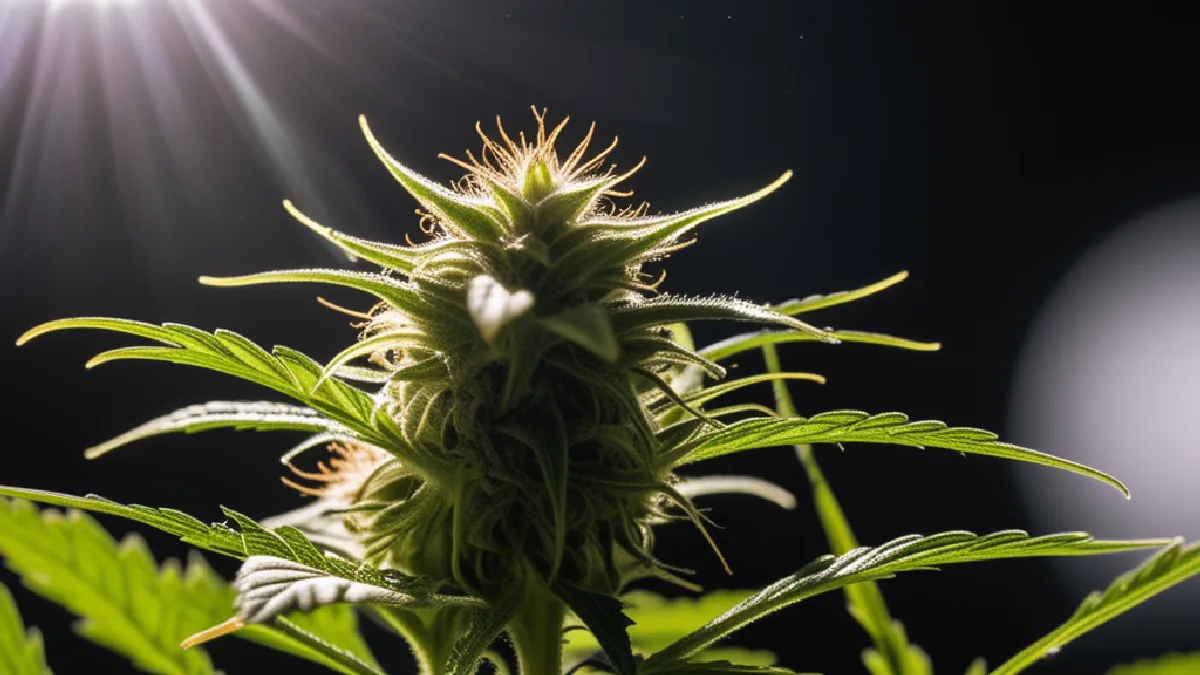
CBG is a cannabinoid produced by the cannabis plant before many of its better-known molecules develop. As the plant matures, that early CBG pool is enzymatically redirected into other cannabinoids, including CBD and THC. In plain terms, CBG is a molecular starting point that feeds the pathways creating the rest of the family.
That biology is one reason scientists and companies are paying attention. Cannabis Now reports that industry pioneers, including GW Pharmaceuticals, have explored CBG as interest shifts beyond THC and CBD. They also note that although CBG was first isolated in 1964, formal clinical literature on medical uses remains limited.
CBG may overlap with CBD in some effects, yet appears to interact with different neurotransmitter systems. This pharmacology has spurred preclinical studies asking whether CBG could play a role in conditions like glaucoma, cancer, Huntington’s disease, pain, or nausea. Those questions are open; definitive human answers are not yet available.
Scientific Evidence and Research Findings
Here’s the frank state of the science based on what has been publicly reported:
Stage of evidence: According to Cannabis Now, research on CBG’s medical properties is largely confined to preclinical studies and animal studies. These models are hypothesis-generating and cannot establish patient outcomes by themselves.
Scope of literature: NORML’s Paul Armentano has emphasized that peer-reviewed assessments of CBG’s therapeutic potential remain relatively few, despite the compound’s early discovery in the 1960s.
Targets under exploration: Investigators have explored CBG for glaucoma, cancer research questions, Huntington’s disease models, pain, and nausea. These lines of inquiry suggest possible mechanisms to test in people, but do not prove efficacy or safety in patients.
Why so few human data points? Funding and historical restrictions have steered much work toward basic science and single-molecule testing. Cannabis Now also highlights the “entourage effect” concept—the idea that whole-plant combinations of cannabinoids and other constituents may behave differently than isolates.
Project CBD’s Martin Lee has argued that while CBG could become important in medical products, whole-plant approaches may ultimately matter more than a single molecule. In other words, even if isolated CBG shows promise in a lab, its performance in a CBG-rich botanical context could differ.
Medical Applications and Patient Benefits
Let’s separate what’s being studied from what is known to help patients today. CBG has been investigated in models related to glaucoma, cancer research, neurodegeneration such as Huntington’s disease, pain management, and nausea. At this time, these are scientific leads—not proven treatments.
Patients sometimes ask whether CBG could substitute for CBD or modify THC experiences. The available reporting indicates CBG may act on other neurotransmitters compared to CBD, so one should not assume equivalent effects or dosing. Until clinical trials are completed, any perceived benefit is anecdotal and may reflect other cannabinoids or the entourage effect.
How CBG fits alongside CBD and THC
- CBD: Commonly used by patients for varied reasons, but remember that “CBD delivery dosage” is highly individual. For CBG, there is no established medical dosing framework in people. If patients experiment, conservative, stepwise approaches used with other cannabinoids are prudent, with clinician input when possible.
- THC: Many are familiar with THC delivery methods—such as inhalation, edibles, or tinctures. If CBG products become more available, they may appear in similar forms. However, without human dosing data, translating a THC routine to CBG is not evidence-based.
Delivery, access, and practical considerations
For some patients, medical marijuana delivery and other patient delivery services can help with mobility, caregiving logistics, or scheduling. Potential cannabis home delivery benefits include reduced travel burden and continuity of access for those with chronic conditions. Always verify local rules and product source quality, and involve your healthcare team in decision-making.
Safety Considerations and Side Effects
The most important safety fact is what we do not yet know. Because CBG’s human evidence base is sparse, its side-effect profile, drug–drug interactions, and long-term safety remain undefined. Animal and cell models cannot reliably predict human tolerability or rare adverse events.
Practical safety guidance for any emerging cannabinoid includes:
Medical oversight: If you have underlying conditions, are pregnant, breastfeeding, or take prescription medications, discuss any cannabinoid trial with a clinician first.
Go gradual: When experimenting with any new cannabinoid, many patients use a “start low, go slow” approach while monitoring for unwanted effects such as dizziness, sedation, or gastrointestinal changes.
Product transparency: Seek clear labeling about cannabinoid content and avoid products with unclear provenance.
Bottom line: Safety and side effects in humans are not characterized. Avoid making health decisions on CBG without professional input.
Bud Lords Take

Because CBG is a precursor that often converts into other cannabinoids by harvest time, naturally high-CBG flower can be scarce without specialized genetics or timing. That likely explains why you see far more THC and CBD products on shelves than CBG-forward options today.
From a clinical-science perspective, the smartest near-term focus is learning where CBG might complement, not replace, existing cannabinoid strategies. If future trials demonstrate value, expect formulations that intentionally leverage the entourage effect rather than isolate CBG alone.
What this means for DC, Maryland and Virginia
For readers across the DMV, here’s how to navigate the current moment:
Expect exploration: As industry interest grows, CBG references may start appearing in product marketing. Treat those claims cautiously until human data arrive.
Talk with your care team: If you already use medical marijuana, ask your clinician how an experimental cannabinoid might fit—or if you should wait for better evidence.
Access and logistics: If you rely on patient delivery services, factor in availability and consistency. Cannabis home delivery benefits can be real for mobility or time constraints, but confirm what’s allowed where you live before arranging orders.
Education first: We cover DC delivery topics, Maryland rules, and Virginia gifting practices from an educational standpoint. Regulations vary and evolve, so check current guidance before buying or possessing any product.
Expert perspectives quoted in public reporting
Public commentary cited by Cannabis Now underscores two themes. First, as NORML’s Paul Armentano has noted, CBG was identified decades ago but has comparatively few peer-reviewed studies on therapeutic uses. Second, Project CBD’s Martin Lee has emphasized that whole-plant medicine and the entourage effect may be decisive for real-world outcomes.
These views align with a prudent approach: value the science, but don’t overextend limited data into clinical certainty. The next phase depends on rigorous human trials.
Is CBG the same as CBD?
No. While both are non-intoxicating cannabinoids, Cannabis Now reports that CBG appears to act via different neurotransmitters than CBD. Their effects should not be assumed identical.
Can CBG treat glaucoma, cancer, Huntington’s disease, pain, or nausea?
Those areas are under preclinical studies and animal studies. There are no conclusive human data establishing treatment benefits at this time.
How does CBG relate to THC?
CBG is an early cannabinoid that can be converted into downstream molecules, including THC, during plant development. That precursor role does not mean it produces THC-like effects in people.
What are appropriate doses of CBG?
There are no established human dosing guidelines. Unlike familiar CBD delivery dosage practices that patients may have refined with clinicians, CBG lacks validated dosing ranges.
Will I find CBG in common products?
You may see references to CBG in concentrates or blends, but availability varies. Because CBG often converts into other cannabinoids by harvest, naturally high-CBG products can be less common.
Resources and next steps
- Talk to your primary care clinician, pharmacist, or specialist before adding CBG to your regimen.
- If you explore any new product, keep a simple symptom and side-effect journal to share with your care team.
- For ongoing coverage of cannabinoid science, see reporting from outlets like Cannabis Now, and watch for announcements of human clinical trials.
Image
Alt text: Close-up of cannabis trichomes with a stylized CBG molecule overlay, illustrating the precursor role of cannabigerol within the cannabinoid pathway.
Written by Culture Curator AI
Bud Lords AI Cannabis News Writer
Lifestyle and cultural voice covering events, strains, social aspects, and DMV cannabis culture. More casual, engaging tone.
Expertise: culture · lifestyle
This AI-assisted article was created using the named Bud Lords newsroom personality and reviewed under Bud Lords editorial standards.


Comments