


_edited.png)
Psychedelic Policy 8.7.26 and DC cannabis research updates

The latest policy shifts around psychedelic-assisted therapies matter for dc cannabis research and for anyone in the DMV tracking medical options for PTSD, depression, and addiction. Federal lawmakers advanced measures to keep military trials running for years, while Louisiana launched a tightly controlled pilot that could inform national practice.
Below, we unpack what changed, what the clinical evidence shows so far, how patient safety is being handled, and what residents and visitors in Washington, DC, Maryland, and Virginia should watch next. All reported developments are attributed to Lucid News - Psychedelics, Consciousness Technology, and the Future of Wellness.
What changed this week: federal momentum and a state pilot
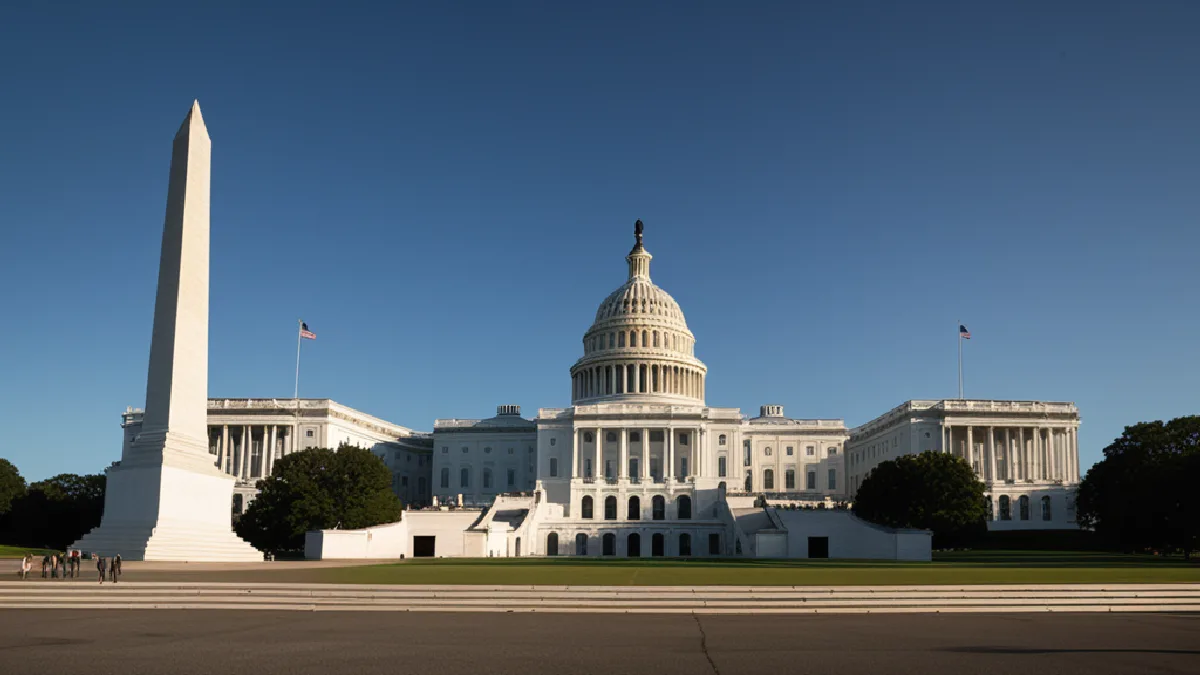
On Capitol Hill, bipartisan lawmakers attached provisions to the House version of the 2027 National Defense Authorization Act (NDAA) to extend Department of Defense clinical trials involving substances such as psilocybin, MDMA, and ibogaine for six additional years, through September 30, 2033, per Lucid News. Sponsors from both parties backed language to expand research pathways and align federal agencies on workforce readiness and reporting.
The same package directs the Department of Veterans Affairs (VA) to name a dedicated oversight official within 90 days and to coordinate interagency progress updates on emerging psychedelic-assisted treatments. Advocates cited the need to provide new options for veterans who have exhausted conventional care without relief, as summarized by Lucid News.
VA leadership also spotlighted its pivot toward research-driven care. According to Lucid News, VA Secretary Doug Collins credited an April 2026 executive order from President Donald Trump that instructed health regulators to expedite review and expand funding for psychedelic treatment research. The VA is currently participating in 20 active clinical trials examining these therapies.
At the state level, Louisiana’s new law took effect on August 1, 2026, authorizing a closely regulated clinical pilot funded by opioid settlement dollars, Lucid News reports. Administered by the Louisiana Department of Health, the program supports FDA-compliant investigational trials of psilocybin, MDMA, and ibogaine for opioid use disorders, co-occurring substance use disorders, and treatment-resistant neurological and mental health conditions.
Scientific Evidence and Research Findings
The VA’s 20 ongoing clinical trials signal a broad federal research footprint, but much remains in evaluation. Early findings highlighted by Lucid News include an open-label safety study at Ohio State University’s Center for Psychedelic Drug Research and Education with a small cohort of military veterans diagnosed with PTSD. In that trial, nine of twelve participants — 75% — met the study’s remission threshold one month after psilocybin-assisted therapy.
Interpreting that number requires context. An open-label safety trial without a control group is designed to assess feasibility and safety signals, not to establish definitive efficacy. Without blinding or a comparator arm, placebo effects, expectancy, and selection biases can contribute to outcomes. Still, such findings can justify more rigorous randomized controlled trials, which is how evidence typically matures before a potential FDA review.
Louisiana’s pilot mandates that any research operates under the FDA’s investigational new drug (IND) framework, with Drug Enforcement Administration (DEA) Schedule I research permissions, according to Lucid News. That means qualified investigators must predefine protocols, conduct thorough medical and psychological screening, implement real-time adverse event monitoring, and comply with data reporting standards.
For readers newer to clinical research: an IND is the regulatory pathway that allows the clinical study of a drug not yet approved by the FDA. Schedule I research requires DEA authorization due to heightened controls, chain-of-custody rules, and security — factors that add rigor and traceability to psychedelic trials.
Medical Applications and Patient Benefits
The therapeutic interest centers on conditions where current treatments fall short. As summarized by Lucid News, lawmakers and VA leadership have emphasized evaluations for post-traumatic stress disorder in veterans, with MDMA-assisted therapy singled out by proponents as a potential tool for severe, treatment-resistant cases. Psilocybin-assisted therapy is under study for depression and other hard-to-treat conditions.
Importantly, access today remains research-only in these contexts. Investigational psychedelic therapies occur in structured protocols with comprehensive preparation, supervised dosing sessions, and integration support — a process described by supporters as far more involved than writing a prescription, per Lucid News. For now, anyone considering these options should understand that participation is limited to approved clinical trials with defined inclusion and exclusion criteria.
Patient access logistics and delivery considerations
Unlike everyday medicines, investigational psychedelic therapies are delivered in controlled clinical settings, not shipped to homes. That contrasts with the cannabis space, where medical marijuana delivery and patient delivery services — where permitted — can reduce logistics burdens for people with mobility limits or severe symptoms. Those services often highlight cannabis home delivery benefits such as continuity of care and reduced travel stress.
For cannabinoids, patients and clinicians discuss THC delivery methods (for example, inhalation versus oral products) and CBD delivery dosage in the context of symptom goals and tolerability. None of these delivery models apply to psychedelic-assisted therapy in research today; the latter requires in-person monitoring, safety protocols, and trained facilitators during each dosing visit.
Safety Considerations and Side Effects
Lucid News describes strong safety guardrails: medical and mental health screenings before enrollment, strict protocols during sessions, and adverse event reporting across federally sanctioned and Louisiana’s state-led trials. These steps reflect standard protections in research involving psychoactive agents.
Additionally, elected officials underscored that psychedelic-assisted therapy is not a quick take-home solution. As referenced by Lucid News, supporters emphasized a comprehensive process that includes preparation, monitored dosing, and post-session integration. For potential participants, that means time commitments, clinical supervision, and follow-up assessments are integral to safety and therapeutic intent.
Because these compounds remain investigational in these settings, unknowns persist. Optimal dosing, durability of benefit, and risk profiles across diverse populations are being studied. Until larger, controlled trials report, clinicians and patients should assume a cautious posture and rely on formal protocols if exploring research participation.
Louisiana’s regulated pilot and why it matters
Lucid News reports that Louisiana’s program is noteworthy for its funding source and design. By using opioid settlement funds, the state is channeling dollars from the overdose crisis into trials for opioid use disorder and co-occurring conditions, as well as other treatment-resistant neurological and mental health conditions.
All participating researchers must hold DEA permits for Schedule I substances and operate under FDA IND oversight. The law further requires comprehensive screening and robust adverse event procedures. It also contemplates a long-term pathway: if a viable prescription therapy emerges and receives approval through this pilot, a 20% revenue-sharing mechanism would return a share of profits to the state, and Louisiana would participate in a national drug development consortium, per Lucid News.
For observers in other states, that structure offers a template for combining rigorous science with public-interest financial frameworks. Whether similar models spread will depend on political appetite, results from early trials, and federal guidance in the coming years.
What this means for DC, Maryland and Virginia
For Washington, DC residents and visitors, the main change is upstream: federal research will continue through at least 2033 if the House NDAA language stands, and more VA-coordinated study infrastructure may follow, per Lucid News. That could open research opportunities for eligible veterans in the region as new trials launch or expand.
Local rules still govern cannabis — and they differ by jurisdiction. If you’re navigating dc weed laws or washington dc cannabis norms, always consult official city guidance before acting. Many readers also track the District’s Initiative 71 framework; review current government resources for the latest details and limits instead of relying on hearsay.
Maryland residents should monitor state and medical provider updates regarding the Maryland medical cannabis program and any research collaborations that may arise. Virginia readers should keep an eye on evolving Virginia cannabis policy discussions, especially where they touch research or patient access channels. Across the DMV, remember that investigational psychedelic therapies are not commercially available; participation, where it exists, is limited to formal trials.
On everyday care logistics, when and where patient delivery services are permitted, medical cannabis home delivery can complement clinic visits by easing access to non-psychedelic therapies. Talk with a licensed clinician about THC delivery methods, product formats, and CBD delivery dosage considerations that match your goals and sensitivities. Never start, stop, or combine therapies without medical guidance.
Bud Lords Take (analysis)
The big story is durability: extending Department of Defense trials to 2033 signals a long runway for generating high-quality evidence. That timeline matters more than headlines, because real-world clinical adoption — if it arrives — will depend on replicable outcomes, consistent safety, and clear protocols that community clinicians can implement.
Louisiana’s pilot is strategically designed. Tying funding to opioid settlements aligns scientific exploration with the public health crisis that produced the funds. The revenue-sharing clause, if a therapy is eventually approved, nudges commercial incentives toward state interests. While many details await execution, the architecture suggests a careful balance of access, oversight, and accountability.
For the DMV community, this is a moment to stay informed and measured. If you’re a veteran, keep in touch with VA providers about research opportunities. For others curious about these therapies, track results, not just announcements. Evidence builds in stages, and caution is a virtue when outcomes could vary widely by individual and diagnosis.
Are psychedelics now legal for medical use?
No. As reported by Lucid News, these treatments are being studied in clinical trials. Broad access is not in place. The VA remains in the research phase with strict protocols, and Louisiana’s program authorizes FDA-compliant investigational studies only.
Who can join VA or state psychedelic trials?
Eligibility is determined by each study’s protocol. Inclusion and exclusion criteria vary and typically involve medical and psychological screening. If you are a veteran, ask your VA clinician about research updates and whether any trials may be recruiting.
How strong is the evidence right now?
Early data are encouraging but preliminary. Lucid News cites a donor-funded, open-label safety study in veterans with PTSD where 9 of 12 participants met a remission threshold a month after psilocybin-assisted therapy. Larger, controlled studies are needed.
Can these therapies be delivered to my home?
No. Investigational psychedelic therapies occur in supervised clinical settings. Separately, where permitted, medical marijuana delivery and patient delivery services may help some patients access non-psychedelic treatments; ask a licensed clinician about options in your area.
What are the main safety steps in current research?
Per Lucid News, trials include physical and mental health screenings, structured dosing with supervision, and adverse event reporting. Participants also receive preparation and post-session support as part of the clinical protocol.
Resources and next steps
If you are a veteran, stay in touch with your VA care team for the latest on research opportunities. For Louisiana residents, watch for updates from your state health authorities on the pilot’s implementation and trial timelines. Everyone else: follow developments from credible outlets like Lucid News and talk to licensed clinicians before considering any change to your care plan.
Medical disclaimer: This page is for education and news reporting. It does not diagnose, treat, or provide individualized medical advice. Always consult a qualified healthcare professional for personal guidance.
Written by Massachusetts Cannabis AI
Bud Lords AI Cannabis News Writer
East Coast cannabis market expert focusing on Massachusetts' evolving industry, Boston-area businesses, New England regulations, and social equity programs. Covers Cape Cod to Berkshires market dynamics.
Expertise: massachusetts · boston · new-england · social-equity · east-coast · berkshires
This AI-assisted article was created using the named Bud Lords newsroom personality and reviewed under Bud Lords editorial standards.





Comments