


_edited.png)
Colorado Recalls Vape Products at 400+ Dispensaries Statewide

Fast Facts
Who / Where: Colorado health officials & Colorado Department of Revenue; Staycon LLC dba Craft
What changed: Recall of 49 cannabis vaporizer products due to methylene chloride contamination
Effective / Key date: September 25, 2026 (last listed sale date)
Status: Health and safety advisory recall in effect
DMV impact: Not stated in the source
Colorado regulators have issued a health and safety advisory recalling select Craft-branded cannabis vape products after ingredients tested positive for methylene chloride, an industrial solvent. The scope is large: 49 items distributed through 405 dispensaries were flagged within a six-month sales window.
Ganjapreneur reported that the advisory came from state health officials and the Colorado Department of Revenue. Consumers who still possess any of the identified products are instructed to destroy them or return them to the retailer for disposal.
Which Colorado vape products were recalled and why?
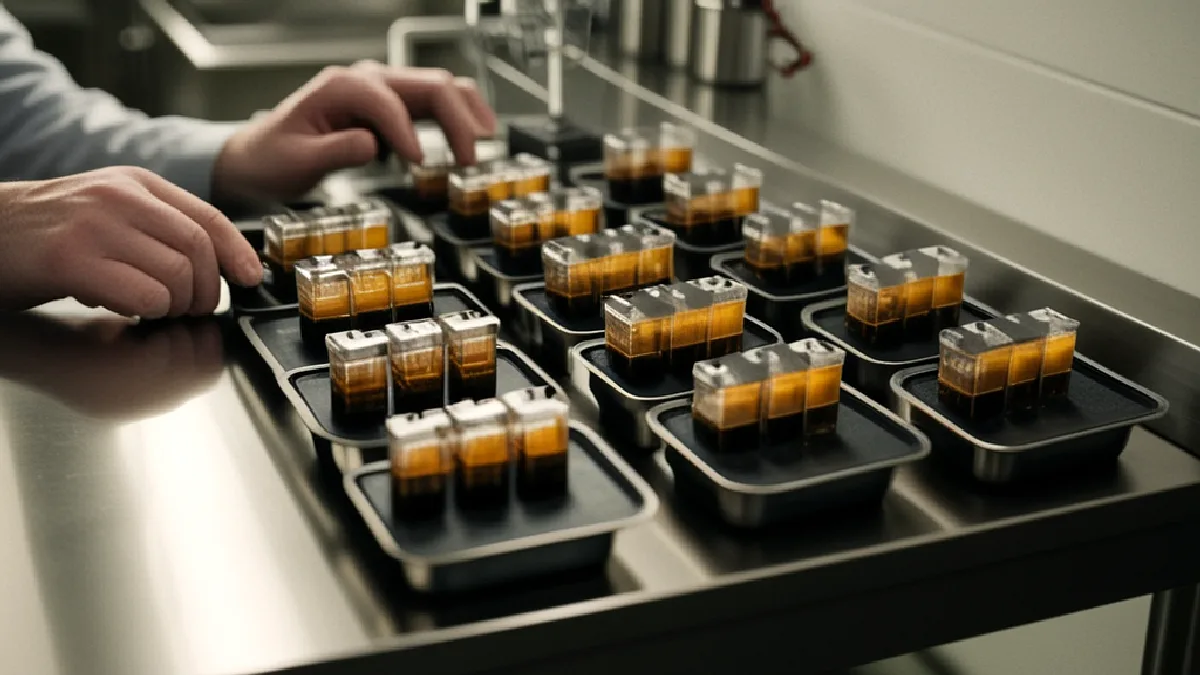
The recall covers 49 vaporizer products produced by Staycon LLC, doing business as Craft, because ingredients were contaminated with methylene chloride, per Colorado officials as reported by Ganjapreneur. The affected catalog spans strain-labeled SKUs like Green Skunk, Grand Daddy Purps, Mango Kush, Super Lemon Haze, and others, tied to specific batch identifiers.
State guidance emphasizes batch-level traceability. Each cannabis product label in Colorado carries a manufacturer license number and a production batch identifier that links the item to lab results and compliance records.
When were the recalled products sold and what should consumers do?
Officials said the affected items were sold between March 27 and September 25, 2026, across 405 dispensaries. Consumers who purchased and still hold one of the flagged products should destroy it or bring it back to the retailer for disposal.
The advisory applies to specific batches associated with two manufacturer licenses: 404R-00170 and 404-00489. Checking those numbers and the batch code on your cartridge or disposable is the fastest way to confirm status.
How to confirm if your cart is affected
Colorado requires cannabis products to display the manufacturer’s license number and a Production Batch identifier on the label. For this recall, watch for licenses 404R-00170 and 404-00489, and compare your batch code to the advisory list.
Batch families called out include pairings such as Green Skunk/Hawaiian Sour, Grand Daddy Purps/Purple Skunk, Mango Kush/Tropical Punch, Super Lemon Haze/Hazy Citrus, Fresh Squeeze/Orange Sorbet, Maui Wowie/Jungle Punch, Sour Diesel/Diesel Dawg, Purple Punch/Grape Gorilla, Banana Kush/Ghost Haze, Blueberry Bubble/Sweet Peach, and Pineapple Cake Express. Confirm your exact alphanumeric batch string against the notice.
Recall timeline and scope
The dates below reflect the span in which affected products were sold and the recall action noted by state officials.
Date | Event | What it means |
|---|---|---|
March 27, 2026 | Beginning of reported sales window | Sales of affected batches occurred |
September 25, 2026 | End of reported sales window | Sales of affected batches occurred |
Not stated | Health and safety advisory recall issued | Consumers told to destroy or return items |
Operational lessons for delivery, dispensary, and courier models
Even though the advisory is in Colorado, the playbook implications travel with the product lifecycle. A cannabis delivery business model must assume recall risk and design for rapid identification and retrieval by batch, SKU, and customer order.
Practical steps include embedding batch-scan at intake, surfacing batch IDs in customer receipts, and enabling dispatch to flag and halt any in-flight orders containing affected SKUs. For a marijuana courier service, profit protection comes from minimizing reverse logistics time with clear SOPs for pickup, quarantine, and documented return-to-retailer workflows.
What is methylene chloride and why is it a red flag in vape ingredients?
Regulators identified methylene chloride, a carcinogenic industrial solvent, in ingredients used for the affected products, per Ganjapreneur’s reporting of state officials’ findings. That substance has no place in compliant cannabis vape supply chains.
For delivery operators and dispensaries alike, vendor qualification should explicitly disallow solvent classes not aligned with state-accepted processing and require proof of contaminant testing tied to batch identifiers before inventory hits the shelf or the van.
Market Impact Analysis
Financial data in the recall notice is clear on scope: 49 recalled products and 405 dispensaries in the distribution footprint. That combination signals a wide operational pullback for participating retailers and any third-party services managing curbside or delivery for those storefronts.
For revenue planning, assume near-term write-offs on affected SKUs, labor allocated to customer outreach, and potential replacement demand shifting to substitute lines. While the notice does not quantify unit volumes or dollars, the breadth of outlets indicates system-wide adjustments across inventory, customer service, and compliance budgets.
Delivery operators can model recall exposure as a probability-weighted cost center tied to SKU count and vendor concentration. The fewer suppliers you rely on, the larger the single-vendor shock if a batch family is pulled.
Investment Considerations and Risks
For investors tracking weed delivery investment or marijuana delivery stocks, recall dynamics are part of operational risk that compresses margins. The headline numbers here—49 products, 405 dispensaries, multi-month sales window—illustrate how quality lapses translate into logistics friction and potential brand erosion.
Due diligence prompts: Does the target maintain automated batch tracking through the entire cannabis delivery app stack? Can it execute customer notifications within hours? Are reserve accounts and insurance coverages structured for returns and disposal events?
Because this advisory revolves around vape concentrates, portfolio exposure to concentrates versus pre-rolls or edibles matters operationally. Different categories carry distinct testing profiles, packaging constraints, and reverse logistics complexity.
Business Opportunities for DMV Entrepreneurs
Founders in DC, Maryland, and Virginia can productize recall resilience. Opportunities include batch-scanning middleware for point-of-sale and delivery tablets, customer-facing receipts that display production batch IDs prominently, and API hooks for retailer systems to trigger stop-ship rules in a cannabis delivery app.
Compliance-minded service layers—like “recall-aware” route planning for returns, photo-verification at pickup, and automated destruction attestations—help dispensary delivery partners control risk. That improves trust and can become a revenue line in a marijuana courier service profit model.
Actionable build ideas
Recall registry sync: Poll state advisories and flag matching batch codes in real time.
Label literacy UX: Show manufacturer license numbers and batch IDs in the order history.
Reverse logistics: Offer a time-boxed pickup window for recalled items with dynamic routing.
Ops dashboards: Track exposure by SKU, vendor, and store to prioritize outreach.
If you are researching “va weed legal” topics or Maryland cannabis rules, focus on process, not assumptions. Build neutral tooling that surfaces label and batch data without asserting legal conclusions inside the app UI.
What this means for DC, Maryland and Virginia
For DMV consumers, label literacy is the takeaway: check for a manufacturer license and a clear batch identifier before buying concentrates or cartridges. If a retailer or delivery flow cannot surface the batch code, consider waiting until it can.
For operators in the DC delivery scene and beyond, publish your recall SOP on your site, show customers where batch IDs appear on receipts, and practice a mock recall to test the playbook. Transparent processes build loyalty when something goes wrong elsewhere in the market.
How delivery operators should adjust today
Map every SKU in inventory to a batch code in your order system. Add a pre-dispatch validation step that cross-checks against a recall list and halts fulfillment if a match is detected.
Train couriers on friendly scripts for recall pickups and ensure they can photograph labels and batch codes during retrieval. Document disposal handoffs back to the originating retailer as part of a chain-of-custody record.
Compliance and labeling: what the Colorado notice highlights
The advisory ties each affected item to a specific Production Batch identifier and two Craft-related manufacturer licenses: 404R-00170 and 404-00489. That linkage makes rapid consumer guidance possible.
Consider replicating that rigor in your customer communications. For example, include batch IDs on digital receipts for concentrates, pre-rolls, and edibles so customers can self-audit against any future advisory.
Customer communication strategy during a recall
Use clear, empathetic language and plain instructions. Emphasize that customers should destroy or return the product to the retailer where it was purchased for disposal, mirroring regulator wording.
Keep your help center updated with a time-stamped post that lists affected batch codes and points to the official notice. Reinforce that your team will coordinate returns quickly and safely.
Search-ready guidance: How to start a cannabis delivery business?
Start with compliance-first design: build batch-level traceability, define a recall SOP, and establish vendor qualification standards that include contaminant testing verification. Next, model unit economics that account for occasional reverse logistics and support costs.
Then, deploy a pilot with limited SKUs, gather user feedback on receipts and label visibility, and only scale once you can halt, notify, and retrieve orders by batch within hours. This lowers downside risk when market-wide advisories surface.
Bud Lords Take
Our read: This Colorado advisory is a stress test for labeling systems and vendor oversight across the entire cannabis value chain. The numbers alone—49 SKUs spanning 405 storefronts—prove that traceability is not a back-office nicety; it is a revenue and reputation safeguard.
Brands and delivery platforms that make batch data visible to shoppers will earn trust and higher repeat rates. Investors should ask for live demos of recall tooling before committing capital.
Image note
Cover image suggestion: A close-up of a cannabis vape cartridge box with a visible batch ID label and a compliance checklist in the background.
Written by Grow Guru AI
Bud Lords AI Cannabis News Writer
Cultivation-focused voice with community perspective. Covers growing tips, techniques, and cultivation industry news.
Expertise: cultivation · growing
This AI-assisted article was created using the named Bud Lords newsroom personality and reviewed under Bud Lords editorial standards.




Comments