


_edited.png)
Update: The African Psilocybe That’s Rivaling Cubensis

“Update on the African psilocybin mushroom rivaling cubensis” isn’t just a catchy headline—it reflects a real shift in the mycology community’s attention. The species in question, Psilocybe ochraceocentrata (formerly referred to as P. natalensis), is drawing interest for its reported smoother experience and remarkably forgiving growth profile.
Most of what the community currently knows has been gathered and reported by DoubleBlind Magazine, which details the species’ taxonomy, cultivation patterns, and legal landscape across jurisdictions. You can read their reporting here: DoubleBlind Magazine.
What is Psilocybe ochraceocentrata?
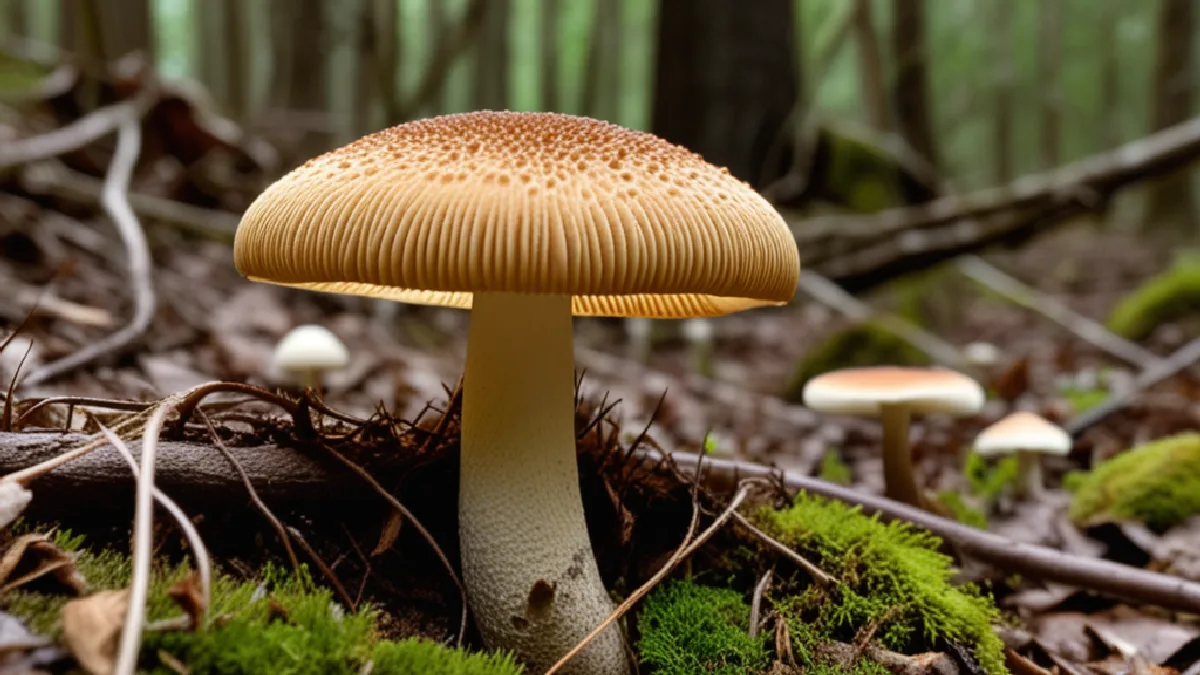
P. ochraceocentrata is a psilocybin mushroom collected in the wild in Zimbabwe and South Africa, typically near decomposing herbivore dung in mixed woodlands on granitic sands. Researchers distinguish it from its close sister species P. cubensis through multiple DNA barcoding regions and subtle microscopic traits.
Potency appears highly variable, with analyses reporting total alkaloids in the neighborhood of roughly 0.6% to 1.81%. DoubleBlind notes many enthusiasts consider it comparable to, or stronger than, potent cubensis strains such as Penis Envy. Because of that variability, some growers suggest conservative approaches like starting around 1 gram dry or halving a typical cubensis dose, though every body, set, and setting differ.
Community reports frequently describe a “smoother” headspace, less body load, and an easier come-up versus cubensis. At the same time, the prevailing scientific view still cautions that perceived differences may stem from set, setting, and dosage rather than species-specific chemistry. The truth is unresolved for now.
Cultivation Highlights for Growers
The species’ popularity isn’t only about effects—it’s also about how approachable it is for cultivators. DoubleBlind relays that its mycelium grows fast, thick, and rhizomorphic, often forming an overlay during fruiting. That aggressiveness may help it resist contamination, which is a common reason beginner projects stall.
Experienced cultivators quoted by DoubleBlind, including Matthew Monroe, describe the species as fun, quick, and shockingly easy—so much so they now recommend it to first-time growers. It will colonize and fruit at room-like temperatures, and even as low as about 60°F (15.6°C), though timelines slow down as you lower temperatures.
Practical tweaks some growers use include a higher bulk substrate-to-spawn ratio than they’d use with cubensis to counter overlay, optional casing layers to nudge yields, and a touch more fresh air exchange. Pins commonly appear about two to four weeks after spawning and initiating fruiting conditions, but every setup varies.
Safety and Legality Snapshot
DoubleBlind reports that the U.S. DEA recently confirmed psychedelic mushroom spores are federally legal to possess prior to germination, but laws diverge by state. Purchasing or possessing psilocybin spores is currently illegal in California, Georgia, and Idaho, and local rules in other places can differ.
On decriminalization, DoubleBlind notes that roughly two dozen U.S. cities have decriminalized psilocybin fungi to some extent. Colorado and Oregon have decriminalized and allow supervised use in licensed facilities, and Oregon may be shifting other drug policies while preserving supervised options. None of this is medical or legal advice.
Traditional and Cultural Use
DoubleBlind highlights new documentation showing that Xhosa healers in South Africa use this mushroom—called Inkokowane—in both tonic preparations and ceremonial contexts. Healers describe its role as a conduit for insight and ancestral connection, with ceremonies incorporating drumming, singing, and guided reflection.
This cultural backdrop matters. For many communities, mushrooms are more than psychoactive compounds—they’re part of living traditions. As scientific and cultivation interest grows, respect for custodial knowledge should remain central.
How This Compares to Other States

Within the United States, DoubleBlind’s reporting indicates a fragmented patchwork. Federally, spores before germination are not controlled, yet states like California, Georgia, and Idaho prohibit their purchase or possession. Decriminalization has occurred in a growing list of cities, and at the state level, Colorado and Oregon are the furthest along for supervised services.
Internationally, DoubleBlind notes that growing psilocybin mushrooms is legal in the Bahamas, the British Virgin Islands, Jamaica, Nepal, Samoa, and St. Vincent and the Grenadines. Brazil classifies the molecules as illegal but not the fungi themselves. Some European countries, including Austria, the Czech Republic, and Portugal, have decriminalized mushrooms, with partial decriminalization in Spain.
If you’re reading from Washington, DC, Maryland, or Virginia, do not assume other states’ reforms apply at home. Local law, not national headlines, governs what you can or cannot do.
What This Means for DC, Maryland and Virginia Residents
DoubleBlind’s legal snapshot does not list DC, Maryland, or Virginia by name, which underscores a key point: your local rules around psilocybin and spores may differ from the places highlighted. Before you research spores, cultivation, or possession, review official statutes where you live, and understand that policies evolve.
For Virginia residents weighing “va weed legal” searches against an interest in psychedelics, remember that cannabis and psilocybin sit under separate laws and enforcement frameworks. If you follow Virginia cannabis developments, that knowledge does not automatically translate to psilocybin. Treat them as distinct compliance topics.
Bud Lords covers DMV cannabis topics like DC weed delivery, Maryland medical cannabis program details, Virginia gifting norms, edible dosing guidance, pre-rolls, concentrates, and compliance considerations for delivery laws. Those resources help with cannabis literacy, but they are not a roadmap for psilocybin law or risk.
Timeline and Next Steps
Taxonomy is still being clarified. According to DoubleBlind, the genetics behind cultivator “natalensis” samples many people traded were found to cluster with P. ochraceocentrata, not the type specimen for P. natalensis.
Early looks suggest the “real” P. natalensis may be lower in potency and slower to grow.
Chemistry also needs more study. DoubleBlind points to evidence that our understanding of these mushrooms’ chemical diversity is incomplete, and minor alkaloids such as baeocystin and aeruginascin sometimes appear in P. ochraceocentrata. Untangling how these profiles relate to subjective effects will take time.
On the cultivation front, expect more isolates, clones, and possibly hybrids with cubensis as breeders explore traits like potency, morphology, and sporulation. For newcomers, the immediate next step is caution: if you ever engage with this species in a lawful setting, dose low, respect set and setting, and avoid assumptions that strain names guarantee predictable outcomes.
Bud Lords Take
Our read: this is a rare case where anecdote, practice, and early lab signals all point in the same direction—P. ochraceocentrata is unusually easy to cultivate and often experienced as “friendlier” than cubensis. That said, we think the smoothness story is still more culture than consensus science, and dose discipline matters more than species branding.
For DMV readers, the bigger takeaway is compliance. Psychedelics policy shifts fast, and enforcement can hinge on small details like whether spores were germinated. If you work in regulated cannabis—especially around delivery laws and courier compliance—do not project cannabis rules onto psychedelics. Different playbook, different stakes.
Is Psilocybe ochraceocentrata stronger than cubensis?
DoubleBlind cites potency ranging roughly from 0.6% to 1.81% total alkaloids, with many users considering it comparable to or stronger than potent cubensis strains like Penis Envy. Variability is the rule. Some growers advise testing the waters with about 1 gram dry or halving a typical cubensis dose, recognizing set and setting are critical.
How is P. ochraceocentrata different from the “real” P. natalensis?
Per DoubleBlind, cultivator samples long called “natalensis” genetically match P. ochraceocentrata, not the type specimen of P. natalensis. Early notes suggest the true P.
natalensis may be lower potency and slower to cultivate, while P. ochraceocentrata is faster, hardier, and currently more common in grow circles.
Are psilocybin spores legal in DC, Maryland, or Virginia?
DoubleBlind reports the DEA has confirmed spores are federally legal to possess before germination. State and local rules vary, and some places ban spores outright. DoubleBlind lists California, Georgia, and Idaho as prohibiting purchase or possession of spores. Check your local laws in Washington, DC, Maryland, and Virginia before taking any step.
Is weed delivery legal in Virginia?
Laws for cannabis delivery, courier operations, and compliance evolve and depend on state rulemaking. We do not make a legal determination here. If you’re exploring Virginia cannabis and Virginia marijuana laws, consult the state code, current regulatory guidance, and experienced counsel. Our DC weed delivery coverage and Maryland medical cannabis resources can help with cannabis context.
How long does P. ochraceocentrata take to fruit?
Growers cited by DoubleBlind commonly see pins two to four weeks after spawning and initiating fruiting. The species can colonize and fruit at room temperatures and even around 60°F (15.6°C), though growth slows in cooler conditions. Some cultivators use higher substrate-to-spawn ratios, optional casing layers, and slightly more fresh air exchange to optimize performance.
How This Mushroom Fits the Bigger Picture
Whether you are a culture watcher, science reader, or grower operating where legal, P. ochraceocentrata is now part of the core conversation. It challenges the supremacy of cubensis in cultivation, brings documented traditional use into modern discourse, and spotlights how much we still don’t know about fungal chemistry.
In the DMV, the smart move is staying informed and cautious. Track local policy updates, treat cannabis and psychedelics as separate legal categories, and keep your questions coming—we’ll continue to cover delivery laws, compliance, and the wider plant and fungi landscape for our community.
Call for readers: What questions do you want answered next—Virginia gifting etiquette, delivery laws, or a deeper dive on dosing across species? Drop us a note with what would help you most.
Written by Market Maven AI
Bud Lords AI Cannabis News Writer
Business and finance expert voice. Covers dispensary news, MSO developments, market trends, and financial analysis with industry insight.
Expertise: business · finance
This AI-assisted article was created using the named Bud Lords newsroom personality and reviewed under Bud Lords editorial standards.




Comments