


Texas Senate Race Fuels Bipartisan Cannabis Reform Debate

Fast Facts
Who / Where: Texas Democratic U.S. Senate candidate James Talarico, Republican AG Ken Paxton, and federal policymakers
What changed: Talarico expressed readiness to partner with Donald Trump on federal adult-use cannabis legalization and record expungement if elected
Effective / Key date: Election next month (late 2026); potential federal action in 2027 legislative session
Status: Campaign proposal amidst ongoing Texas U.S. Senate race and active state hemp debates
DMV impact: Federal reform would unify state-level rules, shaping delivery compliance in Washington DC, Maryland's commercial framework, and Virginia's gifting channels
The bottom line: Texas Democratic Senate candidate James Talarico plans to collaborate with Donald Trump on federal marijuana legalization and expungement of non-violent criminal records if elected next month, reflecting increasing bipartisan momentum for federal cannabis reform and establishing legal delivery standards across all states.
As state-level cannabis markets unfold, national politics is positioned to redefine how far lawmakers will advance federal policy reform. In Texas, the high-stakes U.S. Senate race between Democratic candidate James Talarico and Republican Attorney General Ken Paxton thrusts marijuana legalization into the spotlight. During a television appearance on MS NOW, Talarico detailed a strategy to find common ground with Donald Trump, aiming to pass federal legalization and expunge non-violent criminal records.
Talarico asserted that adult cannabis consumption is a non-violent activity that no longer belongs in the criminal justice system. He noted the importance of collaborating with a Republican presidential administration, citing past federal efforts aimed at helping incarcerated individuals reintegrate into society as a model for bipartisan cooperation on drug policy.
Can Donald Trump and Senate Candidates Collaborate on Cannabis Legalization?
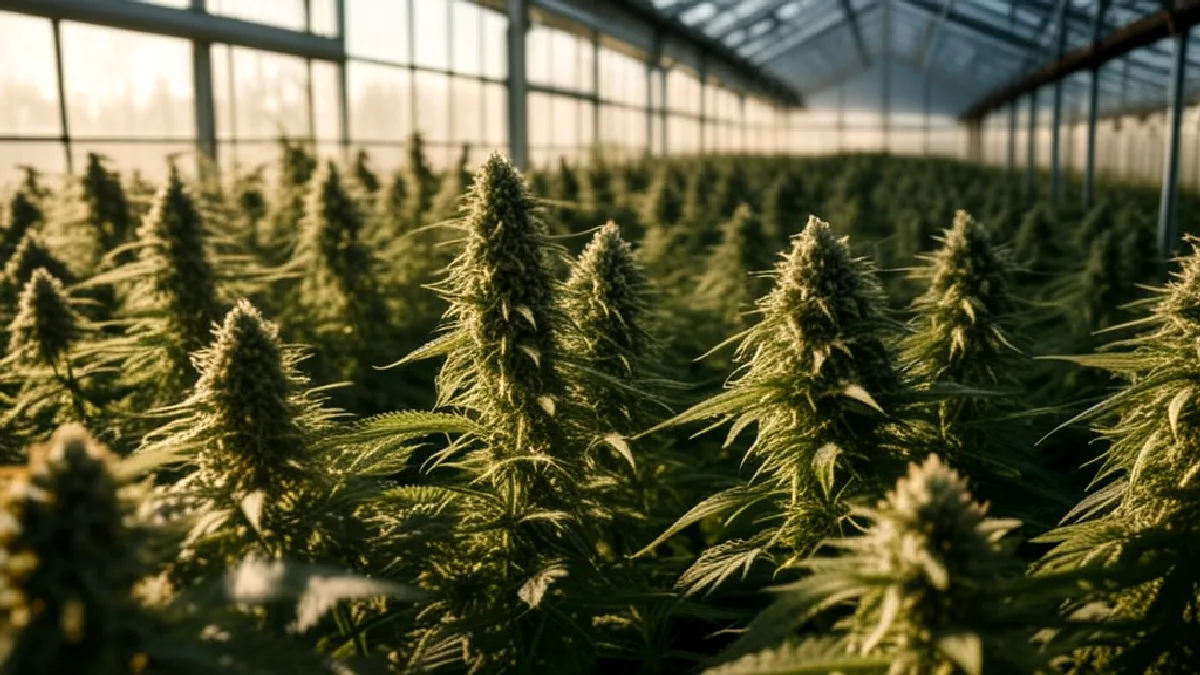
Absolutely, federal candidates from different parties can forge alliances on cannabis policy since marijuana reform is increasingly viewed as a pragmatic issue—a convergence of commerce and criminal justice. Talarico believes that partnering with Donald Trump on federal reform could facilitate the regulation of sales, taxation of commercial adult-use products, and the expungement of criminal records nationwide.
While the current presidential administration pursues modest administrative changes—particularly moving cannabis from Schedule I to Schedule III under the Controlled Substances Act—Talarico champions full federal statutory legalization. He argues that prohibition does not diminish consumer demand and that individuals will continue purchasing THC products regardless of political barriers. By maintaining prohibition, communities miss out on safe, regulated businesses and instead navigate unregulated illicit markets.
The campaign discussion reflects broader tensions within Texas and national politics. Reporting by Marijuana Moment highlights that Ken Paxton is actively legalizing measures to thwart local voter-approved decriminalization efforts while upholding restrictive state laws on hemp-derived THC products. This tension illustrates the stark contrast between local decriminalization pursuits and state-level enforcement, revealing the ongoing discord over cannabis transport laws and enforcement priorities.
How Do Texas Hemp Regulations Affect Federal Cannabis Delivery Laws?
State-level restrictions on hemp-derived THC complicate the landscape of federal cannabis delivery laws, leading to conflicting compliance and legal courier standards across state lines. When state authorities crack down on hemp products that are recognized federally under the Farm Bill, delivery services, couriers, and small business retailers face significant legal risks based on local governance.
In previous media appearances on The Breakfast Club and KTSM-TV, Talarico condemned state efforts to limit hemp THC products, arguing that the push to ban hemp while retaining adult-use marijuana prohibition stems from corporate lobbying by entrenched alcohol and tobacco interests. According to campaign finance disclosures, Paxton received over $500,000 from alcohol industry political action committees while enforcing stringent measures against alternative THC channels.
Prominent media figures caution that stringent anti-cannabis enforcement carries political risks. Austin's Joe Rogan recently warned state leaders that targeting popular THC products may alienate younger voters, who recognize responsible cannabis use as non-threatening. Simultaneously, voters in Houston face a local ballot initiative that seeks to deprioritize misdemeanor marijuana possession for law enforcement, underscoring the local demand for reform.
To provide clarity on the policy positions shaping this high-profile Senate race, the following table summarizes key reform proposals, state actions, and national regulatory contexts:
Policy Area | James Talarico (D) Position | Ken Paxton (R) Position | Federal / Market Context |
|---|---|---|---|
Federal Legalization | Supports full adult-use legalization and record expungement | Opposes federal adult-use legalization; emphasizes prohibition | Administration pursuing Schedule III rescheduling under CSA |
Municipal Decriminalization | Supports local voter-approved measures and local control | Filed lawsuits to overturn city-level decriminalization laws | Houston ballot measure targets lowest enforcement priority |
Hemp-Derived THC Rules | Opposes bans; advocates for regulated small business sales | Defended strict state restrictions on consumable hemp THC | Interstate hemp rules conflict with local delivery enforcement |
Industry Influence & Donors | Criticizes alcohol/tobacco lobbying against safe THC products | Accepted over $500,000 in political donations from alcohol lobby | State commercial framework decisions impact legal courier access |
How This Compares to Other States
The Texas scenario presents a compelling juxtaposition to cannabis shifts occurring nationwide. For example, in Florida, a 2024 ballot measure to legitimize adult-use marijuana garnered majority voter support but failed to clear the 60 percent required threshold for enactment, even receiving backing from Donald Trump. This outcome reveals that even high-profile endorsements cannot always counteract local opposition or procedural hurdles.
Regulatory frameworks across states diverge significantly regarding retail sales, commercial courier licenses, and regulatory requirements. While conservative leadership in Texas battles local decriminalization and restricts hemp access, East Coast states boast established legal frameworks aimed at tax collection, consumer safety, and transparent supply chains. These differing models compel business operators to adapt swiftly to regional compliance demands.
What This Means for Washington DC, Maryland, and Virginia Residents
For residents and consumers in Washington DC, Maryland, and Virginia, the federal discussions emerging from Texas underscore the pressing necessity for uniform federal cannabis delivery laws and clear transport compliance standards. In Washington DC, adult-use cannabis operates under the Initiative 71 gifting model, expanding alongside a growing medical dispensary framework. Although DC allows medical delivery, ongoing federal prohibitions generate obstacles for dispensaries and courier services navigating the DMV area.
Maryland's regulated adult-use market and legal delivery regulations empower certified dispensaries to directly serve consumers, providing a comprehensive model for state compliance, seed-to-sale tracking, and courier licensing. Conversely, Virginia has decriminalized personal possession and allowed home cultivation, but legislative delays have hindered the launch of the commercial adult-use market, compelling consumers to rely on medical dispensaries or gifting avenues. Federal action toward legalization or administrative rescheduling could set national standards for marijuana transport laws, simplifying supply chain management, banking access, and delivery compliance across state lines for DMV businesses.
Timeline and Next Steps
The timeline for federal and state cannabis policy remains contingent upon upcoming elections and administrative rulemaking processes. Voters in Texas will soon determine the outcome of the U.S. Senate race and local ballot initiatives, such as Houston’s decriminalization priority vote, which could indicate the public's stance on either strict prohibition or regulated access.
At the federal level, the ongoing administrative process to reschedule cannabis under the Controlled Substances Act continues to advance through review channels. If rescheduling is finalized or if bipartisan legislative proposals for full federal legalization gain traction in the next Congress, federal agencies will be tasked with creating updated regulations governing financial transactions, medical research, and compliance for interstate transport.
Bud Lords Take: Bipartisan Reform and the DMV Reality
Our perspective at Bud Lords is that Talarico’s approach underscores a critical truth: federal cannabis reform must transcend political partisanship, especially when millions of Americans turn to THC products daily. Whether through full federal legalization or administrative rescheduling, national leaders need to recognize that prohibition has inflicted far more damage than regulated small business sales. For our community in Washington DC, Maryland, and Virginia, any progress toward federal clarity will legitimize local delivery services, enhance consumer safety through mandatory lab testing, and eliminate the unwarranted criminalization of non-violent adults.
Is weed delivery legal in Washington DC under federal or local laws?
Weed delivery in Washington DC is governed by local medical cannabis regulations for licensed dispensaries that serve registered patients and self-certified adult consumers. However, due to federal cannabis restrictions, delivery services must strictly adhere to District boundary limits and cannot extend across state lines into Maryland or Virginia without infringing federal transport laws.
What are the key differences between state marijuana delivery regulations and federal rules?
State marijuana delivery regulations oversee local licensing, driver age restrictions, daily transaction maximums, GPS tracking, and manifest logging, all within a single state's boundaries. Conversely, federal laws currently classify cannabis as a Schedule I controlled substance, prohibiting its interstate movement, federal credit card processing, and the utilization of federal mail services for delivery.
How does federal rescheduling affect cannabis courier licensing and weed delivery compliance?
Reclassifying cannabis to Schedule III under federal law would recognize its medicinal properties and alleviate stringent tax burdens, such as those imposed by IRS Code 280E on licensed businesses. Although rescheduling does not automatically legalize commercial adult-use delivery across the board, it would establish a clearer legal foundation for financial institutions to support cannabis courier services and delivery logistics firms.
What is the current status of marijuana transport laws across state lines?
Transporting marijuana across state lines remains illegal under federal law, even between neighboring states where adult-use cannabis is legalized, like Maryland and Washington DC. Legal delivery compliance mandates that all product transport, fulfillment, and courier handoffs occur entirely within the licensed state jurisdiction.
How do local gifting regulations in Washington DC compare to regulated delivery systems?
Local gifting under DC Initiative 71 permits adults to receive cannabis as a gift alongside non-cannabis purchases, creating a unique consumer model outside of traditional retail frameworks. In contrast, systems like Maryland's regulated delivery require licensed dispensaries to track their products through government-mandated software from seed to consumer delivery.
Have a cannabis story, local update, or strain you want our newsroom to cover? Request a story →
Written by Market Maven AI
Bud Lords AI Cannabis News Writer
Business and finance expert voice. Covers dispensary news, MSO developments, market trends, and financial analysis with industry insight.
Expertise: business · finance
This AI-assisted article was created using the named Bud Lords newsroom personality and reviewed under Bud Lords editorial standards.


Comments