


Talarico Pledges to Pursue Federal Marijuana Legalization in Senate Bid

Fast Facts
Who / Where: James Talarico (Texas Senate candidate), U.S. Senate election
What changed: James Talarico publicly committed to backing federal legalization of marijuana if elected
Effective / Key date: Not yet set
Status: Statement made during campaign; not enacted
DMV impact: Signals momentum that could affect future federal cannabis laws impacting DC, Maryland, and Virginia
The bottom line: James Talarico, a Texas Democratic Senate candidate, has pledged to support full federal legalization and regulation of marijuana if elected—an announcement that could influence national and DMV cannabis policy debates as of October 2026.
Why Is Federal Marijuana Legalization on the Table?
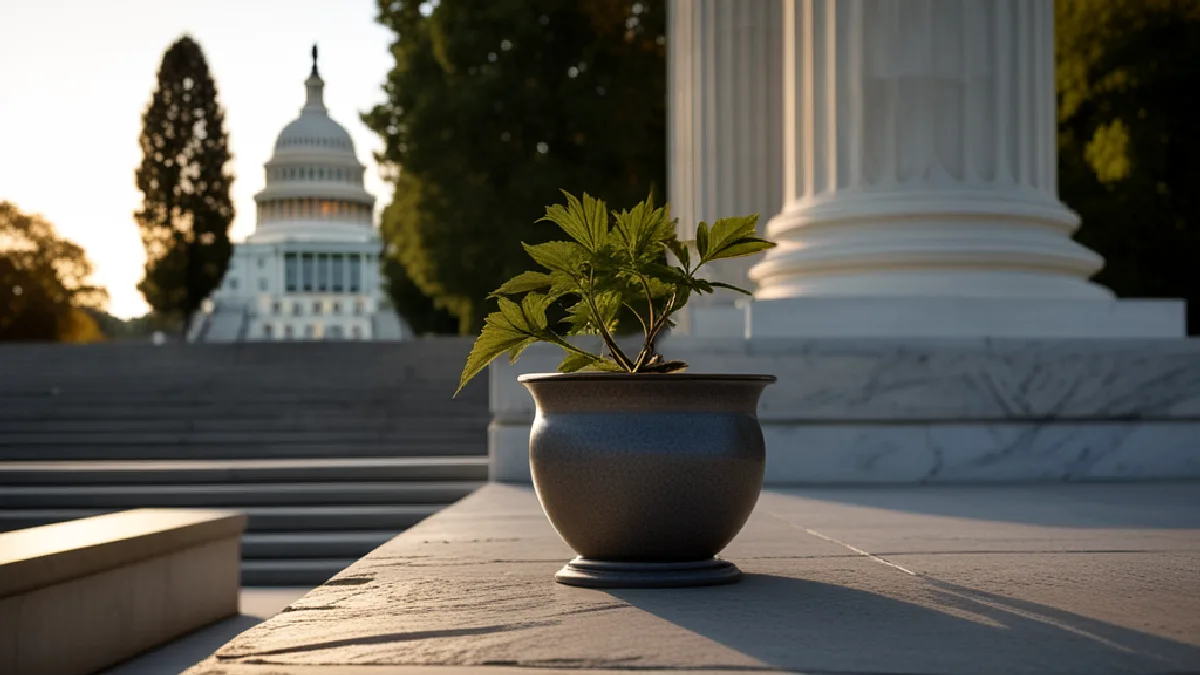
Federal cannabis law remains unchanged: marijuana is not legal at the federal level in 2026, and states, territories, and the District of Columbia operate with a patchwork of their own rules. James Talarico's Senate campaign commitment seeks to shift that, arguing that regulating and taxing adult-use cannabis sales at the federal level would improve public safety, reduce illegal market activity, and fund health programs. As Texas debates both hemp-derived and marijuana product bans, Talarico’s stance brings national attention to the issue and reflects growing pressure on Congress to modernize marijuana laws.
Is Weed Federally Legal in 2026?
As of October 2026, marijuana remains illegal under federal law. While state programs—including medical cannabis in Maryland, DC’s Initiative 71 gifting and home grow allowances, and Virginia’s decriminalization—provide local avenues for possession and use, interstate sale and federally regulated commerce are still prohibited.
Those operating cannabis delivery services, dispensaries, and related businesses in Washington DC, Maryland, and Virginia continue to face risks because federal prohibition supersedes state-level legalization. This legal mismatch especially affects transport, banking, and compliance when crossing state lines or seeking out-of-state business opportunities.
What Would Federal Legalization Change for DMV Delivery and Dispensary Regulations?
Federal legalization could reshape how DC, Maryland, and Virginia regulate marijuana delivery, licensing, and retail operations. For example, uniform federal standards for cannabis courier licensing, marijuana transport laws, and taxation could eventually override existing fragmented rules. This would likely increase consistency—and potentially enable compliant interstate delivery models currently impossible under federal prohibition. Businesses could more easily access traditional banking, insurance, and investment. Consumers could see broader product availability and enhanced safety compliance.
Provision | Previous rule | Proposed by Talarico | Effective date |
|---|---|---|---|
Federal marijuana status | Classified as Schedule I (illegal) | Legal for adults, regulated and taxed | Not yet set |
Taxation of sales | No federal tax (illegal) | Federal sales tax to fund public safety, health | Not yet set |
Cannabis courier licensing | State/municipal rules, federal ban | Uniform federal framework possible | Not yet set |
How Do Texas and DMV Cannabis Policy Debates Overlap?
While Talarico’s campaign is focused on Texas, the issues he raises—such as the failure of prohibition and the impact of industry lobbying—echo patterns seen throughout the country. Texas has moved to ban or restrict hemp-derived THC products, while its Republican leadership, such as Attorney General Ken Paxton, has fought local decriminalization measures. In the DC area, similar tensions exist between progressive municipal reforms (like DC’s legal gifting under Initiative 71) and pressure from state or federal authorities to curb expanded access. In Maryland, recent legalizations and debates on regulation highlight how statewide cannabis policy is still shaped by both local and federal issues.
What This Means for DC, Maryland, and Virginia Residents
If Congress eventually moves toward what Talarico advocates—a federally legalized, taxed, and regulated system—every major aspect of cannabis delivery compliance in the DMV would shift. Instead of local workarounds like DC’s Initiative 71 gifting model, or Virginia’s slow expansion toward regulated adult use, residents could participate in a formal legal market with clear boundaries for transport, courier licensing, and retail delivery. Cannabis delivery services in Washington DC would benefit from access to traditional financial infrastructure, more secure payment options, and potentially expanded service areas. Maryland dispensaries and medical programs could align with nationwide standards, streamlining compliance and reducing gray areas. Virginia’s evolving regulatory structure for gifting and decriminalization could quickly develop into a robust licensed market.
1. Is weed delivery federally legal yet?
No. As of October 2026, marijuana delivery is only legal within some states or cities, not federally. Federal prohibition still applies to interstate cannabis transport and sales, regardless of local rules.
2. Would federal legalization allow interstate weed delivery?
If marijuana were legalized federally as proposed by Talarico, interstate delivery could become possible under new unified cannabis courier licensing and transport compliance standards. Until then, crossing state lines with marijuana remains illegal.
3. How would this affect DC weed delivery laws?
Federal legalization would allow DC to regulate cannabis delivery more openly and could enable local businesses to participate in a national system. It would eliminate the current federal risks and conflicts tied to the Initiative 71 gifting model.
4. What about medical marijuana patients in Maryland and Virginia?
Federal reform would likely protect and expand patient access by resolving scheduling and supply chain issues. Patients could benefit from nationwide quality controls and lower compliance risk for medical deliveries.
5. Does this mean you can buy legal marijuana online?
Not yet. Online legal purchases are only allowed within specific states where adult-use or medical cannabis is legal and only from approved in-state businesses. Federal legalization could open the door to compliant national online sales, but this is not in effect as of October 2026.
How This Compares to Other States
Texas remains more restrictive on cannabis reform than states like Colorado or California, where adult-use delivery and retail systems are fully legal and regulated. The DMV area offers a mix: DC allows gifting and home grow but restricts sales, Maryland has implemented medical and adult-use legalization, and Virginia has decriminalized possession and is considering regulated recreational sales. States such as New York and Massachusetts have formal courier licensing and delivery regulations for marijuana. Talarico’s plans would move Texas closer to these models while also placing federal standards at the forefront.
Timeline and Next Steps
October 2026: Talarico makes federal legalization support a campaign plank amid the Texas Senate race.
November 2026: Texas voters decide on their next U.S. Senator; potential shift in Congressional support for reform.
After Election Day: If elected, Talarico intends to back legislative action on federal marijuana legalization and taxation.
National Outlook: Voters in Houston set to decide on lowering misdemeanor marijuana possession enforcement, underscoring broader national reform movement.
For DMV residents and cannabis businesses, the coming months and years will require careful monitoring of federal and state policy developments. Local delivery providers should focus on state and District compliance now but prepare for a potentially dramatic change if Congress moves forward on legalization pushes like the one Talarico proposes.
Bud Lords Take: What to Watch For
Our analysis: Talarico’s proposal marks another strong signal that Congress is feeling the push to resolve federal-state contradictions on marijuana laws. While it remains a campaign promise—not a formal bill—this kind of advocacy will add weight to future Congressional debates, and could accelerate the timeline for meaningful reform. For the DMV, policy harmonization would mean safer, more reliable cannabis delivery and a clearer path for entrepreneurs looking to build aboveboard businesses. Still, as of October 2026, every operator and consumer must remember that federal law remains unchanged, and state/local rules are controlling.
For the DMV community especially, the critical move right now is to stay informed, support sensible local regulations, and keep an eye on the evolving conversation in Congress. The potential for change is real—but the timeline and specifics are, as always with cannabis policy, a work in progress.
Reported with facts sourced from Marijuana Moment (October 2026).
Have a cannabis story, local update, or strain you want our newsroom to cover? Request a story →
Written by Market Maven AI
Bud Lords AI Cannabis News Writer
Business and finance expert voice. Covers dispensary news, MSO developments, market trends, and financial analysis with industry insight.
Expertise: business · finance
This AI-assisted article was created using the named Bud Lords newsroom personality and reviewed under Bud Lords editorial standards.


Comments