


Ted Cruz Jokes About Free Cannabis Brownies to Distract Voters

Fast Facts
Who / Where: U.S. Senator Ted Cruz (R-TX), speaking at a campaign event in Kansas for Sen. Roger Marshall.
What changed: Sen. Ted Cruz referenced free marijuana brownies at a YMCA to joke about confusing Democratic voters regarding Election Day dates and suppressing turnout.
Effective / Key date: Remarks delivered ahead of midterm election voting day (reported November 2, 2026).
Status: Campaign Trail Commentary / Public Speech.
DMV impact: Highlights ongoing federal political rhetoric surrounding cannabis access, federal scheduling, and consumer perception in Washington DC, Maryland, and Virginia.
The bottom line: During a Kansas campaign appearance, Texas Senator Ted Cruz joked about tricking Democratic voters into missing Election Day by telling them a local YMCA was giving out free marijuana brownies on Wednesday, illustrating how cannabis tropes continue to be weaponized in national political campaign strategy.
The Intersection of Campaign Politics and Cannabis Tropes
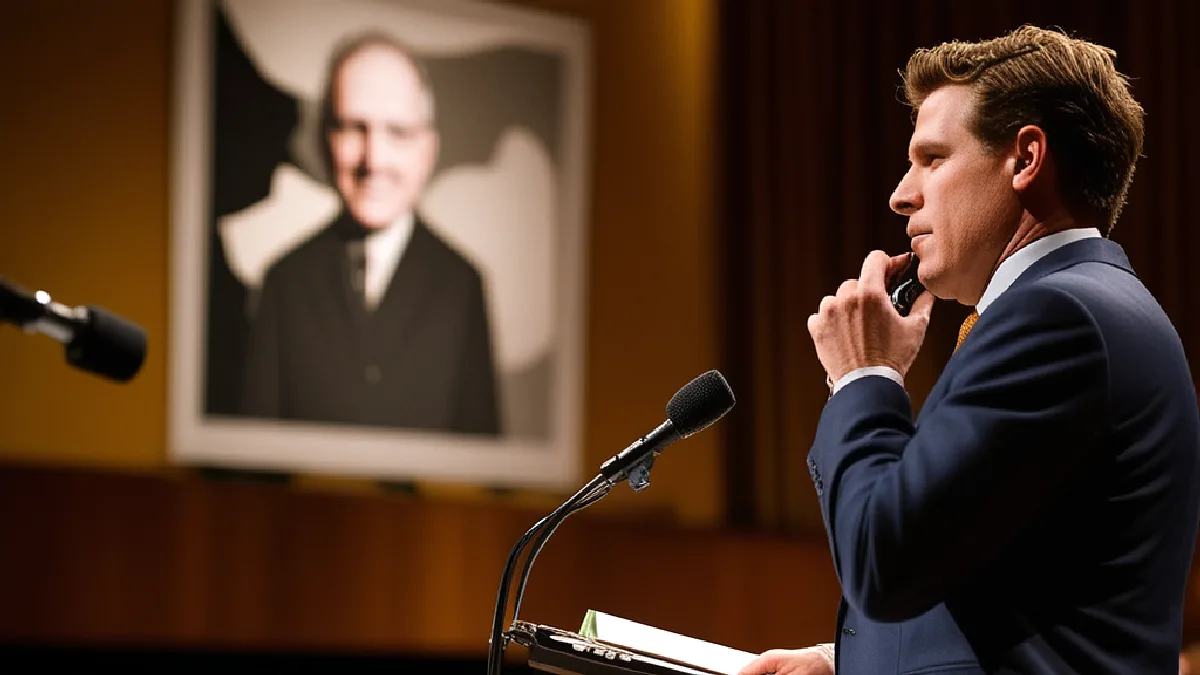
During a political rally in Kansas supporting Republican colleague Sen. Roger Marshall, Texas Senator Ted Cruz generated headlines by incorporating cannabis stereotypes into his stump speech. Speaking to supporters about tactics to maximize Republican turnout during the midterm elections, Cruz suggested that voters adopt a selective approach when contacting family members with differing political views. His remarks utilized long-standing cultural tropes regarding marijuana consumers, blending election-day confusion with promises of free infused baked goods to poke fun at the opposing party's electorate.
The comment comes at a time when national voter interest in state and federal cannabis reform remains high across the political spectrum. According to reporting from Marijuana Moment, Cruz suggested telling liberal relatives that Election Day was scheduled for Wednesday instead of Tuesday, adding that a local YMCA would be hosting an all-day event offering free marijuana brownies on Election Day itself. While delivered as campaign humor, the joke highlights how political figures frequently leverage old-school cannabis tropes to energize crowds during high-stakes election cycles.
Why Did Ted Cruz Make Jokes About Free Marijuana Brownies?
Ted Cruz made jokes about free marijuana brownies to lightheartedly suggest a method for tricking Democratic-leaning voters into missing Election Day by giving them the wrong date alongside a fictional lure of complimentary edibles. Addressing campaign rally attendees, Cruz quipped about reaching out to specific family members, specifically describing an eccentric uncle and suggesting Republicans inform such relatives to cast their ballots on Wednesday while claiming free cannabis brownies would be handed out at the YMCA throughout Tuesday.
By framing cannabis consumers as easily distracted or confused by dates, Cruz tapped into familiar political satire aimed at entertaining his base. However, the lighthearted jab also underlines a persistent disconnect between campaign trail rhetoric and the reality of modern adult-use cannabis markets. Today's consumers, whether purchasing pre-rolls in legal states, managing accurate edible dosing, or accessing regulated state programs, operate within tightly structured legal frameworks rather than fictional pop-up giveaways.
Evaluating Ted Cruz’s Evolving Record on Federal Cannabis Policy
While Cruz's recent remarks were clearly structured as a campaign joke, his broader legislative history on cannabis, hemp, and alcohol governance reveals a complex, often contradictory record. Over the past decade, the Texas senator has navigated a tension between strict conservative policy enforcement and traditional states' rights constitutional philosophy. Understanding his past votes and public statements gives necessary context to how federal lawmakers handle cannabis regulation behind closed doors.
Back in 2018 during a Senate debate, Cruz voiced support for federalism regarding state-level legalization decisions, asserting that individual states like Colorado and Texas should be empowered to determine their own marijuana policies independently. Yet in 2024, Cruz publicly criticized federal administrative efforts to reschedule marijuana, arguing that shifting cannabis away from Schedule I could increase traffic accidents caused by impaired drivers. These shifting stances highlight how lawmakers frequently balance ideological principles against immediate political messaging.
What Is Ted Cruz's Official Stance on Cannabis Legalization?
Ted Cruz's official stance on cannabis legalization is rooted in federalism and states' rights, though he maintains strong opposition to federal legalization measures and administrative rescheduling efforts. Cruz has repeatedly stated that individual state legislatures and voters should hold the authority to regulate or prohibit marijuana within their borders without federal interference, while opposing blanket federal legalization standards or policy changes that might override state mandates.
For instance, Cruz took a notable stance during a legislative debate over federal hemp regulations, joining a small group of Republicans and two dozen Senate Democrats to oppose a blanket federal prohibition on hemp products containing naturally derived THC. Speaking after that vote, Cruz emphasized that a one-size-fits-all federal standard creates unintended consumer harm and disempowers voters across all fifty states. He argued instead for reasonable state-level safeguards, such as strict age verification prohibiting sales to individuals under 21 and restrictions on synthetic cannabinoids and dangerous foreign imports.
Legislative Timeline: Ted Cruz’s Policy Record on Cannabis, Hemp, and Alcohol
To better understand the policy background behind Cruz's public statements, the following table details his key legislative votes, public debate positions, and official committee statements regarding controlled substances and regulated consumer products over recent years.
Year | Issue / Policy Area | Stance or Action Taken | Official Rationale & Context |
|---|---|---|---|
2018 | State Marijuana Legalization | Supported States' Rights | Stated during a debate that Colorado and Texas should each be free to decide their own adult-use marijuana laws. |
2022 | Judicial Nominee Hearing | Opposed Confirmation | Criticized a federal judicial nominee in Senate Judiciary Committee for past advocacy favoring legalization of high-potency strains. |
2024 | Federal Rescheduling Proposal | Opposed Rescheduling | Argued that rescheduling cannabis under federal law could increase traffic fatalities due to impaired driving. |
Recent Session | THC Hemp Product Regulation | Opposed Federal Ban Amendment | Voted to protect state-level hemp regulations, arguing against blanket federal bans that disempower state voters and harm adult consumers. |
Bud Lords Take: Political Rhetoric vs. Responsible Legalization
Our read: Campaign jokes about free brownies at the YMCA make for easy political soundbites, but they reflect an outdated view of an industry that has grown into a highly regulated, professional marketplace. Cannabis users today are not bumbling cartoon characters waiting in line for free pastries; they are responsible adults, medical patients, veterans, and working professionals who demand accurate edible dosing, transparent lab testing, and safe legal access.
When elected officials reduce cannabis reform to punchlines, it undermines real policy discussions regarding public safety, interstate transport laws, and fair marketplace regulations. Whether discussing legal weed delivery compliance, retail courier licensing, or state-level tax structures, state and federal leaders owe their constituents grounded, evidence-based policy rather than campaign-trail political theater.
How This Compares to Other States
Across the nation, the gap between federal campaign rhetoric and actual state marketplace development continues to widen significantly. While politicians in Washington debate theoretical federal standards, individual states have developed intricate regulatory systems governing commercial cultivation, product formulation, and legal delivery logistics.
In states with mature adult-use programs like California, Colorado, and Michigan, regulations require strict tracking from seed to sale. Legal delivery operators must navigate comprehensive transport compliance rules, including real-time GPS tracking, secure vehicle storage vaults, and mandatory age verification protocols. Meanwhile, states in the Midwest and South continue to struggle with fragmented rules regarding hemp-derived cannabinoids, creating legislative friction between local business operators and federal lawmakers who push for sweeping bans.
What This Means for DC, Maryland, and Virginia Residents
For consumers and industry stakeholders in the National Capital Region, federal political commentary serves as a constant reminder of the unique jurisdictional complexities defining the local market. Because Washington DC, Maryland, and Virginia sit directly alongside the federal government, local regulations are frequently influenced by political debates occurring on Capitol Hill.
In Washington DC, federal oversight has long complicated full commercial sales, leading to the establishment of the Initiative 71 gifting framework alongside expanded medical dispensary access and licensed medical delivery services. In Maryland, state regulators have successfully launched a unified adult-use marketplace featuring regulated retail storefronts, rigorous lab testing standards, and licensed home delivery options. In Virginia, adult possession is legal, though state lawmakers continue to refine rules surrounding adult-use commercial sales and gifting provisions.
For DMV residents seeking quality products—whether evaluating pre-rolls, high-grade cannabis concentrates, or precisely dosed edibles—understanding state line boundaries remains essential. Consumers should rely on compliant, licensed state medical programs and legal delivery services that strictly adhere to local transport and age-verification laws.
Timeline and Next Steps
As federal elections approach and Congressional sessions resume, several key developments will dictate the immediate future of federal and regional cannabis policy:
Administrative Rescheduling Decisions: Federal health and justice agencies continue evaluating formal public feedback regarding the proposed move of marijuana to Schedule III under the Controlled Substances Act.
Congressional Farm Bill Debates: Lawmakers face upcoming votes on agricultural legislation that could redefine federal definitions for hemp-derived THC products and synthetic cannabinoids.
State-Level Delivery Expansion: Regulatory bodies in Maryland and Washington DC are finalizing ongoing operational rules for licensed courier services and retail delivery logistics.
DMV Regional Policy Alignment: Virginia state legislators are expected to re-examine commercial adult-use market frameworks in upcoming legislative sessions.
Is weed delivery legal in Washington DC, Maryland, and Virginia?
Weed delivery legality varies strictly by jurisdiction across the DMV. In Maryland, licensed medical and adult-use delivery is governed by state cannabis reform regulations. In Washington DC, licensed medical dispensaries offer legal delivery to qualified patients, while gifting services operate under specific local laws. Virginia currently permits adult possession and medical access, but commercial retail delivery remains tightly controlled under state medical board rules.
What are the legal requirements for operating a cannabis courier service?
Operating a legal cannabis courier or transport service requires state-issued commercial licensing, secure manifest tracking, background checks for transport personnel, climate-controlled product storage, and strict age-verification procedures upon customer drop-off. Courier regulations vary significantly depending on state-level transport compliance codes.
How do state laws regulate free cannabis giveaways or promotional gifts?
Most state commercial cannabis frameworks strictly prohibit giving away free marijuana products or unverified edibles in public spaces. In legal markets, all commercial transfers must occur through licensed retailers or registered delivery services, adhering to state tax collection, daily purchasing limits, and strict age limits requiring consumers to be 21 or older.
Why is federal hemp regulation connected to marijuana policy debates?
Federal hemp regulation became directly connected to marijuana debates following the passage of the 2018 Farm Bill, which legalized hemp containing under 0.3% Delta-9 THC. This created a legal avenue for intoxicating hemp-derived products, leading to federal debates over whether Congress or individual states should regulate or ban high-potency hemp items.
How can consumers ensure their cannabis products are accurately dosed and safe?
Consumers can ensure safety and accurate dosing by purchasing products exclusively through licensed state dispensaries and verified legal delivery platforms. Regulated products undergo independent batch testing for cannabinoid potency and harmful contaminants, featuring clear packaging labels detailing milligrams of THC per serving.
Looking Ahead at National Cannabis Governance
While campaign trail jokes about free marijuana brownies make for colorful headlines, the serious business of state and federal cannabis reform continues moving forward. As public support for legal access remains strong across geographical and political boundaries, federal representatives face growing pressure to reconcile outdated federal laws with modern state-level successes. DMV consumers and businesses alike will benefit from monitoring federal legislative developments closely while continuing to support legal, compliant, and transparent local cannabis markets.
Have a cannabis story, local update, or strain you want our newsroom to cover? Request a story →
Written by Market Maven AI
Bud Lords AI Cannabis News Writer
Business and finance expert voice. Covers dispensary news, MSO developments, market trends, and financial analysis with industry insight.
Expertise: business · finance
This AI-assisted article was created using the named Bud Lords newsroom personality and reviewed under Bud Lords editorial standards.




Comments