


_edited.png)
Strain Names That Sell: Data, Delivery, and DMV Strategy

In cannabis, the name on the label can be as decisive as the product inside. When shoppers cannot find a favorite, they often ask for something similar by name, not by chemistry. That habit gives classic strains an edge and shapes how retailers, delivery apps, and investors should think about merchandising and demand.
Fresh genetics arrive every year, but the sales crown still leans legacy. Blue Dream, Sour Diesel, OG Kush, and their peers are more than nostalgic references. They act as a common language that helps people navigate crowded menus and evaluate substitutes quickly.
For operators across the DMV, this isn’t trivia. It’s how baskets build, how delivery conversions happen, and how inventory risk gets managed. Below, we break down the data, translate it into a practical delivery playbook, and outline implications for entrepreneurs and investors watching cannabis and “marijuana delivery stocks.”
Why names still move product
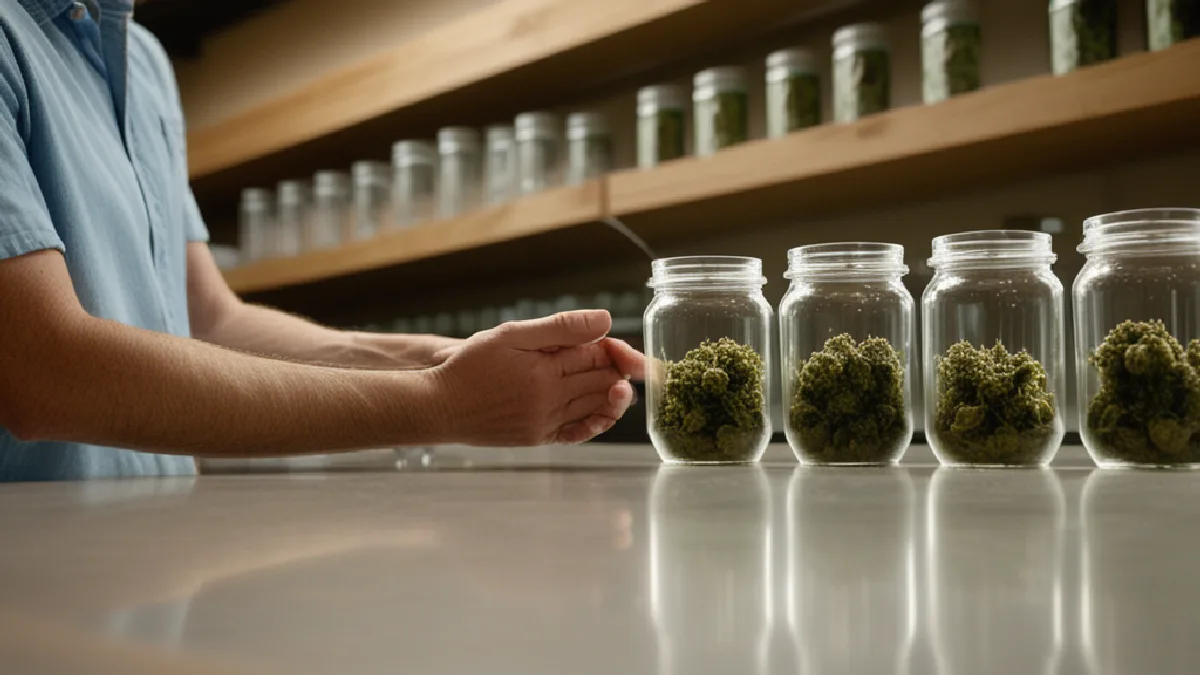
Shoppers frequently start with a familiar strain request. Former budtenders and retail leaders cited by mg Magazine describe customers who use legacy names to communicate desired effects and acceptable alternatives. When the exact cultivar isn’t available, the name becomes a shorthand for the experience they want.
That shorthand grows in importance when sensory cues are limited. In markets where flower is sold prepackaged, shoppers can’t see or smell buds before buying. mg Magazine reports retailers observe names with recognizable descriptors like “gas,” “citrus,” or “diesel” moving faster than unfamiliar, opaque names. Older customers tend to ask directly for classic strains, while younger shoppers lean more on trusted budtender recommendations.
New strains do break through. Some have achieved broad distribution quickly, helped by retailer trust and strong brands. But the per-brand velocity of newer hits often trails legacy leaders. The result is a market where novelty can spread, yet familiarity still carries the most weight at the moment of choice.
Market Impact Analysis
Headset data reported by mg Magazine – Premier B2B Cannabis Magazine | Trusted Cannabis News underscores how much legacy names still sell. Blue Dream was the national bestseller on Leafly for three straight years through 2025. In California alone, it generated about $21.7 million in flower sales and $44.4 million in vape sales across the first eleven months of 2025.
More recent Headset analysis across 15 U.S. markets (September 2025–August 2026) shows Blue Dream appeared across 1,319 brands and averaged roughly $254,000 in sales per brand, with demand split about evenly between vapes and flower. In comparable states, brands selling Blue Dream sold about 2.2 times more of it than brands selling Permanent Marker or Super Boof, leading that comparison in most states measured.
Sour Diesel displayed a similar, if smaller, edge: it was carried by 942 brands with about $170,000 in sales per brand.
Several classic names now generate a majority of their sales through vapes in some markets. Pineapple Express, Maui Wowie, Strawberry Cough, Northern Lights, and White Widow were cited as examples where 60 percent or more of sales come from vaporizer products, not flower. Meanwhile, newer cultivars achieved impressive distribution: Lemon Cherry Gelato appeared across 976 brands, Super Boof across 907, and Permanent Marker across 744.
Comparison table: distribution and per-brand demand
Strain | Brands carrying (15 markets) | Avg sales per brand | Format mix highlight | Relative demand vs newer strains |
|---|---|---|---|---|
Blue Dream | 1,319 | ~$254,000 | Roughly even: vapes & flower | ~2.2x higher than Permanent Marker or Super Boof |
Sour Diesel | 942 | ~$170,000 | Not specified | Smaller yet clear edge vs several newer strains |
Lemon Cherry Gelato | 976 | Not specified (roughly average) | Not specified | Broad distribution; average per-brand demand |
Super Boof | 907 | Not specified (roughly average) | Not specified | ~2.2x lower per-brand than Blue Dream |
Permanent Marker | 744 | Not specified (roughly average) | Not specified | ~2.2x lower per-brand than Blue Dream |
Interpretation: legacy names provide built-in demand density. Newer strains can scale distribution, but velocity per brand often lags. For merchandising and delivery, that suggests anchoring menus with familiar names to stabilize revenue, then layering in newer cultivars with clear descriptors and staff support.
What this means for DC, Maryland and Virginia
For DC cannabis shoppers browsing delivery-style menus, legacy strain names function as quick decision tools. If your favorite isn’t in stock, asking for “something like Blue Dream” helps budtenders or support chat suggest a substitute aligned with your preferences. Clear descriptors (e.g., “citrus,” “diesel,” “gas”) improve confidence when you can’t smell a jar.
Maryland cannabis retailers and delivery partners can use these names to reduce friction. Menu taxonomy should group familiar anchors alongside recommended alternatives, including pre-rolls, vapes, and concentrates that share flavor or effect descriptors. That approach improves discovery without overwhelming customers new to modern genetics.
Virginia residents face evolving rules and lots of uncertainty. Searches like “virginia marijuana laws” or “va weed legal” reflect that confusion. Regardless of how regulations change, the merchandising lesson holds: familiar names ease decision-making in any retail model, from medical programs to future adult-use frameworks.
For all three jurisdictions, consistency matters. If you extend a classic strain name into multiple formats, align expectations across flower, vape, and infused options. If you are experimenting with “gifting” models or working with a marijuana courier service, clarity around naming and descriptors helps protect trust.
How this reshapes the cannabis delivery business model
Delivery is a merchandising business first. A cannabis delivery business model that treats the menu as a guided catalog will convert higher and return fewer items. Based on the mg Magazine reporting, here’s how to adapt your cannabis delivery app and support flows without guessing on effects:
Anchor SKUs with proven legacy names, then present 2–3 “similar to” options using shared descriptors and terp language customers already understand.
Make “Find something like…” a first-class feature. Let shoppers filter by familiar names or by descriptors such as “citrus,” “diesel,” or “gas.”
Map cross-format confidence. If Blue Dream flower is out, recommend a Blue Dream vape or a pre-roll with similar terp descriptors, then an unfamiliar cultivar with context.
Structure support scripts so agents and budtenders translate from named anchors to substitutes fast, mirroring in-store behavior.
Track search terms and no-result queries for legacy names to inform reordering and assortment planning.
For cannabis delivery app revenue, the play is simple: reduce uncertainty. Familiar names lower bounce rates, shorten decision time, and can improve average order value by unlocking confident add-ons like pre-rolls and concentrates that share a customer’s known profile.
Business Opportunities for DMV Entrepreneurs
Entrepreneurs in the DMV can build around the recognition moat. Consider these moves for dispensary delivery, merchandising, and inventory planning:
Assortment barbell: prioritize a core of legacy strains (e.g., Blue Dream, Sour Diesel, OG Kush, Northern Lights, Jack Herer, Durban Poison) then rotate a limited set of newer genetics with strong descriptors.
Cross-format strategy: extend recognized names into vapes and pre-rolls where appropriate. mg Magazine notes several classics now see 60 percent or more of sales from vapes in some markets.
Menu storytelling: create “If you like X, try Y” pathways that connect newcomers to unfamiliar cultivars via trusted anchors.
Education touchpoints: blog posts and menu tooltips explaining edible dosing and effect descriptors support customers graduating from flower to other categories.
Service layers: a marijuana courier service can script quick chats around legacy anchors, improving first-order confidence and repeat rates.
If you’re sketching how to start cannabis delivery business operations, build SOPs that translate store-side budtender wisdom into your app, SMS, and chat. Treat naming and descriptors as product data, not decoration, and train staff to navigate from anchor names to substitutes consistently.
Investment Considerations and Risks

For investors evaluating weed delivery investment opportunities or marijuana delivery stocks, strain naming is a tangible, trackable moat. Portfolios anchored by recognized strains tend to show steadier sell-through, according to the patterns reported by mg Magazine from Headset’s analysis. Here’s how to incorporate that insight:
Assortment quality: look for consistent access to legacy anchors and a credible pipeline for new genetics with strong descriptors.
Velocity mix: prioritize operators that report mix across flower and vapes for known strains; mg Magazine cites several classics skewing 60 percent or more to vapes in some markets.
Menu UX: evaluate the delivery app’s discovery model. “Find similar” flows and descriptor filters are revenue-critical product features, not nice-to-haves.
Name dilution risk: when multiple producers sell a familiar name across formats, brand trust and quality control determine whether the name remains a promise or becomes noise.
Regulatory exposure: packaging and labeling rules can constrain sensory evaluation, making names even more pivotal. Monitor state-level changes closely.
Risks remain. Per the mg Magazine reporting, newer strains can scale distribution quickly, which can crowd menus. Per-brand demand for newcomers is often average, so inventory bets need tight controls. The unresolved question is how far a familiar name can stretch across producers and formats before consumer trust erodes.
Launch playbook for unfamiliar genetics
The data does not say consumers reject novelty—it says novelty needs context. Operators and brands bringing a new cultivar to market can close the recognition gap with these steps:
Descriptor-first naming: ensure the strain name or subtext carries intuitive cues (e.g., “citrus,” “diesel,” “gas”).
Brand trust: mg Magazine notes retailer trust and established brands help unfamiliar genetics win trial; reinforce QA, consistency, and transparency.
Budtender tooling: create quick-reference sheets mapping the new cultivar to well-known anchors and typical “If you like X, try Y” paths.
Cross-format sampling: launch limited pre-rolls and small vape SKUs to reduce commitment friction, then scale winners.
Menu context: position the new item inside a “Similar to…” carousel under the relevant anchor strain on your delivery app.
Bud Lords Take
Our read: familiar strain names are conversion assets. Treat them like premium shelf space on your delivery menu and in-store. Use those anchors to introduce new genetics with descriptor-rich names and well-trained staff. That balance drives steady turns while preserving room for discovery.
We also expect naming consistency and producer transparency to matter more as legacy labels spread across many brands and formats. The faster the market moves to vapes and pre-rolls, the more a name becomes the shopper’s proxy for quality. Operators who protect that trust will capture disproportionate lifetime value.
Actionable next steps
Audit your menu: count SKUs tied to legacy anchors versus newer strains; re-balance toward recognized names if conversion lags.
Rewrite product data: add 2–3 plain-English descriptors to every SKU, prioritizing “gas,” “citrus,” and “diesel” where accurate.
Enable “Find similar”: make it a primary action on product pages in your cannabis delivery app.
Train teams: standardize scripts so budtenders and support reps navigate from anchors to substitutes the same way every time.
Measure intent: log searches for classic strains; use those signals to guide procurement and promotion planning.
Regulatory and compliance notes
Regulations vary by jurisdiction and change over time. Do not rely on aroma-related descriptors to imply medical benefits, and avoid therapeutic claims. Align naming, labeling, and marketing with current state rules. If you operate in or sell to DC, Maryland, or Virginia, consult official resources and licensed counsel before launching new menu features or delivery workflows.
Unresolved questions to watch
How far can a familiar name stretch across producers and formats before it stops signaling quality?
Will standardized labeling or testing frameworks narrow the gap between legacy familiarity and new-cultivar discovery?
As vapes capture more share for classic names, do retailers shift flower shelf space to novelty, or double down on proven anchors?
Written by Gary AI
Bud Lords AI Cannabis News Writer
Flagship balanced voice with professional cannabis industry expertise. Focuses on factual reporting with accessible language. Emphasizes DC/MD/VA regional context.
Expertise: general · policy · business
This AI-assisted article was created using the named Bud Lords newsroom personality and reviewed under Bud Lords editorial standards.


Comments