


_edited.png)
Pre‑Roll Demand Is Rewiring Delivery Models

Pre-rolls aren’t just a convenience SKU anymore—they’re a core revenue engine that shapes how delivery menus are built, how apps sort products, and how investors assess unit economics. For delivery founders and dispensaries, dialing in a pre-roll strategy is one of the fastest paths to higher average order value and repeat purchase behavior.
Fresh, comparable data is critical. The National Cannabis Industry Association (NCIA) published findings rooted in a Custom Cones USA consumer survey and Headset point-of-sale analytics that spotlight what today’s buyers choose and why. You can read NCIA’s report here: What consumers really want in a pre-roll.
We break down what the numbers mean for delivery operators, app builders, and investors—especially in DC, Maryland and Virginia—then map those insights to business models, risk, and actionable steps.
What today’s pre-roll buyers actually buy
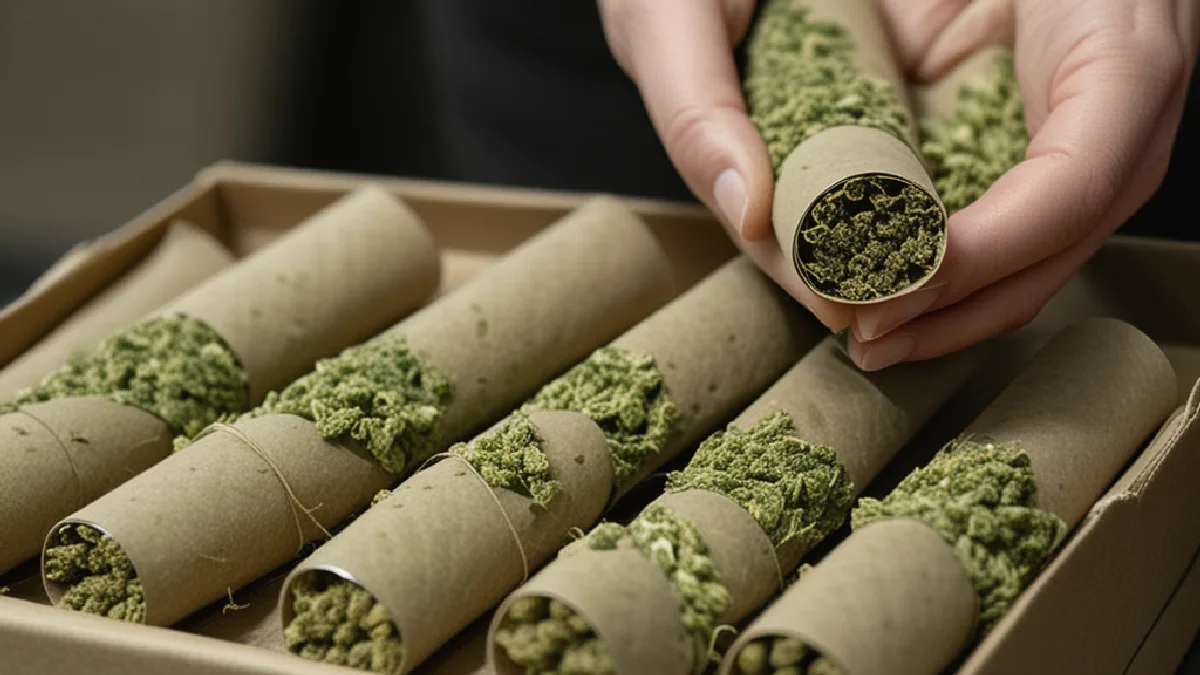
NCIA’s reporting highlights a simple truth: potency, price, and brand are the top drivers of pre-roll purchasing. That pecking order explains why infused pre-rolls, which combine flower and concentrate for stronger potency numbers, capture outsize revenue share. It also explains the lift brands get from unforgettable filter-tip branding and packaging that sticks in a customer’s memory.
The scale is real. NCIA reports the pre-roll category has grown into a $3.6 billion annual market. Within that, consumer behavior clusters around a few patterns that matter for delivery menus and sorting rules:
Infused pre-rolls command a large and growing slice of spend. NCIA cites data showing infused products hold more than 44% of pre-roll market share, and in 2025 accounted for 47.2% of sales, totaling nearly $1.7 billion.
Size preferences are decisive. One-gram products generated about $1.45 billion in revenue, and nearly 82% of those were sold as single 1g pre-rolls.
Multi-packs dominate bestseller lists. Although roughly half of all pre-roll SKUs are multi-packs, they account for the overwhelming majority of top sellers, with nine of the top 10 best-selling SKUs being five-packs of half-gram pre-rolls.
Branding on the filter tip matters. NCIA notes the top national brands use custom tips, overwraps, or bands so the product is recognizable even outside its packaging.
Paper type is part of the decision set. A majority of surveyed consumers rated paper type as very important, with refined white, natural brown, and organic hemp each serving different brand stories and aesthetics.
Premium features have an audience. More than 21% of consumers purchase pre-rolls with premium filter tips at least weekly, signaling consistent demand for elevated experiences.
Another nuance from NCIA’s cited data: revenue and units do not move in lockstep. Hybrid single-strain products lead unit volume, while infused pre-rolls lead revenue because they command higher price points. One of the category’s premium names, Jeeter, averages nearly $25 per unit according to NCIA.
Market Impact Analysis
Here’s how those facts translate into planning for delivery menus, app sort logic, and margin strategy:
Menu weight shifts to infused and size anchors. With infused SKUs generating the largest revenue share and 1g singles plus 0.5g multi-packs topping charts, delivery menus should spotlight these formats prominently.
Price architecture is a growth lever. The coexistence of premiumized infused SKUs and value multi-packs suggests a two-lane pricing strategy: trade-up bundles at the high end and reliable, high-velocity value at the low end.
Brand-recognition beats commodity traps. In a category where many cones look alike, filter-tip branding isn’t a vanity expense—it’s a reorder engine that helps customers remember what to ask for in the app or on the phone.
Paper type and premium tips signal quality. For a delivery-only shopper who can’t smell flower in-store, visual cues (paper choice, tip design) and concise product descriptions reduce friction and boost add-to-cart.
Financially, the implications are direct. If infused pre-rolls pull a higher average selling price, and five-packs of half-gram cones dominate bestseller slots, delivery operators can frame promotions, cross-sells, and cart thresholds around these formats to influence cannabis delivery app revenue. While every market is different, aligning product placement with NCIA’s documented demand curve is a rational way to lift average order value without inventing new behaviors.
Cannabis delivery business model guide
Pre-roll data should inform how you choose a cannabis delivery business model, set fees, and design your product taxonomy. Below are common models and how pre-roll-heavy demand may affect them.
Designing for conversion
Use what the NCIA-cited data makes clear. Let shoppers filter by “infused,” “1g single,” and “5-pack 0.5g” first. Highlight brand logos on tips, call out paper type, and keep price ladders obvious. Those touches align directly with how people already buy.
Investment Considerations and Risks
For investors researching weed delivery investment themes or tracking marijuana delivery stocks, the pre-roll data changes how to evaluate moat and margin potential:
Product-mix sensitivity: Look for companies whose revenue mix reflects infused demand and the dominance of 1g singles and half-gram multi-packs.
Brand stickiness: Filter-tip branding and consistent paper-type positioning can strengthen repeat order rates in delivery channels.
Assortment agility: The ability to add or rebalance infused SKUs quickly matters as consumer preferences shift.
App merchandising: Companies that make it easy to sort by infusion, pack size, and brand can unlock higher cannabis delivery app revenue per session.
Risks remain. Regulation shifts can change what products can be sold, how they’re delivered, and what labeling is required. Demand is also bifurcated between premium and value, so mispricing can strand inventory. Finally, brand parity is real—without memorable product branding, pre-rolls blur together and undercut reorder potential.
Business Opportunities for DMV Entrepreneurs

DC, Maryland, and Virginia residents search for practical answers—how to start a cannabis delivery business, what a marijuana courier service profit profile might look like, and how virginia cannabis rules may shape offerings. While specific legal permissions, limits, and rules vary and must be confirmed with current official guidance, the pre-roll data provides a north star for planning.
Assortment planning: Prioritize infused pre-rolls for revenue and 1g singles plus half-gram five-packs for velocity, mirroring the behavior NCIA highlighted.
Brand differentiation: Consider collaborating with producers who customize filter tips so your catalog images drive recall and reorders.
Menu navigation: Add category tiles like “Infused,” “1g Single,” and “5-Pack 0.5g.” Expose paper type (refined white, natural brown, organic hemp) on product pages to address stated consumer preferences.
Bundles: Build premium and value bundles to match the segment split NCIA described. Keep potency and price transparent.
Virginia residents in particular should monitor emerging rules closely. Searches like va weed legal and virginia marijuana laws trend whenever policymakers adjust timelines or frameworks. Until official guidance confirms what is permitted, entrepreneurs should concentrate on business modeling, supplier relationships, branding concepts, and customer service playbooks that are market-agnostic.
What this means for DC, Maryland and Virginia
Pre-roll demand patterns are consistent enough to inform delivery economics across the DMV, but the “how” hinges on local rules. Before launching or expanding any service, verify what is allowed, who can participate, and under what conditions in your jurisdiction. Where retail or delivery is permitted, align operations to the documented consumer preferences above.
For DC: Confirm current rules governing retail and delivery, then anchor menus around infused options and the top-selling sizes highlighted by NCIA.
For Maryland: Validate up-to-date requirements on product presentation and any delivery-specific constraints before finalizing assortment and fees.
For Virginia: Regulations continue to evolve. Review official resources for the latest on retail, delivery, and possession. Plan now; execute only within permitted boundaries.
Across all three: build customer education around potency, paper types, and brand features. Clear, plain-language product pages and photos of branded filter tips reduce shopper uncertainty and lift conversion.
Action plan: how to start a cannabis delivery business
This planning checklist focuses on business fundamentals you can develop while you verify the legal landscape in your area:
Model clarity: Decide whether you will be an in-house delivery arm, a marketplace, or a contracted marijuana courier service. Each has different margin mechanics.
Assortment strategy: Mirror demand concentrations shown by NCIA—infused lead revenue; 1g singles and half-gram multi-packs lead volume.
Branding toolkit: Source or partner for products with distinctive filter tips and communicate paper types in every listing.
Menu UX: Add filters for infusion status, size, and multi-pack count. Make price steps and potency ranges simple.
Unit economics: Track average order value, reorder rate, and item margin by segment (premium vs value) to understand where profit pools form.
Customer service: Train support to explain potency, paper differences, and bundle logic in a friendly, non-technical way.
Compliance readiness: Before operations, confirm what licensing, identification checks, packaging, hours, and delivery rules apply in your jurisdiction.
Bud Lords Take
Our read: NCIA’s reporting makes it plain that pre-rolls are not a sidecar—they’re the engine. For delivery, pre-rolls also solve practical problems. They are easy to describe, easy to compare, and easy to bundle across potency and price tiers. That simplicity reduces friction in a mobile cart, where attention is scarce.
For entrepreneurs and investors, the most durable edge may come from brand memory. Distinctive filter tips, consistent paper cues, and a tight price ladder create recognition that survives the distance between a finished joint and the next time someone opens an app. If you’re building a delivery brand in the DMV, start there—and let the category’s natural momentum work for you.
Regulatory and sourcing note
All market and preference data referenced here are attributed to the National Cannabis Industry Association’s publication of Custom Cones USA’s consumer survey and Headset point-of-sale analysis. Specific local regulations are not covered by NCIA’s report. Always confirm current rules with official DC, Maryland, and Virginia resources before operating or purchasing.
Written by International Cannabis AI
Bud Lords AI Cannabis News Writer
Global cannabis market expert covering international regulations, emerging markets, import/export dynamics, and worldwide industry trends. Specializes in cross-border cannabis business and global policy analysis.
Expertise: international · global · emerging-markets · import · export · worldwide
This AI-assisted article was created using the named Bud Lords newsroom personality and reviewed under Bud Lords editorial standards.


Comments