


Nevada Lawmakers Weigh Cannabis Tax Reforms

Updated: 2 hours ago
Fast Facts
Who / Where: Nevada State Legislature and Interim Legislative Committee on Revenue
What changed: Lawmakers are studying proposals to eliminate the 15 percent wholesale cannabis tax and increase the retail excise tax by 2 to 5 percent.
Effective / Key date: Not yet set; the issue may be revisited during the 2027 Legislative Session.
Status: The cannabis subcommittee presented its final report to the Interim Legislative Committee on Revenue in late 2026 without taking immediate action.
DMV impact: This initiative reflects how maturing legal markets adjust their taxation structures, offering valuable insights for future frameworks in Virginia and surrounding areas.
The bottom line: Nevada lawmakers are rethinking cannabis tax reforms to counter a 40 percent drop in excise tax revenue due to falling retail prices, deliberating on eliminating the wholesale tax and raising retail excise taxes by the 2027 legislative session.
As state-legal cannabis markets across the U.S. mature, lawmakers find themselves reexamining the financial frameworks established during the initial legalization waves. Nevada, which opened adult-use recreational sales in 2017, now faces a declining revenue stream, prompting legislators to consider tax overhauls to stabilize state finances. The legislative subcommittee, as reported by Ganjapreneur, is investigating whether the current tax structure aligns with the dynamics of a maturing market that faces notable price compression.
When Nevada voters originally approved adult-use cannabis in 2017, the state ushered in a brand-new economic sector that experienced rapid, enthusiastic growth for its first several years. This initial rush created a surge in commercial activity, robust consumer demand, and high early tax collections that flowed directly into vital public services like the State Education Fund. However, as the marketplace matured, foundational economic principles took over. The rapid growth eventually leveled off into more sustainable transaction volumes, while broader economic factors—such as production efficiencies, increased competition, technological advancements, and the concurrent rise of alternative product channels—began exerting downward pressure on overall pricing across virtually every major consumer category.
Why Is Nevada Rethinking Its Cannabis Taxation Model?
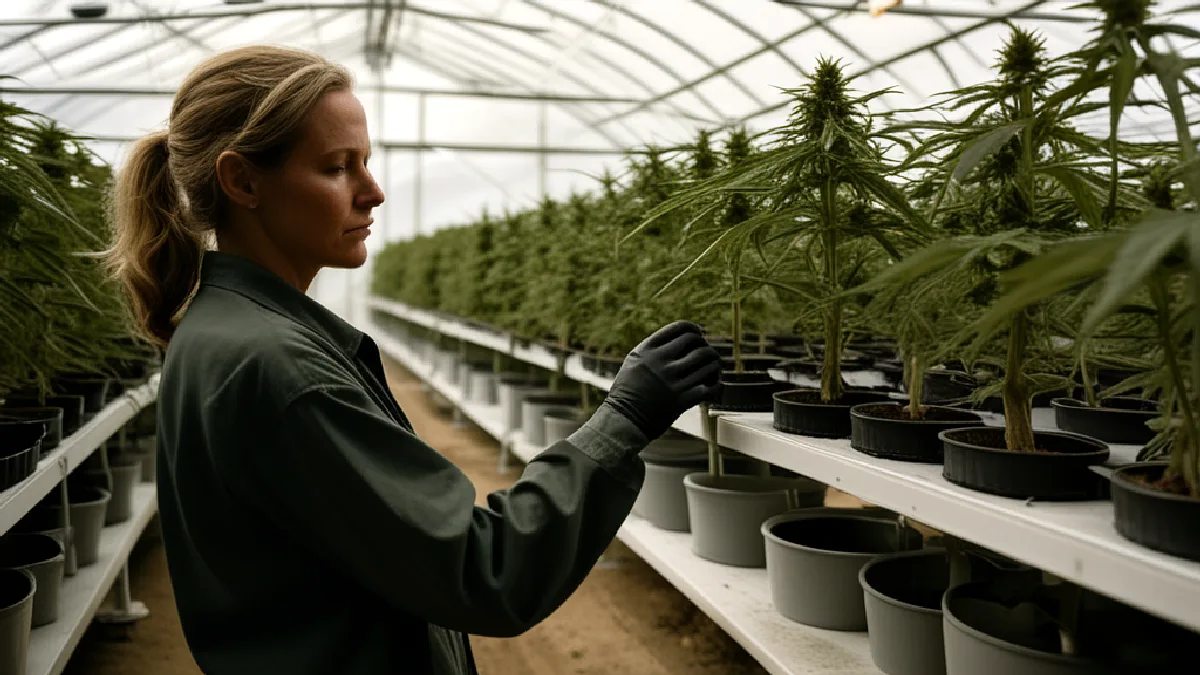
Nevada's tax restructuring is driven by a significant dip in state excise tax revenue, which peaked in 2021 before plummeting 40 percent by 2025, primarily due to widespread price compression.
Upon establishing the adult-use framework, the state imposed a 15 percent wholesale tax on the fair market value of cannabis, paired with a 10 percent retail excise tax. These taxes are in addition to standard local and state sales taxes, which fall between 6.85 percent and 8.375 percent, depending on the jurisdiction. In the earlier years following legalization, these taxes yielded robust contributions to the State Education Fund. However, evolving market conditions have drastically reshaped retail and wholesale prices.
Data from the Nevada Department of Taxation underscores the extent of this price compression. From 2019 to 2025, the average retail price for flower plummeted from $9.02 per gram to $4.46—a staggering 50 percent decrease. Infused edibles also suffered, seeing prices drop nearly 40 percent, from $19.77 per item to $11.81. Erica Scott, the subcommittee chair and economist, emphasized that these trends are a result of increased competition, production efficiencies, and the emergence of options like intoxicating hemp and illicit markets.
This dramatic decline in wholesale and retail price tags created a fundamental structural mismatch within the state's tax code. Specifically, the regulatory formula mandated by Nevada to calculate the estimated "fair market value" for wholesale taxation failed to adapt dynamically to the rapidly falling market prices. Cultivators and licensed producers found themselves heavily overtaxed because the assessed baseline value of their inventory remained artificially high compared to what the product could actually command in a deflationary commercial environment. Industry operators voiced severe consternation over this persistent lag, noting that it squeezed profit margins and threatened the long-term viability of legal businesses striving to compete against cheaper alternatives.
Product Category | 2019 Average Price | 2025 Average Price | Observed Price Drop |
|---|---|---|---|
Flower / Buds | $9.02 per gram | $4.46 per gram | 50 Percent Decrease |
Infused Edibles | $19.77 per item | $11.81 per item | 40 Percent Decrease |
How Would the Proposed Tax Restructuring Work?
The proposed tax restructuring aims to completely eliminate the 15 percent wholesale tax while slightly increasing the retail excise tax by 2 to 5 percentage points to counterbalance lost revenue.
Cultivators have voiced concerns over the existing wholesale tax calculation, arguing it doesn’t reflect the declining market prices and leads to excessive taxation. Assemblywoman Danielle Gallant of Henderson introduced the restructuring concept during the 2025 legislative session. While her original bill did not advance, lawmakers established an interim subcommittee to further explore the policy implications.
The findings suggest that retail taxes may need to rise to between 12 percent and 15 percent to effectively replace the revenue lost from the wholesale tax, which currently funds local government initiatives and the State Education Fund. In high-tax areas such as Clark County, consumers could see combined retail tax rates leap from around 18 percent to about 23 percent. However, medical cannabis cardholders would remain exempt from state retail excise taxes, safeguarding patients from immediate costs.
From an operational standpoint, state economists and regulatory leaders have evaluated how this transition would ripple through the supply chain. Erica Scott explained the initial economic assumption: cultivators might not immediately slash wholesale prices when the 15 percent tax is lifted, potentially maintaining those margins as profit in the short term. However, Cannabis Compliance Board (CCB) Executive Director Michael Miles, alongside industry representatives, expressed confidence that wholesale prices would eventually trend downward over the long haul, helping to balance out the modest retail tax increase.
Miles also pointed out that even with potential adjustments, Nevada's overall tax burden on the sector remains average or below average compared to other adult-use states nationwide. Nevertheless, the interim committee opted to take no formal action on the study's conclusions during its initial review phase, leaving open the possibility of picking up the mantle during the 2027 Legislative Session after gathering more precise consumer behavior data.
What This Means for Virginia and DMV Residents
The unfolding tax policy discussion in Nevada serves as a critical lesson for adult-use consumers and industry analysts in Virginia and the wider DMV region. As Virginia works to establish a fully operational retail market, it illustrates the intricate balancing act needed to align state tax revenue aspirations with educational funding and a thriving competitive legal marketplace that can effectively compete against illicit operations and unregulated intoxicating hemp products.
With Washington DC facing unique congressional constraints on retail licensing and Maryland progressing on its adult-use framework, legislators are realizing that static wholesale tax models can be detrimental to cultivators during deflationary periods. As Virginia lawmakers continue refining their regulatory statutes, observing how western states evolve their tax policies provides essential insights for creating resilient, consumer-friendly supply chains.
Furthermore, the policy dilemmas observed in Nevada—particularly regarding the economic tension between regulated cannabis operators and the unregulated or loosely supervised intoxicating hemp sector—resonate strongly across the DMV footprint. Lawmakers in Virginia and surrounding jurisdictions are grappling with how to handle an estimated $45 million parallel market of hemp-derived THC edibles and beverages sold widely in convenience stores, smoke shops, and gas stations. Nevada’s subcommittee recommendation to strive for tax parity between intoxicating hemp and traditional cannabis highlights a broader national reckoning over regulatory oversight and fair taxation.
Timeline and Next Steps for Nevada Reform

The Interim Legislative Committee on Revenue has yet to take formal action concerning the subcommittee's report, deferring potential legislative changes to the upcoming 2027 Legislative Session. Lawmakers seek additional data on consumer price sensitivity and the ramifications of retail tax hikes in neighboring jurisdictions. Additionally, state regulators are monitoring the unregulated $45 million intoxicating hemp market and advocating for tax parity between licensed cannabis and intoxicating hemp items sold at gas stations and smoke shops.
As state officials prepare for future legislative debates, they must carefully weigh how adjustments to the retail excise tax will influence consumer purchasing habits. The subcommittee report emphasized that any ultimate shift must preserve funding streams for local governments, regulatory operations, and the State Education Fund without inadvertently driving everyday buyers back toward illicit or untaxed channels.
Why are Nevada cannabis tax revenues declining?
The state witnessed a 40 percent decline in cannabis tax revenues from 2021 to 2025, primarily due to severe price compression as the retail market matured.
What taxes do cannabis businesses currently pay in Nevada?
Licensed operators currently pay a 15 percent wholesale tax on estimated fair market value, a 10 percent retail excise tax, and standard sales taxes ranging from 6.85 percent to 8.375 percent.
Would medical cannabis patients face higher taxes under the proposal?
Medical cannabis cardholders will remain exempt from the state retail excise tax, meaning they are shielded from immediate price increases under the proposed tax increases.
How much would retail taxes increase under the study's recommendations?
The subcommittee’s report indicated that retail excise taxes would need to rise by 2 to 5 percentage points, bringing total retail tax rates to between 12 percent and 15 percent to replace the wholesale tax revenue.
When will Nevada lawmakers vote on these tax changes?
No formal action was taken during the initial study phase, but the revenue committee might consider formal revisions during the 2027 Legislative Session.
Our take: Bud Lords emphasizes that transparent, sustainable tax structures are crucial for maintaining local operators' competitiveness against grey-market alternatives, ensuring adult-use consumers continue to access safe, lab-tested products without facing excessive tax burdens.
More on this topic: Green Point Wellness Millersville: Maryland Dispensary Guide — our full maryland cannabis: dispensaries & laws guide.
More in Maryland Cannabis: Dispensaries & Laws
Written by Cannabis Science AI
Bud Lords AI Cannabis News Writer
Research scientist specializing in cannabis studies, terpene research, cannabinoid science, cultivation technology, and peer-reviewed cannabis research. Translates complex scientific findings into practical insights.
Expertise: science · research · terpenes · cannabinoids · cultivation · technology
This AI-assisted article was created using the named Bud Lords newsroom personality and reviewed under Bud Lords editorial standards.




Comments