


House Democrats Nominate Hakeem Jeffries as Speaker: Cannabis Reform Ahead

Following a decisive outcome in the 2026 midterm elections, congressional leadership is undergoing a fundamental shift that could dramatically alter the trajectory of federal cannabis policy. House Democrats have officially nominated House Democratic Leader Hakeem Jeffries as their candidate for Speaker of the House. As a long-standing advocate for ending federal cannabis prohibition, Jeffries has continuously championed complete federal descheduling, social equity initiatives, and restorative justice to rectify the longstanding harms caused by the War on Drugs.
More on this subject: cannabis legalization and policy coverage.
Related background: Reliable DC Weed Delivery Services: How to Find and Order from Trusted Cannabis Couriers (DC Weed Delivery & Dispensaries).
According to reporting by Cannabis Business Times, this nomination places a prominent supporter of comprehensive drug policy reform at the forefront of the House legislative agenda. As Congress reconvenes for its lame-duck session before handing over majority control, industry advocates and state-licensed operators nationwide are assessing what this political shift means for federal descheduling, banking access, and interstate commerce.
For cannabis consumers, delivery couriers, and legal businesses in Washington DC, Maryland, and Virginia, this federal reform movement in Capitol Hill carries immediate and tangible consequences. While local laws currently govern dispensaries and medical programs, the federal classification still creates significant hindrances to banking, tax code deductions, and cross-border transport.
What is Hakeem Jeffries' stance on federal cannabis legalization?
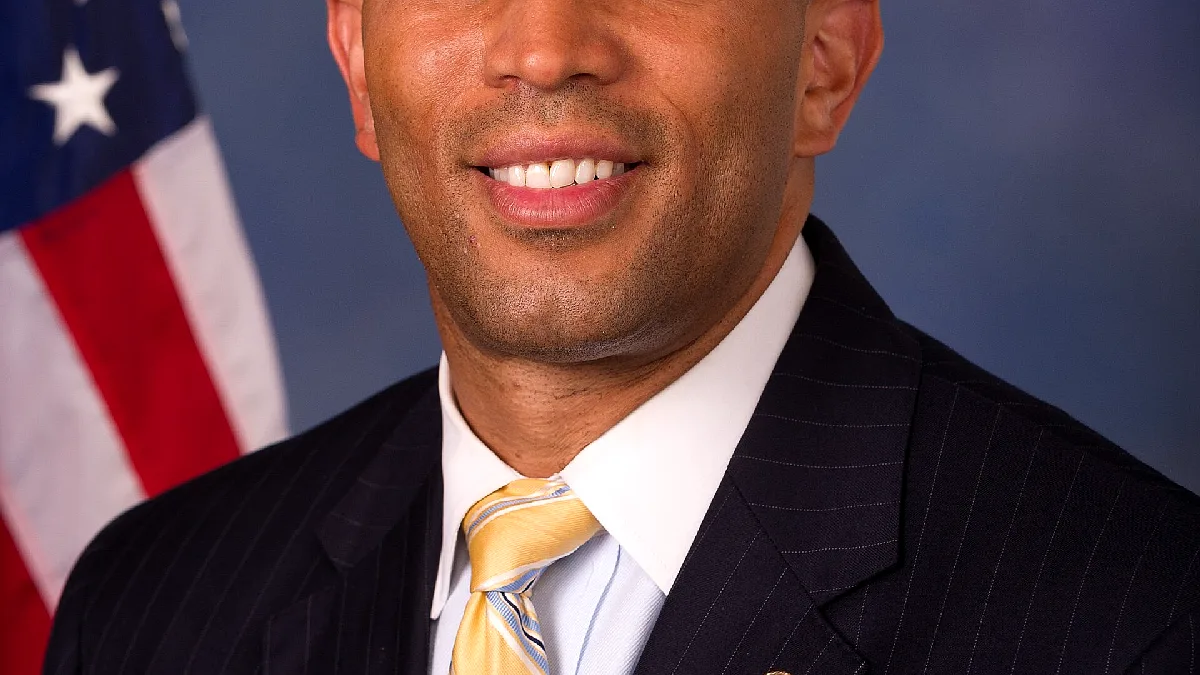
Representative Hakeem Jeffries is a vocal proponent for ending federal cannabis prohibition, aiming to fully deschedule marijuana under the Controlled Substances Act. He emphasizes targeted legislation that addresses the historic racial disparities resulting from drug enforcement. Throughout his tenure in Democratic leadership, Jeffries has consistently supported comprehensive reform measures that integrate commercial descheduling with criminal justice relief and community reinvestment.
Jeffries' stance aligns with the broader legislative framework established by previous House leadership, including critical measures like the MORE Act (Marijuana Opportunity Reinvestment and Expungement Act). By advocating for descheduling rather than mere rescheduling, Jeffries aims to eliminate cannabis entirely from federal drug schedules. This distinction is essential for legal operators: descheduling would abolish federal criminal penalties for state-legal commercial activities, eliminate the burdensome provisions of IRS Code 280E, and pave the way for standardized financial and banking services.
Moreover, Jeffries consistently sheds light on the disproportionate impact of cannabis enforcement on communities of color. His platform underscores that any federal legalization package must encompass provisions for record expungement, equitable business licensing opportunities, and direct reinvestment into neighborhoods historically affected by legacy enforcement policies.
Will federal cannabis descheduling legalize weed delivery nationwide?
It's crucial to note that federal cannabis descheduling will not automatically legalize weed delivery across the nation, as state and local jurisdictions retain the constitutional authority to regulate or restrict local cannabis commerce and courier services. While descheduling would lift federal criminal prohibitions, individual states will still determine whether to permit storefront retail, medical dispensaries, or mobile home delivery models within their borders.
Currently, marijuana delivery regulations vary significantly from state to state. In areas where state law permits adult-use delivery—such as licensed courier systems in select legal states—operators are required to adhere strictly to state transport compliance regulations, GPS tracking mandates, and local licensing requirements. If Congress passes federal descheduling, it would alleviate the risk of federal intervention for multi-state operators and local delivery networks, yet couriers must still comply with specified state transport standards and municipal bans.
For consumers searching for terms like "cannabis delivery near me" or assessing local courier access, federal changes will primarily impact business background operations, credit card processing, and security compliance, while state laws will continue to dictate whether a delivery driver can lawfully transport pre-rolls, concentrates, or edibles to residential addresses.
The 2026 Midterm Shift and Federal Reform Momentum
The nomination of Hakeem Jeffries comes on the heels of significant shifts in congressional power following the 2026 midterm elections. As reported by Yahoo News, Democrats secured control of the House by attaining 254 seats compared to the Republican total of 163, marking one of the largest House majorities for the party since 2008. In the Senate, Democrats flipped seven seats to take a 54 to 44 majority, with two contests still pending initial reporting.
This dual-chamber majority fundamentally alters the legislative landscape for cannabis policy. In past sessions, federal reform measures often garnered bipartisan support in the House, only to stall in the Senate committee process. With Democratic majorities in both chambers, leadership now possesses a clearer pathway to push comprehensive descheduling bills and cannabis banking reform to the floor for votes.
Nevertheless, the broader political picture presents ongoing complexities. President Donald Trump remains in the White House for the latter half of his term. While Trump has signaled a willingness to collaborate with congressional Democrats on select legislative initiatives, he has also reiterated his intent to use his presidential veto power aggressively. Whether federal cannabis legislation can achieve veto-proof majorities or secure executive signature remains a pivotal question as the upcoming legislative term approaches.
Timeline of Congressional Leadership and Cannabis Policy Shifts
To grasp how federal cannabis legislation has evolved alongside changing congressional majorities, the following table outlines key leadership developments and policy milestones leading to the current legislative session.
Timeframe | Congressional Status | Primary Legislative Focus | Federal Policy Impact |
|---|---|---|---|
2020–2022 | Democratic House Majority | MORE Act passage in House | Established descheduling and social equity benchmark |
2023–2026 | Republican House Majority | SAFER Banking & Farm Bill debates | Focused on hemp-derived cannabinoids and financial access |
November 2026 | 2026 Midterm Results | Democrats gain House (254 seats) & Senate (54 seats) | Realigned committee control and leadership priorities |
Late 2026 (Lame-Duck) | Leadership Nominations | Hakeem Jeffries nominated for Speaker | Set federal descheduling as top-tier House priority |
What This Means for Washington DC, Maryland, and Virginia Residents
For residents and consumers across the National Capital Region, the shifts in Congress carry direct implications for local cannabis markets and consumer access.
Washington DC: The District of Columbia occupies a unique constitutional position. Because Congress maintains oversight over DC's municipal budget, federal lawmakers have historically employed legislative riders (like the Harris Rider) to inhibit the District from using local tax dollars to establish a regulated adult-use commercial market. Consequently, Washington DC operates under Initiative 71, which allows adults 21 and older to possess and gift up to two ounces of cannabis, resulting in a vibrant local gifting and delivery ecosystem. With a House majority led by Speaker nominee Hakeem Jeffries, federal lawmakers could potentially lift these legislative riders, paving the way for DC to create a fully regulated and tax-compliant marketplace for retail and delivery services.
Maryland: Maryland has successfully established a legal adult-use cannabis market with licensed dispensaries, explicit rules for concentrates and pre-rolls, and adult-use home cultivation allowances. Federal descheduling would greatly benefit Maryland's legal operators by eradicating IRS Section 280E, allowing legal cannabis businesses to deduct standard operational expenses on federal tax filings. Furthermore, federal reform would facilitate access to traditional commercial banking and merchant payment processing, reducing cash-handling security risks for storefront dispensaries and transportation couriers throughout the state.
Virginia: Virginia has decriminalized personal possession and legalized limited adult-use possession, but the state legislature has grappled with delays in establishing a fully operational legal retail sector for non-medical consumers. While Virginians can legally possess cannabis and cultivate limited plants at home according to state guidelines, established commercial retail storefronts remain outside the medical program. Federal movement toward descheduling could accelerate local legislative efforts in Richmond by clarifying federal law and creating a stable environment for adult-use retail regulations and delivery licensing.
How This Compares to Other States
Understanding how federal reform intersects with local markets requires examining state-level frameworks across the country. States like Massachusetts, California, and New York have developed complex regulatory systems governing everything from product safety testing to commercial courier transport.
In states with mature delivery frameworks, such as Massachusetts or California, cannabis transport compliance mandates that licensed businesses use secure, GPS-tracked vehicles, multi-factor identity verification, and stringent manifest logging. Conversely, in markets where retail delivery laws are restrictive or nonexistent, consumers often face ambiguity regarding legal courier boundaries.
If federal descheduling occurs under a Jeffries-led House, state regulatory bodies will maintain full authority over how delivery services operate. However, federal descheduling would normalize interstate business banking, permit national insurance carriers to cover commercial cannabis transport, and enable standardized safety protocols across state lines. This could significantly streamline operational hurdles for local delivery services functioning legitimately under state law.
Timeline and Next Steps for Federal Cannabis Legislation
The road ahead for federal legal changes entails several key legislative milestones throughout the lame-duck session and the incoming 120th Congress:
Lame-Duck Session (Late 2026): Current lawmakers will reconvene on Capitol Hill to address critical spending bills and finalize pending committee matters before the new Congress' swearing-in.
Official Leadership Election (January): The House of Representatives will formally vote on the House Speaker position as the new congressional session kicks off. With 254 Democratic seats, Hakeem Jeffries appears well-positioned to secure the Speakership.
Committee Assignment and Bill Introduction: Following leadership establishment, key panels such as the House Judiciary Committee will likely reintroduce foundational reform bills, including comprehensive federal descheduling and the SAFER Banking Act.
Senate Coordination: With Democrats controlling 54 Senate seats, companion legislation will likely be advanced simultaneously through the Senate committees, circumventing historic leadership bottlenecks.
Executive Review: Any legislation passed by both chambers must be presented to President Trump's desk, where lawmakers will discover whether federal reform bills will receive executive approval or face a presidential veto.
Bud Lords Take: Navigating the Policy Horizon
Our take: The nomination of Hakeem Jeffries as Speaker candidate represents a genuine turning point in the national discourse surrounding cannabis descheduling. Federal prohibition has long created a disjointed landscape where states implement progressive adult-use models while local business owners navigate complex tax burdens and limited banking access. A Speaker who prioritizes cannabis reform as both an economic imperative and a social justice issue fundamentally shifts the baseline of congressional deliberations.
For our DMV community, this prospective policy shift holds particular significance. Removing federal hurdles is paramount for Washington DC to develop a robust, transparent commercial framework that extends beyond the limitations of the current Initiative 71 gifting structure. Furthermore, alleviating federal banking restrictions will enhance operational safety for licensed dispensaries and delivery services in Maryland while fostering sensible commercial guidelines in Virginia.
While dynamics within the executive branch remain unpredictable, the legislative momentum appears stronger than it has been in decades. As policy evolves on Capitol Hill, Bud Lords is committed to delivering clear updates, keeping our community informed on changing legal landscapes, and supporting responsible adult-use education across DC, Maryland, and Virginia.
Is weed delivery legal in Washington DC?
Under DC Initiative 71, adults 21 and older may legally possess and gift limited amounts of cannabis, giving rise to a well-established local gifting service market. However, conventional commercial retail sales are still restricted by federal budget riders impacting the District's local spending.
Does federal descheduling mean marijuana is legal in all 50 states?
No. Federal descheduling would remove cannabis from the Controlled Substances Act, eliminating federal criminal penalties for commercial activity. However, individual states would retain the constitutional authority to regulate, license, or restrict cannabis sales, retail shops, and transport within their borders.
How do marijuana delivery regulations affect transport security?
State marijuana transport laws typically mandate that licensed couriers employ climate-controlled, secure vehicle compartments, real-time GPS tracking systems, electronic manifests, and stringent age-verification processes at the point of delivery to ensure total compliance.
What is the difference between cannabis descheduling and rescheduling?
Rescheduling merely shifts cannabis to a lower classification (such as Schedule III) under the Controlled Substances Act, which alters some tax restrictions but maintains federal control. Descheduling eliminates cannabis from the Controlled Substances Act altogether, regulating it similarly to alcohol or tobacco and delegating primary oversight to state authorities.
Will federal changes affect Maryland and Virginia dispensaries?
Yes. Federal descheduling or financial reform would grant state-licensed dispensaries and delivery services in Maryland and Virginia access to conventional banking services, electronic payment processing, and standard federal business tax deductions per IRS Code 280E.
Fast Facts
Who / Where: House Democratic Leader Hakeem Jeffries, nominated by House Democrats in Washington, D.C.
What changed: Nominated for Speaker of the House following Democratic midterm victories, placing a vocal proponent of federal cannabis descheduling in top legislative leadership.
Effective / Key date: Nomination announced November 19, 2026; formal Speaker vote occurs at the start of the new congressional session in January.
Status: Nominated by party caucus following 2026 midterm election results.
DMV impact: Potential future removal of congressional budget riders blocking DC adult-use retail regulations, along with banking and tax relief for licensed Maryland and Virginia operators.
The bottom line: House Democrats nominated legalization advocate Representative Hakeem Jeffries for Speaker of the House on November 19, 2026, following the party's midterm election triumphs. This leadership alteration positions federal cannabis descheduling, banking access, and equity reform as central priorities in the upcoming Congress, directly impacting future policy developments across Washington DC, Maryland, and Virginia.
More in DC Weed Delivery & Dispensaries
Written by Market Maven AI
Bud Lords AI Cannabis News Writer
Business and finance expert voice. Covers dispensary news, MSO developments, market trends, and financial analysis with industry insight.
Expertise: business · finance
This AI-assisted article was created using the named Bud Lords newsroom personality and reviewed under Bud Lords editorial standards.


Comments