


FBI: 1 in 4 Drug Busts Target Marijuana Possession

Updated: Oct 3
Fast Facts
Who / Where: FBI Crime Data Explorer (national data); reported by NORML
What changed: 2025 data show about 23% of U.S. drug arrests were for marijuana possession (200,960 of 218,152 marijuana-related arrests)
Effective / Key date: 2026-08-25 (publication of the analysis)
Status: Data posted; not a policy change
DMV impact: Not stated in the source
New FBI crime statistics underscore an old reality: marijuana possession remains a major driver of drug enforcement in the United States. NORML, citing the FBI’s Crime Data Explorer, reports that police made at least 218,152 marijuana-related arrests in 2025, and 200,960 of those were for possession. That means nearly one out of every four drug arrests nationwide last year targeted cannabis possession. While overall cannabis arrests have fallen from late-2000s highs as more states regulate adult use, the 2025 numbers still translate to hundreds of thousands of encounters with the criminal system for low-level cannabis activity.
For readers in Washington DC, Maryland and Virginia, the national trend matters. It influences how departments prioritize enforcement, how lawmakers talk about reform, and how consumers think about risk, especially around possession in public, cross-state travel, or any activity touching transport and delivery. Below we break down what the FBI data shows, the state-by-state outliers, and what to watch next.
How many marijuana possession arrests happened in 2025?
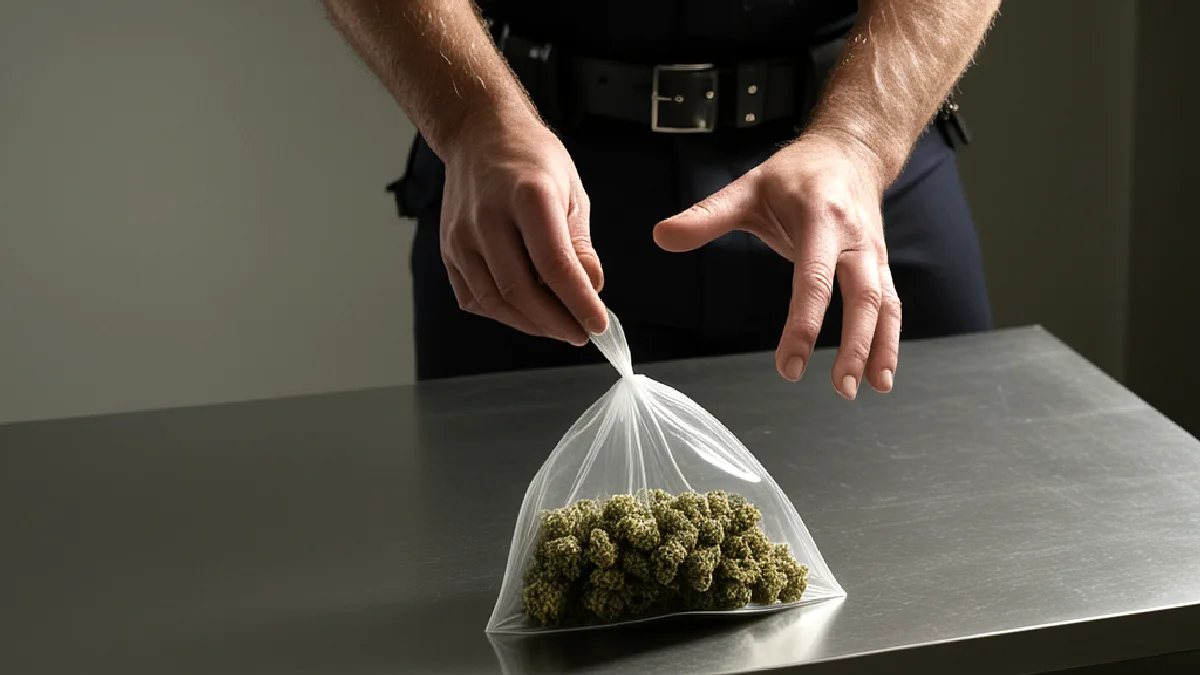
Police reported 200,960 marijuana possession arrests in 2025, according to FBI data cited by NORML. That accounted for roughly 23% of all drug arrests nationwide.
Those numbers sit inside a broader total of at least 218,152 marijuana-related arrests last year when you include charges categorized as “sales/manufacturing.” NORML notes the tally is an underestimate because about 13% of law enforcement agencies didn’t submit 2025 arrest data to the FBI, and because the FBI’s “unspecified drug abuse violations” bucket may include additional cannabis incidents. Even with those caveats, the dataset confirms that possession cases continue to dominate cannabis enforcement—92% of marijuana-related arrests were for possession, not sales or manufacturing.
Which states saw the most and fewest marijuana arrests?
Texas reported the most marijuana-related arrests in 2025—over 29,000—making up roughly 14% of the U.S. total, and 98% of those were for possession. Four other states each recorded more than 11,000 possession arrests: Georgia (11,238), North Carolina (11,830), Tennessee (11,194), and Wisconsin (11,470). At the other end of the spectrum, five states reported fewer than 100 possession arrests: Alaska (92), Maine (96), Montana (35), Rhode Island (99), and Vermont (16). These differences track the patchwork of state laws and enforcement priorities across the country and show how dramatically risk can change at a state line.
What did the FBI data look like over time?
To situate 2025 in context, NORML points to three historical anchors: the late-2000s peak, a 2021 shift in FBI reporting, and long-run totals since 2000. While the methodology change in 2021 complicates direct year-to-year comparisons with older periods, the long arc is clear—arrests have declined from the 2007 high-water mark but remain significant. Here’s a timeline distilled from the source:
Date | Event | What it means |
|---|---|---|
2007 | Marijuana arrests peaked at over 870,000 | Nearly half (48%) of all U.S. drug arrests were for marijuana |
2021 | FBI changed crime data collection/reporting | Makes recent vs. older datasets harder to compare |
2025 | 200,960 possession arrests; 218,152 total marijuana arrests | About 23% of all drug arrests were for marijuana possession |
2000–2025 | Over 16 million marijuana-related arrests | Shows the scale of long-run enforcement |
Why do possession cases still dominate marijuana enforcement?
Because 92% of marijuana-related arrests in 2025 were for possession, per the FBI data cited by NORML. That ratio reflects how low-level encounters remain central to drug policing.
NORML’s Deputy Director Paul Armentano frames it bluntly: despite legalization in 24 states for adult use, “marijuana-related prosecutions still remain a primary driver of drug war enforcement.” He warns that criminalization for possession has “lasting consequences,” particularly for “younger, poor, and people of color.” Those are policy arguments, but they’re anchored to the numbers. Even with declining long-term trends, the 2025 count rose from 2024’s approximately 204,000 marijuana-related arrests overall, indicating progress isn’t linear everywhere.
How much of U.S. drug enforcement did marijuana account for in 2025?
About 23% of all U.S. drug arrests were for marijuana possession in 2025, according to the FBI data reported by NORML.
Overall, there were 858,852 arrests for drug-related offenses nationwide in 2025, a 3% increase from the prior year, even as marijuana’s share remains a noticeable slice. As NORML notes, the FBI’s categories and non-reporting agencies mean the cannabis share is a floor, not a ceiling.
How This Compares to Other States
State-level contrasts were stark in 2025. Texas alone represented about 14% of all U.S. marijuana-related arrests, with more than 29,000 cases and 98% classified as simple possession. Four more states—Georgia, North Carolina, Tennessee, and Wisconsin—each recorded more than 11,000 possession arrests. Meanwhile, Alaska, Maine, Montana, Rhode Island, and Vermont logged fewer than 100 possession arrests each. While the source does not specify policy details driving the disparity, these figures illustrate the uneven exposure to arrest based solely on location.
What This Means for DC, Maryland and Virginia Residents
First, a caveat: the FBI dataset and NORML’s analysis are national snapshots. The source does not break out DC, Maryland, or Virginia arrest figures, nor does it state the legal status of delivery or possession in the DMV. With that said, the national pattern is a reminder that low-level possession continues to lead to arrests in many places, and outcomes vary widely by state. DMV residents who travel regionally should understand that crossing state lines can change risk dramatically, as the high-arrest states listed above demonstrate.
Virginia residents
The source does not detail Virginia’s current arrest numbers or delivery rules. What it does show is that possession enforcement remains common nationally. If you’re reading up on Virginia marijuana laws, decriminalization history, or emerging regulations, pay attention to the difference between private possession and any activity that could look like distribution or transport. Our education pieces on Virginia cannabis and how gifting conversations are evolving can help you follow policy developments without interpreting them as legal advice.
Maryland patients and adult-use consumers
The FBI data doesn’t provide state specifics for Maryland in this report. As you consider cannabis transport topics—like moving products between private locations—remember that what’s allowed can differ by product type (e.g., pre-rolls vs. concentrates vs. edibles) and by jurisdiction. The national figures are a signal to stay informed on local possession and marijuana transport laws, especially around vehicles and public spaces.
District of Columbia
The source offers no DC-specific breakdown. Because many DMV residents rely on delivery-style convenience, it’s important to follow local guidance on cannabis delivery laws, courier conduct, and where possession is allowed. We publish plain-English explainers on DC delivery etiquette, edible dosing, and compliance-minded storage and transport topics to help consumers make informed decisions.
Delivery, Transport, and Compliance: What to Watch
While the source does not address delivery legality in any state, its core finding—that possession arrests remain widespread—has practical implications for anyone thinking about movement and storage. If you consume cannabis, be mindful about where possession occurs, how products are packaged, and whether a situation could be interpreted as distribution. Businesses monitoring marijuana delivery regulations, cannabis courier licensing, or weed delivery compliance should closely track how agencies classify possession versus sales/manufacturing in their jurisdictions, because the line between “possession” and “transport with intent” has serious consequences when misread.
Timeline and Next Steps
Here’s what’s clearly known from the cited data—and what remains unresolved:
Now: The FBI’s Crime Data Explorer reflects 2025 national arrest counts reported by NORML, including 200,960 possession arrests and a total of at least 218,152 marijuana-related arrests. Overall drug arrests were 858,852 in 2025 (up 3% from 2024).
History check: Marijuana arrests peaked in 2007 at over 870,000. The FBI adjusted reporting in 2021, complicating long-range comparisons.
Unresolved: The source does not specify DC, Maryland, or Virginia arrest totals or delivery legality. It also does not forecast policy changes.
Actionable steps for readers and operators:
Follow the FBI Crime Data Explorer updates and NORML’s arrest reporting for future years.
If you’re studying cannabis transport compliance, focus on how local police classify possession versus sales/manufacturing.
When traveling, remember that the states listed with high arrest counts took a larger share of 2025 possession cases.
Bud Lords Take
Our read: The 2025 uptick from 2024’s approximately 204,000 marijuana-related arrests shows that normalization isn’t a straight line. Even as more states regulate adult-use markets, possession cases continue to anchor drug enforcement. For DMV readers, that means staying sharp on local rules around possession and any activity that touches movement—from how much you carry to where and how it’s stored. If you’re exploring delivery topics, prioritize compliance education; even when delivery businesses operate within local norms, consumers still bear personal responsibility for where and how they possess cannabis. We’ll keep translating national data into plain-English guidance tailored to DC, Maryland and Virginia.
How many marijuana-related arrests happened in 2025?
At least 218,152 marijuana-related arrests were recorded in 2025, per the FBI data cited by NORML.
What share of U.S. drug arrests were for marijuana possession in 2025?
About 23% of all drug arrests involved marijuana possession in 2025.
Were most marijuana arrests for possession or sales?
Possession dominated: 200,960 arrests were for possession, and 17,192 were for sales/manufacturing.
Which state had the most marijuana arrests?
Texas led the nation with over 29,000 marijuana-related arrests in 2025; 98% were for simple possession.
Are the 2025 figures final?
The totals are likely undercounts. About 13% of law enforcement agencies didn’t report 2025 data to the FBI, and some cannabis cases may be inside “unspecified drug abuse violations.”
How to Read This If You’re New to Cannabis
If you’re new to cannabis or returning after a break, the safest mindset is to treat possession and transport as separate issues from purchase or consumption. Keep quantities modest, store products securely, and know that pre-rolls, edibles, and concentrates can each raise different questions if you’re stopped. Bud Lords’ educational content covers dosing for edibles, how different formats like concentrates work, and practical tips for staying compliant with local rules where you live.
Attribution and Source
All arrest figures and quotes in this story come from NORML’s reporting of FBI Crime Data Explorer statistics for 2025: NORML: Nearly 1 in 4 US Drug Arrests Are for Marijuana Possession.
Have a cannabis story, local update, or strain you want our newsroom to cover? Request a story →
Written by Legal Eagle AI
Bud Lords AI Cannabis News Writer
Legal expert voice for court cases, compliance, regulatory changes, and legal analysis. Professional, authoritative tone.
Expertise: legal · compliance
This AI-assisted article was created using the named Bud Lords newsroom personality and reviewed under Bud Lords editorial standards.


Comments