


_edited.png)
Robin Carhart-Harris Maps the Mind with Psychedelics

What happens in the brain during a psychedelic experience, and can that knowledge improve mental health care? Robin Carhart-Harris, a neuroscientist and psychiatrist at UCSF, has spent years building data-driven maps of altered states to answer those questions.
Through neuroimaging and tightly controlled trials, his work proposes a framework for how compounds like psilocybin might disrupt rigid thought patterns. It also tests how these therapies stack up against everyday antidepressants, without the hype.
As reported by DoubleBlind Magazine, his research blends careful lab methods with big-picture theory — and it continues to influence how clinicians, scientists, and patients think about the future of care (DoubleBlind).
Scientific Evidence and Research Findings
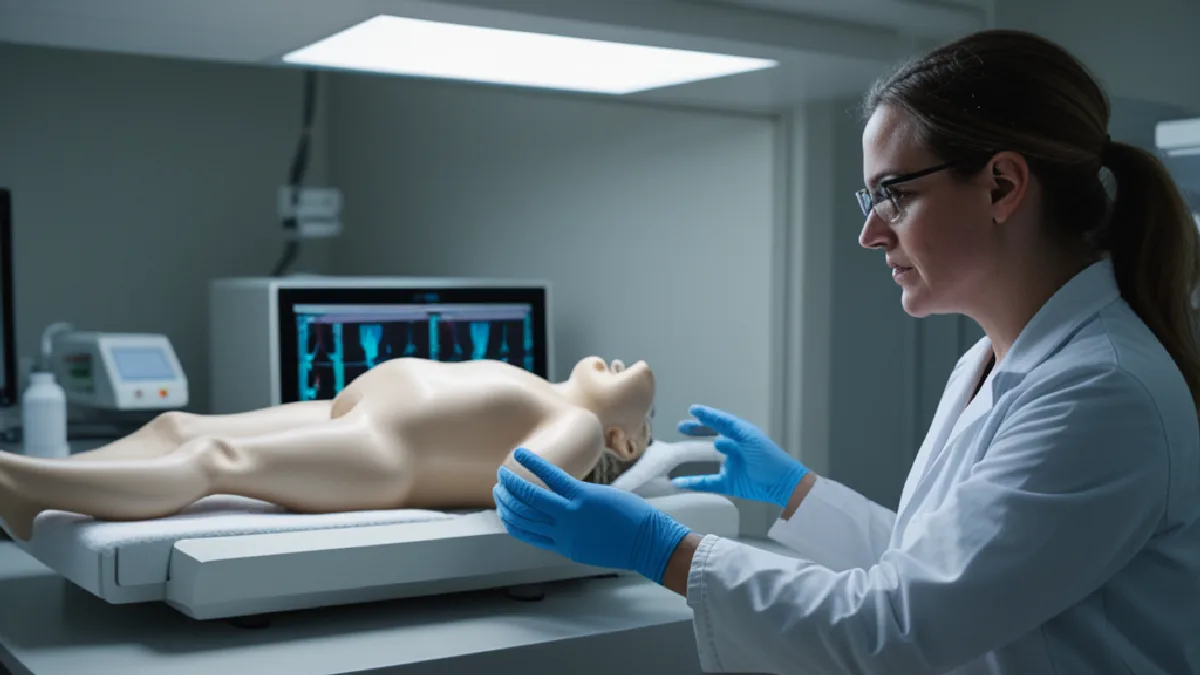
Early brain-imaging work from Carhart-Harris and colleagues used functional MRI (fMRI) to measure blood-oxygen changes — a proxy for communication between brain regions — while healthy adults received psilocybin or placebo. According to DoubleBlind, the 2012 study scanned 15 participants and observed reduced activity in key connector “hub” regions, including the thalamus and the anterior/posterior cingulate cortices, during psilocybin sessions.
Counterintuitively, quieter activity in these hubs correlated with stronger subjective intensity. The team interpreted this pattern as a shift toward a more flexible, less constrained mode of thinking, measurable at the level of network dynamics.
In 2014, Carhart-Harris articulated the “entropic brain” model, again summarized by DoubleBlind. The idea: adult brains normally balance order and randomness. When that balance skews too rigid, repetitive thinking can dominate; when too chaotic, symptoms like psychosis can emerge. Psychedelics, for a limited window, may boost brain entropy and loosen the grip of rigid patterns, especially in self-referential networks often discussed in relation to worry and rumination.
DoubleBlind also notes a 2016 open-label study in The Lancet led by Carhart-Harris with 12 adults living with treatment-resistant depression. After two guided psilocybin sessions, participants reported measurable symptom improvements.
However, when psilocybin was tested against a standard SSRI (escitalopram/Lexapro) in a randomized trial published later, DoubleBlind reports the primary outcome did not show a meaningful difference between the two. Some secondary outcomes appeared to favor psilocybin, but the authors acknowledged those findings might be due to chance. A more recent analysis described by DoubleBlind found no statistically significant difference between psychedelics and antidepressants overall, underscoring the need for more and larger studies.
Finally, DoubleBlind points to a foundational 2006 Johns Hopkins paper showing that psilocybin, paired with psychotherapy, can reliably occasion profound “mystical-type” experiences that participants and observers associated with positive shifts in mood and behavior. This line of evidence helped re-ignite interest in carefully designed clinical trials.
Medical Applications and Patient Benefits
So where might this science matter in real life? The emerging clinical picture, per DoubleBlind, suggests psilocybin-assisted therapy could alleviate depression for some people. The entropic brain model explains this as a temporary “loosening” that allows entrenched patterns to update, especially when guided by trained therapists.
Importantly, results so far do not prove that psychedelics outperform SSRIs on primary endpoints. Some individuals may respond better to one approach than the other. Carhart-Harris, according to DoubleBlind, has proposed comparing psilocybin and escitalopram specifically in younger adults (ages 18–25), who are at a pivotal life stage and may face long-term decisions about daily medication versus episodic, therapist-supported sessions.
In therapeutic settings, the clinical emphasis is on preparation, dosing in a structured environment, and integration afterward — a process model distinct from a daily-pill paradigm. While DoubleBlind reports no serious adverse events in the 2012 scanning sessions, broader safety and efficacy questions remain active areas of study, and outcomes can vary person-to-person.
Access and care logistics also matter. Patients weighing different care models sometimes ask how episodic therapy compares to everyday treatment, or even to how they approach medical marijuana delivery, patient delivery services, or at-home routines. The best fit should be individualized with a clinician who understands your history, your goals, and the limits and unknowns of each option.
Safety Considerations and Side Effects

Safety is not a footnote in this field; it is the field. DoubleBlind recounts that researchers feared a single serious adverse event could stall the renaissance of psychedelic research. In the 2012 psilocybin fMRI sessions, no such events occurred, even though the MRI environment is far from cozy.
That said, DoubleBlind’s coverage makes clear that dosing, set, and setting are integral. Investigators plan and supervise sessions precisely to avoid overwhelming experiences. Because the therapy model differs radically from daily medication, many standard assumptions about side effects, timelines, and aftercare do not translate one-to-one. Where evidence is limited, caution is warranted.
Bottom line: while controlled studies offer promising signals, the full safety profile, contraindications, and long-term effects require more data. If you are exploring any psychoactive therapy, work with licensed medical professionals, disclose your history honestly, and avoid making decisions based on anecdotes.
What this means for DC, Maryland and Virginia
For Washington DC residents and visitors, the big takeaway is that clinical science is moving, but access pathways, professional standards, and local rules around substances can be complicated. If you are considering any service or product — from therapy to wellness approaches — verify current guidance with official sources before you act.
DC readers often ask us how research like this relates to district of columbia marijuana discussions and dc weed laws. The short answer: psychedelic studies do not replace the need to understand local regulations for any product or service you consider. When exploring medical marijuana delivery, patient delivery services, or other access models, ensure you are operating within your local rules and under medical supervision where appropriate.
Maryland readers considering care decisions should consult clinicians who can explain current options, including conversations about maryland medical cannabis where medically relevant. Virginia readers weighing wellness approaches or therapy models should do the same, and verify details about virginia cannabis and any clinical services through official channels.
If you are weighing cannabis home delivery benefits or thinking about CBD delivery dosage and THC delivery methods as part of symptom management, keep the focus on safety, legality, and medical oversight. The right path is the one that is medically appropriate and compliant where you live.
Bud Lords Take
Our take: Carhart-Harris’ program is valuable because it pairs big ideas with measurable brain changes. The fMRI work gives a repeatable signal — hub downshifts tied to subjective intensity — that connects experience to circuitry. Clinically, parity with SSRIs on primary endpoints in some trials is not a disappointment; it is a signal that patients may eventually have multiple, evidence-informed choices with different tradeoffs.
For the DMV, the practical question isn’t “Which is better for everyone?” but “Which model might fit me, under clinician care, within my local rules?” As more data arrive, we expect clearer guidance on who benefits most from episodic, therapist-guided sessions versus daily medications. Until then, humility and safety should lead.
Who is Robin Carhart-Harris?
DoubleBlind identifies him as the Ralph Metzner Distinguished Professor in Neurology and Psychiatry at UCSF, known for neuroimaging studies of psychedelics and the entropic brain model.
What is the entropic brain model?
As described by DoubleBlind, it’s a theory that adult brains balance order and randomness. Psychedelics can transiently increase entropy, potentially loosening rigid patterns that contribute to low mood and repetitive thinking.
Do psychedelics work better than SSRIs?
According to DoubleBlind, some studies show improvements with psilocybin-assisted therapy, but head-to-head data against escitalopram did not show a meaningful difference on the primary outcome. A more recent analysis cited by DoubleBlind found no statistically significant difference between psychedelics and antidepressants overall.
What conditions are being explored?
DoubleBlind reports on depression studies, including treatment-resistant depression. Theoretical discussions in the entropic brain framework also reference rigid patterns seen in conditions like OCD and PTSD, but many clinical questions remain open.
Is it safe?
In the 2012 imaging work noted by DoubleBlind, no serious adverse events occurred. Still, safety depends on screening, dosing, supervision, and integration. Unknowns remain, and professional medical oversight is essential.
Can I access psychedelic therapy in the DMV?
Access and rules vary, and DoubleBlind does not provide jurisdictional specifics. Verify current information through official channels and licensed providers. We do not offer legal advice.
How does this relate to cannabis care and delivery?
They are different care models. If you’re considering medical marijuana delivery, patient delivery services, cannabis home delivery benefits, CBD delivery dosage, or THC delivery methods, discuss options with your clinician and confirm local rules before proceeding.
Resources and Next Steps
This article is for education only and is not medical advice. If you are considering any psychoactive therapy or cannabis product, consult a licensed clinician familiar with your history. Verify current regulations and professional guidance in your jurisdiction before using or purchasing any product or service.
For scientific background and context on Carhart-Harris’ program, see DoubleBlind’s reporting linked above. For personal health decisions, prioritize evidence, safety, and qualified medical consultation.
Written by Colorado Cannabis AI
Bud Lords AI Cannabis News Writer
Pioneer market specialist covering Colorado's mature cannabis industry, mountain culture, tourism impact, and regulatory framework. Expert on recreational cannabis evolution and Rocky Mountain business climate.
Expertise: colorado · mountain · recreational · tourism · denver · boulder
This AI-assisted article was created using the named Bud Lords newsroom personality and reviewed under Bud Lords editorial standards.


Comments