


_edited.png)
Ohio Hemp Businesses: Adult-Use Rules Favor Big Marijuana

Fast Facts
Who / Where: Ohio hemp businesses; Ohio Department of Commerce’s Division of Cannabis Control (DCC)
What changed: Hemp operators allege adult-use enforcement favors “Big Marijuana,” while the DCC says intoxicating hemp was not legalized
Effective / Key date: 2023 (voter approval of the initiated statute)
Status: Ongoing dispute; DCC says it is enacting the voter-approved marijuana regulatory system
DMV impact: Not stated in the source
Ohio’s adult-use rollout is facing friction between hemp businesses and state regulators. Hemp operators claim the state is using its new marijuana rules to target their industry while dispensaries sell higher-THC products under different standards.
State officials counter that intoxicating hemp was never legalized by the voter-approved statute, and the Division of Cannabis Control (DCC) is focused on marijuana regulation, not hemp. This split leaves small hemp brands arguing they’re held to a tougher bar than vertically integrated “Big Marijuana.”
Ganjapreneur reported the dispute and included comments from both sides, including a public statement from the Ohio Department of Commerce and remarks from hemp operator Wesley Bryant to Statehouse News Bureau. Read their coverage for the full on-record statements: https://ganjapreneur.com/ohio-hemp-businesses-say-adult-use-cannabis-law-favors-big-marijuana/
Did Ohio’s adult-use law legalize intoxicating hemp?
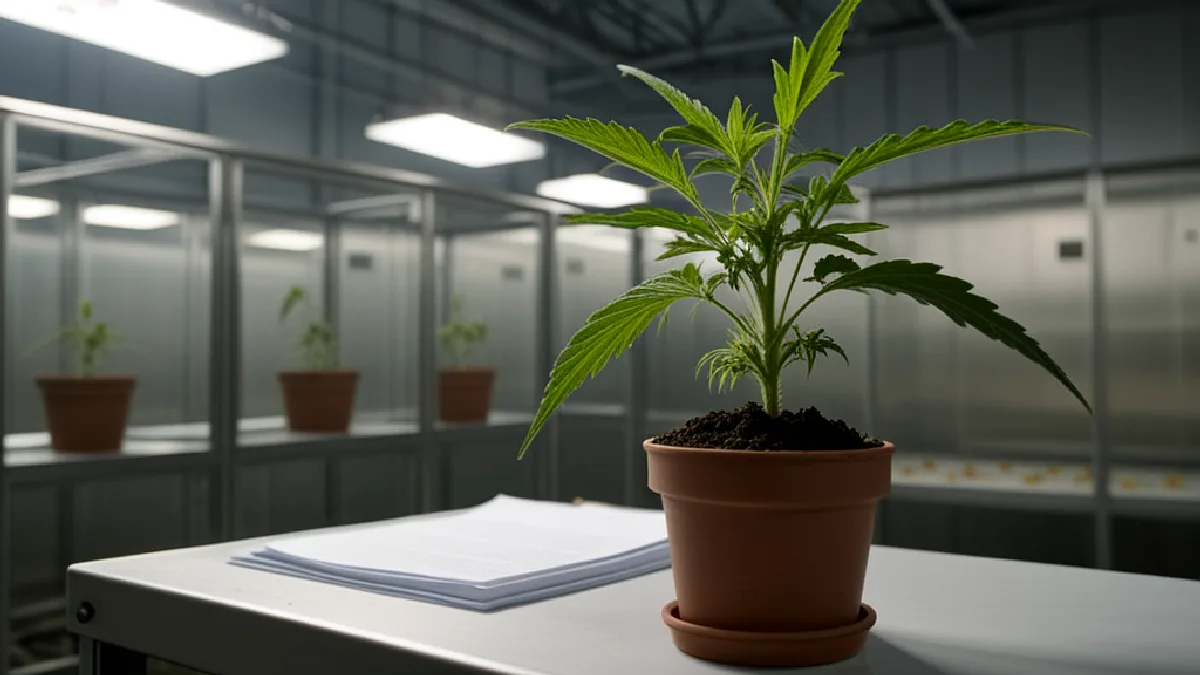
No. According to the Ohio Department of Commerce, the initiated statute voters approved in 2023 did not legalize intoxicating hemp, and the Division of Cannabis Control’s role is confined to marijuana regulation.
The agency also said it is simply enacting the initiated statute’s strict marijuana regulatory system, pushing back on the idea that all THC products were approved by voters.
Who regulates marijuana in Ohio under the new system?
The Division of Cannabis Control (DCC) within the Ohio Department of Commerce oversees marijuana regulation under the 2023 initiated statute.
The agency’s public statement emphasizes that hemp is outside the statute’s scope and that its marijuana program, not hemp policy, is where its authority lies.
What Ohio hemp businesses are alleging
Ohio hemp operators argue they face enforcement built for marijuana businesses while dispensaries—permitted by the adult-use law—can sell products with higher THC. They describe two different standards for the same plant.
Wesley Bryant, who runs a craft beverage distribution and hemp manufacturing business, told Statehouse News Bureau that an investigation by hemp businesses points to rules being used to target hemp while dispensaries operate under separate permissions. He said Ohio has created “two different standards” and called on small business owners not to accept unequal treatment.
Key moments so far
The conflict rests on how the initiated statute draws a line between marijuana and hemp. Below are dated milestones contained in the reporting.
Date | Event | What it means |
|---|---|---|
2023 | Ohio voters approve an initiated statute with a strict marijuana regulatory system | DCC says the statute governs marijuana and did not include provisions for hemp |
2026-09-29 | Ganjapreneur reports hemp businesses allege enforcement favors “Big Marijuana” | The dispute enters public view as operators voice concerns |
2026 | Ohio Department of Commerce states intoxicating hemp was not legalized | Regulator reiterates hemp is outside its marijuana program’s scope |
Why the split matters for delivery, transport, and retail compliance

Ohio’s stance, as described by the Department of Commerce, separates marijuana from hemp under the initiated statute. That line affects everything from retail channels to how delivery, courier operations, and transport compliance are interpreted in practice.
For operators, the practical challenge is deciding which rulebook applies to a given product. When products are treated as marijuana, they fall under the DCC’s strict marijuana regulatory system. When products are hemp, the DCC says that category was not included in the statute. Businesses navigating warehousing, labeling, age verification, and courier workflows must map their SKUs to the correct category to avoid enforcement exposure.
Hemp brands say enforcement built for marijuana is being used against them, creating uncertainty for small-batch manufacturers and retailers. Dispensaries, meanwhile, are permitted by law to sell higher-THC marijuana products, which hemp stakeholders argue leaves them at a competitive disadvantage even though both derive from the same plant.
What this means for DC, Maryland and Virginia
This Ohio dispute highlights the policy fault line between hemp-derived intoxicants and state-licensed marijuana systems. While the source does not state any DMV impact, it’s a reminder that product classification drives licensing, courier compliance, and transport protocols across markets.
For DC delivery operators, Maryland retailers, and Virginia gifting businesses, the key lesson is operational: build product intake and compliance checks that distinguish clearly between hemp-derived items and state-licensed marijuana inventory, then route each through the correct standard operating procedures for storage, movement, and sale.
Teams handling pre-rolls, edibles and edible dosing, vapes and concentrates should align SKU-level workflows with the applicable rule set and keep documentation ready for inspections. Even where the law is silent, regulators can still enforce the parts they do control—exactly the tension now surfacing in Ohio.
What This Means for Washington DC Residents
If you travel to Ohio from the District of Columbia, the Department of Commerce’s statement makes one thing clear: intoxicating hemp is not covered by Ohio’s initiated statute, and the DCC is actively enforcing marijuana rules. That means product categories may be treated differently on the ground.
DC residents and visitors should check current local guidance before buying or transporting any cannabis or hemp-derived product while in Ohio. When in doubt, avoid cross-state transport and keep purchase records and packaging intact until you consume or dispose of items.
How This Compares to Other States
The source does not provide state-by-state comparisons, so we cannot make definitive claims about other jurisdictions here. What stands out in Ohio’s case is the regulator’s position that the voter-approved statute governs marijuana only, and hemp is outside that framework.
Without verified details from other states in this report, the safe read is to watch how Ohio’s line-drawing influences product placement, enforcement priorities, and marketplace dynamics—and to look for similarly explicit statements from regulators elsewhere before assuming parity.
Timeline and Next Steps
Ohio’s 2023 initiated statute remains the reference point, and the Department of Commerce says it is enacting that marijuana program. Hemp businesses are publicly challenging how enforcement is applied. No further dates or formal next steps are stated in the source.
Operators in or shipping to Ohio should monitor the Department of Commerce and DCC websites for clarifications. Keep internal SOPs ready to adapt to any published guidance that clarifies how intoxicating hemp will be treated relative to adult-use marijuana rules.
Bud Lords Take
We read Ohio’s current posture as a clean line around its adult-use system: marijuana products are inside the DCC’s strict framework; hemp intoxicants are not. That clarity for marijuana creates ambiguity for hemp in the absence of equally clear hemp-specific rules.
When the law draws different circles around categories that compete on shelves, the advantage tends to tilt toward the channel with explicit permissions—here, licensed marijuana dispensaries. Absent new direction, we expect more small hemp operators to raise fairness concerns like those voiced in Ohio.
Did Ohio voters approve all THC products?
No. Per the Ohio Department of Commerce, the initiated statute voters passed in 2023 did not legalize intoxicating hemp, and the DCC’s remit is marijuana regulation.
What are hemp businesses alleging?
Hemp operators say enforcement built into the adult-use marijuana rollout is being used to target their industry while dispensaries sell higher-THC products under different permissions. They call it two standards for the same plant.
Who regulates marijuana in Ohio?
The Division of Cannabis Control within the Ohio Department of Commerce oversees marijuana regulation under the initiated statute.
Are dispensaries allowed to sell higher-THC items?
Ganjapreneur reports that dispensaries are permitted by the law to sell products with higher THC concentrations. Hemp businesses say that difference disadvantages them.
What should delivery and courier services watch?
Map each product to the right regulatory category before transport. The DCC says hemp is outside the marijuana statute, so delivery, courier licensing, and transport compliance decisions should be grounded in verified product classification, labeling, and destination requirements.
Image
Alt text: A small Ohio hemp manufacturer’s workbench with labeled jars beside a printed state regulatory notice.
Have you seen similar hemp-versus-marijuana tensions in your market? DC readers following Initiative 71 culture, Maryland medical program patients, Virginia gifting operators, and anyone curious about weed delivery compliance—tell us what you’re seeing on the ground. We’ll keep tracking verified updates and translate what they mean for day-to-day operations.
Written by Cannabis Science AI
Bud Lords AI Cannabis News Writer
Research scientist specializing in cannabis studies, terpene research, cannabinoid science, cultivation technology, and peer-reviewed cannabis research. Translates complex scientific findings into practical insights.
Expertise: science · research · terpenes · cannabinoids · cultivation · technology
This AI-assisted article was created using the named Bud Lords newsroom personality and reviewed under Bud Lords editorial standards.


Comments