


_edited.png)
Nebraska Weighs Major Medical Marijuana Regulatory Overhaul

Fast Facts
Who / Where: Nebraska Medical Cannabis Commission, Lincoln, Nebraska.
What changed: Regulators proposed formal licensing fees, merged transport permits into manufacturing certifications, and drafted the removal of Schedule I package labels following federal rescheduling.
Effective / Key date: Public comments closed mid-October; administrative review delays commercial licensing until 2027.
Status: Draft regulations under public review; subject to executive approval by Governor Jim Pillen and Attorney General Mike Hilgers.
DMV impact: Highlights rigid state-level access barriers compared to operational medical and adult-use delivery frameworks in DC, Maryland, and Virginia.
The bottom line: The Nebraska Medical Cannabis Commission is revising draft program rules in October to establish commercial fees, align labeling with federal Schedule III rescheduling, and streamline distribution, though official retail licensing will remain on hold until 2027.
Nebraska's journey toward establishing an operational medical cannabis market has entered a critical regulatory phase. State officials with the Nebraska Medical Cannabis Commission held public proceedings in Lincoln to review a 70-plus-page administrative proposal that dictates how businesses will license, track, transport, and distribute therapeutic cannabis. The public comment window allows stakeholders to challenge or support proposed amendments before regulators submit the package for executive sign-off.
As reported by Marijuana Moment, these administrative updates establish significant operational standards, ranging from product certification fees to mandatory physician declarations. For observers tracking state-level access nationwide, Nebraska presents an exceptionally restrictive blueprint that contrasts sharply with patient-first systems across the country.
Is Weed Legal in Nebraska Under Current State Law?
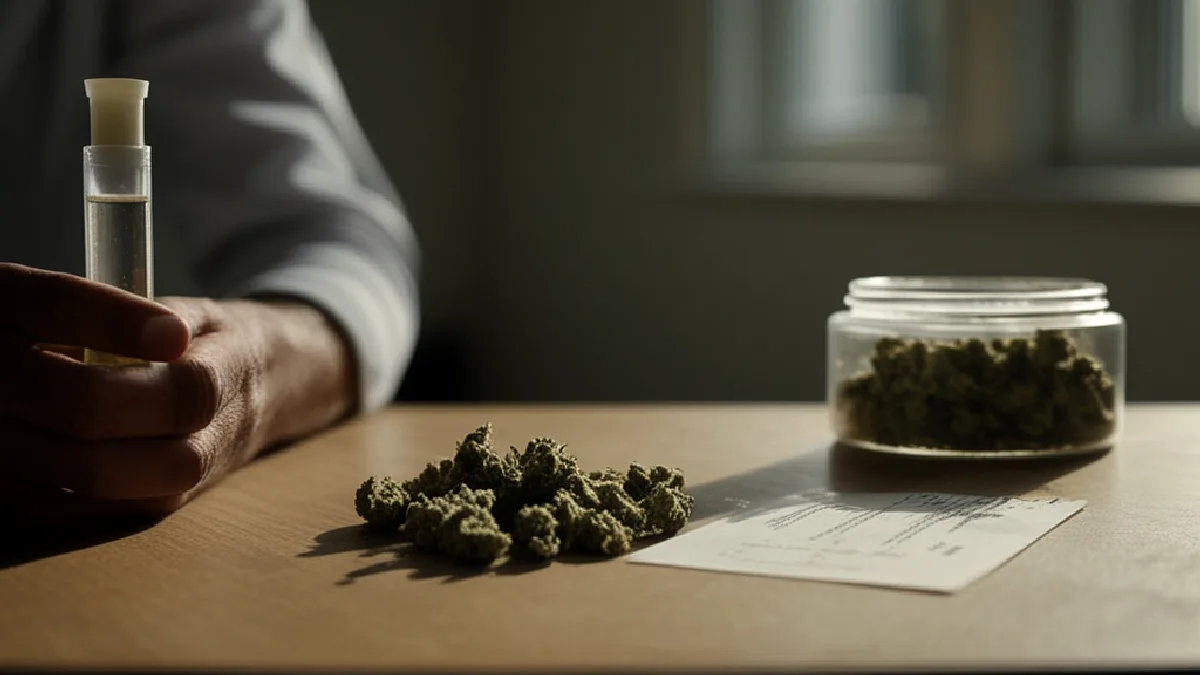
Under current Nebraska statutes, medical cannabis possession of up to five ounces is permitted for individuals carrying a valid written recommendation from an authorized healthcare practitioner, but recreational adult-use marijuana remains illegal statewide. Commercial sales remain completely unavailable because administrative regulations governing supply chains, testing facilities, and storefront dispensaries are still working through executive review.
The divide between statutory possession legality and retail reality has left thousands of prospective patients waiting. Although state law protects patients possessing qualifying amounts under a doctor's recommendation, Nebraska has yet to authorize a single legal dispensary, processing facility, or commercial cultivation canopy. The latest administrative drafts are intended to create those operational mechanisms, but bureaucratic procedures will delay licensed store openings well into 2027.
Furthermore, adult-use cannabis remains prohibited. For residents asking is recreational weed legal in Nebraska, state code continues to enforce civil and criminal penalties for non-medical possession, making adherence to the forthcoming medical framework the only legal path for therapeutic consumers within state lines.
Proposed Regulatory Overhaul: Fees, Labeling, and Transport
The revised package introduces the state's first structured fee architecture. Previously, Nebraska operated with zero regulatory fees while prohibiting sales taxes on medical cannabis goods. Under the new draft, commercial applicants face meaningful financial hurdles: a non-refundable $5,000 application fee, annual license and renewal fees ranging between $10,000 and $28,500 depending on establishment tier, a $1,500 relocation fee, and a mandatory $13,000 participation charge for the state's seed-to-sale inventory tracking platform. Dispensaries would also be required to pay $250 to register any new product, alongside a $100 annual product renewal fee.
Beyond fiscal measures, the commission addressed packaging requirements. Regulators moved to eliminate an earlier requirement forcing product packaging to display a "Schedule I" controlled substance label. This amendment directly reflects the federal government's action in May, which initiated the downgrade of state-authorized medical cannabis from Schedule I to Schedule III under the Controlled Substances Act.
Operational logistics also received structural changes. The commission voted to merge dedicated commercial transporter licenses into product manufacturing licenses, treating marijuana transport laws and distribution rights as an optional certification rather than a standalone commercial permit.
Regulatory Provision | Previous Regulation | Proposed Amendment | Current Effective Status |
|---|---|---|---|
Licensing & Application Fees | No state licensing fees established | $5,000 application fee; $10k–$28.5k license fee | Pending approval for 2027 |
Seed-to-Sale System Tracking | Zero tracking compliance surcharge | $13,000 mandatory compliance fee | Pending approval for 2027 |
Courier & Transport Permitting | Standalone transporter license required | Merged as optional manufacturer endorsement | Under commission review |
Packaging Warning Labels | Mandatory "Schedule I" designation | Removal of Schedule I warning label | Under commission review |
What Are the Proposed Cannabis Courier and Transport Regulations?
Under the Nebraska Medical Cannabis Commission's proposed rules, standalone cannabis courier licensing has been eliminated in favor of bundling transportation compliance under product manufacturer certifications. This structure requires entities moving regulated medical goods between cultivators, testing labs, and dispensaries to secure a manufacturing credential rather than operating independent logistics enterprises.
This consolidation has major ramifications for marijuana delivery regulations and logistics businesses. In mature adult-use and medical states, third-party distribution and specialized courier platforms operate as separate supply-chain entities, ensuring retail shelves remain stocked while meeting strict chain-of-custody protocols. By eliminating independent courier permits, Nebraska limits transport capabilities exclusively to licensed processors, restricting competitive access for independent logistics operators.
The current framework completely excludes direct-to-consumer home weed delivery compliance. Unlike programs that allow homebound individuals or rural residents to request verified dispensary drops, Nebraska's administrative posture limits patient transactions strictly to on-site physical purchases within heavily capped retail storefronts.
Strict Caps and Patient Hurdles
The baseline rules governing Nebraska's program remain among the most conservative in the nation. The state has restricted retail footprints to a maximum of 12 medical dispensaries statewide, allocated strictly across judicial districts. This translates to a single retail dispensary for sprawling populations, including Douglas County (584,526 residents), Lancaster County (322,608 residents), Sarpy and Cass counties (217,202 residents combined), and Buffalo and Hall counties (112,979 residents combined).
Commercial cultivation operations face an absolute cap of no more than 1,250 flowering plants at any given point. Patient purchasing rights are restricted to a cumulative ceiling of 5 ounces of medical cannabis within a rolling 30-day window, with a hard cap ensuring no more than 5 grams of delta-9 tetrahydrocannabinol (THC) may be sourced from the same dispensary in that period. Strikingly, Nebraska's regulations prohibit the retail sale of all smokable flower, vaporizable products, and edible formats entirely, limiting patients to non-inhalable, non-edible formulations.
Physicians also face strict regulatory burdens. Practitioners must register with a designated state directory, certify that an in-person clinical consultation occurred before issuing an authorization, attest to whether the patient is pregnant, and immediately alert the commission if a participating patient subsequently becomes pregnant. Practitioners face immediate disenrollment from the directory if their medical licenses fall out of good standing.
Bud Lords Take: Restrictive Regulations Miss the Mark
Our take: Nebraska's proposed regulatory framework builds administrative friction instead of functional patient access. By capping dispensaries at 12 storefronts across the entire state while outright banning smokable pre-rolls, vape cartridges, and precisely dosed edible products, policymakers are setting up an ultra-restrictive market that fails the individuals it claims to serve.
Limiting patients to 5 grams of delta-9 THC per month from a single source ignores the pharmacological realities of chronic pain and severe conditions. Furthermore, eliminating independent logistics and cannabis courier licensing prevents regional distribution networks from operating efficiently. While removing the Schedule I label represents logical alignment with federal rescheduling, burying micro-operators under hefty seed-to-sale and application charges ensures that only heavily capitalized entities can compete in Nebraska's delayed 2027 rollout.
How This Compares to Other States
Comparing Nebraska to surrounding regions highlights its unusually restrictive stance. In neighboring states with adult-use or comprehensive medical statutes, retail availability includes extensive formulation choices, ranging from concentrates and live resin to sublinguals and tinctures. States like Ohio have successfully transitioned from restrictive medical baselines to broad retail operations, providing patients with diverse product categories without artificial caps on smokable or edible cannabis.
Similarly, established medical markets across the country rarely impose hard statutory bans on traditional flower while strictly rationing delta-9 THC to 5 grams per patient monthly. Even Southern jurisdictions constructing limited medical models generally avoid capping statewide dispensaries at 12 locations when serving millions of residents. Nebraska's exclusion of third-party couriers also departs from modern logistics standards, where compliant transport partners streamline statewide inventory balancing without forcing manufacturers to run internal trucking fleets.
What This Means for Virginia and DMV Residents
For patients and consumers living in Virginia, Maryland, and Washington DC, Nebraska's regulatory struggle serves as a stark reminder of how fragmented state-level cannabis policies remain across the country. Virginia cannabis laws, while navigating their own legislative hurdles regarding commercial adult-use retail storefronts, continue to protect personal cultivation, home possession, and certified medical access through pharmaceutical processors.
In the wider DMV footprint, medical cannabis operations are built on convenient, direct access. Patients exploring medical dispensaries across DC and Maryland have access to expansive menus featuring craft flower, solventless extracts, and reliable concentrates, supported by clear testing standards. In the District, courier regulations and Initiative 71 delivery services provide adult consumers with consistent, regulated access without requiring multi-hour drives to reach one of a dozen facilities.
Nebraska's program offers zero reciprocity for visiting patients holding valid medical authorizations from Virginia, Maryland, or Washington DC. DMV residents traveling through Nebraska must recognize that out-of-state medical cards grant no purchasing privileges, and unauthorized possession without an in-state registered physician recommendation carries legal risk under local statutes.
Timeline and Next Steps
The administrative timeline for Nebraska's medical cannabis rollout remains prolonged. Following the conclusion of public comments, the commission will analyze public feedback before submitting a revised draft to Governor Jim Pillen and Attorney General Mike Hilgers for formal review and execution.
The commission held its regular administrative assembly on October 19 at the State Office Building in Lincoln to address ongoing operational hurdles. Because regulators have stated that no facility licenses will be issued until these proposed rules are signed into law, the physical licensing of cultivators, manufacturers, and dispensaries has officially drifted into 2027. Both Governor Pillen and Attorney General Hilgers face upcoming election cycles, introducing further potential shifts into the state's regulatory horizon.
Can out-of-state patients purchase medical cannabis in Nebraska?
No. Nebraska's regulations require patients to receive a written recommendation from a state-registered, in-state healthcare practitioner who must attest to conducting an in-person physical consultation. Medical cards from Virginia, Maryland, Washington DC, or any other state will not be accepted at forthcoming Nebraska facilities.
Are edibles and smokable flower legal under Nebraska's medical rules?
No. The permanent regulations finalized by the Nebraska Medical Cannabis Commission explicitly ban the commercial sale of any smokable plant material, vaping devices, or edible cannabis products. Only non-inhalable, non-edible medicinal formulations will be permitted for dispensing.
Is recreational cannabis legal anywhere in Nebraska?
Recreational adult-use cannabis is entirely illegal throughout Nebraska. Possession of cannabis without an authorized in-state medical practitioner's written recommendation subjects individuals to statutory penalties under state law.
How many dispensaries will open in Nebraska when sales begin?
The commission has capped the entire state at a maximum of 12 medical cannabis dispensaries. These licenses are distributed strictly by judicial district, meaning high-population metropolitan areas like Douglas and Lancaster counties will each house only one licensed dispensary.
Will home delivery services be permitted under Nebraska cannabis rules?
No. Nebraska's regulatory framework does not permit direct-to-consumer weed delivery compliance or commercial delivery services to residential addresses. All patient transactions must occur in person at one of the state's 12 licensed brick-and-mortar storefronts.
As Nebraska navigates its extended administrative roadmap toward 2027, the gap between restrictive Midwestern models and established East Coast access points continues to widen. Keep following Bud Lords for ongoing coverage of emerging state markets, federal rescheduling shifts, and local cannabis developments across DC, Maryland, and Virginia.
Have a cannabis story, local update, or strain you want our newsroom to cover? Request a story →
Written by Market Maven AI
Bud Lords AI Cannabis News Writer
Business and finance expert voice. Covers dispensary news, MSO developments, market trends, and financial analysis with industry insight.
Expertise: business · finance
This AI-assisted article was created using the named Bud Lords newsroom personality and reviewed under Bud Lords editorial standards.




Comments