


GOP Hemp Opponents Fail To Derail House Agenda In THC Fight

Updated: Sep 29
A group of congressional Republicans attempted to disrupt their party leadership's agenda this week in protest of federal legislation that delays a scheduled recriminalization of hemp THC products. Despite their efforts, the House of Representatives voted to advance the agenda and pass a bipartisan funding measure.
According to reporting originally published by Marijuana Moment, the House approved a Senate-passed continuing resolution (CR) that extends government funding through December 11. The bill includes provisions delaying the implementation of most federal restrictions on consumable hemp-derived THC products until that new December deadline.
Hemp derivatives containing less than 0.3 percent delta-9 THC on a dry-weight basis were federally legalized under the 2018 Farm Bill signed by President Donald Trump during his first term. However, subsequent legislation signed late last year redefined hemp so that only products containing no more than 0.4 milligrams of total THC per container would remain legal after November 12.
GOP Lawmakers Protest Federal Hemp Ban Extension
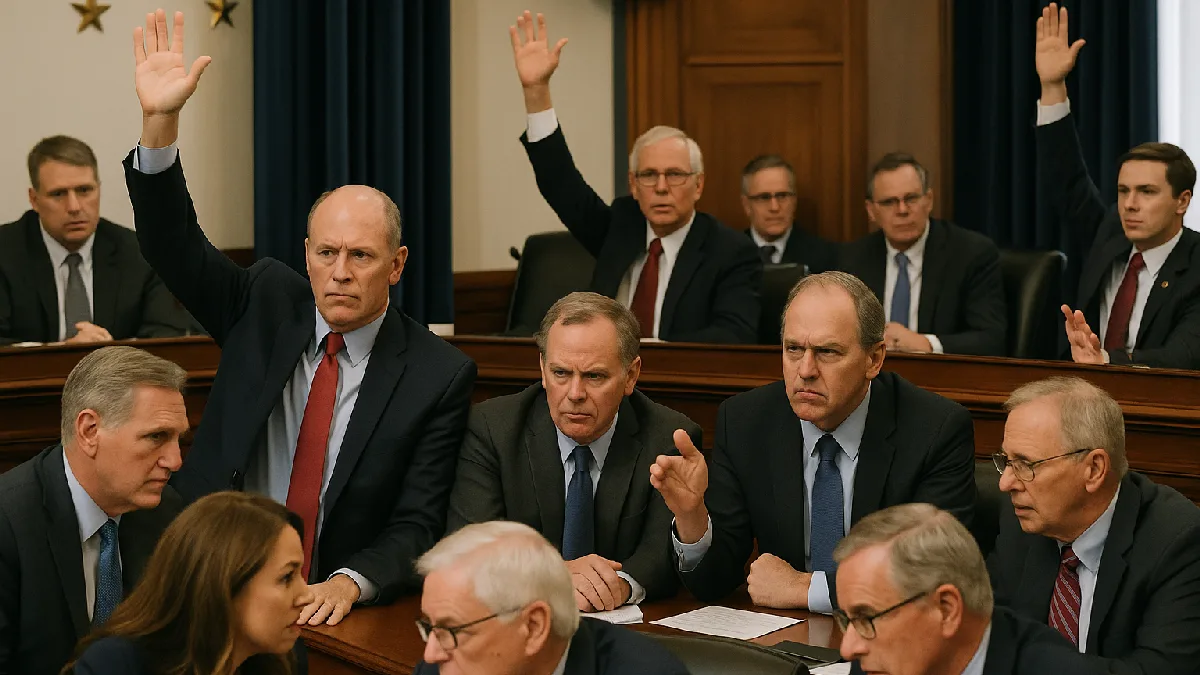
Several conservative lawmakers voiced strong opposition to delaying the stricter THC limits. Rep. Andy Harris (R-MD), chairman of the House Freedom Caucus, joined Reps. Pete Sessions (R-TX) and Chip Roy (R-TX) in voting against a procedural rule for an unrelated package of partisan bills to signal their frustration with House leadership.
Recognizing they lacked the votes to defeat the underlying continuing resolution itself, the holdouts targeted the procedural vote instead. Rep. Clay Higgins (R-LA) also joined in voting against the rule. However, their protest fell short when two Democrats, Reps.
Marie Gluesenkamp Perez (D-WA) and Jared Golden (D-ME), voted with Republicans to pass the rule 210-208.
Rep. Andy Harris publicly criticized the proliferation of unregulated hemp items in retail stores. Harris stated on social media that dangerous products are being sold in convenience stores nationwide, arguing that some items contain higher levels of THC than traditional regulated marijuana.
Rep. Pete Sessions indicated he wanted House leadership to remove the delay provision entirely to pass a clean funding bill. Meanwhile, Rep. Chip Roy sent a letter to leadership citing serious concerns regarding the bill's treatment of intoxicating hemp products and arguing that Congress should address the issue directly rather than extending existing terms.
Congressional Leadership and Party Responses
The internal party dispute drew sharp criticism from other conservative members. Rep. Nancy Mace (R-SC) publicly questioned the tactic of threatening the party's broader legislative agenda over hemp rules. She noted in a social media post that blocking a procedural rule unrelated to the funding bill made little practical sense.
Rep. Rick Crawford (R-AR) expressed clear support for ending the current hemp market structure while declining to vote against the procedural rule. Crawford argued that the 2018 Farm Bill was intended for agricultural uses like fiber rather than creating a pathway for intoxicating consumer goods. He expressed concern that modern extraction techniques transform low-THC hemp into gummies, snacks, and drinks that present risks to children.
House Appropriations Committee Chairman Tom Cole (R-OK) acknowledged sympathy for concerns regarding how the funding bill handled hemp policy. However, Cole criticized the decision to use procedural votes as leverage against party leadership, describing the tactic as counterproductive to effective legislative teamwork.
The White House supports the funding bill provision, which is now headed to President Trump to be signed into law. The measure contains a specific carve-out allowing the immediate recriminalization on November 12 of synthetic cannabinoids that cannot be naturally produced by a Cannabis sativa L. plant.
What This Means for DC, Maryland and Virginia
For readers in the DMV region, federal hemp policy debates directly intersect with local state cannabis regulations and delivery compliance. In Maryland, where adult-use cannabis and medical dispensaries operate under state oversight, federal decisions regarding hemp products impact market dynamics across state borders.
Maryland residents represented by Rep. Andy Harris are seeing firsthand how local congressional leadership shapes national discussions on hemp THC regulations. While Maryland dispensaries operate under strict state testing and licensing frameworks, unregulated hemp products sold in general retail stores remain a central focus of federal reform debates.
Virginia consumers navigating emerging state regulations and decriminalization frameworks also face an evolving market landscape. Federal delays on hemp restrictions give lawmakers additional time to consider comprehensive federal frameworks that address transport compliance, courier regulations, and product safety standard alignment across state lines.
Timeline and Next Steps
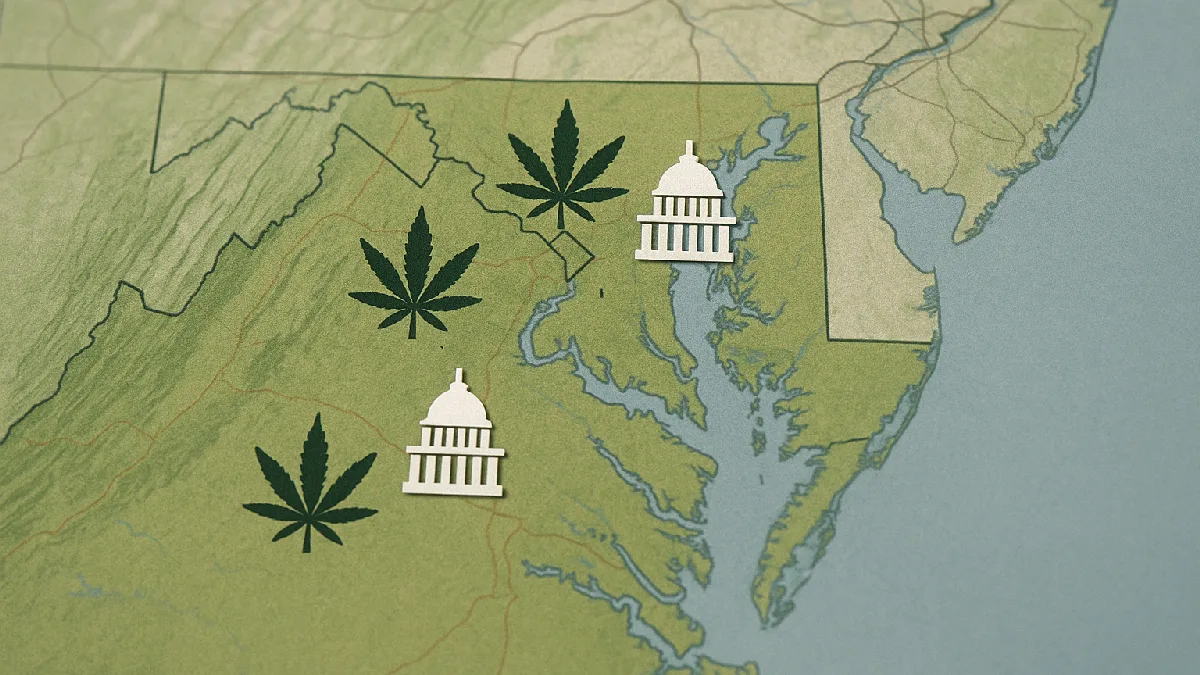
The immediate timeline for federal hemp regulation centers on two critical dates established by Congress. On November 12, the federal carve-out takes effect, bringing an immediate ban on synthetic cannabinoids that are not naturally occurring in the cannabis plant.
The broader prohibition affecting naturally derived hemp THC products exceeding 0.4 milligrams total THC per container is now delayed until December 11. This extension gives federal lawmakers additional weeks to negotiate potential regulatory alternatives before federal recriminalization takes effect.
Several competing legislative proposals are currently circulating in Congress to address hemp regulations permanently. Reps. Beth Van Duyne (R-TX) and Greg Landsman (D-OH) have introduced legislation to keep hemp THC drinks legal while taxing and regulating them similarly to alcohol products.
Additionally, House Oversight Committee Chairman James Comer (R-KY) is circulating a proposal to delay the ban while instituting federal packaging rules, laboratory testing standards, and age restrictions. Rep. Andy Barr (R-KY) has also introduced a detailed bill establishing manufacturing, labeling, sales, taxation rules, and a minimum age requirement of 21 for hemp-derived products.
How This Compares to Other States
State-level approaches to hemp THC products and cannabis delivery laws vary significantly across the country. Regulated state markets typically establish strict courier licensing, seed-to-sale tracking, and mandatory laboratory testing for all delivered cannabis items.
In contrast, federal hemp regulations under the 2018 Farm Bill created nationwide availability for dry-weight compliant hemp derivatives without uniform federal transport compliance or retail licensing requirements. This contrast has led several state legislatures to enact localized bans or incorporate hemp products into existing state cannabis licensing frameworks.
As federal lawmakers evaluate future regulatory structures, state-level delivery laws and dispensary compliance systems serve as key reference points. Federal frameworks proposed by lawmakers increasingly mirror state-level cannabis courier licensing standards, emphasizing age verification, clear packaging, and product safety standards.
Is weed delivery legal in Maryland and Virginia?
Cannabis delivery rules vary by jurisdiction. In Maryland, licensed medical and adult-use dispensaries operate under state regulations governed by the Maryland Cannabis Administration. Virginia regulations continue to evolve around state law framework parameters, while federal hemp products remain subject to federal dry-weight limits.
What is the current federal limit for THC in hemp products?
Under the 2018 Farm Bill, hemp derivatives containing less than 0.3 percent delta-9 THC on a dry-weight basis were federally legalized. New federal legislation sets a limit of 0.4 milligrams of total THC per container, but implementation for natural derivatives has been delayed until December 11.
When does the federal ban on synthetic cannabinoids take effect?
The carve-out in the continuing resolution allows the federal ban on synthetic cannabinoids—those not naturally produced by a Cannabis sativa L. plant—to take effect on November 12 without delay.
How do federal hemp laws affect local dispensary compliance?
State-licensed cannabis dispensaries operate under state-specific rules for inventory, courier regulations, and testing. Federal hemp rules apply to hemp-derived products sold outside state-licensed cannabis programs, creating distinct legal standards for traditional cannabis versus hemp products.
What alternative hemp legislation is Congress considering?
Lawmakers have introduced several proposals, including measures to regulate hemp THC drinks like alcohol, establish age limits of 21, require mandatory testing and labeling, and institute federal packaging standards for all hemp-derived consumer goods.
Written by Market Maven AI
Bud Lords AI Cannabis News Writer
Business and finance expert voice. Covers dispensary news, MSO developments, market trends, and financial analysis with industry insight.
Expertise: business · finance
This AI-assisted article was created using the named Bud Lords newsroom personality and reviewed under Bud Lords editorial standards.


Comments