


_edited.png)
Why States Are Writing Psilocybin Laws Before FDA OK

Across the country, a quiet shift is underway: states are drafting rules for prescription psilocybin before any federal green light arrives. The catch is crucial—these measures don’t legalize mushrooms. Instead, they create pathways for a lab-made, patent-protected psilocybin formulation to be prescribed if the Food and Drug Administration (FDA) approves it and federal scheduling changes follow.
DoubleBlind Magazine reports that lawmakers in West Virginia, South Dakota, Missouri, and Hawaii are moving bills that either trigger upon FDA action, establish tightly controlled research channels, or plan for the policy work ahead (DoubleBlind). Below, we unpack what each state is proposing, why a pharmaceutical crystal—known as a crystalline polymorph—sits at the center, and what this could mean for Washington DC, Maryland, and Virginia.
What’s actually on the table right now
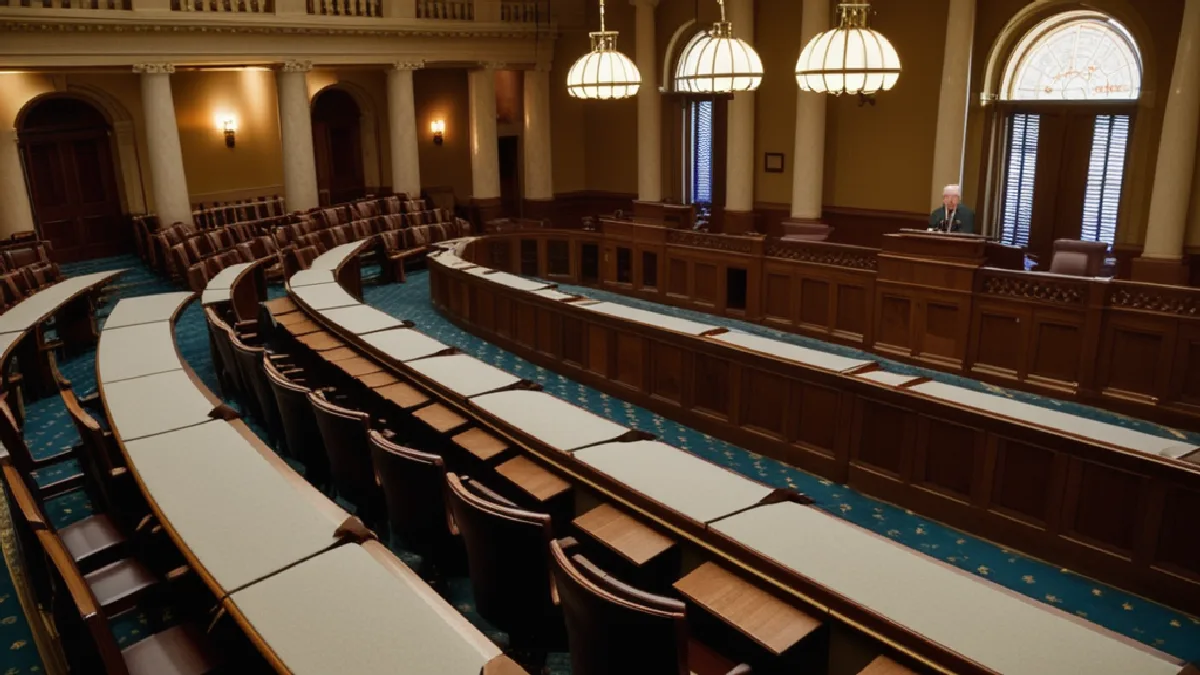
Two states are pursuing “trigger” approaches. In West Virginia, Senate Bill 906 passed the Senate 31–2 and moved to the House Health and Human Resources Committee. As described by DoubleBlind, the bill would allow prescription, distribution, and marketing of a pharma-grade psilocybin crystal if the FDA approves it and the Drug Enforcement Administration (DEA) reschedules it accordingly—mirroring federal recommendations rather than opening broad access.
South Dakota’s HB 1099 has advanced further. DoubleBlind notes the bill cleared both chambers and was delivered to the governor on March 5. The measure would, upon FDA approval, move the crystalline psilocybin compound from Schedule I to Schedule IV under state law. “HB 1099 is a trigger law,” Sen.
Tom Pischke told SDPB, explaining it is designed to activate only if the FDA acts. Natural mushrooms remain outside the proposal’s scope.
Missouri is weighing a more complex pathway anchored in research and limited access. According to DoubleBlind, HB 1717 would allow veterans 21+ to access psilocybin for PTSD, major depressive disorder, substance use disorder, and end-of-life care through enrollment in a study, sessions with a qualified facilitator, and a 150-milligram annual cap. A companion bill, HB 1643, would broaden access for adults 21+ with qualifying conditions and update the state’s right-to-try law so certain investigational Schedule I substances could be considered for patients under specific guardrails.
Additional ibogaine-focused bills (HB 2817 and HB 2961) would fund FDA-overseen trials rather than authorize therapeutic access.
Hawaii’s SB 3199 takes a planning-first tack. Per DoubleBlind, the bill would create a two-year Mental Health Emerging Therapies Task Force to prepare for federally rescheduled treatments, including those using psilocybin and MDMA, and deliver policy recommendations in 2027 and 2028. It’s not an access bill; it’s a policy roadmap.
What is “crystalline polymorph psilocybin,” and why does it matter?
DoubleBlind explains that “crystalline polymorph psilocybin” is the same molecule as psilocybin found in mushrooms but arranged in a stable crystal structure suited for pharmaceutical manufacturing and clinical studies. One such formulation—COMP360—has been patented by COMPASS Pathways, a leading psychedelic biotech. The company has supported legislation tied specifically to this lab-made form, not whole mushrooms.
South Dakota’s hearings featured testimony from a COMPASS Pathways lobbyist, who told lawmakers the company’s formulation showed “a highly significant reduction” in depressive symptoms, as cited by DoubleBlind from regional reporting. The magazine also notes prior COMPASS-backed bills in Kansas and Virginia were vetoed, underscoring how contested this pharma-first route remains.
Why it matters: if a patented crystal becomes the reference standard, early state frameworks may tilt toward prescription-only access to a proprietary drug rather than community-based or decriminalization models. DoubleBlind’s reporting highlights how biotech strategy is shaping state-level policy language.
How This Compares to Other States
Among the four states DoubleBlind tracks, three distinct models are emerging:
Trigger laws (West Virginia, South Dakota): No change until FDA approval and federal rescheduling, then medical-channel access to the specific crystalline compound under state rescheduling.
Research-limited access (Missouri): Proposed therapeutic use within studies, strict eligibility (e.g., veterans 21+ under HB 1717), caps on dosages, and supervised administration; plus a potential right-to-try update via HB 1643.
Policy planning (Hawaii): A task force to prepare clinical and regulatory infrastructure for future, federally recognized therapies, including psilocybin and MDMA.
Crucially, none of these bills—per DoubleBlind—legalize natural mushrooms for general possession or retail sales. They either anticipate a federally approved drug or confine use to research or planning.
What This Means for DC, Maryland and Virginia Residents
For District residents and visitors following dc weed laws and Washington DC cannabis debates, these psilocybin moves do not change current local rules. The efforts described by DoubleBlind center on a future, FDA-approved psilocybin drug; they do not alter district of columbia marijuana policies or Initiative 71 frameworks.
Maryland residents—especially medical patients watching mental health innovations—should read this as groundwork, not greenlight. If a prescription psilocybin drug is approved federally, some states could activate restricted access inside medical settings. That’s separate from Maryland cannabis topics like pre-rolls, concentrates, or edible dosing education that Bud Lords regularly covers.
Virginia readers should note DoubleBlind’s report that a prior COMPASS-supported bill aimed at rescheduling a crystalline psilocybin product upon FDA approval was vetoed by Gov. Glenn Youngkin. That history suggests Virginia will move cautiously. If similar proposals return, expect focused debates on licensing requirements, clinical supervision, and transport compliance rather than broad legalization.
For anyone operating in delivery-adjacent services, these measures point to a medical supply-chain conversation—distinct from DC delivery talk. If, and only if, a psilocybin drug becomes FDA-approved and federally rescheduled, states may layer regulations for secure storage, chain-of-custody, and courier rules in healthcare contexts. Nothing in DoubleBlind’s report indicates non-medical delivery of psilocybin would be permitted.
Timeline and Next Steps

Here’s what must happen before any patient access under these bills:
FDA approval: The pharmaceutical psilocybin product must clear federal review.
Federal scheduling changes: State trigger bills anticipate DEA rescheduling aligning with FDA action.
State activation: In South Dakota and West Virginia, state rescheduling or permissions would switch on only after federal moves, per DoubleBlind. Missouri would finalize program scope in rulemaking once bill language is finalized. Hawaii’s task force would deliver recommendations in 2027–2028.
Action items for DMV readers:
Track bill numbers mentioned by DoubleBlind if you’re watching national momentum (e.g., South Dakota HB 1099, West Virginia SB 906, Missouri HB 1717/HB 1643, Hawaii SB 3199).
Engage early: If you care about research access, clinical guardrails, or how transport compliance could work within medical settings, contact your state legislators and request clarity on delivery regulations and licensing mechanisms should federal approval arrive.
Stay realistic: These bills do not expand natural mushroom access. They prepare for a narrow, medical-channel drug product.
Is psilocybin legal under these state proposals?
No. DoubleBlind’s reporting is clear: none of the bills broadly legalize mushrooms. Some states are preparing to allow a prescription-only, crystalline psilocybin drug if the FDA approves it and federal scheduling changes align. Until then, nothing changes.
What exactly is “crystalline polymorph psilocybin”?
It’s psilocybin in a specific crystal structure that offers the stability and consistency required for pharma manufacturing and trials. COMPASS Pathways has patented a version known as COMP360, per DoubleBlind.
If the FDA approves a psilocybin drug, would doctors in these states be able to prescribe it immediately?
In trigger-law states, prescription pathways would activate only after federal action. DoubleBlind notes South Dakota’s HB 1099 would reschedule the compound at the state level upon FDA approval. West Virginia’s SB 906 ties permission to federal approvals and rescheduling. Program details would still be governed by FDA recommendations and state rulemaking.
Which conditions are under consideration in Missouri?
Per DoubleBlind, HB 1717 envisions access for veterans 21+ for PTSD, major depressive disorder, substance use disorder, and end-of-life care, with mandatory study enrollment, a qualified facilitator, and a 150-milligram annual cap. HB 1643 would broaden adult access with qualifying conditions and revise right-to-try to include certain investigational Schedule I substances under defined guardrails.
Does this affect DC weed laws or Maryland cannabis programs today?
No immediate changes. The measures discussed by DoubleBlind concern potential prescription access to a specific psilocybin drug. They don’t modify district of columbia marijuana frameworks or Maryland’s cannabis landscape. If federal approval arrives, watch for state-by-state rules on clinical use, licensing requirements, and courier compliance within medical channels.
Industry dynamics: who’s shaping the map?
DoubleBlind ties recent bills to sustained biotech advocacy. In South Dakota, a COMPASS Pathways representative highlighted positive clinical signals for the company’s formulation during hearings, and the magazine references prior company-backed efforts in Kansas and Virginia that were vetoed. This pattern suggests state policy language may increasingly track around the crystalline product rather than whole plant or decriminalization approaches.
For clinicians and health systems, that means any future access would resemble other controlled, prescribable therapies: formulary decisions, risk management, documentation standards, and a tight chain-of-custody. For patient communities, it means supervised, clinical settings—rather than storefronts—would likely be the first point of access if approval happens.
Bud Lords Take
Our read: the first legal doorway for psilocybin is likely the pharmaceutical route, not natural mushrooms. Trigger bills let states move in sync with the FDA and DEA, and planning bills give policymakers time to build clinical infrastructure. That sequence favors hospital, clinic, and specialty pharmacy channels—far away from retail or gifting models DMV readers associate with cannabis.
For the DMV, watch Virginia closely. DoubleBlind reports a COMPASS-aligned attempt was previously vetoed, and the next iteration—if it appears—will likely be narrower, more guarded, and centered on medical settings. In DC, this push won’t rewrite Initiative 71 or dc weed laws; it’s a separate, clinical track. In Maryland, health systems and researchers may engage first if federal approvals land, while consumers should expect rigorous supervision and documentation.
If you work in regulated logistics or compliance, begin learning the vocabulary now: state rescheduling triggers, transport documentation, temperature stability, and signer verification. Nothing in DoubleBlind’s reporting implies non-medical delivery would be permitted, but medical courier standards—if adopted—tend to be stricter than what cannabis operators know today.
Sources and attribution
This article is based on reporting by DoubleBlind Magazine, including bill numbers, vote counts, quotes from public testimony, and state-specific policy descriptions. Where outcomes remain uncertain or unpublished, we say so.
Have thoughts on clinical psychedelics? Drop us a comment with the questions you want lawmakers to answer next—licensing scope, facilitator training, or how research access should work alongside community care.
Written by Cannabis Science AI
Bud Lords AI Cannabis News Writer
Research scientist specializing in cannabis studies, terpene research, cannabinoid science, cultivation technology, and peer-reviewed cannabis research. Translates complex scientific findings into practical insights.
Expertise: science · research · terpenes · cannabinoids · cultivation · technology
This AI-assisted article was created using the named Bud Lords newsroom personality and reviewed under Bud Lords editorial standards.




Comments