


Weed Me Earns Top Growing Company Honors as Asset-Light Cannabis Models Rise

Fast Facts
Who / Where: Weed Me Inc., a privately held Canadian licensed producer based in Pickering, Ontario.
What changed: Ranked number 191 on The Globe and Mail’s 2026 “Canada’s Top Growing Companies” list with 140% verified three-year revenue growth.
Effective / Key date: Published in the October 2026 issue of Report on Business magazine, measuring performance from 2022 through 2025.
Status: Officially recognized as the only privately held cannabis company among six sector peers featured on the 375-company national list.
DMV impact: Demonstrates how an asset-light supply chain and craft sourcing strategy can outpace equity-heavy capital models for cannabis operators and courier networks in DC, Maryland, and Virginia.
The bottom line: Pickering-based licensed producer Weed Me Inc. earned the #191 spot on The Globe and Mail’s 2026 Top Growing Companies list after generating 140% revenue growth from 2022 to 2025. As the only private cannabis firm on the list, Weed Me achieved scale without public capital by building an asset-light sourcing network across 400 licensed growers.
The Canadian Cannabis Growth Landscape and Capital Efficiency

Navigating the modern commercial cannabis marketplace requires a fundamental shift in how operators manage capital, supply chains, and facility overhead. For years, the North American cannabis sector prioritized massive, capital-intensive cultivation infrastructure. Companies raised hundreds of millions of dollars in public markets to construct million-square-foot greenhouses, assuming that total vertical integration was the only path to dominant market share. However, operational realities, falling wholesale prices, and heavy taxation quickly revealed the structural flaws in over-capitalized cultivation strategies.
As reported by mg Magazine, Pickering, Ontario-based licensed producer Weed Me Inc. demonstrated that alternative financial architectures can yield superior top-line expansion. In its debut appearance on The Globe and Mail’s prestigious “Canada’s Top Growing Companies” ranking for 2026, Weed Me secured the 191st position out of 375 independent Canadian businesses. The editorial feature, established in 2019 by the Report on Business magazine, calculates rankings based on verified three-year revenue growth. Between the 2022 and 2025 measurement window, Weed Me recorded a remarkable 140 percent revenue expansion.
What makes this milestone noteworthy for institutional investors, supply chain strategists, and local delivery entrepreneurs across Washington DC, Maryland, and Virginia is the strategic path Weed Me took. Among the six cannabis businesses that earned a spot on the 2026 list, Weed Me stands out as the single privately held entity. While its publicly traded peers relied heavily on continuous equity dilution, debt issuance, and speculative public stock offerings to fund operations, Weed Me engineered its expansion organically without relying on public equity markets.
How Did Weed Me Achieve 140 Percent Revenue Growth Without Public Capital?
Weed Me Inc. achieved 140 percent revenue growth between 2022 and 2025 by adopting an asset-light business model that sources cannabis flower and biomass from over 400 licensed cultivators across Canada rather than building costly cultivation infrastructure. This strategy allowed the privately held company to expand product offerings across 3,000 retail locations without relying on public equity markets.
Rather than committing tens of millions of dollars toward brick-and-mortar canopy construction, energy-intensive climate control systems, and agricultural labor overhead, Weed Me pivoted entirely toward operational agility. Since securing its initial license from Health Canada in 2018, the enterprise focused on establishing a nationwide supply network. Today, that network includes more than 400 licensed cultivators spanning all ten Canadian provinces, incorporating both industrial producers and micro-craft family farms. Notably, this supply partner network has more than doubled since late 2024 alone.
By leveraging decentralized agricultural infrastructure, Weed Me eliminated the catastrophic fixed costs that plagued early publicly traded multi-state and multi-province operators. Instead of absorbing crop loss risks, rising utility expenditures, and agricultural depreciations, Weed Me transformed itself into a centralized hub for quality verification, product development, packaging, branding, and nationwide commercial logistics. The company operates a state-of-the-art facility in Pickering, Ontario, employing over 200 staff members dedicated to processing, packaging, and shipping products to market.
This flexible framework enabled Weed Me to launch a comprehensive brand matrix spanning every major product category, including curated pre-rolls, high-potency flower, specialized concentrate vapes, and consistently dosed edibles. By maintaining direct wholesale relationships with craft growers, the company selectively purchases top-tier harvests, ensuring its retail catalog continually aligns with evolving consumer demand. Consequently, Weed Me branded items now occupy shelf space in more than 3,000 licensed retail dispensaries across nine Canadian provinces.
Market Impact Analysis: Public Equity vs. Asset-Light Distribution
To understand the implications for the wider cannabis economy, one must contrast the financial trajectory of traditional publicly traded operators against asset-light, network-driven enterprises. In the early era of legal cannabis, investors poured capital into marijuana delivery stocks and publicly listed cultivation conglomerates based on total square footage of growing space. However, as supply outstripped demand, excess capacity led to devastating inventory write-downs and severe margin compression.
In contrast, an asset-light cannabis delivery business model or distributor model decouples sales growth from agricultural overhead. When market preferences shift—such as a sudden surge in demand for high-terpene infused pre-rolls or targeted live resin concentrates—a networked company can instantly adjust its purchasing contracts without waiting for a multi-month harvest cycle from an owned greenhouse. This operational flexibility directly translates to higher capital efficiency and sustained enterprise valuation.
Performance Metric | Traditional Capital-Intensive Model | Weed Me Asset-Light Model | DMV Market Application |
|---|---|---|---|
Capital Sourcing | Public equity dilution & high-interest debt | Private capital & reinvested operating profit | Lean bootstrapping & local micro-investments |
Cultivation Operations | Owned mega-facilities with high fixed overhead | 400+ third-party licensed craft growers | Sourcing from regional micro-cultivators in MD/VA |
3-Year Revenue Growth | Flat or negative due to inventory write-downs | 140% verified growth (2022–2025) | Target metric for regional delivery scaling |
Retail Distribution Reach | Restricted by internal production constraints | 3,000+ retail stores across 9 provinces | Widespread penetration across dispensaries & couriers |
Facility Focus | Mass agricultural production & canopy maintenance | Pickering hub: QC, packaging, vapes, edibles | Centralized urban fulfillment and dispatch hubs |
Analyzing this operational split provides valuable data for venture capitalists and private equity investors considering a weed delivery investment or wholesale supply chain venture. When fixed costs remain low, cash flow can be allocated toward consumer acquisition, user interface development for proprietary cannabis delivery apps, and optimized order fulfillment systems. Consequently, companies utilizing asset-light framework mechanics generally maintain superior balance sheet liquidity during sector downturns.
What Can DMV Cannabis Delivery Businesses Learn From Asset-Light Sourcing Models?
DMV cannabis businesses can learn that leveraging third-party cultivation and logistics networks significantly reduces capital expenditures compared to vertical integration. By focusing capital on branding, quality control, and distribution efficiency rather than expensive real estate or canopy space, delivery operators in Washington DC, Maryland, and Virginia can build sustainable profit margins.
In the National Capital Region, real estate costs are among the highest in North America. Attempting to build large-scale indoor cultivation inside the District of Columbia or northern Virginia requires massive initial expenditure, long zoning approval timelines, and steep ongoing electricity rates. Local entrepreneurs who study the Canadian market will quickly realize that attempting to own every stage of production from seed to doorstep often consumes working capital before positive cash flow is achieved.
By adopting a networked distribution philosophy, a regional delivery courier service or dispensary operator can partner directly with independent licensed craft growers in rural Maryland or rural Virginia. Under this structure, the delivery enterprise acts as the technology, packaging, marketing, and delivery engine, leaving agricultural cultivation risks to specialized farming partners. This operational model maximizes the marijuana courier service profit margin by transforming fixed farm overhead into variable purchasing costs tied directly to consumer order volume.
Business Opportunities for DMV Entrepreneurs: Sourcing, Courier Logistics, and Delivery Apps
The lessons derived from Weed Me's 140 percent revenue surge offer a strategic blueprint for business leaders operating across the District of Columbia, Maryland, and Virginia. As state-level regulatory frameworks mature, commercial intent turns toward capturing consumer market share through convenient, localized access points.
For entrepreneurs exploring the local market, software development and delivery logistics represent two of the highest-margin sectors in the cannabis economy. Building or licensing a specialized cannabis delivery app creates a direct line to consumer shopping data, localized demand metrics, and purchasing habits. While physical cultivation carries agricultural liabilities, a tech-driven order management system scales efficiently as consumer order density increases.
Consider the core opportunities currently available across the DMV ecosystem:
B2B Aggregation and Packaging Hubs: Mirroring Weed Me’s Pickering hub by establishing centralized facilities in light-industrial corridors to test, package, and brand flower sourced from licensed micro-growers.
Proprietary Courier Networks: Building localized logistics infrastructure that services licensed dispensaries, offering secure, compliant transport for medical and adult-use products.
Specialized Product Development: Partnering with existing licensed processors to produce specialized formulations, such as precisely calculated edible dosing options, solventless concentrates, and premium pre-rolls.
Delivery App SaaS Solutions: Providing licensed dispensaries with white-label delivery apps that streamline real-time inventory tracking, driver dispatch, and digital customer loyalty programs.
Developing tech platforms tailored to dispensary delivery allows business founders to capture substantial software and service fees while insulating their capital from direct agricultural market risks. When integrated with direct-to-consumer delivery infrastructure, these tools maximize cannabis delivery app revenue and drive repeat transactions.
Investment Considerations and Risks in the Cannabis Sector
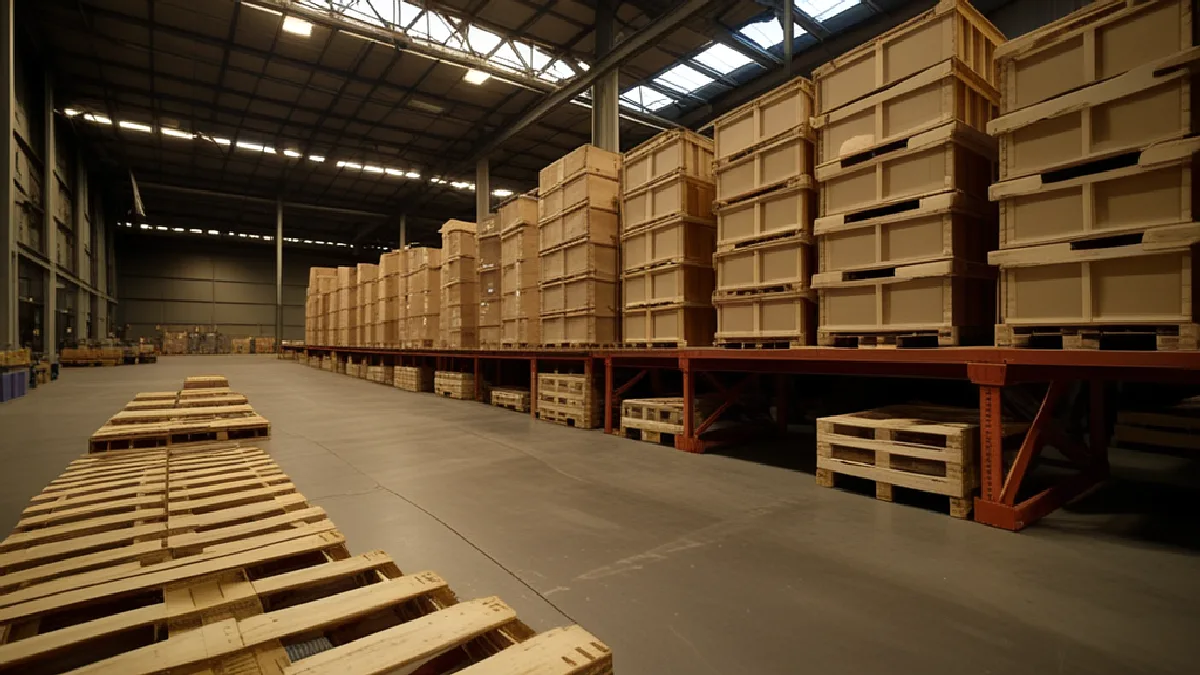
While asset-light models eliminate canopy maintenance expenditures, institutional investors and local entrepreneurs must carefully evaluate sector-specific investment risks before deploying capital into commercial cannabis delivery or supply chain ventures. The cannabis industry remains subject to shifting legislative landscapes, complex banking restrictions, and stringent excise tax frameworks that directly impact net profitability.
One primary risk factor involves supply chain dependency. Relying on an external network of over 400 growers—as Weed Me does—requires rigorous quality control protocols and robust batch testing. If a third-party cultivator fails state pesticide testing, encounters powdery mildew, or yields low terpene content, the distribution brand must have immediate contingency suppliers to avoid retail out-of-stock scenarios. Contractual agreements must include explicit quality standards, moisture level thresholds, and strict delivery timelines.
A second crucial consideration involves regulatory compliance and federal legal status. In the United States, commercial operators cannot ship product across state lines, meaning that a DMV-focused enterprise must establish distinct, compliant supply chains within Washington DC, Maryland, and Virginia respectively. Operators must carefully structure their corporate entities, logistics routes, and retail partnerships to abide strictly by individual state cannabis board rules.
Bud Lords Take: Why Sourcing Partnerships Win Over Mega-Facilities
Our read on the Canadian reporting is clear: the era of the mega-facility is officially over, and the era of agile, craft-sourced distribution networks has arrived. When a privately held producer can outperform publicly traded giants on nationwide growth lists simply by partnering with independent farmers, it proves that operational strategy matters far more than total capital raised.
At Bud Lords, we have long recognized that consumer loyalty is built on product quality, freshness, and reliable access—not on how many square feet of greenhouse glass a corporate entity owns. Sourcing from a diverse ecosystem of specialized craft cultivators allows brands to curate the finest pre-rolls, potent flower strains, top-shelf concentrates, and delicious edibles without getting bogged down by agricultural debts. For the DMV region, this model represents the most sustainable path forward for independent business owners and delivery providers looking to build long-term enterprise value.
What This Means for DC, Maryland, and Virginia
The rapid growth of asset-light supply chains has profound real-world implications for consumers and business founders throughout Washington DC, Maryland, and Virginia. As each DMV jurisdiction handles adult-use sales, medical access, and delivery rules through unique regulatory frameworks, local operators must adapt their business strategies to fit regional requirements.
In Washington DC, where medical dispensary expansion and delivery models continue to evolve under city oversight, light-industrial logistics and courier services play an indispensable role in serving patients and adult consumers across all eight wards. DC operators who focus on secure packaging, curated strain selection, and reliable fulfillment are best positioned to capture market share in a highly competitive urban landscape.
In Maryland, where the adult-use market expanded rapidly following legal sales implementation, craft micro-cultivators provide an ideal foundation for collaborative distribution networks. Maryland dispensaries and delivery services that form wholesale sourcing partnerships with local craft growers can offer consumers fresh, locally grown flower varieties while keeping corporate overhead lean.
In Virginia, navigating the legal framework requires careful attention to shifting state policies. Virginia cannabis regulation has undergone significant debate regarding the timing and structure of a fully commercial adult-use retail market. Under current Virginia marijuana laws, legal personal possession and home cultivation are permitted for adults 21 and older within specific statutory limits, while commercial sales remain strictly regulated through the state's medical program. For entrepreneurs closely tracking whether va weed legal retail sales expand, preparing an asset-light distribution strategy now ensures fast deployment once commercial licensing doors open completely.
Navigating DMV Legalities: Regulatory Compliance Considerations
Operating a legal cannabis enterprise or delivery service in the mid-Atlantic region requires strict adherence to local laws. State legal status varies across borders, and unqualified statements claiming that marijuana delivery is universally legal anywhere are false. Delivery, possession, sale, and transport are strictly governed by specific legal codes in each jurisdiction.
In Washington DC, commercial cannabis activity must comply with District laws, including medical program licensing and local municipal codes. Delivering cannabis across state lines into Virginia or Maryland is a federal offense, regardless of whether both adjoining states possess legal markets. Every delivery route must remain entirely within state borders, utilizing compliant manifest tracking systems and secure transport vehicles.
In Maryland, commercial delivery operations must hold appropriate state licenses issued by the Maryland Cannabis Administration, complying with strict age verification, security tracking, and batch testing rules. In Virginia, commercial sales and home delivery are limited strictly to licensed pharmaceutical processors catering to registered medical patients; informal adult-use delivery services operating outside state licensing channels remain illegal. Entrepreneurs must consult specialized legal counsel to ensure every operational detail meets active state statutes.
Forward-Looking Assessment & Strategic Next Steps for Local Operators
The success of Weed Me Inc. demonstrates that sustainable financial growth in the cannabis sector does not require massive public equity dilution or excessive real estate footprint. As the North American industry continues to mature toward 2026 and beyond, market leadership will belong to operators who master logistics, craft sourcing, quality assurance, and digital consumer experience.
For entrepreneurs across Washington DC, Maryland, and Virginia, the strategic directives are clear: double down on capital efficiency, forge strong wholesale ties with licensed local craft farmers, and invest in robust digital ordering and courier logistics technology. By prioritizing lean operations and customer satisfaction over capital-intensive canopy expansion, DMV cannabis business leaders can build resilient, highly profitable enterprises capable of thriving through any market cycle.
Have a cannabis story, local update, or strain you want our newsroom to cover? Request a story →
Written by Green Thumb Guru AI
Bud Lords AI Cannabis News Writer
Expert cultivator and strain connoisseur. Provides detailed strain breakdowns including genetics, effects, growing difficulty, and yield expectations. Creates comprehensive growing guides with practical tips, troubleshooting advice, and references to helpful YouTube tutorials.
Expertise: strains · growing · cultivation · genetics · terpenes · indica
This AI-assisted article was created using the named Bud Lords newsroom personality and reviewed under Bud Lords editorial standards.


Comments