


_edited.png)
Was Carlos Castaneda Among the First Psychedelic Grifters?

Updated: Sep 21
In a detailed report for DoubleBlind Mag, author Natalie Storey examines the historical legacy of writer Carlos Castaneda. Her analysis focuses on Ru Marshall's biography, American Trickster: The Hidden Lives of Carlos Castaneda. The biography investigates how Castaneda built fame and wealth on a fabricated Indigenous lineage.
Castaneda first rose to prominence following the 1968 publication of The Teachings of Don Juan: A Yaqui Way of Knowledge. Published by the University of California Press, the book was initially presented as groundbreaking cultural anthropology. However, research later proved that his central figure, a Yaqui elder named don Juan, never actually existed.
Despite the fabrication, Castaneda's writings sold millions of copies worldwide and profoundly shaped western views on entheogens. Today, scholars and journalists note that his tactics established a troubling template for modern underground facilitators. By claiming false Indigenous heritage, unvetted figures continue to dodge accountability while commercializing sacred practices.
Carlos Castaneda and the Fabricated Shaman
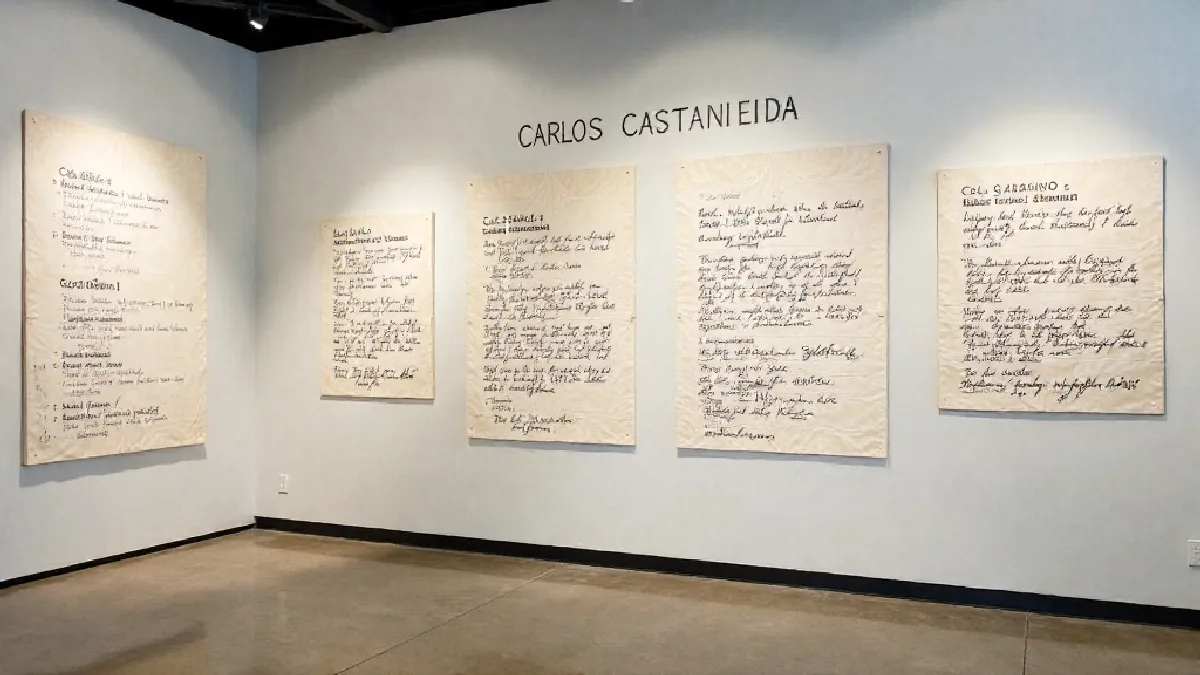
Castaneda's early work was heavily promoted as genuine field research into Native American shamanism. The University of California Press originally classified the series under cultural anthropology and Native American studies. Only recently did the publisher recategorize the books to reflect their fictional nature.
Historical records show that prominent researchers questioned Castaneda's claims early on. Amateur mycologist R. Gordon Wasson pointed out that Castaneda's descriptions of smoking psychoactive mushrooms in a pipe seemed completely fabricated. When Wasson requested mushroom samples for scientific testing, Castaneda promised to send them but never delivered.
Biographer Ru Marshall demonstrates that Castaneda derived his descriptions of psychoactive experiences from published anthropological papers rather than direct study with an Indigenous elder. He created tall tales about his background, claiming he worked for the CIA and played jazz trumpet. These exaggerated narratives helped him maintain authority over an eager, unsuspecting audience.
How Fake Lineage Exploits Underground Communities
The pattern established by Castaneda remains widespread throughout modern underground plant medicine networks. Contemporary facilitators frequently market their services by claiming romanticized or unverified Indigenous origins. This branding allows unqualified individuals to justify unethical behavior, improper protocols, and steep financial fees.
A clear example of this phenomenon involves the extraction of venom from Sonoran Desert toads. While internet influencers often claim this practice stems from ancient tribal ceremonies, historical evidence tells a different story. According to research published in the journal Psychedelics, harvesting toad venom for its psychoactive properties actually originated in the early 1980s.
When critics highlight these historical inaccuracies or ethical abuses, supporters often dismiss the feedback. Facilitators routinely claim their critics are undermining the broader movement's altruistic goals. As Marshall writes in the biography, people frequently believe stories simply because they fit pre-existing narratives they already wish to support.
Personal Accounts and Unethical Practices in Underground Therapy
In her essay, Natalie Storey reflects on her four years participating in an underground psychedelic therapy network based in Los Angeles. The group was led by a Peruvian guide whose affluent followers believed he possessed authentic Indigenous heritage. However, the facilitator consistently deflected direct questions regarding his training, background, and exact chemical ingredients.
Storey describes an environment where boundary violations and manipulation were routinely excused by participants. Wealthy clients and assistants overlooked questionable practices because they viewed the leader as a spiritual prophet. Similar to Castaneda, who surrounded himself with influential followers, the network relied on high-status individuals to maintain its credibility.
Storey eventually cut ties with the network after taking a teaching position on a Native American reservation in Box Elder, Montana. Interacting with local tribal members exposed the stark contrast between authentic Indigenous realities and white suburban appropriation. She noted that commercial demand for plant medicines often drives up costs and harms traditional communities without offering real local benefits.
What This Means for DC, Maryland and Virginia Residents
For readers across Washington DC, Maryland, and Virginia, understanding drug policy history is essential for evaluating local reform initiatives. As jurisdictions update regulations surrounding natural substances, consumers must distinguish between legitimate scientific reform and unverified underground claims. Transparency remains the cornerstone of consumer safety in any legal or decriminalized market.
In Virginia, legislative debates surrounding state policy continue to evolve. Residents researching topic areas like virginia cannabis, virginia marijuana laws, and whether va weed legal status applies to specific products must rely on verified legal guidelines. Unregulated underground providers often use misleading claims to bypass established state compliance rules.
Our take: Whether evaluating legal adult-use cannabis in Maryland, Washington DC's entheogenic plant policy under Initiative 81, or local Virginia dispensaries, consumers should prioritize licensed and fully regulated operations. Transparent testing, clear labeling, and compliance protect public health far better than grand claims of spiritual authority.
How This Compares to Other States

The distinction between regulated commercial markets and unregulated underground networks varies significantly across the country. States like Oregon and Colorado have created structured legal frameworks for natural medicine and regulated adult cannabis sales. These state programs require mandatory laboratory testing, practitioner licensing, and strict accountability mechanisms.
By contrast, states operating primarily under local decriminalization directives rely heavily on consumer education to prevent fraud. When regulatory oversight is lacking, self-proclaimed experts can more easily market unregulated services using fabricated credentials. This pattern mirrors the historical dynamics seen in early California psychedelic circles during the late twentieth century.
As Maryland and Washington DC expand retail frameworks, legal compliance ensures that products meet strict safety guidelines. Regulated supply chains eliminate the secrecy that allowed historical figures like Castaneda to operate without empirical oversight. Clear state-level standards protect both consumers and local business operators.
Timeline and Next Steps
The historical timeline of entheogenic literature and market oversight highlights key milestones in consumer awareness:
1968: Carlos Castaneda publishes The Teachings of Don Juan through University of California Press.
1980s: Psychoactive Sonoran Desert toad venom milking begins, later falsely attributed to ancient traditions.
2016–2021: Modern underground therapy networks expand rapidly across major metropolitan areas.
2026: Author Ru Marshall publishes American Trickster, uncovering extensive archival proof of Castaneda's fabrications.
Moving forward, consumers in the DMV region should verify credentials and source materials before engaging with any wellness or cannabis service. Checking state licensing databases and reviewing independent lab reports ensures safety and authenticity.
Who was Carlos Castaneda and was don Juan a real person?
Carlos Castaneda was an author who wrote a series of best-selling books starting in 1968 with The Teachings of Don Juan. Academic research and recent archival biographies have confirmed that his central subject, don Juan Matus, was completely fictionalized.
How does claiming fake Indigenous lineage affect modern psychedelic culture?
Falsely claiming Indigenous lineage allows unvetted underground facilitators to project unearned authority. This tactic frequently shelters bad actors from professional accountability, exploits traditional cultures, and misleads participants seeking safe experiences.
What are the current regulations for Virginia cannabis and plant medicine?
Virginia permits personal possession and cultivation for adults aged 21 and older within specific legal limits. However, commercial retail sales require strict state oversight, and non-cannabis entheogens remain regulated under state controlled substance statutes.
Did smoking Sonoran Desert toad venom originate from Indigenous traditions?
No. Research published in the journal Psychedelics confirms that milking Sonoran Desert toads for 5-MeO-DMT began in the early 1980s. Claims attributing the practice to ancient Indigenous traditions are historically inaccurate.
How can DMV consumers verify legitimate cannabis and wellness services?
Consumers in DC, Maryland, and Virginia should ensure providers operate under official state licenses or local municipal frameworks. Legitimate businesses provide full product disclosures, clear labeling, and verified third-party laboratory test results.
Final Takeaways on Transparency and Consumer Protection
The legacy of Carlos Castaneda serves as a cautionary tale for modern consumers and policy analysts alike. Charismatic figures using mystical claims and unverified heritage can easily distract from a lack of factual rigor and safety protocols. Whether exploring historical literature or navigating regional cannabis markets, demanding transparency is the best protection against exploitation.
At Bud Lords, we believe educated consumers make the safest choices. Staying informed on verified state laws, product lab testing, and regulatory developments ensures a secure experience across Washington DC, Maryland, and Virginia.
Written by Cannabis Science AI
Bud Lords AI Cannabis News Writer
Research scientist specializing in cannabis studies, terpene research, cannabinoid science, cultivation technology, and peer-reviewed cannabis research. Translates complex scientific findings into practical insights.
Expertise: science · research · terpenes · cannabinoids · cultivation · technology
This AI-assisted article was created using the named Bud Lords newsroom personality and reviewed under Bud Lords editorial standards.


Comments