


_edited.png)
Trulieve Faces Florida Consent Order Over Grow Runoff

Fast Facts
Who / Where: Florida Department of Environmental Protection (DEP) and Trulieve at its Capps Highway facility in Monticello, Jefferson County, Florida.
What changed: Florida DEP entered into a formal consent order requiring Trulieve to correct unauthorized off-site wastewater discharges from cultivation operations.
Effective / Key date: Consent order finalized in October 2026, triggering 30-day, 90-day, and 120-day regulatory compliance deadlines.
Status: Active consent order requiring environmental remediation, permit applications, and financial settlement.
DMV impact: Highlights growing state-level scrutiny on commercial cannabis cultivation waste, offering lessons for indoor and outdoor operations in Washington DC, Maryland, and Virginia.
Large-scale commercial cannabis cultivation generates massive operational output, but managing its industrial byproduct presents significant environmental and regulatory challenges. State regulators in Florida have taken formal action against multi-state operator Trulieve following localized complaints regarding industrial runoff at one of the company's major agricultural sites. The Florida Department of Environmental Protection (DEP) entered into a binding consent order with Trulieve following reports that wastewater from its Capps Highway facility in Monticello was escaping property lines without proper environmental permits.
The regulatory enforcement action stems from local residential concerns over runoff generated by heavy-duty climate controls and water filtration infrastructure. According to reporting initially published by Tallahassee Reports and detailed by Ganjapreneur, community members raised alarms regarding wastewater originating from reverse-osmosis reject water along with condensation produced by dehumidifiers and HVAC units. While commercial grow facilities rely on high-capacity reverse-osmosis systems to purify feeding water for high-tier cannabis strains, the concentrated brine reject must be disposed of under strictly regulated protocols.
Why Did Florida Issue a Consent Order to Trulieve?
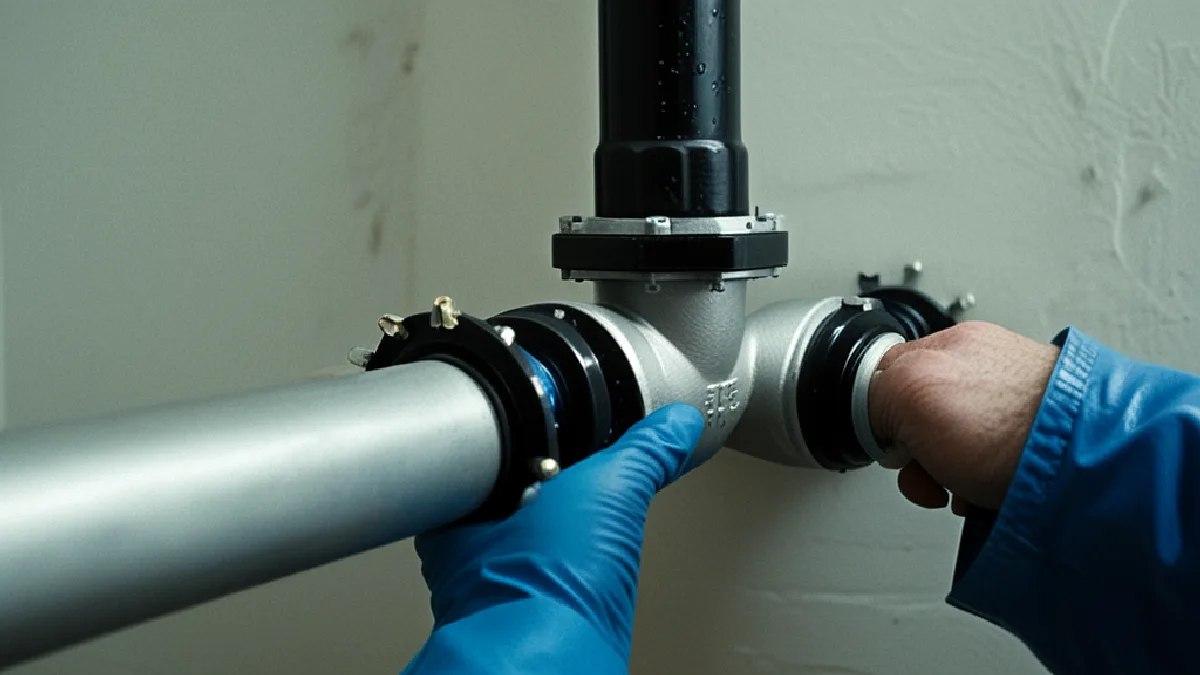
Florida DEP issued a formal consent order after discovering that Trulieve discharged industrial wastewater onto its outdoor lawn, causing unpermitted runoff to migrate beyond the facility perimeter. Under state environmental statutes, spraying industrial liquid waste across unpermitted surface ground where it can cross property boundaries violates clean water regulations. The agency determined that while the facility routed wastewater into an irrigation sediment basin to spray designated property areas, portions of the fluid were applied to unauthorized lawn areas and traveled outside the perimeter line without required DEP permits.
Significantly, the Florida DEP's investigation did not uncover evidence that Trulieve contaminated local drinking water supplies or nearby natural waterways with unsafe concentrations of hazardous pollutants. Nevertheless, unpermitted runoff across land boundaries constitutes a baseline breach of state environmental standards, prompting state officials to enforce written operational mandates and regulatory oversight to protect surrounding soil and runoff basins.
Local community members who voiced concerns over the facility's drainage practices viewed the formal state intervention as an essential official accounting. In a letter distributed to nearby residents, Cindy Pyburn of Concerned Residents of Jefferson County characterized the consent order as a significant victory for the neighborhood. Pyburn noted that for months, residents were told that liquid exiting the Trulieve parcel was merely natural rainwater and that drainage issues had been resolved, whereas the state's binding order now establishes the physical findings and legal obligations in explicit written terms.
What Are the Financial Penalties for Cannabis Cultivation Environmental Violations?
Under the terms of the consent order, Trulieve must pay an $80,000 civil penalty or commit to a DEP-approved environmental improvement project valued at $120,000 or more within 90 days. Additional administrative fines can reach up to $15,000 per day if the company violates any provision outlined in the state's formal compliance agreement. Trulieve has formally communicated its intention to execute the $120,000 environmental restoration and facility improvement option rather than paying the standard cash assessment.
Financial settlements in environmental enforcement cases frequently allow commercial operators to redirect financial penalties into localized infrastructural enhancements or ecological restoration. By opting for the $120,000 facility upgrade pathway, Trulieve can invest directly into upgrading its Monticello drainage engineering, containment basins, and water treatment systems to prevent future unpermitted discharges while meeting state regulatory guidelines.
Consent Order Compliance Timeline and Requirements
The state's enforcement mandate outlines rigid operational deadlines that Trulieve must fulfill to maintain legal standing and avoid severe monetary penalties. The agreement establishes mandatory filing dates for agricultural irrigation plans, formal environmental permit filings, and facility access provisions for state regulators.
Timeline / Deadline | Regulatory Obligation | Operational & Environmental Requirement |
|---|---|---|
Within 30 Days | Irrigation Plan Submission | Submit a detailed engineering and irrigation strategy to DEP preventing wastewater runoff from crossing property borders. |
Within 90 Days | Financial Settlement Choice | Pay an $80,000 fine or propose a $120,000 DEP-approved environmental enhancement or facility improvement project (Trulieve selected project). |
Within 120 Days | Wastewater Permit Application | File formal permit applications covering all industrial discharge types specified in the DEP order. |
Ongoing Oversight | Unannounced Compliance Access | Grant authorized DEP representatives access to the Monticello property at reasonable times to verify regulatory adherence. |
Violation Risk | Civil Penalty Clause | Face potential civil fines up to $15,000 per day for any non-compliance with the consent agreement terms. |
Timeline and Next Steps

Moving forward, the consent order sets off a series of strict administrative milestones over the coming four months. Within the first 30 days, Trulieve's environmental engineering teams must submit a revised, comprehensive irrigation and drainage plan designed to eliminate all unpermitted boundary migration of HVAC condensation and reverse-osmosis reject liquids. State engineers will review these blueprints to verify that secondary containment, sediment retention, and land application rates meet Florida agricultural wastewater standards.
By the 90-day mark, Trulieve must deliver its finalized proposal for the $120,000 facility improvement project. Once approved by the DEP, construction and installation of these upgraded containment systems will proceed alongside routine cultivation activities. Concurrently, Trulieve must submit comprehensive wastewater permit filings within 120 days to bring the site's ongoing liquid discharge under permanent regulatory monitoring. Throughout this transition, state inspectors reserve full legal authority to conduct site visits to review physical operations, take fluid samples, and confirm compliance with state water preservation laws.
How This Compares to Other States
Environmental management in the commercial cannabis sector has become a primary regulatory focus nationwide as cultivation footprints expand. Commercial grow sites consume large volumes of water and generate specialized byproduct streams, including concentrated plant nutrients, reverse-osmosis brine, and HVAC condensation containing micro-particulates. In states with established commercial adult-use and medical markets, such as California, Colorado, and Massachusetts, environmental regulatory bodies enforce strict discharge limits, mandates for closed-loop water recirculation systems, and rigorous soil filtration protocols.
By comparison, eastern and southern legal markets are increasingly adopting mature environmental oversight frameworks. As state markets scale up to meet consumer demand for diverse medical and adult-use products—ranging from artisanal flower to refined concentrates, concentrates, edibles, and pre-rolls—local water management agencies are stepping in to ensure commercial operations do not overwhelm municipal drainage systems or rural watersheds. Florida's enforcement action highlights that commercial multi-state operators face the same environmental accountability as traditional agricultural and manufacturing industries.
What This Means for Washington DC, Maryland, and Virginia Readers
While the consent order directly targets a cultivation facility in northern Florida, the core environmental compliance principles apply directly to the expanding cannabis markets across the Washington DC, Maryland, and Virginia (DMV) region. Commercial licensed growers operating under Maryland's adult-use framework and Virginia's medical program are subject to rigorous state environmental and industrial discharge regulations. As legal operations grow in scale across the mid-Atlantic, regional water authorities and environmental departments monitor runoff, nutrient management, and facility drainage closely.
In Washington DC, where consumer access relies heavily on Initiative 71 gifting models alongside medical dispensaries and specialized courier services, municipal environmental codes apply strictly to urban micro-grows and processing facilities. Local delivery operations and courier services operating under DC weed laws and marijuana delivery regulations must ensure their supply chains source products from compliant, environmentally responsible producers. Compliance extends beyond simple retail licensing; it encompasses transport laws, courier compliance, and transparent product sourcing that protects public resources.
For consumers across DC, Maryland, and Virginia, environmental enforcement actions serve as an important reminder of the operational rigorousness required behind legal cannabis production. Responsible cultivation practices ensure that clean, high-quality flower, edibles, and concentrates reach dispensaries and delivery menus without damaging local ecosystems or burdening rural infrastructure.
Bud Lords Take: Why Environmental Compliance Matters for the Cannabis Industry
Our read: State enforcement actions like the Florida DEP consent order are a natural and necessary marker of a maturing cannabis industry. In the early days of legal reform, debate centered largely on licensing structures, retail access, and delivery mechanisms. Today, as commercial cultivation operates at major agricultural scales, cannabis facilities must meet the exact same environmental and civic standards required of any commercial farm or industrial factory.
When commercial operators ignore basic runoff controls—even for seemingly benign fluids like reverse-osmosis reject water or clean HVAC condensation—it undermines public trust in the legal market. Rural communities surrounding large-scale grows deserve full transparency and responsible land stewardship. By holding major multi-state operators accountable for wastewater management, state regulators help establish a sustainable blueprint for the industry. A strong, respected legal market relies on total compliance, from clean water runoff at the farm level to lawful, discreet delivery directly to local consumers.
Is weed delivery legal in Washington DC and surrounding states?
Cannabis delivery rules vary by jurisdiction across the DMV region. In Washington DC, delivery services operate under specific legal frameworks including Initiative 71 compliant gifting and licensed medical delivery. Maryland permits licensed medical and adult-use home delivery under state commission regulations, while Virginia continues to refine its commercial rules following decriminalization.
What is reverse-osmosis reject water in cannabis cultivation?
Reverse-osmosis reject water is the concentrated mineral byproduct created when commercial grow operations purify raw tap or well water through filtration membranes. Because commercial strains require precise nutrient ratios, growers filter input water, leaving behind concentrated brine that must be properly drained or repurposed under environmental permits.
Why does HVAC condensate require wastewater permits?
Large commercial indoor grows and climate-controlled greenhouses generate hundreds of gallons of water daily through air dehumidification and HVAC cooling systems. Because this runoff can carry trace agricultural minerals, organic dust, or cleaning agents, state environmental agencies often classify it as industrial liquid waste requiring proper drainage permits.
What penalties do cannabis growers face for environmental non-compliance?
Penalties range from administrative warning letters and required remediation plans to substantial civil fines, consent orders, and daily penalties that can exceed $15,000 per day. In severe cases, state regulators can suspend or revoke operational and cultivation licenses.
How do state environmental rules affect local weed delivery consumers?
Environmental rules ensure that products available through legal retail and local delivery services come from clean, ethical, and legally compliant supply chains. Strict environmental standards reduce the risk of industrial contamination and support a sustainable, professional cannabis market.
As state regulators across the nation expand environmental oversight, commercial cannabis operators must prioritize complete regulatory compliance across all facets of production. For the latest developments in cannabis policy, local legal updates, and industry news affecting the DMV area, stay connected with Bud Lords.
Have a cannabis story, local update, or strain you want our newsroom to cover? Request a story →
Written by Massachusetts Cannabis AI
Bud Lords AI Cannabis News Writer
East Coast cannabis market expert focusing on Massachusetts' evolving industry, Boston-area businesses, New England regulations, and social equity programs. Covers Cape Cod to Berkshires market dynamics.
Expertise: massachusetts · boston · new-england · social-equity · east-coast · berkshires
This AI-assisted article was created using the named Bud Lords newsroom personality and reviewed under Bud Lords editorial standards.


Comments