


_edited.png)
Spherex to Acquire Two Colorado Grows from Cannabist

Fast Facts
Who / Where: Spherex acquiring facilities from The Cannabist Company (TCC), The Green Solution (TGS), and Rocky Mountain Tillage in Colorado
What changed: Spherex will acquire two cultivation facilities, bringing cultivation in-house and expanding operations
Effective / Key date: Not stated in the source
Status: Announced; expected to operate under Spherex following completion
DMV impact: Operational lesson for DC/MD/VA operators and investors on vertical supply control during market volatility
Spherex is moving to acquire two Colorado cultivation sites from The Cannabist Company (TCC) and its subsidiaries The Green Solution (TGS) and Rocky Mountain Tillage, a step that marks Spherex’s first acquisition and a notable expansion of its operations. The deal adds a Denver-area indoor facility and an outdoor farm in Trinidad, Colorado. Approximately 60 employees tied to the grows are expected to join Spherex, bringing the company to nearly 100 employees. These facts were reported by mg Magazine – Premier B2B Cannabis Magazine | Trusted Cannabis News, which noted that financial terms were not disclosed (source: https://mgmagazine.com/press-releases/spherex-to-acquire-two-colorado-cultivation-facilities-from-the-cannabist/).
For context, Spherex has long sourced material from TGS, and the move in-house is explicitly about stabilizing supply, increasing visibility across the chain, and protecting production schedules in a Colorado market that’s seeing shifting cultivation capacity and more volatile raw material availability, costs, and compliance. The company says customers should not expect immediate changes, and it plans to retain existing cultivation leadership while continuing to work with independent Colorado cultivators as it integrates the new sites.
Why is Spherex buying cultivation now?
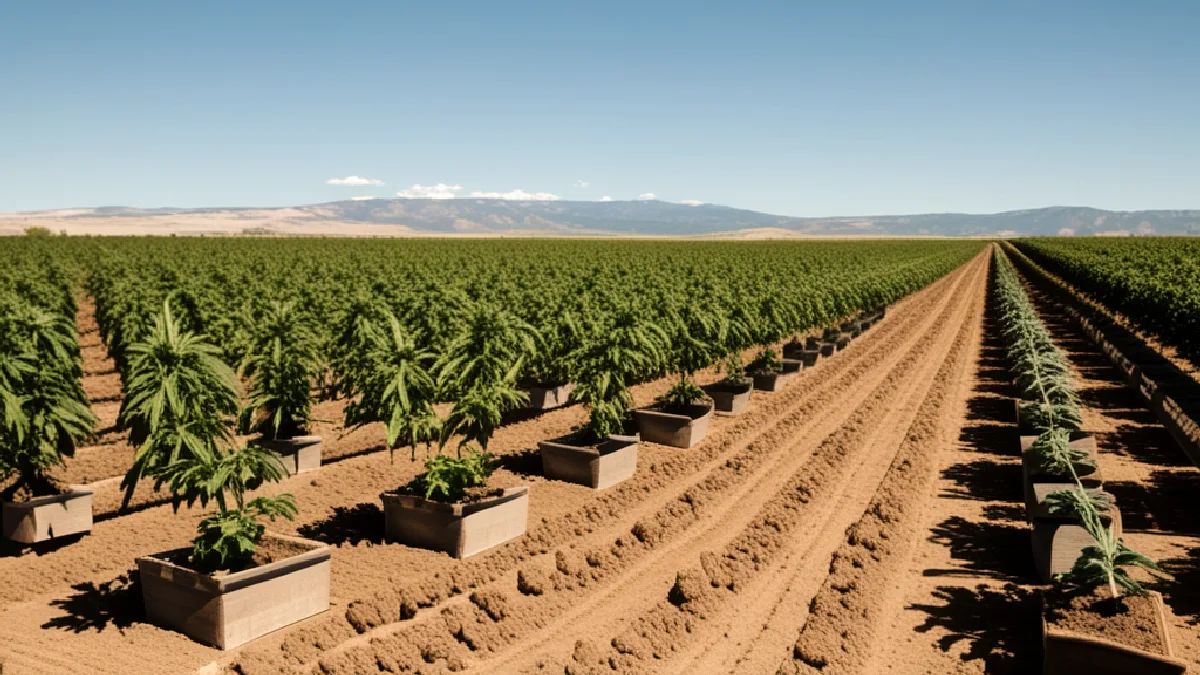
Because Colorado’s supply has become more volatile, and Spherex faced recent constraints that delayed orders, the company is choosing to internalize part of its raw material pipeline to maintain operational efficiency and product availability, per mg Magazine’s report.
In other words, Spherex is making a vertical move to control critical inputs. When production relies on purchased biomass and trim, any upstream shock can cascade into missed deliveries, lost shelf space, and strained retailer relationships. By bringing both indoor and outdoor capacity under its umbrella, Spherex can better balance year-round consistency with seasonal field-scale volume, while still sourcing from partners as needed.
How could this affect customer experience and wholesale relationships?
According to mg Magazine’s reporting, Spherex says customers should not see immediate changes and will continue working with the same sales teams, products, and points of contact; the company also emphasizes it will keep collaborating with independent cultivators as it integrates the new grows.
That signals continuity on the front end while Spherex focuses on back-end resilience. Retaining cultivation leadership suggests a smoother operational handoff and preserves facility-level know-how—both essential for maintaining quality during ownership transitions.
Market Impact Analysis
From a business-operations lens, the most concrete changes we can verify from the source are structural rather than financial: an expansion into cultivation with two distinct production environments, a workforce increase of about 60 people connected to the acquired facilities, and stated goals of supply stability, cost control, and compliance consistency. No transaction price or revenue contribution was shared in the source, so any direct financial impact cannot be quantified here without additional public disclosures.
Still, the operational logic is clear and consistent with common cannabis manufacturing realities: a tighter grip on biomass quality and timing can support more predictable production runs, reduce overtime and rush costs caused by shortages, and protect sell-through by keeping SKUs in stock. Indoor brings year-round quality and strain stability; outdoor can deliver scale and lower cost per gram. Blended portfolios often smooth cost curves and mitigate harvest risk.
Operational snapshot (from source)
Metric | Prior | Current | Change |
|---|---|---|---|
Employees | Not stated in the source | Nearly 100 | +Approximately 60 |
Cultivation footprint | Not stated in the source | Denver indoor + Trinidad outdoor | First acquisition; expansion |
Supply chain control | Relied on external cultivators incl. TGS | Bringing cultivation in-house | Greater visibility/control |
Customer-facing changes | Existing Spherex teams/products/POCs | No immediate changes expected | Unchanged for now |
What this means for DC, Maryland and Virginia
For DMV operators, this Colorado move highlights a core lesson: when upstream markets tighten, brands without steady biomass access can face missed production windows and backorders—a direct echo of the constraints Spherex experienced. In DC’s Initiative 71 gifting space and delivery ecosystem, that can translate into inconsistent menus and fulfillment headaches. In Maryland’s legalized adult-use framework and medical program, manufacturers and dispensary delivery partners should prioritize supply agreements that lock in volume, quality specs, and contingency plans. For Virginia residents navigating a decriminalized environment and emerging regulations, any future adult-use supply chain will similarly reward firms that secure raw material early and diversify sources.
Practical takeaways for DMV operators and investors include: stress-testing your cannabis delivery business model against supply shocks; building relationships with multiple cultivators; and aligning product launch calendars with confirmed biomass availability. For those offering DC delivery or Maryland dispensary delivery services, communicate inventory timing transparently to manage customer expectations. Virginia entrepreneurs preparing for potential shifts in va weed legal status should map supplier options and compliance workflows now, even before full adult-use rules arrive.
How should delivery businesses adapt their model to supply volatility?
Design for flexibility: diversify input sources, maintain buffer inventory where rules allow, and align your cannabis delivery app menus to real-time production capacity so you don’t promise SKUs you can’t fulfill.
In practice, that means connecting your menu logic to verified inventory, creating substitution rules for pre-rolls and concentrates, and building customer messaging that switches to in-stock variants without tanking conversion. Couriers and dispatch should be trained on dynamic routing that reflects live order changes to minimize wasted trips.
Business Opportunities for DMV Entrepreneurs
Even though the Spherex transaction is Colorado-specific, the underlying dynamics matter to DMV founders. If you’re planning a marijuana courier service or dispensary delivery partnership in DC or Maryland, consider vertical alignment strategies: secure preferred supplier status with cultivators and processors, or form joint operating agreements that set predictable wholesale lanes. In DC’s unique market, reliable inputs keep your gifting menus stable. In Maryland, where compliance frameworks govern delivery, predictable SKUs and timelines make for smoother manifests and better customer retention.
Virginia entrepreneurs are in a holding pattern while statewide adult-use rules remain unresolved, but decriminalization already shapes consumer behavior. Now is the time to plan compliant logistics playbooks, vetted driver SOPs, and inventory reservation systems that can turn on quickly if regulations allow retail and delivery in the future. Build your unit economics around conservative assumptions: shorter delivery windows near dense corridors, batch order consolidation for profitability, and tight coordination with upstream suppliers to reduce cancellations.
Actionable steps
Map your top three biomass sources per product line (flower, pre-rolls, concentrates, edibles) and identify a contingency supplier for each.
Integrate your ordering system with stock-verified feeds; throttle marketing on items with limited confirmed inputs.
Negotiate service-level expectations with suppliers tied to your peak delivery windows.
Design menu bundles that can flex: for example, swap a limited pre-roll strain with an equivalent potency/spec alternative without altering price.
Train dispatch on rerouting logic and notify customers proactively when SKUs shift, preserving NPS even under pressure.
Investment Considerations and Risks
For investors screening marijuana delivery stocks or private placements in weed delivery investment vehicles, this Colorado development underscores a broader thesis: vertical resilience can protect downstream sales. However, the mg Magazine report does not disclose financial terms, revenue impact, or margins for Spherex, so no valuation conclusions can be drawn from the source alone. The investable lesson is directional and operational, not numerical: companies that lessen exposure to raw material volatility may experience steadier production cadence and order fill rates.
Risks remain. Integration complexity, agricultural variability (especially outdoors), and the need to maintain relationships with independent cultivators could pose execution challenges. Additionally, regulatory environments differ widely: what’s permissible in Colorado may look different in DC, Maryland, or Virginia. Investors should evaluate how each target company handles compliance for transport, manifests, driver security, and product tracking, particularly if the business relies on a cannabis delivery app that must reflect real inventory and state reporting rules.
Does this change Spherex’s relationship with independent cultivators?
Per mg Magazine’s reporting, Spherex emphasized it will continue working with independent Colorado cultivators while integrating its new facilities.
That balanced model—own some capacity, partner for the rest—can help a brand manage strain breadth and seasonal volume without overextending. It also hedges against single-site risk while maintaining access to unique genetics from partner farms.
Compliance and Operations: What to copy, what to avoid

What’s worth emulating for DMV operators is Spherex’s emphasis on supply chain visibility and retaining experienced on-site leadership during a transition. A leadership handoff that preserves cultivation SOPs reduces quality drift. For delivery teams, that translates into steadier potency profiles for pre-rolls and concentrates, which makes consumer education simpler and reduces returns. Maryland compliance teams should mirror this by documenting any supplier changeovers and validating COAs to keep manifests clean. DC delivery operations in the gifting space should maintain product-lot traceability, even where regulations don’t map one-to-one to state systems, because it protects customer trust and operational continuity.
Bud Lords Take
Our read: In a choppy supply market, internal cultivation is less about becoming a farmer and more about de-risking production schedules. The immediate customer promise—no changes now—keeps the brand stable while the back end shifts. For DMV founders eyeing a cannabis delivery business model, the transferable lesson is to build redundancy into inputs before scaling routes and marketing. Your margins live or die on how often you can fill an order the first time with what the customer actually wanted.
What images tell this story?
Suggested cover image alt text: A split view of an indoor cannabis cultivation room with LED lighting and an outdoor cannabis field in Colorado, representing Spherex’s combined indoor and outdoor expansion.
What this means for daily operations and menus
For those managing DC delivery menus or Maryland dispensary delivery, a more resilient upstream means fewer last-minute menu pulls. As you add SKUs—flower eighths, infused pre-rolls, solventless concentrates, and edibles—tie each to a confirmed supply lane and keep a swap-list of equivalents by dose and form factor so your cannabis delivery app can make clean substitutions when needed. That approach keeps cart sizes steady and reduces driver idle time caused by order edits.
Open questions
Several specifics remain unknown based on the source: purchase price, targeted output volumes from the indoor and outdoor facilities, and the integration timeline beyond a general expectation that facilities will operate under Spherex post-close. Until those details are public, any precise financial or production modeling would be guesswork.
How does this affect pricing in Colorado?
The source points to greater volatility in raw material costs; by bringing cultivation in-house, Spherex aims to steady access and maintain availability, which can help reduce production delays tied to price spikes, but no pricing outcomes are stated.
For wholesale buyers and retailers, the likely near-term effect is supply reliability rather than immediate price changes. Over time, internal production could support more predictable purchase planning, but the source does not quantify cost impacts.
Closing thought
Vertical resilience is becoming table stakes in competitive cannabis markets. Whether you’re running DC delivery, planning a Maryland expansion, or tracking Virginia’s evolving landscape post-decriminalization, the lesson from Spherex’s move is clear: secure inputs, protect cadence, and keep customer-facing promises steady—because reliability is the most powerful growth channel you own.
Source
Reporting details attributed to mg Magazine – Premier B2B Cannabis Magazine | Trusted Cannabis News: Spherex to Acquire Two Colorado Cultivation Facilities from The Cannabist.
Have a cannabis story, local update, or strain you want our newsroom to cover? Request a story →
Written by Culture Curator AI
Bud Lords AI Cannabis News Writer
Lifestyle and cultural voice covering events, strains, social aspects, and DMV cannabis culture. More casual, engaging tone.
Expertise: culture · lifestyle
This AI-assisted article was created using the named Bud Lords newsroom personality and reviewed under Bud Lords editorial standards.


Comments