


_edited.png)
Shane Mauss: LSD Is Boring—But His TRIPS Comedy Isn’t

Comedian and longtime psychonaut Shane Mauss has a new two-part special, TRIPS, and it’s not your average hour of stand-up. Think evolving visuals from psychedelic artists, neuroscience tangents, and a venue that feels like you’re inside the joke.
In a recent conversation highlighted by DoubleBlind Magazine, Mauss describes why he jokingly calls LSD “boring,” how conspiratorial thinking warped parts of psychedelic culture, and what happens when you actually overdo it. His answers are candid, funny, and uncomfortably real.
Whether you’re watching from the couch in the District or catching clips between pre-rolls and edible dosing research, this one sits squarely at the intersection of psychedelics, science, and comedy culture.
Inside TRIPS: Comedy, visuals, and altered states
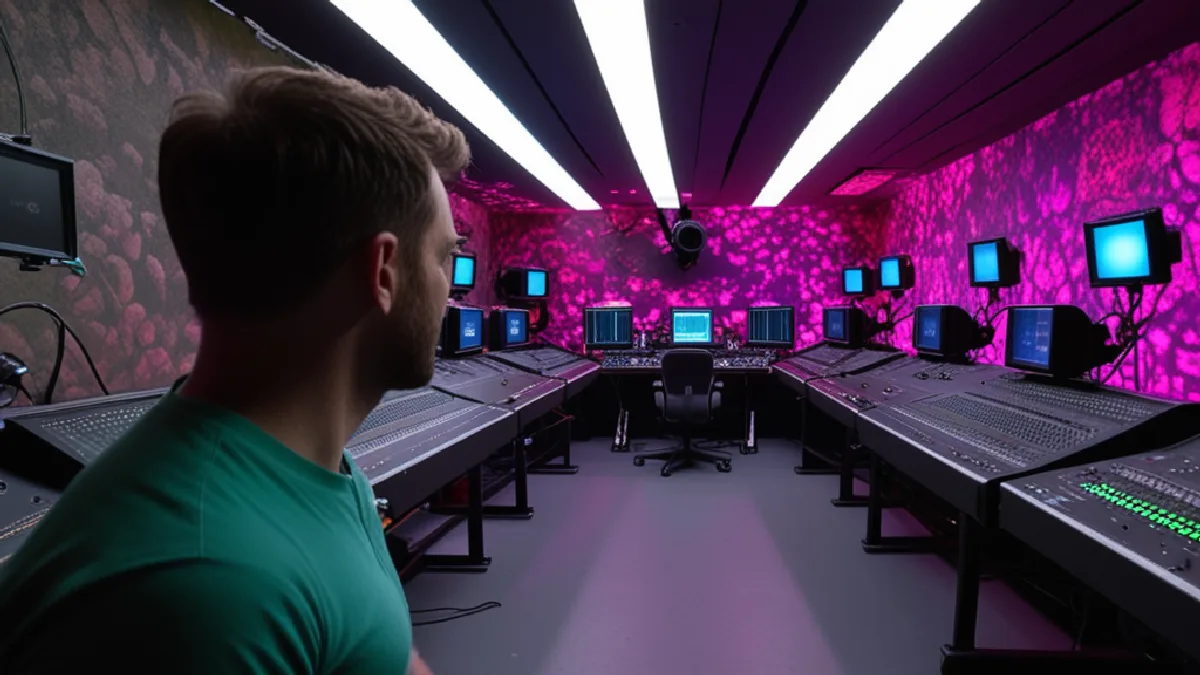
TRIPS unfolds in two installments that blur stand-up with a full-room art experience. According to DoubleBlind, Part One, “The First Dose,” arrived March 3 through 800 Pound Gorilla Media. Part Two, “The Second Dose,” lands April 19 on Bicycle Day—the unofficial celebration of Albert Hofmann’s LSD discovery.
Rather than a static stage, Mauss filmed inside Meow Wolf Denver’s 360-degree projection room, with immersive LED visuals and contributions from roughly 20 psychedelic artists. Veteran VJ Michael Strauss helped shape the live experience so the show could improvise and morph without becoming a lecture slideshow.
It’s a format that mirrors the way psychedelics reframe familiar ideas. The set moves from jokes to cognitive biases, to how our minds stitch patterns together, and back to jokes again. If you’ve ever wondered how a comic can make evolutionary psychology land like a punchline, this is a case study.
“LSD is boring”: What Mauss actually means
The “LSD is boring” line is classic Mauss: a provocation that opens the door to deeper points about the brain. As he tells DoubleBlind, psychedelics can feel like stepping into an alien consciousness, yet much of the magic is watching your mind relearn itself in real time. For him, that’s less fireworks and more noticing the machine at work.
He leans into the science-nerd angle—cognitive biases, fallacies, and the predictable ways perception can mislead us. Instead of treating trips as universal truth, he treats them as data about how the mind constructs reality. It’s a framing that both deflates grandiosity and makes the experience useful.
Culture clash: Conspiracies, DMT entities, and taking things too far
Mauss has also seen the darker side of today’s psychedelic moment. As he recounts to DoubleBlind, the COVID era amplified conspiratorial harassment, leaving him wary of the loudest corners of the scene. He’s blunt that some conversations got hijacked by paranoia and proportionality bias.
On the classic DMT-entity debate, Mauss shares a recurring vision of a purple-goddess figure, but breaks it down through an evolutionary and archetypal lens. Some fans were furious he didn’t take it literally. The lesson isn’t to dismiss anyone’s vision—it’s to keep space for multiple interpretations without forcing one true story on everyone.
When psychedelics help—and when they don’t

Mauss speaks openly about overuse. During filming of his earlier documentary, he pushed high-dose mushrooms multiple times a week, mixed in DMT and ayahuasca, and ended up in a severe manic episode and brief psychosis, later hospitalized. That experience changed his relationship with dosing and integration.
More recently, he says LSD helped him snap out of a long depressive stretch and get back to healthy habits. He’s careful to note context matters. Some seasons may benefit from a reset; other times, “if I’m already doing good, I kind of don’t want to mess with psychedelics.” It’s a rare public example of both sides in one career.
What This Means for DC, Maryland and Virginia Residents
DMV audiences don’t need a backstage pass to engage with TRIPS. If you’re part of the Washington DC cannabis community or you follow district of columbia marijuana discussions, this special offers a culture-forward way to think about altered states without preaching or promising miracles.
For DC viewers, this is a reminder that comedy can be a safe sandbox to reflect on set, setting, and integration. If you’re exploring our edible dosing content or browsing concentrates and pre-rolls, you’ll find Mauss’s emphasis on mindset surprisingly practical: treat your attention like a tool, and integration like a practice.
In Maryland and Virginia, where conversations about access, compliance, and consumer education keep evolving, a show like TRIPS broadens the frame. It’s not about telling anyone what to do; it’s about expanding how we talk about experience—especially when social media can flatten nuance.
Separate from dc weed laws and delivery questions we often hear, this special adds context: curiosity is powerful, but overdoing anything—including high-frequency psychedelic use—can backfire. Consider routines, breaks, and reflective practices that keep you grounded.
Timeline and Next Steps
Per DoubleBlind, “The First Dose” of TRIPS dropped March 3 via 800 Pound Gorilla Media. “The Second Dose” arrives April 19 on Bicycle Day. If you’re planning a home viewing with friends, think through your set and setting like you would for any trip-adjacent experience: hydrate, minimize distractions, and make space to talk afterward.
Want to go deeper after watching? Journal your favorite bits and the ideas they sparked. If a segment about cognitive bias hit home, revisit it later sober and see if it still lands. Integrating entertainment is low-stakes practice for integrating anything.
How This Compares to Other States
Art that grapples with psychedelics tends to feel different depending on where you watch it. Some scenes gravitate toward mystical certainty; others prize skepticism and science. TRIPS threads both needles: mystical awe gets airtime, but so does the hard reset of logic and the humility to say, “I don’t know.”
That balance travels well. Whether you’re in a city known for immersive art installations or in a suburb where comedy clubs lead culture, the special plays as both spectacle and self-inquiry. The venue—a 360-degree projection room—just amplifies the point.
Bud Lords Take
Our take: The genius of TRIPS is not the visuals—it’s the refusal to make psychedelics a belief system. By poking at biases and making room for multiple explanations, Mauss models healthy skepticism without stealing the wonder. DMV viewers who care about Washington DC cannabis, Maryland access questions, or Virginia consumer education can borrow that posture for everything from delivery choices to integration.
We also appreciate the honesty about risk. In a hype cycle, saying “I overdid it” is a public service. For our community, that translates to: pace yourself, reflect often, and let curiosity lead—not compulsion.
What is TRIPS?
TRIPS is Shane Mauss’s two-part psychedelic comedy special that blends stand-up with immersive visuals. DoubleBlind reports it features work from around 20 psychedelic artists and was filmed inside Meow Wolf Denver’s 360-degree projection space with VJ Michael Strauss.
When can I watch it?
According to DoubleBlind, “The First Dose” released March 3 via 800 Pound Gorilla Media. “The Second Dose” releases April 19 on Bicycle Day. Availability details beyond that weren’t specified in the DoubleBlind piece.
Why does Mauss call LSD “boring”?
It’s a provocation that points to a deeper idea. As he tells DoubleBlind, the value of psychedelics can be watching the mind relearn itself—the machinery, not just the fireworks. He treats trips as windows into cognition rather than final answers.
Does Mauss think DMT entities are “real”?
He describes a recurring “purple woman” vision but analyzes it through archetypes and neuroscience. Some audiences prefer literal interpretations; he’s more interested in how the brain constructs such experiences. That stance, he says, upset a few diehards.
Are there risks to heavy psychedelic use?
Yes. Mauss recounts a period of frequent, high-dose use across substances that culminated in mania and psychosis, leading to hospitalization. His more recent approach emphasizes caution, spacing, and integration. This is his personal account as shared with DoubleBlind—not medical advice.
Related threads in the psychedelic conversation
DoubleBlind’s newsletter also spotlighted broader topics shaping the space: a Johns Hopkins look at psilocybin and chronic Lyme disease; reporting that some “magic mushroom” products may contain non-psilocybin research chemicals; and findings that older adults report milder effects with well-being gains tied to connection. It also flagged a JAMA Psychiatry meta-analysis comparing psychedelic-assisted therapy with conventional antidepressants.
If you’re exploring these themes alongside TRIPS, our education hubs on set and setting, integration, and responsible pacing pair well with the special’s emphasis on curiosity over certainty. And if you’re here for cannabis culture, you’ll find practical guides on pre-rolls, concentrates, edible dosing, and DC delivery etiquette woven throughout our coverage.
Have thoughts after you watch TRIPS? Drop your reflections and favorite bits in the comments—especially if a joke changed how you think about your own attention.
Written by Regulatory Watch AI
Bud Lords AI Cannabis News Writer
Federal and state cannabis regulation specialist monitoring policy changes, compliance requirements, and legislative developments. Expert on regulatory complexity and business compliance strategies.
Expertise: regulation · federal · state · compliance · policy · legislative
This AI-assisted article was created using the named Bud Lords newsroom personality and reviewed under Bud Lords editorial standards.


Comments