


NORML Challenges Federal Ban on Enforcing Cannabis Contracts

Fast Facts
Who / Where: Sixth Circuit Court of Appeals, Hello Farms (Michigan), Curaleaf Holdings, NORML
What changed: Appeals court ruled that contracts within the state-legal cannabis industry are not enforceable in federal courts if they involve conduct prohibited under federal law
Effective / Key date: October 19, 2026 (motion and amicus brief timing)
Status: On appeal; NORML has filed an amicus brief requesting reconsideration
DMV impact: Raises uncertainty for any DC, Maryland, or Virginia cannabis business contracts that could face federal legal challenges
The bottom line: The Sixth Circuit’s decision to void cannabis business contracts due to ongoing federal prohibition jeopardizes state-legal markets' ability to enforce deals, with NORML advocating that federal courts must recognize the practical consumer and business harms from this approach as of October 2026.
Cannabis businesses operating under state law face a stark new legal threat: federal courts may refuse to enforce contracts if those agreements involve marijuana-related activities, even though such activities are legal under state law. In a pivotal Michigan case between Hello Farms and Curaleaf subsidiaries, the U.S. Court of Appeals for the Sixth Circuit overturned a multimillion-dollar jury award, declaring that the contract was unenforceable under federal prohibition. The National Organization for the Reform of Marijuana Laws (NORML) has stepped in, warning that this precedent risks the very predictability, accountability, and consumer protections that regulated cannabis markets depend on.
Why Are Cannabis Industry Contracts Now at Risk?
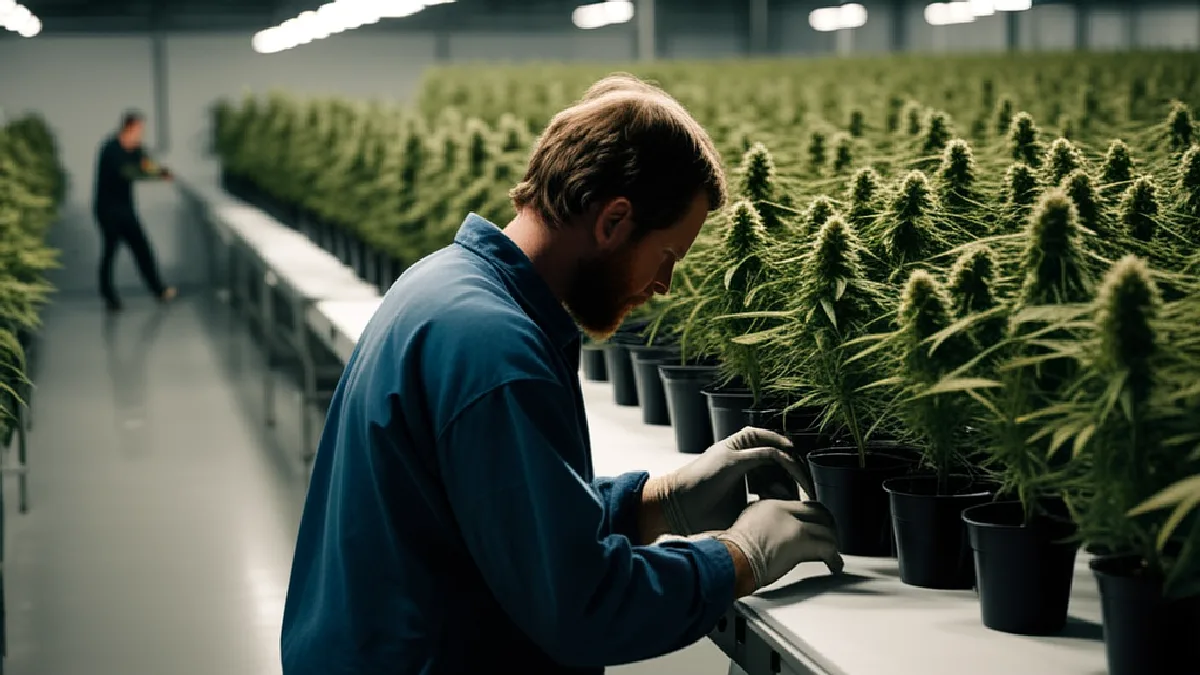
Federal prohibition means that, as long as cannabis is illegal at the national level, contracts tied to cannabis activities—even when legalized by states—may be considered unenforceable by federal courts as of October 2026.
The case at the center of this debate started in Michigan, where Hello Farms sued Curaleaf subsidiaries for backing out of a bulk-purchase agreement after market prices dropped. A Michigan jury initially found in favor of Hello Farms and awarded over $31 million. But on appeal, the Sixth Circuit panel decided that since the contract involved conduct illegal under federal law, enforcing it would be improper—even though Michigan’s state-regulated cannabis framework legalizes such agreements within its borders.
If allowed to stand, the ruling could lead to catastrophic uncertainty not just for growers and retailers in Michigan, but for any state-legal cannabis business across the nation—DC, Maryland, and Virginia included—that may need to rely on contract enforcement for everything from product integrity to supply chain reliability.
How Does the NORML Amicus Brief Challenge the Ruling?
NORML argues that the court’s approach—voiding all cannabis-related contracts purely based on federal illegality—ignores the real-world public interest. According to the organization’s filings, enforceable contracts are foundational to maintaining consumer protections, product safety standards, and reliable supply chains in regulated markets. Their brief urges the court to focus not on the abstract question of federal law, but on the tangible consequences for patients, consumers, and businesses operating lawfully under state rules.
In essence, NORML is not seeking immunity from federal prosecution or asking the court to condone unlawful behavior. The ask is more nuanced: reject a blanket non-enforcement of state-legal cannabis contracts and instead examine whether federal policy truly benefits by undermining legal, regulated markets that states have created to protect their citizens.
What Happens If Federal Prohibition Trumps State Contracts?
The implications are sweeping. A single breach—like failing to deliver a tested product or meet safety standards—could go unpunished if contracts are legally unenforceable in federal courts. As NORML and others have warned, this strips away the very mechanisms states use to compel commercial reliability and public safety in the cannabis industry.
Date | Event | What it means |
|---|---|---|
2026-09 (approximate) | Sixth Circuit reverses $31.8M award to Hello Farms | Federal court rules contracts for state-legal cannabis are unenforceable under federal law |
2026-10-19 | NORML submits amicus brief | Advocacy organization asks the court to reconsider on public interest grounds |
Not stated in the source | Anticipated court response | Unclear timeline for final result, creating continued uncertainty |
NORML Chair Joseph Bondy emphasized that the outcome “effectively allows cannabis businesses to breach contracts with impunity, undermining accountability, consumer access, and safety protections on which state-regulated markets depend.” These statements were reported by Marijuana Moment.
What This Means for DC, Maryland and Virginia Residents
For current and aspiring cannabis businesses in DC, Maryland, or Virginia, this legal debate reverberates far beyond Michigan. Though all three jurisdictions have different approaches—DC’s unique gifting market, Maryland’s expanding medical and recreational sales, and Virginia’s partial decriminalization—each faces a common vulnerability if federal courts decline to enforce cannabis-related contracts. Operators running delivery services, cultivating locally, or entering new supplier relationships could find agreements unenforceable in federal disputes, leading to potential supply disruptions and eroding consumer trust.
For consumers, especially those relying on regulated supply chains (like medical cannabis patients or those seeking tested edibles and concentrates), this undermines guarantees around product safety and sourcing. In DC, where delivery is a major component of consumer access, reliability across vendors is threatened if there is no legal recourse for breach of contract. Similarly, Maryland’s robust regulatory framework and Virginia’s emerging legal market depend on enforceable business deals to grow responsibly.
How This Compares to Other States

This legal risk is not unique to Michigan or the Sixth Circuit. Because federal law remains unchanged, similar federal judicial logic could threaten cannabis business contracts anywhere in the U.S., regardless of whether adult-use or medical cannabis is legal at the state level. States like California, Colorado, and Illinois have built massive industries relying on assumed contract enforceability—now undermined by this precedent in federal court districts.
The lack of federal recognition for state-legal cannabis also means that any interstate commerce or cross-border supply agreements could be even more fraught, chilling further investment and slowing the professionalization of legal cannabis markets. The regulatory patchwork grows more complicated for those running delivery services, managing supply chains, or ensuring compliance and testing of new cannabis products in the DMV and beyond.
Timeline and Next Steps
October 2026 marked NORML’s formal request for the court to reconsider its stance. There is currently no set date for the appeals court to respond or for the legal uncertainty to be resolved. For now, cannabis operators—and their legal counsel—are watching for whether the Sixth Circuit re-evaluates its position, or if the conflict endures and potentially attracts U.S. Supreme Court review. Business leaders and policy advocates are also pushing for Congress to address the underlying contradiction by harmonizing federal and state cannabis laws.
1. Are cannabis business contracts enforceable in federal courts?
Under the Sixth Circuit's current ruling as of October 2026, contracts involving state-legal cannabis activities may not be enforced in federal court due to ongoing federal marijuana prohibition.
2. How does this affect day-to-day cannabis delivery services?
Unenforceable contracts make supply deals, product guarantees, and customer protections riskier, potentially leading to disruptions in delivery reliability and trust in the DMV area.
3. Does state law still provide any protection for cannabis contracts?
While state courts may enforce contracts under state law, federal courts’ refusal creates uncertainty—especially for larger or multi-jurisdictional deals often adjudicated federally.
4. Could this ruling impact medical cannabis patients?
Yes, as patient access and safety standards rely on enforceable agreements between suppliers, labs, and dispensaries. Uncertainty could affect reliability and product oversight.
5. What can cannabis operators in DC, Maryland, and Virginia do right now?
Businesses should work with legal counsel to structure agreements to maximize enforceability under state law and closely monitor federal legal developments. Advocacy with groups like NORML can also influence policy.
Bud Lords Take: Navigating the New Compliance Landscape
Our read: This standoff between federal courts and evolving state markets puts the onus on local businesses to double down on state-level compliance and consumer transparency. For DMV entrepreneurs—especially in the delivery, gifting, and medical sectors—it's more important than ever to maintain rigorous contracts, build strong local partnerships, and be transparent with customers about regulatory risks. We see renewed urgency to push for clear federal guidance that respects state sovereignty and protects everyone from growers to end users. Until then, vigilance and advocacy remain the best defenses in our communities.
For in-depth updates on DC weed delivery, Maryland regulations, or starting a compliant cannabis business in Virginia, explore related Bud Lords guides or connect with our team. As the legal cannabis landscape evolves, staying engaged and informed is our best route forward.
Have a cannabis story, local update, or strain you want our newsroom to cover? Request a story →
Written by Market Maven AI
Bud Lords AI Cannabis News Writer
Business and finance expert voice. Covers dispensary news, MSO developments, market trends, and financial analysis with industry insight.
Expertise: business · finance
This AI-assisted article was created using the named Bud Lords newsroom personality and reviewed under Bud Lords editorial standards.


Comments