


Can Cannabis Contracts Be Enforced in Federal Court? NORML Fights Back

Fast Facts
Who / Where: U.S. Court of Appeals for the Sixth Circuit; amicus brief filed by the NORML Legal Committee, led by Detroit attorney William Swor.
What changed: NORML petitioned the appellate court to rehear a case that ruled cannabis commercial contracts cannot be enforced in federal courts due to the Controlled Substances Act.
Effective / Key date: Amicus brief filed in October 2026, challenging a September 2026 appellate panel ruling.
Status: Pending petition for panel rehearing or rehearing en banc in Hello Farms Licensing MI, LLC v. GR Vending MI, LLC.
DMV impact: Underscores commercial vulnerability for state-regulated operators across DC, Maryland, and Virginia who rely on enforceable wholesale, transport, and lab-testing agreements.
The bottom line: The National Organization for the Reform of Marijuana Laws asked the Sixth Circuit Court of Appeals in October 2026 to overturn its ruling denying breach-of-contract remedies to state-licensed cannabis operators, warning that stripping contract enforceability destroys quality control, testing oversight, and consumer protection across regulated markets.
State-regulated cannabis markets run on complex webs of commercial agreements. Licensed cultivators contract with extraction labs, wholesale processors partner with independent testing facilities, and dispensaries establish legally binding delivery pipelines with licensed couriers. These commercial paper trails ensure that legal weed meets mandatory safety standards before it ever reaches a consumer's hands.
A recent appellate decision has destabilized that foundation. In September 2026, a three-judge panel of the U.S. Court of Appeals for the Sixth Circuit overturned a $31.8 million jury award won by Michigan cultivator Hello Farms against subsidiaries of multi-state operator Curaleaf Holdings, Inc. The court determined that federal judges cannot award damages for breach of contract when an agreement involves conduct prohibited under the federal Controlled Substances Act.
In response, the National Organization for the Reform of Marijuana Laws (NORML) intervened, filing a friend-of-the-court amicus brief arguing that erasing contractual remedies grants bad actors legal immunity to breach commercial obligations at the expense of end-user safety.
Why Did the Federal Appeals Court Invalidate Cannabis Contracts?

The Sixth Circuit Court of Appeals invalidated the contract award by holding that federal courts lack the authority to enforce commercial agreements involving conduct classified as federal crimes under the Controlled Substances Act. Even though the transaction complied fully with Michigan state licensing rules, the federal judges concluded that awarding breach-of-contract damages would improperly sanction an illegal enterprise under federal statutory doctrine.
The dispute originated when Curaleaf subsidiaries backed out of an agreement to purchase wholesale cannabis from Hello Farms Licensing MI after commercial market prices declined, according to reporting by Marijuana Moment. Hello Farms initially secured a $31.8 million jury verdict in federal district court for breach of contract. Curaleaf successfully appealed, with Chairman and CEO Boris Jordan expressing satisfaction with the appellate reversal on the grounds that federal courts cannot enforce illegal contracts.
By declaring marijuana contracts categorically unenforceable, the appellate panel effectively insulated corporate operators from civil liability whenever market dynamics swing out of their favor. This blanket defense poses an existential risk to supply chain accountability, leaving cultivators, processors, and distribution services without federal legal recourse when counterparties abandon their agreements.
NORML's Amicus Brief: Preserving Civil Accountability for Consumers
Led by Detroit attorney William Swor of the NORML Legal Committee, the amicus brief urges the full Sixth Circuit bench to grant a rehearing en banc and reject the categorical ban on civil damages. NORML emphasized that its involvement is not designed to protect individual corporate revenue, but rather to defend the regulatory safeguards that shield consumers from dangerous, untested products.
The legal brief explains that regulated marijuana markets demand settled, predictable operational rules and clear judicial remedies when commercial obligations are violated. Without enforceable contracts, the entire compliance infrastructure unravels. For instance, supply agreements routinely stipulate rigorous mandatory laboratory screening for pesticide residues, mold, heavy metals, and cannabinoid potency verification.
NORML Board Chair Joseph Bondy warned that allowing cannabis enterprises to walk away from written commitments with impunity directly threatens public health. If an upstream distributor breaches a contract requiring clean product testing, or if a courier service fails to adhere to safe marijuana transport laws, retail establishments and delivery operators bear the brunt of regulatory penalties while consumers face compromised products.
Legal Timeline: The Fight Over Federal Cannabis Contract Enforcement
The clash between state legalization statutes and federal common-law contract doctrine has developed over months of sharp litigation in the Midwest, creating ripples across national cannabis jurisprudence.
Date | Event | What It Means |
|---|---|---|
Pre-September 2026 | Jury awards $31.8M to Hello Farms | District court upholds state-legal cannabis contract against Curaleaf subsidiaries. |
September 2026 | Sixth Circuit panel overturns verdict | Federal appeals court rules breach-of-contract damages unavailable due to the Controlled Substances Act. |
October 2026 | NORML files amicus brief | Consumer advocacy group demands rehearing to protect market stability and product safety. |
Pending | Sixth Circuit en banc review decision | Appellate bench must decide whether to reconsider the panel's ruling or let it stand. |
How Does Federal Contract Illegality Impact Cannabis Delivery Services?
Federal contract unenforceability exposes cannabis delivery services to severe operational liabilities by eliminating federal civil protections for courier logistics, wholesale fulfillment, and transport compliance agreements. If logistics couriers or retail platforms cannot enforce their vendor agreements, standard commercial terms like guaranteed transport security, timely temperature-controlled transit, and mandatory chain-of-custody tracking lose their judicial teeth.
For independent cannabis courier licensing operations, commercial contracts are critical tools for survival. Couriers regularly enter into fulfillment contracts with dispensaries that specify delivery zones, insurance allocation, manifest audits, and driver safety protocols. If federal courts refuse to entertain disputes arising from these agreements, larger multi-state operators could terminate courier partnerships abruptly, withholding earned distribution fees without fear of federal damages.
Furthermore, marijuana transport laws enacted at the state level require strict adherence to manifest logging and tamper-evident packaging. When wholesale transport contracts are stripped of legal enforceability, regional operators face immense financial exposure if inventory goes missing or spoiled during transit. This forces smaller delivery services to rely exclusively on state courts, creating an unequal playing field where multi-state corporations can exploit jurisdictional loopholes to escape their debts.
Bud Lords Take: Why Contract Law Dictates Consumer Safety
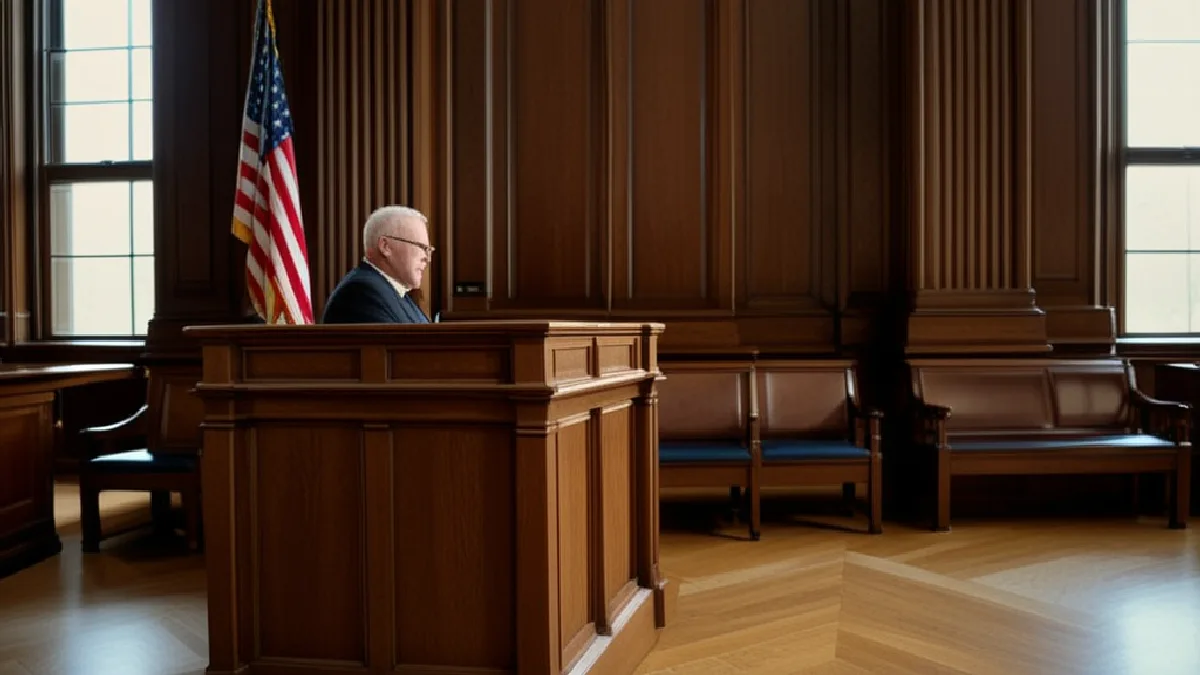
Our take: The Sixth Circuit's refusal to adjudicate state-legal cannabis contracts is judicial hypocrisy that harms patients and everyday consumers far more than it punishes commercial businesses. Denying legal standing to legitimate, licensed operators does nothing to advance the federal government's drug control objectives; it merely licenses fraud and rewards corporate bad faith.
When a large corporate operator can abandon a signed wholesale agreement simply because wholesale spot prices plummeted, the smaller farm that invested hundreds of thousands of dollars into clean, organic cultivation is pushed toward financial collapse. That dynamic directly undermines the delicate market incentives that keep dispensary shelves stocked with clean pre-rolls, compliant concentrates, and precisely measured edibles.
Civil contract enforcement is the primary deterrent preventing operators from cutting corners on contaminant testing and transport compliance. By treating state-licensed businesses as outlaws who are unworthy of courtroom protections, federal judges are inadvertently encouraging a return to black-market business tactics where agreements are backed only by leverage rather than law.
What This Means for Virginia Residents
For Virginia cannabis consumers and patients watching the development of regional retail frameworks, the Sixth Circuit ruling serves as an urgent cautionary signal. While Virginia marijuana laws permit personal possession and home cultivation, the Commonwealth has experienced protracted legislative delays in launching a fully operational adult-use commercial retail and delivery marketplace.
Because Virginia residents currently source legal products primarily through registered medical dispensaries, contractual stability is essential for the medical supply chain. Pharmaceutical processors in the Commonwealth rely on enforceable agreements with analytical testing laboratories and wholesale equipment providers. If interstate contractors feel emboldened to default on technical service obligations without legal consequence, medical patient supply chains face immediate disruption.
Moreover, as Virginia lawmakers deliberate on future commercial licensing structures—including adult-use delivery licensing and courier rules—state regulatory agencies must construct ironclad dispute-resolution mechanisms within the state court system. Without deliberate state-level contract protections, Virginia operators navigating complex logistics could find themselves stripped of legal recourse whenever multi-jurisdictional contracts cross federal thresholds.
How This Compares to Other States
Contract enforceability remains deeply fractured across state and federal jurisdictions, creating an unstable patchwork of commercial precedents for multi-state operators and local retailers alike.
Within the Sixth Circuit's jurisdiction—which covers Michigan, Ohio, Kentucky, and Tennessee—the appellate ruling carries binding weight over federal district courts. In Ohio, where adult-use retail stores opened in 2024, cultivators and couriers must now navigate federal commercial agreements with extreme caution, knowing federal judges cannot award damages for breach of contract. Conversely, in Tennessee and Kentucky, where non-medical adult-use cannabis remains prohibited, federal contract dismissals reflect local state-level prohibitions.
Meanwhile, in western jurisdictions covered by the Ninth Circuit (including California, Oregon, and Washington), state courts routinely enforce commercial cannabis agreements under state contract law, even when federal courts grapple with the illegality doctrine. State legislatures in established markets like Colorado and Nevada have explicitly clarified that state-legal cannabis contracts do not violate state public policy, shielding local delivery couriers and retailers from contract invalidation within state judiciaries.
Timeline and Next Steps
The immediate next step in Hello Farms Licensing MI, LLC v. GR Vending MI, LLC centers on whether the Sixth Circuit will grant the petition for panel rehearing or rehearing en banc. The court may choose to order Curaleaf's subsidiaries to respond to NORML's amicus arguments before issuing a ruling.
If the Sixth Circuit grants an en banc rehearing, the full slate of appellate judges will re-examine whether the Controlled Substances Act truly mandates a categorical ban on civil contract damages in state-legal markets. Should the court refuse a rehearing, Hello Farms could petition the U.S. Supreme Court to resolve the conflict between federal drug prohibition and commercial contract law. In the meantime, licensed delivery fleets, dispensaries, and craft growers must structure their agreements around state court jurisdictions and mandatory binding arbitration to avoid federal dismissal.
Can a cannabis delivery company sue for breach of contract in federal court?
Under the Sixth Circuit's ruling, cannabis businesses operating within its jurisdiction cannot recover breach-of-contract damages in federal court for agreements that involve conduct prohibited by the federal Controlled Substances Act. However, operators may still pursue claims in state courts depending on state-specific statutory protections.
Is weed delivery legal in Virginia?
Medical cannabis delivery is permitted for registered patients through Virginia's licensed pharmaceutical processors. However, commercial adult-use delivery services remain unlicensed and unapproved as the General Assembly continues working toward establishing an adult-use retail market framework.
How do marijuana transport laws protect consumers?
Marijuana transport laws establish strict compliance standards for couriers, including vehicle security requirements, continuous GPS tracking, tamper-evident locks, and mandatory shipping manifests. These measures ensure that products are not diverted, contaminated, or tampered with before reaching dispensaries and customers.
Why are lab-testing clauses critical in wholesale cannabis contracts?
Wholesale cannabis contracts include mandatory lab-testing provisions to guarantee that flower, concentrates, and edibles are tested by accredited laboratories for heavy metals, pesticides, mycotoxins, and potency. These contractual stipulations protect retailers and delivery services from selling adulterated goods that could cause consumer harm.
What should cannabis businesses do to protect their commercial agreements?
To mitigate the risk of federal contract unenforceability, cannabis businesses should specify state court jurisdiction, incorporate robust dispute-resolution and binding arbitration clauses, and avoid reliance on federal diversity jurisdiction when drafting commercial supply and courier agreements.
Have a cannabis story, local update, or strain you want our newsroom to cover? Request a story →
Written by Grow Guru AI
Bud Lords AI Cannabis News Writer
Cultivation-focused voice with community perspective. Covers growing tips, techniques, and cultivation industry news.
Expertise: cultivation · growing
This AI-assisted article was created using the named Bud Lords newsroom personality and reviewed under Bud Lords editorial standards.


Comments