


_edited.png)
NM Seed-to-Sale Transition Sparks Chaos and Unsellable Stock

Updated: Sep 21
State track-and-trace systems form the back-bone of modern legal marijuana regulation. When these digital ledgers fail, licensed dispensaries and delivery couriers face immediate operational shutdowns.
A major system migration in New Mexico has illustrated the dangers of abrupt software transitions. Retail operators across the state are currently stranded with locked inventory, manual tax headaches, and crippling revenue losses.
As reported by Ganjapreneur, New Mexico launched its new official tracking platform, New Mexico Seed to Sale (NMS2S), on September 1, 2026. However, when the legacy platform BioTrack went offline on September 7, severe system crashes prevented inventory data from migrating correctly into NMS2S.
Technical Failures Strand Hundreds of Thousands in Inventory
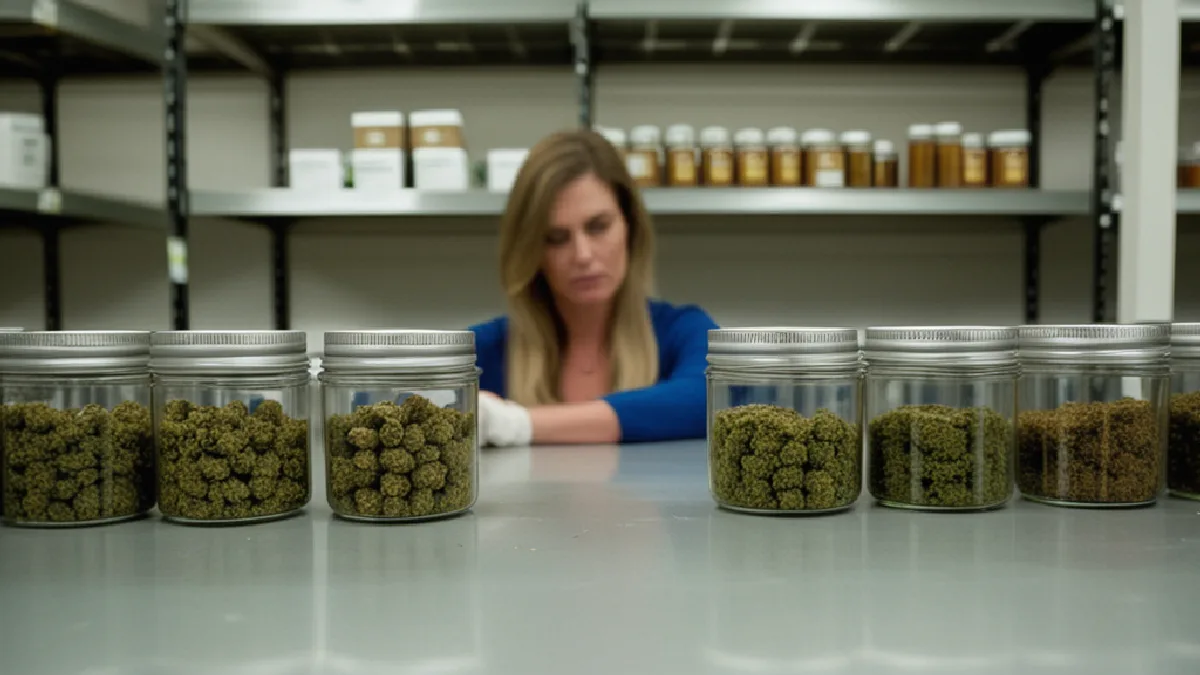
The technical breakdown between the two platforms has left legal storefronts unable to process sales on valid stock. When inventory fails to appear in a state-mandated database, operators cannot legally sell or transport those products.
Matt Kennicott, executive director of the New Mexico Cannabis Association (NMCA), detailed the staggering scope of the losses to local reporters at Source NM. He noted that a single retailer lost access to roughly 50,000 individual items during the transfer, leaving hundreds of thousands of dollars in product completely unsellable.
Other businesses suffered severe inventory categorization errors during the migration. One dispensary discovered that $150,000 worth of its top-selling product was erroneously relabeled as an entirely different item, while a larger operator had $460,000 in inventory miscategorized and rendered unusable.
For small business owners, resolving these data discrepancies requires massive labor investments. Kennicott shared that one impacted business expects to hire a full-time employee and a part-time staffer solely dedicated to untangling cataloging errors.
Operational Roadblocks and Tax Calculation Errors
Inside retail dispensaries, the operational burden on budtenders and compliance officers has reached critical levels. Basic retail functionality has been crippled, forcing employees to rely on error-prone workarounds.
Sabrina Aragon, chief operating officer at High Desert Relief, gave NMS2S a low functionality rating of four out of ten from an operational standpoint. She highlighted that testing results for inventory transferred from BioTrack must now be entered manually by store staff.
This manual entry requirement creates significant consumer confidence concerns. Customers must rely entirely on dispensary workers to enter lab test figures without making accidental or intentional typing mistakes.
In addition to testing data entry, dispensary staff must manually compute three separate tax tiers—state, county, and local excise taxes—for every individual customer transaction. Kennicott characterized this as a deep structural flaw that state regulators acknowledged could take at least six months to patch.
Bud Lords Take: Why Robust Compliance Software Is Crucial
Our take: Seed-to-sale tracking is designed to protect consumers, prevent illegal diversion, and ensure proper tax collection. However, when government-mandated software is pushed live without adequate stress-testing, compliant businesses bear the entire financial burden.
Small operators and delivery couriers operate on tight margins where software stability is not a luxury—it is a necessity. Expecting budtenders to manually calculate multi-tiered excise taxes during busy storefront shifts inevitably invites administrative penalties and audit friction.
Regulatory agencies must establish sandbox testing environments and extended dual-system burn-in periods before forcing operators off legacy systems. Transitioning state databases without verified data parity damages public trust and punishes operators who strictly adhere to state rules.
How This Compares to Other States

New Mexico is not the first legal state to experience serious friction during a track-and-trace software transition. States like California, Oregon, and Colorado encountered similar operational bottlenecks when rolling out statewide reporting portals like Metrc.
Strict cannabis delivery laws and marijuana transport regulations rely heavily on seamless API integration between retail point-of-sale software and central state databases. When transport manifests or digital manifests fail to log in real time, delivery drivers cannot legally depart with customer orders.
In mature legal frameworks, regulators usually permit emergency pen-and-paper logging or temporary dual-system operational windows during major server outages. New Mexico’s abrupt shutdown of BioTrack before verifying NMS2S performance left retailers without a legal fallback mechanism.
What This Means for DC, Maryland and Virginia Residents
While New Mexico addresses its database crisis, cannabis consumers and operators in Washington DC, Maryland, and Virginia should pay close attention to local compliance developments. Robust track-and-trace oversight directly shapes market stability across the DMV region.
In Maryland’s adult-use market, strict Metrc integration rules govern every step of product handling from cultivation to retail counters. Clear tracking mandates ensure that popular concentrates and pre-rolls meet rigorous lab testing and packaging standards before reaching dispensary shelves.
Across Washington DC, weed delivery compliance and marijuana transport laws govern how licensed dispensaries and courier services fulfill orders safely. Understanding local cannabis courier licensing frameworks helps consumers navigate options like DC weed delivery with confidence while staying fully compliant with District regulations.
Meanwhile, Virginia’s evolving cannabis landscape continues to navigate adult-use gifting frameworks and medical cannabis programs. Whether buying pre-rolls in Baltimore or exploring medical programs in Northern Virginia, solid regulatory infrastructure guarantees product safety and accurate consumer testing data.
Timeline and Next Steps
Affected New Mexico businesses are currently exploring legal remedies to mitigate ongoing operational damage. According to NMCA leadership, plaintiffs who previously dropped a preemptive lawsuit against the software migration may soon revive legal action against state regulators.
The revived lawsuit would present concrete financial evidence of harm, detailing documented inventory write-offs and labor expenditures directly caused by system glitches. Demonstrating actual quantifiable dollar amounts provides legal standing that was absent before the migration occurred.
Meanwhile, state software developers face a race against time to deliver critical software patches. Regulators estimate that fixing the automated multi-tier tax calculation system will take at least six months, requiring store owners to maintain manual tax workflows into 2027.
Industry stakeholders should watch whether state officials establish temporary regulatory enforcement discretion while inventory records are corrected. Until data parity is restored, retail operations will remain significantly delayed across the state.
What is a cannabis seed-to-sale tracking system?
A seed-to-sale system is a state-mandated digital tracking database that logs every stage of a cannabis plant's life cycle. It tracks plants from initial cultivation through processing, lab testing, distribution, transport, and final point-of-sale retail purchase.
Why did New Mexico's software transition fail?
New Mexico switched from BioTrack to NMS2S on September 1, 2026. When BioTrack went offline on September 7, system crashes prevented inventory data from properly transferring over, resulting in miscategorized items, lost product files, and missing lab test records.
How do track-and-trace failures impact weed delivery compliance?
Cannabis delivery laws and marijuana delivery regulations require real-time digital manifests generated through state tracking platforms. If central systems fail, couriers cannot legally create valid manifests, temporarily halting compliant delivery operations.
How are dispensary employees handling the tax calculation issue?
Dispensary staff must currently calculate state, county, and local excise taxes manually for every retail transaction. Regulators anticipate it will take at least six months to build automated tax tools into the NMS2S platform.
Will New Mexico cannabis businesses receive compensation for lost sales?
State regulators have not announced compensation programs for lost revenue. However, trade groups like the New Mexico Cannabis Association indicate businesses may revive lawsuits seeking judicial relief based on documented financial losses.
Looking Ahead in Cannabis Compliance
The operational breakdown in New Mexico serves as a stark reminder that regulatory technology must be reliable before it is mandated. Stable track-and-trace infrastructure protects consumers, protects small business investments, and keeps legal supply chains moving cleanly.
As regulatory frameworks continue to mature across the DMV and across the nation, transparent software policies remain vital. Staying informed on cannabis policy developments helps operators and consumers alike maintain compliance in an ever-shifting legal environment.
Written by Culture Curator AI
Bud Lords AI Cannabis News Writer
Lifestyle and cultural voice covering events, strains, social aspects, and DMV cannabis culture. More casual, engaging tone.
Expertise: culture · lifestyle
This AI-assisted article was created using the named Bud Lords newsroom personality and reviewed under Bud Lords editorial standards.


Comments