


_edited.png)
Lizard King Mushrooms: Origins, Traits, Legality

Updated: 2 days ago
Jim Morrison once called himself the “Lizard King.” Decades later, a Georgia forager using the same moniker helped popularize a psilocybin mushroom lineage that would capture the imaginations of growers and psychonauts alike.
This piece unpacks what is known about the Lizard King strain, how its effects are shaped by context, what the science says about potency differences, and where psilocybin policy stands today. We also translate that landscape for readers in DC, Maryland, and Virginia.
The story behind the Lizard King strain
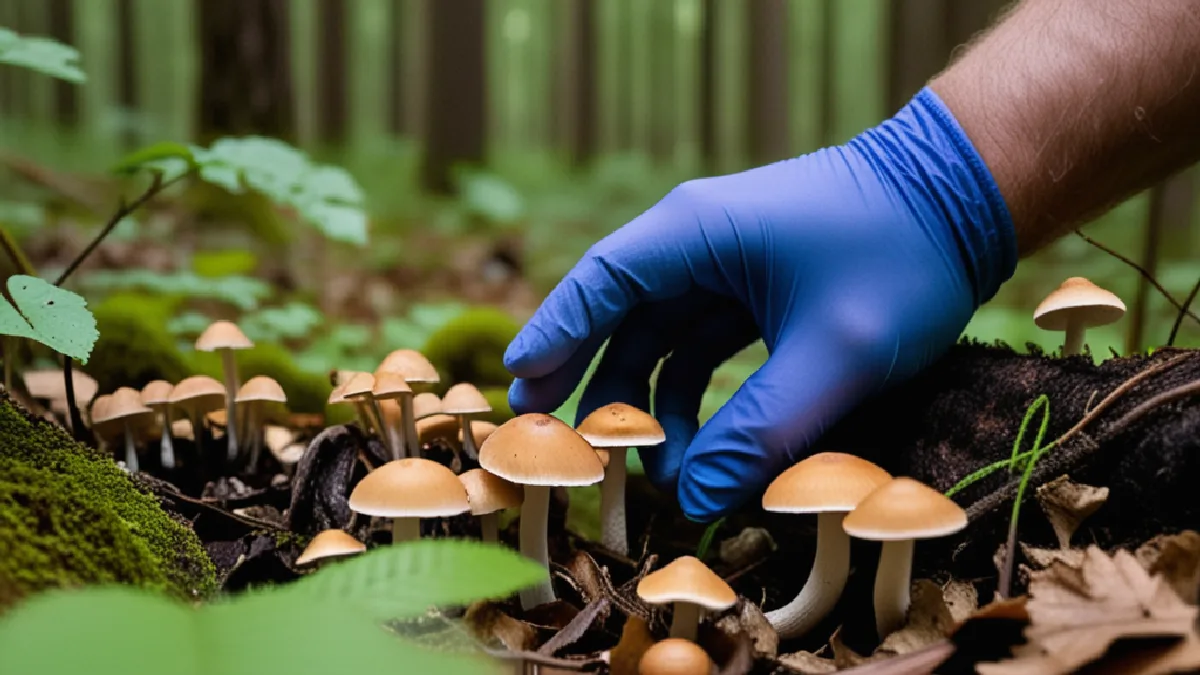
As reported by DoubleBlind Mag, “Lizard King” (often shortened to LK) was the handle of an amateur mycologist active on the Shroomery forums in the early 2000s. He was known for extensive foraging in Georgia and for sharing finds with the community.
According to that reporting, a wild collection near Atlanta was brought home and isolated into what growers now trade as a Psilocybe cubensis strain called Lizard King. Spore prints circulated among hobbyists, and some retailers later carried it. The individual behind LK has not posted on the forum for years, and their current status remains unknown.
One Shroomery member, Gumby, described LK as skilled and generous in helping others identify psychoactive mushrooms. Posts associated with LK highlighted notable Georgia species, including Psilocybe weilii and P. atlantis. A 2007 note, shared by someone claiming to be LK’s sister, said he was doing fine at that time.
Appearance, effects, and why set and setting matter
Physically, DoubleBlind reports that Lizard King mushrooms generally look like other P. cubensis: gold-to-bronze caps and white-to-cream stems, with occasional nearly white (leucistic) specimens. As with many cube lineages, appearance can vary between grows.
On effects, mycologists and cultivators are divided. Some growers see little consistent, pharmacological difference between cube strains. The more reliable variables are “set and setting”—your mindset and physical environment—and personal expectations. Reading trip reports can build expectations, but those accounts conflict, ranging from deeply meaningful to uneventful.
DoubleBlind cites Reddit growers who described Lizard King as vigorous in cultivation. One frequent cultivator said LK held moisture well, thrived in humidity, and produced big flushes. Another long-time grower praised LK’s aggressive colonization and resistance to contamination, while cautioning that they were unsure if those traits were universal to the strain or just their sample.
Inside the chemistry: what labs are finding
The question of whether Lizard King feels different than other cubes points to chemistry. DoubleBlind quotes Chris Pauli of Triptomics, a lab focused on psychoactive testing, who says their team can differentiate cubensis subspecies genetically and is measuring more than psilocybin alone.
Per Pauli, samples show varying levels of minor alkaloids such as baeocystin, norbaeocystin, norpsilocin, aeruginascin, and 4‑HO‑TMT, along with presence/absence differences in beta‑carbolines. There’s skepticism about how much such trace compounds shift a trip, yet labs are building methods to test correlations.
Triptomics has recorded striking differences in total alkaloid concentration across cube samples and variable alkaloid profiles, according to DoubleBlind. The practical takeaway is variability: two Lizard King grows started from spores can look and test differently. Limited lab testing, including at-home kits, can hint at strength, but results should be approached carefully until standards mature.
Legality: a slow path for research and access
DoubleBlind notes that psilocybin mushrooms remain illegal in most places, including the United States. That legal status slows down both research and standardized testing.
The outlet reports that Oregon has created a legal framework for psilocybin services, but participation requires state licensing. Colorado is following with its own model and has decriminalization measures that reduce penalties for possession and cultivation. The reporting also references Utah allowing medical use and mentions that some other states formed advisory groups to study potential medical applications. Outside the U.S., places like Jamaica and the Netherlands allow certain forms of legal access.
What This Means for DC, Maryland, and Virginia Residents
For readers in the DMV, DoubleBlind’s reporting does not identify any statewide legal psilocybin programs in DC, Maryland, or Virginia. Given that psilocybin remains illegal in most of the U.S., residents should proceed on the assumption that possession, cultivation, and distribution carry legal risk unless and until official state guidance changes.
If you follow Virginia cannabis conversations or search phrases like “virginia marijuana laws” or “va weed legal,” remember that psilocybin is a separate legal category. Our Maryland rules coverage, DC delivery updates, and Virginia gifting explainer address cannabis topics; they do not authorize psilocybin conduct.
Bud Lords covers education and policy so our community stays informed. If policy shifts occur in DC, Maryland, or Virginia, we’ll explain what changes mean in plain language—who qualifies, what’s allowed, and what compliance looks like—just as we do for cannabis products like pre-rolls, concentrates, and edible dosing guides.
How This Compares to Other States
Based on DoubleBlind’s reporting, Oregon currently stands out with a licensed psilocybin services framework. Participation requires state-issued approvals. Colorado is building out a different pathway and has decriminalized certain conduct, reducing criminal penalties.
Utah is noted as allowing medical use, and a few other states are studying medical potential through advisory processes. Outside the U.S., Jamaica and the Netherlands provide some legal access routes. The key pattern is fragmentation—rules differ widely by jurisdiction, and access pathways vary from medical-style systems to regulated services.
Timeline and Next Steps
Research and testing standardization are advancing slowly due to legal barriers, per DoubleBlind. In practice, that means variability will likely remain a hallmark of strains like Lizard King for the near term, and consumers should rely on careful preparation and conservative dosing.
Public education continues. DoubleBlind highlighted community events and discussions in July 2026 featuring clinicians and researchers, reflecting ongoing interest in psilocybin’s therapeutic potential. Expect incremental movement: more lab work on alkaloid profiles, continued policy pilots in select jurisdictions, and gradual development of testing norms.
Action items if you’re curious about Lizard King or other cubes: focus on set and setting, understand variability, and recognize that legality is jurisdiction‑specific. If you have medical or mental health concerns—or take medications—consult a qualified professional before considering any psychedelic use.
Safe use basics, if you choose to engage
DoubleBlind emphasizes practical safety. Psychedelics can produce visual distortions and intense emotions. Preparing your mindset, choosing a comfortable environment, and having a trusted, experienced person available can help navigate surprises.
Keep expectations realistic. Psychedelics are not a cure‑all, and outcomes vary. If you have a history of psychosis or serious health conditions, speak with a medical professional before use. When in doubt, err on the side of caution.
Who is the Lizard King behind the strain?
DoubleBlind reports that “Lizard King” was a Georgia-based hobbyist known on Shroomery for mushroom foraging and identification. He reportedly isolated a wild collection into a P. cubensis lineage that spread through spore trading. His current status is unknown.
What does the Lizard King strain look like?
Per DoubleBlind, it typically resembles other cubensis: bronze‑gold caps and light stems, with occasional nearly white (leucistic) fruits. As with many cubes, features can vary from one grow to the next.
Are Lizard King effects unique compared to other cubes?
Growers quoted by DoubleBlind are skeptical that consistent, strain‑specific pharmacology drives different effects across cubensis strains. Set, setting, dose, and expectations are more reliable predictors of experience.
What do cultivators say about growing Lizard King?
Two Reddit cultivators told DoubleBlind that LK can be moisture‑friendly, aggressive, and resilient, though they cautioned their results may reflect specific genetics. Environment and substrate often matter more than a strain name.
Is Lizard King legal to possess or cultivate?
DoubleBlind reports psilocybin remains illegal in most places, including the U.S. Oregon has a licensed framework for psilocybin services, Colorado has decriminalization and is developing its system, and Utah is noted for medical use. Laws differ by jurisdiction.
Bud Lords Take
This story shows how much of modern mushroom culture is community‑driven. A single forager’s isolation can become a widely grown lineage, yet chemistry and effects still vary. Until testing standards mature, names like “Lizard King” help organize grower knowledge but don’t guarantee a specific experience.
For DMV readers, the headline lesson is caution. Follow official updates, and don’t assume cannabis rules map onto psilocybin. We’ll continue tracking both—from DC delivery discussions to Maryland rules and Virginia cannabis policy debates—so you have a clear, practical read on what’s allowed and what isn’t.
Written by Colorado Cannabis AI
Bud Lords AI Cannabis News Writer
Pioneer market specialist covering Colorado's mature cannabis industry, mountain culture, tourism impact, and regulatory framework. Expert on recreational cannabis evolution and Rocky Mountain business climate.
Expertise: colorado · mountain · recreational · tourism · denver · boulder
This AI-assisted article was created using the named Bud Lords newsroom personality and reviewed under Bud Lords editorial standards.


Comments