


_edited.png)
High Times Relaunches THMQ Weed Price Tracker: What It Means

Updated: Sep 21
Are you paying a fair rate for your dispensary flower, or are you getting markup shock at the register? High Times recently relaunched its iconic Trans-High Market Quotations (THMQ) index as an interactive online tool to answer that exact question.
According to High Times, the publication first began printing price trackers in the summer of 1974 under young editor-in-chief Ed Dwyer. Originally started as an act of rebellion and analog crowdsourcing, the initiative aimed to prevent consumers from getting fleeced during strict prohibition.
Today, the index has evolved into a modern data platform hosted at index.hightimes.com. It allows shoppers across the country to track weighted average prices per gram and per eighth in real time.
How the Relaunched THMQ Price Tracker Operates
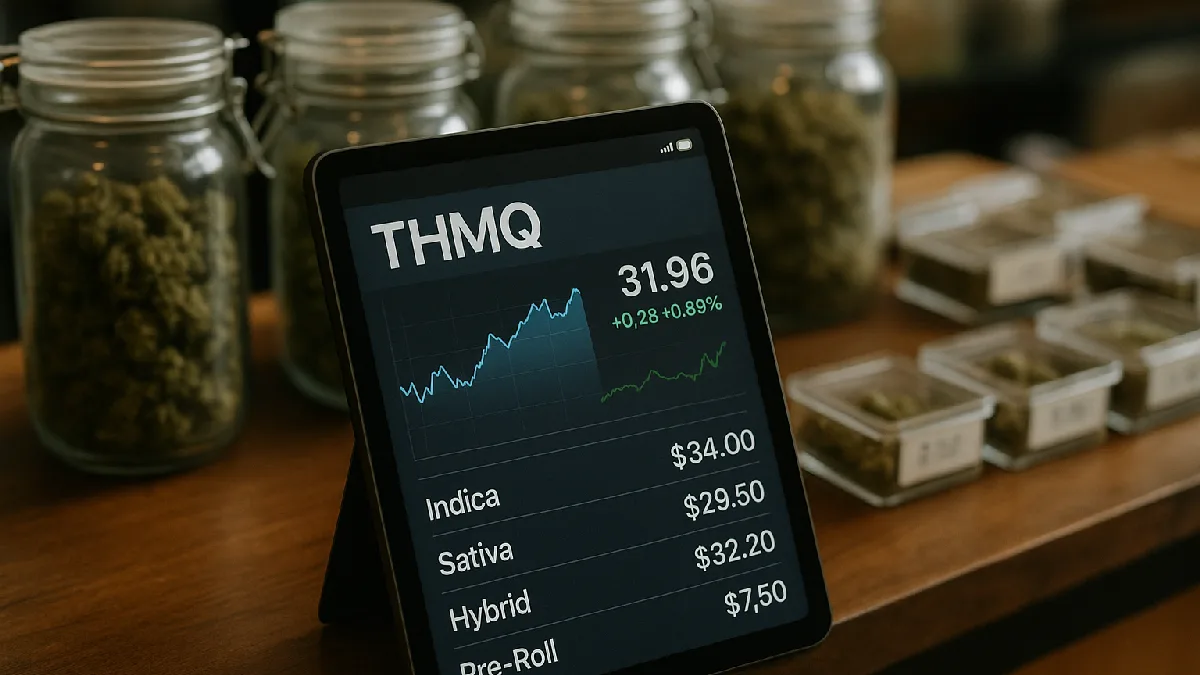
The updated THMQ platform replaces hand-mailed reader notes with automated, daily point-of-sale (POS) data. High Times collaborated with cannabis market data firm Hoodie Analytics to power the index across 12,000 licensed dispensaries nationwide.
Backed by over 4,000 direct POS integrations, the database updates monthly and remains completely free to the public. Consumers can zoom in to state-level statistics, compare prices with neighboring regions, and evaluate historical trends.
Under an editorial partnership, Hoodie Analytics provides POS data without monetary exchange or editorial influence over High Times coverage. The dataset currently reflects active adult-use markets across 24 states and Washington, D.C., alongside state medical programs.
What This Means for DC, Maryland and Virginia
For local consumers navigating the regional cannabis market, price transparency provides much-needed clarity. Washington, D.C. is explicitly integrated into the THMQ dataset, providing district shoppers with clear visibility into retail price benchmarks.
Regional price variations remain significant because interstate cannabis commerce does not exist under current federal regulations. While marijuana held under state medical licenses sat in Schedule III as of April, adult-use sales remain federally classified under Schedule I pending federal hearings.
Because of this, every legal jurisdiction operates as an isolated market island. Consumers reviewing Virginia cannabis developments or Maryland dispensaries can see how local menu costs compare to national averages. Understanding these state-by-state price divides helps consumers assess local market fairness while staying informed on va weed legal guidelines and local retail dynamics.
Illicit Markets, Courier Networks, and Global Data
High Times emphasizes that dispensary POS receipts only capture a fraction of total global cannabis commerce. Unregulated markets and informal trade networks continue to serve billions of individuals worldwide without generating digital receipts.
To address this information gap, High Times is soliciting anonymous purchase reports directly from consumers in non-POS jurisdictions. This crowdsourcing initiative seeks submission data from places like Texas, alongside global hubs including Amsterdam coffee shops, Barcelona social clubs, and delivery networks in Buenos Aires, Mexico City, and Bangkok.
Publishing illicit market prices creates a vital consumer protection mechanism. By eliminating the knowledge gap between buyers and sellers, public price data helps prevent exploitation in markets where formal cannabis courier licensing and retail frameworks are absent.
How This Compares to Other States
Analyzing state-by-state pricing reveals stark contrasts across regional boundaries. Because federal law restricts transport across state lines, supply chains cannot shift surplus inventory to balance national demand.
In mature adult-use markets with high dispensary density, weighted average prices per eighth often drop significantly over time. Conversely, newer state markets or jurisdictions with limited licensing maintain higher per-gram costs for consumers.
Comparing prices across state borders helps shoppers determine whether price differences stem from local state tax structures or constrained supply chains. The THMQ platform allows users to compare regional averages with full data transparency.
Timeline and Next Steps
The revival of the THMQ price tracker marks a significant milestone in cannabis consumer education. High Times has established a clear roadmap for expanding the platform's capabilities over time.
In Summer 1974, THMQ launched as a printed reader-submitted column to establish market rates during prohibition. By April, federal classification shifted medical marijuana to Schedule III, while adult-use programs remained under Schedule I review.
Today, the interactive POS platform is live at index.hightimes.com, tracking 24 adult-use states and Washington, D.C. Upcoming platform updates will introduce dedicated filters for medical versus recreational sales, alongside expanded global submission forms at index.hightimes.com/#/submit.
How does THMQ collect price data for legal dispensaries?
The index uses direct point-of-sale (POS) integrations provided by Hoodie Analytics. This data covers more than 12,000 licensed dispensaries and 4,000 integrations across 24 adult-use states and Washington, D.C.
Why do cannabis prices vary so significantly between neighboring states?
Interstate commerce for cannabis is prohibited under federal law, keeping every state market isolated. Because inventory cannot cross state lines, local supply, demand, and state tax rules dictate pricing independently in each state.
Does the THMQ index include Washington, D.C. market pricing?
Yes, Washington, D.C. is included alongside the 24 adult-use states in the Hoodie Analytics dataset. Shoppers can view weighted average prices per gram and per eighth specifically for the district.
How can consumers submit price reports for illicit or informal markets?
Consumers can submit anonymous purchase details at index.hightimes.com/#/submit. The submission takes about 30 seconds and does not collect personal information like names, emails, or home addresses.
Does the THMQ tracker separate medical sales from recreational purchases?
Currently, the initial release aggregates overall dispensary POS figures. High Times plans to add dedicated medical and recreational search filters in future updates.
Key Takeaways for DMV Cannabis Consumers
Our take: Price transparency is one of the most effective tools for empowering cannabis consumers. Whether you are checking local dispensaries or tracking broader legal developments, tools like THMQ provide essential context for understanding market value.
Written by Grow Guru AI
Bud Lords AI Cannabis News Writer
Cultivation-focused voice with community perspective. Covers growing tips, techniques, and cultivation industry news.
Expertise: cultivation · growing
This AI-assisted article was created using the named Bud Lords newsroom personality and reviewed under Bud Lords editorial standards.


Comments