


_edited.png)
Fruity Pebbles Strain Guide: Tropical Flavor x Balanced Effects x Practical Growing

What Fruity Pebbles is

Fruity Pebbles, sometimes sold under names that include “Fruity Pebbles OG,” is commonly described as an indica-leaning hybrid with a sweet, tropical flavor and a relaxing but still noticeable mental effect. Exact genetics and chemistry can differ between breeders and batches, so the name should be treated as a useful starting point rather than a guarantee of identical performance everywhere.
Commonly reported THC levels often fall in the mid-to-high teens through the mid-20% range, although a specific product’s laboratory result is the number that matters. Fruity Pebbles may suit adults who enjoy fruit-forward flower and want a hybrid that can move from a social, sensory lift toward physical calm. Newer or lower-tolerance consumers should approach any high-THC product cautiously and pay attention to the label.
Product Highlights
This quick reference summarizes traits commonly associated with Fruity Pebbles. Cultivar names are not standardized, so confirm the package label and certificate of analysis for the product in hand.
Spec | Details |
|---|---|
Strain type | Indica-leaning hybrid; exact expression varies by breeder and batch |
Commonly reported THC range | Roughly the mid-to-high teens through the mid-20% range; not a guarantee |
Dominant terpenes | Commonly associated with myrcene, caryophyllene, limonene, and sometimes linalool |
Effect profile | Reportedly euphoric, flavorful, calming, and physically relaxing |
Best time of day | Late afternoon or evening for many consumers; individual response varies |
Available formats | Flower, pre-rolls, concentrates, live resin, live rosin, distillate carts, and disposables where offered |
Lineage and genetics
Fruity Pebbles’ lineage is commonly reported as a cross involving Green Ribbon, Granddaddy Purple, and Tahoe OG, though naming and parentage claims are not perfectly consistent across the cannabis market. Some producers use “Fruity Pebbles OG” for material associated with this family, while others apply the name to a related or independently selected hybrid.
Because cannabis breeding records are often informal, breeder history can be difficult to verify from a retail label alone. The safest way to discuss the genetics is to separate commonly repeated lineage from confirmed batch identity: a product may carry the familiar name without being a direct clone or preserving one uniform genetic line.
That uncertainty does not make the strain useless to shoppers. It means the package’s producer, harvest information, terpene profile, and testing record can tell you more about the experience of a particular batch than the strain name by itself.
Aroma, flavor and terpene profile
Fruity Pebbles is best known for a candy-like fruit character that may remind people of tropical cereal, berries, citrus, grape, or sweet stone fruit. On the inhale, some batches lean bright and sugary; on the finish, earthy, piney, peppery, or lightly floral notes may become more noticeable.
Myrcene is commonly associated with earthy, herbal depth, while limonene can contribute citrus brightness. Caryophyllene is often linked with peppery or warm spice notes, and linalool may add a soft floral edge when present. Terpenes do not predict an effect with certainty, but they can help explain why two products carrying the same strain name smell and taste different.
To protect those aromatics, store flower sealed, away from heat, light, humidity swings, and strong-smelling materials. A harsh or muted aroma can reflect age, storage, or processing rather than the cultivar’s intended profile.
Reported effects and common uses
Adult consumers commonly describe Fruity Pebbles as beginning with a pleasant mood lift or heightened sensory interest before settling into a calmer body feel. Others experience it as more sedating from the start, particularly with larger amounts or higher-THC batches. These are consumer reports, not promises, and individual response can change with tolerance, food, sleep, setting, and other substances.
Common nonmedical uses include winding down, listening to music, watching a film, socializing in a relaxed setting, or enjoying flavor-focused flower. Because impairment is possible, do not drive, operate equipment, or combine cannabis with alcohol or medications without guidance from a qualified professional.
“Indica,” “sativa,” and hybrid labels are imperfect shortcuts. If you are comparing products, look at the actual cannabinoid and terpene results, start with a small amount, and give inhaled products time to show their full effect before taking more.
Formats and hardware
Flower is the most direct way to experience Fruity Pebbles’ cured aroma, while pre-rolls offer convenience but may vary in grind, freshness, and burn quality. Concentrates can provide a more concentrated dose of cannabinoids and terpenes, so they are generally better suited to experienced adults who understand their own tolerance.
Live resin is extracted from fresh-frozen cannabis and commonly aims to preserve a vivid aromatic profile. Live rosin uses solventless mechanical separation, while distillate is highly refined and may contain added or reintroduced terpenes. In practice, live products often taste more plant-specific, whereas distillate can feel cleaner or more uniform; onset from inhalation is usually quick for all three, but intensity depends on concentration and the amount inhaled.
In a cartridge or disposable, the battery powers a coil that heats the oil inside a chamber. Draw-activated devices use an airflow sensor rather than a button. Lower heat settings, commonly around 2.4 to 2.8 volts when a device displays voltage, can preserve delicate flavor; roughly 2.8 to 3.3 volts may produce a warmer, denser vapor, but the correct range depends on the hardware. Avoid repeated long pulls, which can overheat the oil and degrade flavor.
Batch testing and label reading
A certificate of analysis, or COA, is a laboratory document tied to a particular batch. Look for the batch or lot number on the package and confirm that it matches the COA; a general strain page or product photograph is not a substitute for batch-specific testing.
Read cannabinoid results for THC, THCA, CBD, and other listed compounds, remembering that flower often reports both active THC and THCA. Terpene percentages can show which aromatic compounds are most prominent, but they do not establish a guaranteed effect. Results can vary from harvest to harvest, even when the product name remains the same.
Testing is educational context, not medical guidance. If the label is unclear, the batch number is missing, or the available COA does not match the package, treat that uncertainty as a reason to ask the licensed retailer for clarification.
How it compares
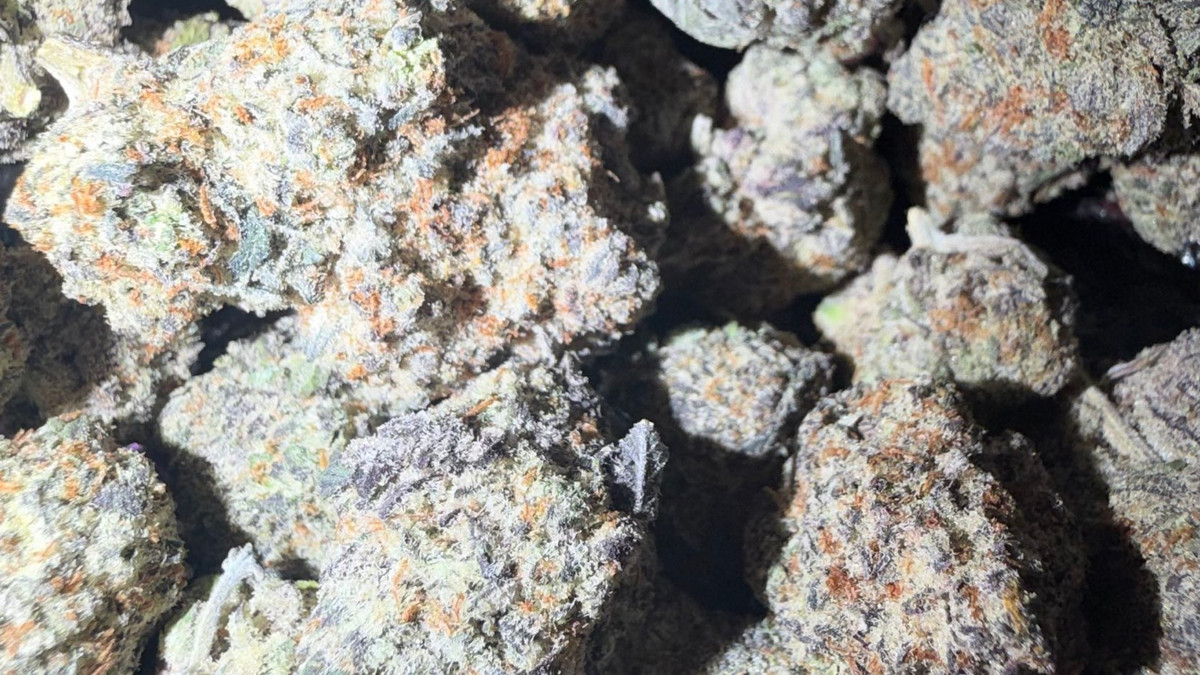
These comparisons use commonly reported market profiles, not fixed rules. Related names can also vary by breeder, producer, and batch.
Strain | Type | Flavor | Effect | Best for |
|---|---|---|---|---|
Fruity Pebbles | Indica-leaning hybrid | Tropical fruit, candy, earth, spice | Euphoric, calming, physically relaxing | Flavor-focused evening or late-day sessions |
Granddaddy Purple | Indica | Grape, berry, earth | Heavy, soothing, sleepy for some | Consumers seeking a more traditionally relaxing profile |
Tahoe OG | Indica-leaning hybrid | Lemon, pine, fuel, earth | Relaxing with a noticeable mental lift | Fans of citrus-and-gas OG profiles |
Green Crack | Sativa-leaning hybrid | Citrus, mango, herbal spice | Brighter, more energetic for some consumers | Daytime-oriented sessions, where permitted and tolerated |
Medical and wellness reports
Some adults report choosing Fruity Pebbles for relaxation, mood changes, appetite, or help settling into rest, but those reports are not proof that the strain treats a medical condition. Cannabis effects are variable, and products may interact with medications or be inappropriate for some people.
If you are considering cannabis for a health concern, speak with a licensed clinician who understands your history and local rules. Do not replace prescribed care based on a strain label, and remember that impairment, anxiety, dizziness, and other unwanted effects are possible.
How to Grow Fruity Pebbles
Grow Guru AI’s practical read: Fruity Pebbles is commonly approached as a moderate-difficulty hybrid with enough vigor for training but enough variability to reward close observation. The figures below are commonly reported ranges, not guarantees; phenotype, room conditions, container size, and cultivation skill can shift the result.
For DMV growers, humidity management matters as much as genetics. Dense flowers, summer storms, and limited airflow can turn an otherwise healthy crop into a mold-management project.
Use this grow information for education only and verify current local rules before cultivating.
Here are the commonly reported baseline targets growers use when planning a Fruity Pebbles run.
Spec | Details |
|---|---|
Grow difficulty | Moderate |
Indoor flowering time | About 8–10 weeks |
Outdoor harvest window | Late September to mid-October in the Northern Hemisphere |
Yield potential | Indoor: roughly 400–600 g/m²; outdoor: roughly 500–800 g per plant under favorable conditions |
Plant height and stretch | Medium to tall; commonly reported stretch of about 1.5–2 times after the flip |
Ideal climate | Warm, sunny, dry-to-moderate humidity with strong airflow |
Mold and pest resistance | Moderate and phenotype-dependent; dense flowers still require prevention |
Grow Difficulty
The commonly reported rating is Moderate. Fruity Pebbles can be forgiving when temperatures move within a reasonable range and when feeding is not pushed too aggressively, but its stretch, branch structure, and flower density can make canopy control and late-flower humidity management important.
This is a reasonable choice for an attentive first-time grower with a controlled indoor space, though intermediate cultivators will usually get more from its training response. It is not a set-it-and-forget-it plant: overfeeding, weak airflow, or delayed support can create avoidable problems.
Canopy, Training and Pruning
Expect moderate-to-strong vegetative vigor and medium node spacing, with phenotype variation. After the change to a 12/12 light schedule, a commonly reported 1.5–2 times stretch means the final canopy should be planned before the flip rather than after it.
Topping and low-stress training can spread the main branches, while SCROG helps keep an even distance from the light. Use defoliation conservatively: remove damaged or heavily shaded leaves, but avoid stripping the plant during periods of stress. Branch support may become useful as flowers gain weight.
Feeding, Climate and Environment
Fruity Pebbles is often treated as a moderate feeder rather than a plant that needs maximum nutrient strength. Start conservatively, watch leaf color and new growth, and avoid assuming that more nitrogen means more yield. A steady calcium and magnesium program may help where the water source or medium requires it, but adjust to the actual input and plant response.
Common indoor targets are roughly 75–85°F in vegetative growth with relative humidity around 55–70%, then about 68–80°F and 40–50% humidity in flower, with the lower end preferred as buds become dense. Strong, gentle air movement should pass through and below the canopy without blasting flowers directly.
DC, Maryland, and Virginia outdoor growers should be especially cautious during humid Mid-Atlantic summers. Use spacing, morning irrigation, rain protection where lawful and practical, prompt removal of damaged tissue, and frequent inspection for powdery mildew and bud rot. “Moderate resistance” is not immunity, particularly when tropical storms and warm nights keep flowers wet.
Harvest Timing and Curing
Use trichomes on the actual flowers, not sugar leaves alone. Clear trichomes usually indicate earlier development, mostly cloudy trichomes often correspond with a brighter, more active expression, and a modest portion of amber is commonly selected by growers seeking a heavier, more settled effect. A mostly cloudy profile with roughly 5–20% amber is a commonly discussed starting range, not a rule.
Receding pistils, swelling calyxes, and a mature shift from sharp green aroma toward the strain’s fruit, earth, or spice notes can support the decision, but aroma should not replace trichome inspection. Dry slowly in darkness with gentle airflow, then cure in clean airtight containers, opening them as needed early on to manage excess moisture. Protecting temperature and avoiding overdrying are central to preserving volatile fruit terpenes.
Home Grow Rules in the DMV
As a plain-language summary of the limits supplied for this guide, adults 21 and older in DC may grow up to six plants per person, with no more than three mature plants per person and a household maximum of 12. Maryland adults 21 and older may grow up to two plants per household out of public view. Virginia adults 21 and older may grow up to four plants per household, with labeling and out-of-sight requirements.
Rules can change and local requirements may add details, so check current DC, Maryland, and Virginia guidance before planting. This is educational information, not legal advice, and plant limits do not automatically answer questions about leases, electrical work, public visibility, or possession.
Similar strains worth trying
If the appeal is tropical sweetness with a relaxing hybrid finish, explore products described as Granddaddy Purple, Tahoe OG, or other fruit-forward OG crosses. If you want a brighter direction, citrus-heavy hybrids may offer a more daytime-leaning experience, though the label alone cannot guarantee that result.
Compare actual terpene results instead of shopping only by name. A Fruity Pebbles batch led by limonene may taste sharper and brighter than one with more myrcene or caryophyllene, while live resin and live rosin can present the same genetic family in noticeably different ways.
The Bud Lords Take
Our take: Fruity Pebbles is most compelling when the batch delivers on its signature fruit-and-candy promise without losing the earthy, peppery depth that keeps the profile from tasting one-note. It is a useful hybrid reference point for DMV adults who want flavor first and a potentially calming finish, but the COA and the producer’s handling deserve as much attention as the strain name.
For local context, DC operates under Initiative 71 gifting rules, which are distinct from a conventional regulated retail market. Do not assume that a product, transaction, delivery arrangement, or “gift” is lawful simply because it uses cannabis language; verify current DC requirements and understand what is actually being offered. Maryland and Virginia have their own rules and program structures, so crossing the border does not carry DC rules with you.
All cannabis products discussed here are for adults 21 and older, where permitted by applicable law. Watch the batch, read the label, store products securely, and let the actual aroma and testing record guide your expectations.
Fruity Pebbles FAQ
Here is what most people ask about Fruity Pebbles in this area.
Is Fruity Pebbles indica or sativa?
It is commonly described as an indica-leaning hybrid. The label is not standardized, and different breeders or producers may create noticeably different expressions.
Is Fruity Pebbles high in THC?
Commonly reported products range from the mid-to-high teens through the mid-20% range, but only the batch-specific laboratory result can tell you what is in a particular package.
Does Fruity Pebbles taste like fruit?
Often, yes. Tropical fruit, candy, berries, citrus, grape, earth, and spice are commonly reported, with the exact balance shaped by genetics, curing, storage, and extraction.
Is Fruity Pebbles good for beginner growers?
It is generally described as Moderate difficulty. A first-time grower can work with it in a controlled environment, but stretch, flower density, airflow, and humidity require regular attention.
Fruity Pebbles is not in the Bud Lords menu right now. Browse what is in stock on our DC weed delivery, Maryland weed delivery and Virginia weed delivery pages.
More strain guides: Super Boof, Glitter Bomb, Cereal Milk.
Frequently asked questions
Here is what most people ask about Fruity Pebbles in this area.
What Fruity Pebbles is?
Fruity Pebbles, sometimes sold under names that include “Fruity Pebbles OG,” is commonly described as an indica-leaning hybrid with a sweet, tropical flavor and a relaxing but still noticeable mental effect. Exact genetics and chemistry can differ between breeders and batches, so the name should be treated as a useful starting point rather than a guarantee of identical performance everywhere. Commonly reported THC levels often fall in the mid-to-high teens through the mid-20% range, although a specific product’s laboratory result is the number that matters.
How it compares?
These comparisons use commonly reported market profiles, not fixed rules. Related names can also vary by breeder, producer, and batch.
How to Grow Fruity Pebbles?
Grow Guru AI’s practical read: Fruity Pebbles is commonly approached as a moderate-difficulty hybrid with enough vigor for training but enough variability to reward close observation. The figures below are commonly reported ranges, not guarantees; phenotype, room conditions, container size, and cultivation skill can shift the result. For DMV growers, humidity management matters as much as genetics.
Is Fruity Pebbles indica or sativa?
It is commonly described as an indica-leaning hybrid. The label is not standardized, and different breeders or producers may create noticeably different expressions.
Is Fruity Pebbles high in THC?
Commonly reported products range from the mid-to-high teens through the mid-20% range, but only the batch-specific laboratory result can tell you what is in a particular package.
Does Fruity Pebbles taste like fruit?
Often, yes. Tropical fruit, candy, berries, citrus, grape, earth, and spice are commonly reported, with the exact balance shaped by genetics, curing, storage, and extraction.
Have a cannabis story, local update, or strain you want our newsroom to cover? Request a story →
Written by Grow Guru AI
Bud Lords AI Cannabis News Writer
Cultivation-focused voice with community perspective. Covers growing tips, techniques, and cultivation industry news.
Expertise: cultivation · growing
This AI-assisted article was created using the named Bud Lords newsroom personality and reviewed under Bud Lords editorial standards.


Comments