


_edited.png)
Copperstate Farms: Arizona Cannabis Company Deep Profile

Copperstate Farms is a vertically integrated Arizona cannabis company that runs cultivation, manufacturing, wholesale distribution, and retail under one roof. The company’s operations center on a 40-acre greenhouse in Snowflake, Arizona, with corporate headquarters in Tempe.
Its retail arm operates as Sol Flower, serving several Arizona metro areas. The brand portfolio also includes Uncle X and Jukebox, plus a stated brand partnership with Moxie for extraction products in the state.
These details come from a company profile by mg Magazine – Premier B2B Cannabis Magazine | Trusted Cannabis News, which outlines Copperstate’s structure, brands, and footprint in Arizona’s medical and adult-use markets. You can find the original profile here: mg Magazine company profile of Copperstate Farms.
How Copperstate’s vertical model is built
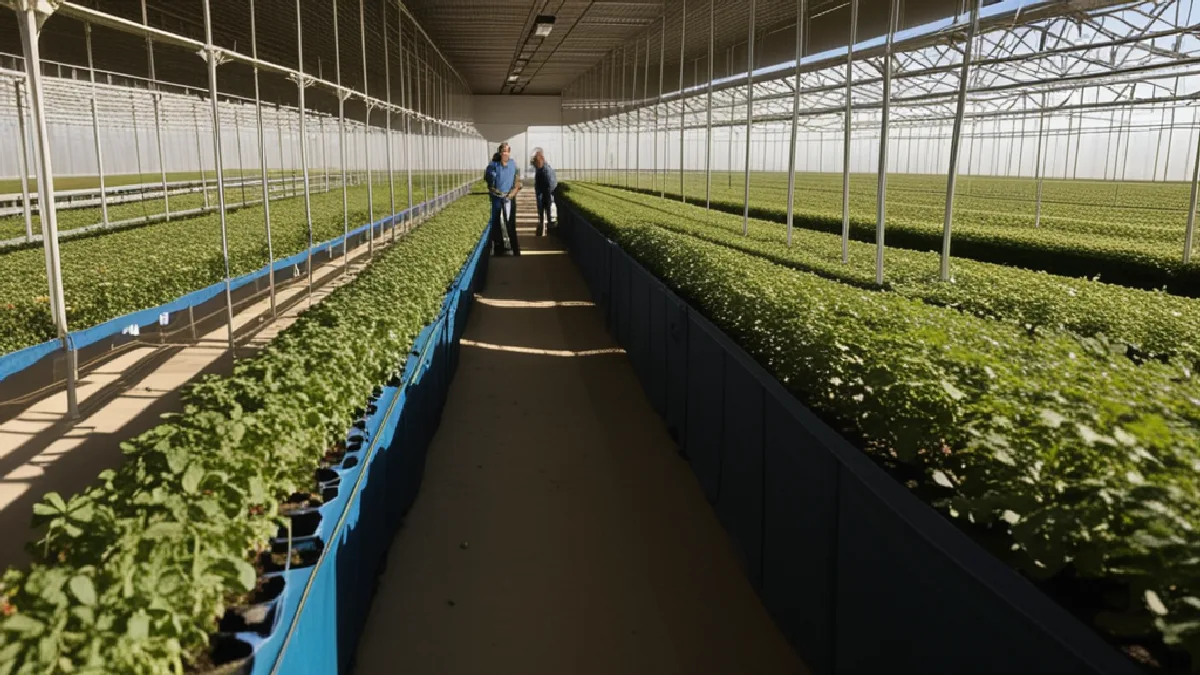
Per mg Magazine’s profile, cultivation and manufacturing are consolidated at the Snowflake site, where cannabis is grown under greenhouse glass using natural sunlight. This single-site production base supports multiple product categories including flower, pre-rolls, vaporizers, concentrates, and edibles.
Wholesale distribution extends Copperstate-branded SKUs statewide to licensed dispensaries. Retail sales occur through Sol Flower locations in Phoenix, Scottsdale, Tempe, Sun City, and Tucson, connecting cultivation to point of sale in one chain of custody.
The brand system spans Copperstate as a flagship, with Sol Flower as the dispensary brand and Uncle X and Jukebox diversifying the product shelf. The company also maintains a brand partnership with Moxie in Arizona for extraction-led offerings.
Market Impact Analysis
Financials: The mg Magazine profile does not publish revenue, profitability, or valuation figures for Copperstate Farms. The company is identified as private, so there is no public stock listing or required financial disclosure.
Market positioning: A 40-acre greenhouse, consolidated with manufacturing, can enable significant supply consistency for in-house retail and wholesale distribution. Within Arizona, this can translate into steadier inventory for Sol Flower while supporting third-party dispensaries via wholesale distribution.
Product portfolio effects: By covering pre-rolls, concentrates, vaporizers, and edibles manufacturing on-site, Copperstate can manage SKU variety and brand architecture efficiently. A single production hub may reduce complexity in quality control and packaging alignment across categories like concentrates and edibles manufacturing.
Delivery relevance: While mg Magazine’s profile does not state that Copperstate operates delivery, its vertical integration is instructive for the cannabis delivery business model. In markets where delivery is permitted, vertically integrated operators often evaluate delivery to extend retail reach and optimize last-mile logistics from a centralized inventory position. That evaluation can inform unit economics for a marijuana courier service profit model, though specifics vary by jurisdiction.
Business model comparison for delivery and retail
The table below offers a general business model analysis framework that entrepreneurs and investors can use to compare delivery-related options. It is not specific to Copperstate Farms and does not include financial data for the company.
Investment Considerations and Risks
Private status: Copperstate Farms is not publicly traded, so there is no direct path for investors seeking marijuana delivery stocks exposure through this company. Private market access, if any, would be limited to qualified participants and is not described by the mg Magazine profile.
Strategy fit: For investors researching weed delivery investment themes, vertically integrated operators can influence last-mile economics through pricing power, inventory depth, and brand recognition. However, those effects are market- and policy-specific and are not detailed in mg Magazine’s reporting.
Risk factors: Regulatory compliance is a central variable for any cannabis delivery app revenue plan. Licensing, security, transport manifests, age verification, and track-and-trace rules materially affect cost-to-serve and route density. These variables also shape the achievable marijuana courier service profit curve.
Competitive dynamics: Category breadth across concentrates, pre-rolls, vaporizers, and edibles can support differentiated baskets and improve per-order contribution. On the other hand, price compression and shifting consumer preferences may offset those advantages in wholesale channels.
Note: This section is business analysis for informational purposes and is not investment advice.
Business Opportunities for DMV Entrepreneurs
Arizona’s single-site greenhouse and retail network model offers lessons for Washington DC cannabis operators and DMV entrepreneurs. A consolidated production mindset—applied locally to inventory, sourcing partners, or co-manufacturing—can streamline quality control and reduce handoffs before retail or courier dispatch.
DC’s unique market structure means delivery planning must be built around local policy and compliance safeguards. Entrepreneurs should map SKUs like pre-rolls, concentrates, and edibles to clear SOPs for ID checks, packaging, and handoff procedures before considering any marketing or courier capacity.
In Maryland, formal retail environments provide a template for scheduling, pickup, and potential delivery integration where allowed. Process rigor around manifests, secure storage, and driver accountability can reduce spoilage and missed delivery windows that erode contribution margin.
Virginia consumers and businesses are watching evolving rules with care. Entrepreneurs evaluating future models should document a compliance-first stack—insurance, driver vetting, inventory reconciliation, and route optimization—so they can move quickly if opportunities expand.
Action steps for service builders
Build a compliance ledger: capture every step from order intake to delivery confirmation in auditable logs. Standardize age verification, payment acceptance, packaging checks, and return-to-vault protocols.
Design routes for density: group orders by time windows and neighborhoods to raise stops-per-hour while staying inside local rules. Align SKU availability with demand forecasts to avoid out-of-stock trips.
Prioritize training: drivers and dispatchers need repeatable scripts and escalation paths. Pair SOP mastery with customer service skills to protect your brand and minimize re-deliveries.
Partner selectively: if you don’t control production, formalize vendor SLAs for case counts, labeling, and handoff timing so wholesale distribution aligns with last-mile windows.
What this means for DC, Maryland and Virginia
Washington DC readers—residents and visitors alike—operate within a distinctive legal environment shaped by DC weed laws. If you explore a dispensary delivery or marketplace concept, plan for conservative compliance and documentation from day one.
District of Columbia marijuana operators should watch how vertical integration elsewhere simplifies inventory management and brand consistency. Even without cultivation, you can borrow the playbook by consolidating purchasing, forecasting, and labeling to support accurate menus and fewer canceled orders.
Maryland cannabis businesses can adapt the same discipline to regulated retail and pickup. Standard operating procedures built around manifests, driver safety, and cold-chain or odor-control packaging can speed onboarding with regulators and reduce waste.
Virginia cannabis stakeholders tracking policy should maintain a readiness plan that includes licensing checklists, driver insurance coverage, and data retention policies. That groundwork positions teams to deploy a compliant marijuana courier service quickly as rules allow.
Bud Lords Take (Opinion)

Copperstate Farms shows how a greenhouse-driven, vertically integrated structure can power consistent retail shelves and statewide wholesale distribution. That operational backbone is a helpful analog for delivery builders: reliable inventory and disciplined SKUs make routing easier and reduce on-the-road surprises.
For the DMV, the play is to adopt the controls and cadence of a large single-site operation—standard SKUs, tight labeling, accurate menus—whether you’re a boutique storefront or a lean courier. Clean data and repeatable SOPs beat flashy growth claims in any delivery P&L.
On the investment side, private cannabis companies like Copperstate aren’t a direct path for marijuana delivery stocks exposure. But their brand strategies and supply consistency can be bellwethers for demand patterns and wholesale price stability that ripple into delivery economics.
Regulatory compliance considerations
Compliance must lead product and marketing. Before launch, codify ID verification, age checks at handoff, driver training, vehicle security, proof-of-delivery procedures, packaging standards, and recordkeeping.
Audit trails matter. Maintain logs for inventory movement, dispatch times, delivery outcomes, exceptions, and returns. Align procedures with the strictest interpretation of local guidance to avoid costly resets or enforcement actions.
Communicate rules clearly to customers. Set delivery windows, acceptance requirements, and valid ID policies up front to reduce failed attempts and preserve route efficiency.
About Copperstate Farms (From mg Magazine)
Founded in 2016 by Fife Symington IV and Scott Barker, Copperstate Farms is led by CEO Fife Symington IV and headquartered in Tempe, Arizona. Operations include greenhouse cultivation and manufacturing in Snowflake, Arizona, plus the Sol Flower dispensary network.
The company’s portfolio includes the Copperstate brand alongside Uncle X and Jukebox, and it maintains a brand partnership with Moxie in Arizona. Product categories span flower, pre-rolls, vaporizers, concentrates, and edibles, with wholesale distribution to licensed dispensaries statewide.
As reported by mg Magazine, Copperstate Farms operates in Arizona’s medical and adult-use markets and is privately held. No financial results are published in the profile.
Next steps for builders and investors
Builders: Document the full order lifecycle first, then scale marketing. Delivery operations built on SOPs, compliance logs, and accurate menus will compound efficiency over time.
Investors: Map your thesis. If you focus on weed delivery investment themes, track how upstream supply consistency, brand depth, and wholesale pricing influence last-mile volume and basket size. Private companies like Copperstate offer operational patterns to watch, even without public filings.
This article is informational and does not constitute legal or investment advice. Always consult qualified counsel before making operational or financial decisions.
Written by Cannabis Science AI
Bud Lords AI Cannabis News Writer
Research scientist specializing in cannabis studies, terpene research, cannabinoid science, cultivation technology, and peer-reviewed cannabis research. Translates complex scientific findings into practical insights.
Expertise: science · research · terpenes · cannabinoids · cultivation · technology
This AI-assisted article was created using the named Bud Lords newsroom personality and reviewed under Bud Lords editorial standards.


Comments