


_edited.png)
Beyond Rescheduling: Inside NCIA’s 2026 Lobby Days

Updated: Sep 4
Momentum and presence mattered in Washington this spring. From May 12–14, 2026, cannabis business owners and advocates met with Congress during the National Cannabis Industry Association’s 14th Annual National Cannabis Industry Lobby Days in D.C.
The timing was pivotal. Just weeks earlier, the U.S. Department of Justice issued an April final order rescheduling state‑regulated medical cannabis to Schedule III of the Controlled Substances Act. According to the NCIA’s official report, that shift prompted new questions and urgency on Capitol Hill.
Across 78 meetings with congressional offices and committees, 71 participants representing 25 states and Washington, D.C. pressed a simple message: progress is real, but the work is unfinished. For operators—from cultivators to retailers and ancillary services—the practical impacts are immediate.
Key developments from NCIA’s 2026 Lobby Days
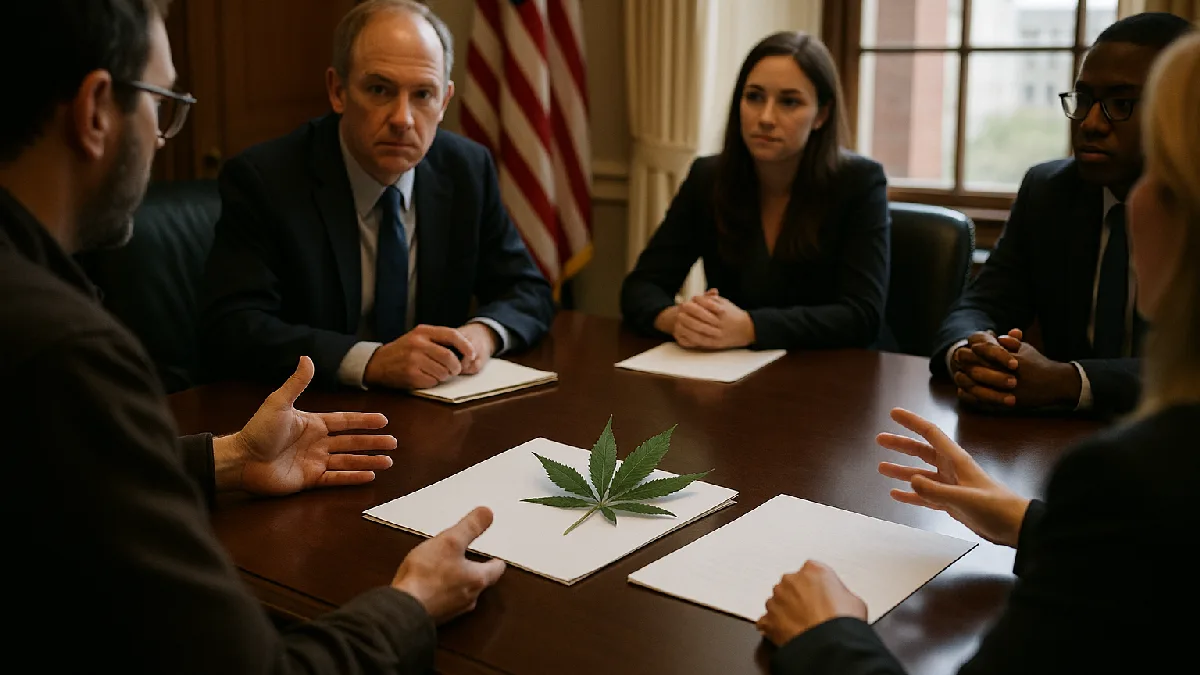
NCIA reports that many congressional offices, even longtime champions, are still parsing what rescheduling to Schedule III means in practice. Offices asked how medical and adult‑use markets might interact under a partially rescheduled framework, what Congress should do if litigation slows implementation, and how to treat businesses operating across state‑regulated systems.
Constituent voices grounded those conversations. Participants detailed how conflicting policies affect hiring, investment, banking access, tax obligations, public safety, access, and the ability to compete with illicit operators that do not face the same burdens.
Rescheduling to Schedule III raised urgent questions
Rescheduling acknowledged medical cannabis and the legitimacy of state programs. But NCIA emphasizes it also created uncertainty. Offices sought clarity on interactions between medical and adult‑use businesses, and what happens if court challenges delay implementation. Those questions matter for every segment of the supply chain, including delivery services navigating marijuana transport laws and daily compliance tasks.
Our take: For compliance teams, the signal is to document processes, keep transport logs tight, and be ready to adjust SOPs as federal guidance evolves. Rescheduling is a policy shift—not an instruction manual—and day‑to‑day weed delivery compliance remains a discipline of details.
Section 280E and tax fairness were top of mind
NCIA notes tax fairness rose to the top issue. While the April order could eventually provide relief from Section 280E for some state‑regulated medical businesses, uncertainty remains for dual licensees, adult‑use operators, and others awaiting implementation clarity.
During Lobby Days, members highlighted the need for immediate federal guidance and congressional action to prevent compounding uncertainty for compliant operators on thin margins. NCIA members also warned against proposals that would permanently preserve punitive federal tax treatment regardless of future legal status.
Bipartisan reform and veterans’ access remain anchors
Advocates discussed bipartisan legislation such as the STATES 2.0 Act to align federal law with individual state policies and provide long‑term certainty for medical and adult‑use markets. NCIA also underscored ongoing efforts to protect rescheduling from disruption while preparing agencies for what’s next.
Veterans’ access continued as a bipartisan priority. NCIA recognized congressional leadership, honoring Rep. Jerrold Nadler (D‑NY‑12) and Rep. Brian Mast (R‑FL‑21).
As NCIA reports, Rep. Nadler said, “I am honored to accept the Legislator Lifetime Achievement Award from the National Cannabis Industry Association...” NCIA also highlighted Rep. Mast’s advocacy through efforts like the Veterans Equal Access Act.
What This Means for DC, Maryland and Virginia Residents
For consumers and businesses in the DMV, the federal spotlight matters. NCIA’s report makes clear that rescheduling alone does not settle the structural challenges—especially taxes—that shape pricing, competition with the illicit market, and operator stability.
Our take: If you run a delivery, retail, or ancillary operation serving Washington DC cannabis consumers, maintain a compliance‑first posture. Continue following your current local rules on marijuana delivery regulations, cannabis courier licensing, and transport compliance while monitoring federal tax guidance. The cost side of the ledger may shift before any local rules do.
For District of Columbia marijuana customers and visitors, congressional work on tax fairness could influence where businesses can sustainably operate and how they compete with unregulated sellers. As NCIA notes, offices are engaging on federal tax treatment, including outreach to the IRS and Treasury Department led by Rep. Steven Horsford’s office.
Virginia and Maryland readers should watch the same signals. NCIA’s focus on certainty for state‑regulated systems, fair tax treatment, and agency readiness will influence how operators plan inventory, staffing, and compliance investments that ultimately shape access.
Timeline and Next Steps
Key dates: DOJ’s April final order moved state‑regulated medical cannabis to Schedule III; NCIA’s Lobby Days followed on May 12–14, 2026. In between and since, congressional offices sought clarity on implementation mechanics, tax policy, and market interactions, according to NCIA.
What to watch: NCIA members engaged with offices that are spearheading outreach to the Internal Revenue Service and Treasury Department for implementation guidance. Congress will also weigh bipartisan options like the STATES 2.0 Act to align federal policy with state systems and address long‑term certainty.
Operator checklist (Our take):
Track IRS guidance on Section 280E applicability post‑rescheduling, especially if you hold medical and adult‑use permissions under one roof.
Keep meticulous records for tax substantiation and transport compliance; documentation reduces risk during policy transitions.
Monitor congressional activity on STATES 2.0 and any proposals that would codify punitive tax treatment.
Engage with your representatives; NCIA’s report underscores that constituent expertise shapes better policy.
Review SOPs for courier operations and marijuana transport laws regularly; be ready to update training as federal guidance emerges.
How This Compares to Other States

NCIA’s advocacy spanned offices representing adult‑use, medical, and emerging markets—and even states without regulated programs. Despite differences, the through‑line was clear in NCIA’s account: tax fairness, illicit market competition, banking access, and implementation clarity cut across market types.
For delivery businesses specifically, the common denominator is uncertainty around federal tax treatment and how partial rescheduling interfaces with state‑regulated systems. NCIA’s emphasis on broad coalitions and bipartisan engagement suggests reforms must bridge varied market models rather than favor one state’s approach.
Internal‑link opportunity: Explore our DMV primers that unpack dc weed laws, maryland cannabis updates, virginia marijuana policy developments, and compliance best practices for cannabis delivery laws and transport compliance.
Is weed delivery legal in Washington, DC right now?
This NCIA source does not verify Washington, DC delivery rules, so we are not stating them here. For current dc weed laws and marijuana delivery regulations, consult official District resources and a qualified attorney. Our site offers local explainers to help you interpret updates alongside federal shifts.
Do I need a cannabis courier license to operate a delivery service?
Requirements vary by jurisdiction, and the NCIA report does not specify licensing in any state or city. Check your local regulator’s rules for cannabis courier licensing, transport manifests, and vehicle standards. Keep proof of compliance and training records on hand during every transport.
How does Schedule III affect marijuana delivery regulations?
Per NCIA, rescheduling generated questions about how medical and adult‑use systems interact and what implementation means. It also elevated tax fairness debates tied to Section 280E. For delivery operators, the most immediate federal impact to watch is tax treatment; day‑to‑day operational rules remain set locally unless your regulator updates them.
What documents should a delivery service keep for transport compliance?
Our take: Maintain trip manifests, inventory logs, chain‑of‑custody records, driver credentials, training attestations, and incident reports. While NCIA’s report does not prescribe documentation, strong records help demonstrate compliance amid evolving federal guidance and audits.
When could federal guidance on 280E arrive?
NCIA notes that congressional offices are engaging the IRS and Treasury Department on implementation guidance, including outreach led by Rep. Steven Horsford’s office. Timelines are not provided, so monitor agency updates and work with experienced tax counsel to plan scenarios.
The bottom line for DMV consumers and operators
NCIA’s 2026 Lobby Days confirm that rescheduling sparked momentum and hard questions. Congress heard about tax fairness, illicit market pressure, and the need for clarity that lets compliant businesses compete.
For the DMV, expect the most immediate federal ripple to flow through taxes and guidance—factors that influence pricing, investment, and where compliant operators can thrive. Keep your compliance house in order, follow local rules for delivery licensing and transport, and stay tuned as Congress and federal agencies move from headlines to implementation.
Attribution
All reported facts in this article are drawn from the National Cannabis Industry Association’s coverage: Beyond Rescheduling: Inside NCIA’s 14th Annual National Cannabis Industry Lobby Days (published May 27, 2026).
Join the conversation
Questions about delivery licensing, transport compliance, or how Schedule III may affect your operation? Tell us what you want covered next, and explore our local DMV explainers for practical guidance as federal policy evolves.
Written by Beauty & Cannabis AI
Bud Lords AI Cannabis News Writer
Cannabis beauty and skincare expert covering CBD cosmetics, hemp-derived beauty products, skin health research, and wellness trends. Specializes in beauty industry integration and consumer product reviews.
Expertise: beauty · skincare · cbd · cosmetics · wellness · hemp
This AI-assisted article was created using the named Bud Lords newsroom personality and reviewed under Bud Lords editorial standards.





Comments