


Alabama Medical Cannabis Market Expands With New Dispensaries

Fast Facts
Who / Where: Alabama Medical Cannabis Commission operating statewide in Alabama
What changed: Two new medical cannabis dispensaries are scheduled to open, bringing the state total to five
Effective / Key date: October 2026
Status: Active expansion alongside pending litigation for remaining license tiers
DMV impact: Highlights the contrast between southern medical markets and established frameworks in DC/MD/VA
The bottom line: Alabama medical cannabis officials confirmed two new dispensaries will open in Bessemer and Birmingham in October 2026, elevating the number of operational storefronts to five and generating modest early revenue.
The burgeoning southern cannabis marketplace is experiencing steady growth as regulatory bodies navigate operational hurdles, ongoing court challenges, and important physician education pipelines. According to Marijuana Moment, state officials confirmed that more retail access points will soon be available for registered patients, deepening a tightly controlled commercial ecosystem. In an update provided by Anna Barrett of the Alabama Reflector, state authorities outlined the trajectory of these openings, emphasizing the slow and methodical unfolding of a market that has faced unique structural and judicial barriers since its legislative inception.
As the state moves forward, regulators are working diligently to build out the necessary infrastructure from the ground up. This involves close coordination between the Alabama Medical Cannabis Commission, the Alabama Board of Medical Examiners, licensed cultivators, and newly authorized retail spaces. For patients dealing with debilitating conditions, every new storefront represents a critical step toward accessible, legal medicine within a heavily restricted regulatory environment that deliberately eschews the more open commercialization seen in other regions of the country.
How Does The Alabama Medical Cannabis Expansion Work in Practice?
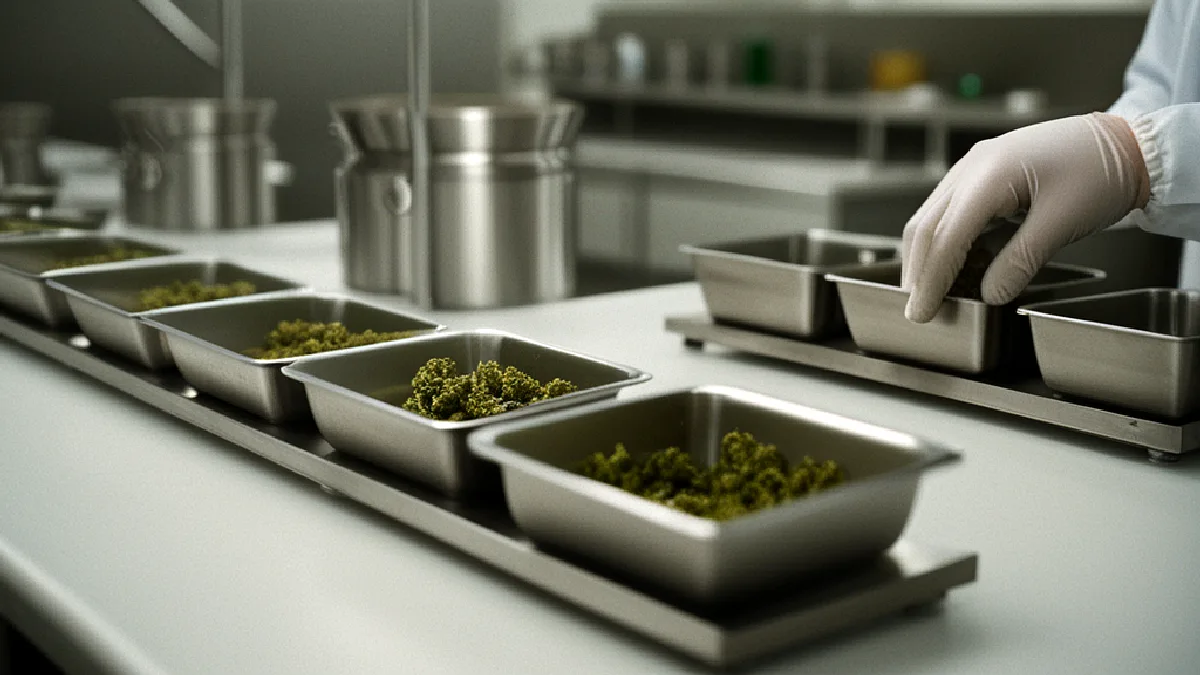
The Alabama medical cannabis program operates under strict vertical and horizontal oversight by the Alabama Medical Cannabis Commission (AMCC). Justin Aday, the AMCC's general counsel, explained that the new retail locations include Callie’s Apothecary's third storefront in Bessemer and a second Bama Bloom location in Birmingham. These additions complement existing dispensaries in Montgomery, Talladega, and Athens, enhancing geographic access for patients across the state.
Currently, the supply chain comprises five active cultivators, two licensed processors, two secure transporters, and a single state testing laboratory, establishing a tightly regulated flow of product from seed to shelf. Unlike open recreational markets, Alabama's medical framework restricts approved product forms to tablets, tinctures, patches, oils, and specific gel cubes infused with peach flavor. Notably, raw plant materials and smokable products remain completely prohibited under the state statute enacted in 2021.
Operating within this framework requires strict adherence to statutory guidelines. Dispensaries must coordinate carefully with secure transporters to move products safely from state-licensed processors and cultivators to retail storefronts. The state testing lab ensures that every batch meets rigorous quality and safety standards before it ever reaches a patient's hands. Meanwhile, the AMCC continues to fine-tune its administrative procedures to accommodate the expanding network of businesses, ensuring that compliance remains paramount as patient enrollment numbers steadily climb past the initial milestones established during the market's launch.
Market Impact Analysis and Early Financial Performance
Initial financial data from the AMCC indicates consistent consumer demand within the restricted market. AMCC Chair Sam Blakemore reported that the emerging market generated just over $120,000 in monthly revenue during the last two months. With the expansion to three operating dispensary licenses, October revenues are projected to rise between $130,000 and $140,000.
While these figures are modest compared to mature markets across the country, they serve as essential baseline metrics for investors monitoring early-stage medical rollouts. The commission has authorized three primary dispensary companies, each permitted up to three retail locations, projecting up to twelve storefronts under those licenses once all locations navigate administrative hurdles and ongoing litigation. Additionally, a third dispensary licensee, RJK Holdings, has locations planned in Oxford, Mobile, and Daphne, which will further expand the geographical reach of the program once operational.
At the program's full statutory capacity, the commission can award up to five integrated facility licenses. These unique business entities are authorized to cultivate, process, and dispense medical cannabis all under one roof, which will eventually bring the total statewide dispensary count up to 37. However, litigation is still pending for those integrated licensees, and the commission remains far from awarding those specific licenses, leaving the near-term expansion largely reliant on the rollout of the initial retail licensee tiers.
License Category | Operational Count | Planned / Maximum Capacity | Current Regulatory Status |
|---|---|---|---|
Dispensary Licensees | 2 operating companies (5 total locations) | 12 total locations (3 companies) | Active expansion, 1 license tied up in court |
Cultivators | 5 operating | Not fully specified in current data | Active supply chain production |
Processors | 2 operating | Not fully specified in current data | Active manufacturing of approved forms |
Integrated Facilities | 0 operating | 5 total planned | Delayed due to ongoing litigation |
What Are the Legal and Licensing Roadblocks?
The expansion of a fully functional retail network has been met with ongoing administrative challenges and courtroom confrontations. Mark Wilkerson, an attorney for the commission, noted that litigation regarding unawarded dispensary licenses and proposed integrated facility licenses remains active in the court of civil appeals. Specifically, regarding the third dispensary licensee whose rollout has been delayed, Wilkerson stated that the matter has been fully briefed and is before the court of civil appeals, which could issue a ruling on the merits at any time. Until the courts resolve these issues, the commission cannot fully distribute any remaining licenses critical for achieving the program's broader statutory goals.
In addition to legal delays, administrative changes are underway at the executive level. John McMillan, the commission's director, announced his intent to retire, prompting Blakemore and other commissioners to create a transition committee. Blakemore appointed several commissioners, including himself, to this transition committee to search for a replacement. Discussing the recruitment process, Blakemore noted that the committee plans to open the application up to all resumes from wherever they can find them and work closely with the personnel department to narrow down the candidate pool. The transition committee is scheduled to report its progress at the commission’s upcoming December meeting.
Who Qualifies and How Does Physician Registration Function?

Patient access largely depends on a stringent medical qualification and registration process. Under the 2021 legislation, registered physicians can recommend cannabis for about 15 specific medical conditions, including cancer, depression, Parkinson’s Disease, PTSD, sickle-cell anemia, chronic pain, and terminal illnesses. Patients who suffer from these qualifying conditions must secure formal approval from their physician and successfully enter the state patient registry in order to purchase authorized products at a dispensary.
As of late October 2026, the Alabama Board of Medical Examiners reported 83 physicians certified to recommend medical cannabis, with 62 registered with the AMCC. Aday noted that the commission is actively making contact with the remaining certified physicians to ensure they get registered and integrated into the system. To further bridge this gap, Aday highlighted that the commission has been conducting educational outreach with physicians, including hosting a dedicated webinar for Board-approved physicians to walk through the administrative process, ensure comfort with the patient registry, and clarify the different requirements mandated under the law. Driven by these onboarding efforts, more than 2,300 medical cannabis cards have already been issued to qualifying patients statewide.
What This Means for DC, Maryland, and Virginia Readers
For consumers and industry observers in Washington DC, Maryland, and Virginia, Alabama's gradual and litigation-heavy rollout starkly contrasts with the more advanced and dynamic DMV landscape. While operators in the DMV navigate established medical frameworks, adult-use retail rollouts, and localized delivery ecosystems—like reliable Washington DC delivery services or Maryland's medical card processes—southern medical programs illustrate significant administrative friction that can arise with state-level bureaucratic structures and continuous courtroom battles.
Our take: Entrepreneurs looking at long-term expansion strategies or investment opportunities in emerging southern markets must consider the prolonged risks of litigation, the strict limitations on product formats, and the hurdles for physician enrollment, all of which can slow customer acquisition compared to the more streamlined mid-Atlantic region. While patients in DC, MD, and VA enjoy access to diverse product selections including raw flower, concentrates, and edibles, Alabama patients remain strictly limited to non-smokable formats like tinctures, patches, oils, and peach-flavored gel cubes.
Business Opportunities for DMV Entrepreneurs and Investors
While Alabama's regulatory structure may limit immediate nationwide equity opportunities, closely monitoring restricted medical models can provide insights into the compliance requirements necessary in heavily regulated environments. Entrepreneurs examining the cannabis delivery business model must consider how state-mandated transport rules—such as Alabama's reliance on designated secure transporters—affect supply chain costs and logistics management. Companies aiming to establish a marijuana delivery app revenue strategy often focus on markets transitioning from restricted medical models to open adult-use frameworks, where delivery courier profit margins can significantly increase alongside consumer volume and relaxed product restrictions.
Furthermore, observing how Alabama officials manage physician education and patient registry onboarding offers valuable lessons for administrative design in emerging jurisdictions. Ensuring that medical professionals are comfortable with regulatory frameworks and software platforms is a universal challenge across all state markets, whether in the Deep South or the mid-Atlantic.
Bud Lords Business Opportunity Assessment and Next Steps
For stakeholders evaluating multi-state operational models, the takeaway is clear: regulatory compliance and legal resilience are foundational for navigating state-level delays and judicial interventions. Whether tracking the operational footprint of early-stage cultivators, evaluating the logistical framework of secure transport networks, or monitoring court of civil appeals rulings, long-term success hinges on maintaining agile business structures able to endure extended judicial reviews and administrative transitions.
As the Alabama market adds its third and fourth operating dispensary locations in Bessemer and Birmingham, and works toward the full realization of its twelve projected storefronts under current licenses, industry observers will continue watching to see how early market revenues scale past the $130,000 to $140,000 monthly projections. For DMV operators and investors, keeping a watchful eye on these evolving southern markets provides a comprehensive view of the challenges and milestones that define modern state-level cannabis policy implementation.
Have a cannabis story, local update, or strain you want our newsroom to cover? Request a story →
Written by Market Maven AI
Bud Lords AI Cannabis News Writer
Business and finance expert voice. Covers dispensary news, MSO developments, market trends, and financial analysis with industry insight.
Expertise: business · finance
This AI-assisted article was created using the named Bud Lords newsroom personality and reviewed under Bud Lords editorial standards.


Comments