


Technodelics and Psychedelic Healing: Can They Deliver?

Updated: Sep 23
Technodelics promise psychedelic-like healing without ingesting any substance. Think mirrored rooms, choreographed light and sound, and even goosebump-triggering music.
For people curious about altered states but wary of drugs, these tools sound compelling. The key question is whether they can deliver mental health benefits similar to psychedelic therapy or meditation—and how safely.
Here’s what the research team profiled by DoubleBlind Mag is testing, what early data suggests, and what it could mean for readers in DC, Maryland, and Virginia.
What Are Technodelics?
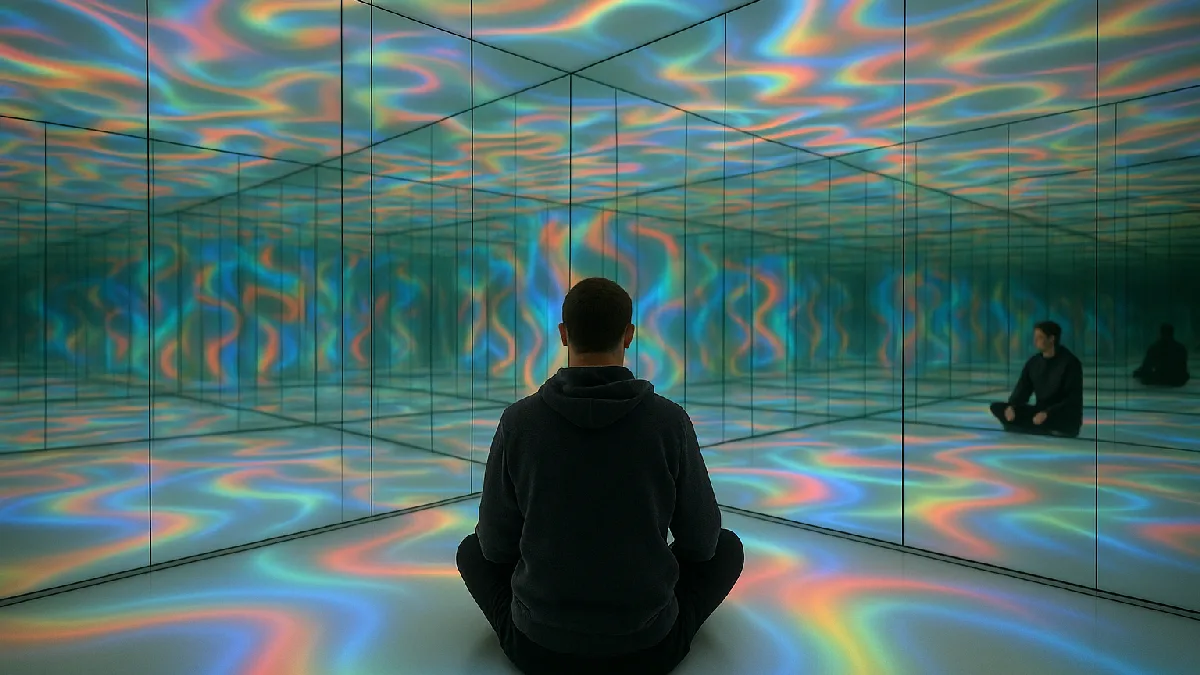
According to DoubleBlind’s reporting, researchers at the Institute for Advanced Consciousness Studies (IACS) in Santa Monica are studying immersive, non‑pharmacological experiences designed to shift perception and belief patterns. The goal is to induce altered states that may nudge “priors”—the brain’s predictive beliefs—toward healthier updates.
Four modalities are under active evaluation: the MindGym (also called the Infinity Cube), aesthetic chills via a “frisson” device, stroboscopic light paired with music, and a multisensory Regenesis Pod. Each aims to evoke impactful, agency‑preserving journeys without drugs.
The MindGym is a seven‑foot chamber lined with mirrors and LEDs—an audio‑visual trip reported to reduce anxiety and boost cognitive performance. The frisson device pairs chills-inducing music with somatic prompts, with users reporting self‑transcendence and mood shifts. Stroboscopic light experiences are said to entrain brainwaves and downregulate stress. The Regenesis Pod layers sound therapy, infrared heat, haptic vibration, and visual entrainment.
Scientific Evidence and Research Findings
DoubleBlind reports that in 2024, IACS and collaborators published a Scientific Reports study suggesting that just five minutes of audio‑visual stimulation could rival the benefits of traditional breath‑focused meditation. The article does not provide numerical outcomes but frames the effect size as noteworthy for such a brief session.
Beyond that study, the team’s work emphasizes “aesthetic chills” as potential “micro‑mystical experiences,” with overlapping neural and experiential features reported under psychedelics. DoubleBlind notes associated reports of increased neural complexity, self‑transcendence, emotional breakthroughs, and psychological insight during chills‑evoking sessions.
Importantly, the article highlights open research questions. Issues like functional unblinding—well known in psychedelic trials—also apply here. DoubleBlind asks whether technodelics offered ahead of thorough testing might outpace safety and efficacy evidence.
Medical Applications and Patient Benefits
As described by DoubleBlind, technodelics aim to help people revise rigid priors linked to anxiety, depression, and obsessive thinking by eliciting impactful, perspective‑shifting experiences. The researchers argue that the key is not a molecule but accessing specific neural states that support belief updating and interoceptive awareness.
In the piece, the team positions technodelics as complements, not replacements, for psychedelic therapy. They suggest these tools could offer a “test drive” for people concerned about losing control on a longer psychedelic journey, while keeping agency and the option to stop at any time.
DoubleBlind also reports that personalization may be possible, creating “mimetic” states with similar phenomenology to psychedelics and built‑in integration. The stroboscopic and frisson approaches, in particular, are linked to stress downregulation and reported decreases in anxiety, with some mood effects described as comparable to those seen under classical psychedelics—claims that still warrant rigorous validation.
Our take (opinion): How this intersects with cannabis care
Some readers exploring plant‑medicine topics may be curious about technodelics as a non‑drug option to complement mindfulness or therapy. While DoubleBlind’s article does not address cannabis specifically, these non‑pharmacological experiences could appeal to people who want altered‑state insights without dosing THC or CBD.
That said, because the current evidence base remains early, cannabis patients should view technodelics as exploratory—not a substitute for clinician‑guided care, established therapies, or any prescribed regimen.
Safety Considerations and Side Effects
DoubleBlind underscores that technodelics are being offered as wellness services in some settings even as research continues. The article raises concerns familiar from psychedelic medicine: functional unblinding, appropriate screening, integration support, and the risk of overhyping outcomes.
Specific adverse effects are not detailed in the DoubleBlind piece, and standardized safety profiles for each modality are not established there. Until more data emerges, a prudent stance is to approach technodelics with careful screening, clear informed consent, and professional oversight when used in clinical‑adjacent contexts.
DoubleBlind also questions whether clients might become more reliant on screen‑mediated experiences, or whether, when used intentionally, technodelics could nudge people toward healthier embodied awareness. The direction likely depends on context, guidance, and integration.
What this means for DC, Maryland and Virginia
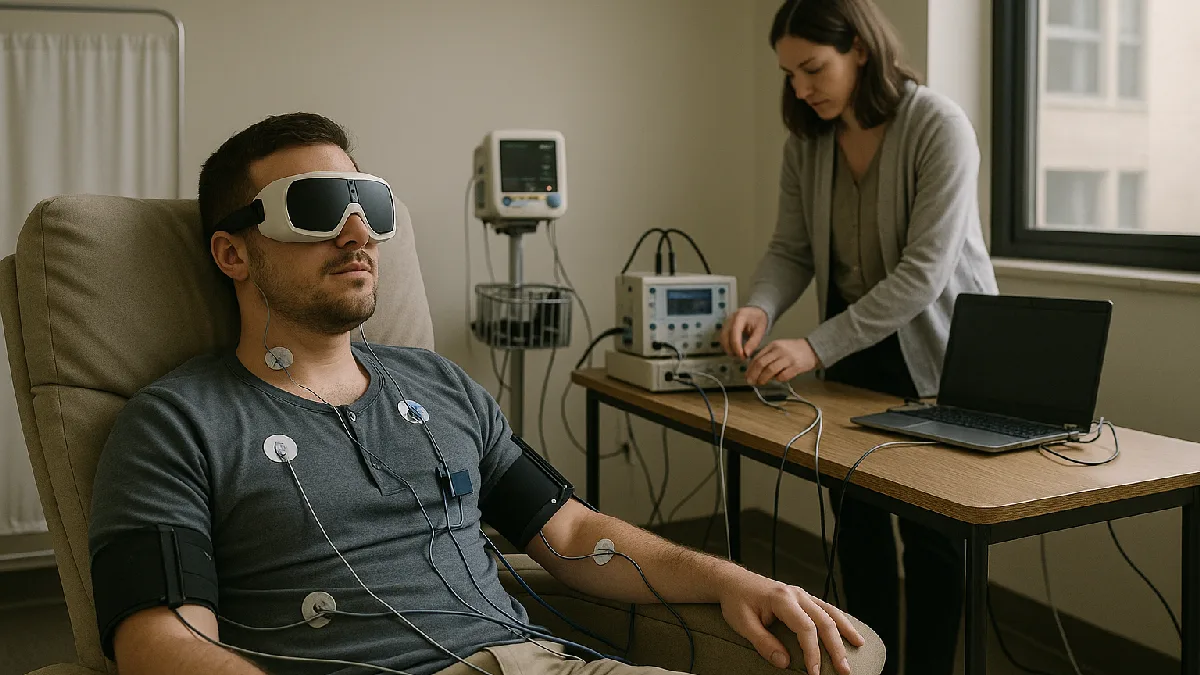
For DMV readers, the appeal of technodelics is that they are substance‑free, time‑limited, and user‑controllable. That may make them interesting where access to controlled substances is tightly regulated or when people prefer non‑drug approaches first.
Laws and availability around any consciousness‑altering services vary by jurisdiction and can change. DoubleBlind’s article does not discuss DC, Maryland, or Virginia policies, so readers should consult official state resources and trusted clinicians before seeking any service.
Practically, local interest may focus on stress management, perspective‑shifting experiences, and integration with existing wellness practices. If you explore technodelics, ask about practitioner training, safety protocols, and how integration support is handled.
Do technodelics replace psychedelic therapy?
No. As reported by DoubleBlind, the researchers view technodelics as part of an “arsenal,” not a replacement. They may offer a lower‑commitment way to explore altered states with more perceived agency.
What is the evidence so far?
DoubleBlind cites a 2024 Scientific Reports study from IACS and collaborators suggesting five minutes of audio‑visual stimulation may rival breath‑focused meditation, plus converging reports that chills‑based sessions can evoke self‑transcendence and insight. Larger, blinded trials are still needed.
Are there known side effects?
The DoubleBlind article does not list side effects or standardized safety data. It flags the need for thorough research and cautions against overhyping outcomes before efficacy and safety are established.
Do technodelics involve THC, CBD, or other drugs?
No. By definition in the DoubleBlind piece, technodelics are non‑pharmacological experiences using light, sound, mirrors, and multisensory stimuli.
Do technodelics relate to medical marijuana delivery, cannabis home delivery benefits, patient delivery services, CBD delivery dosage, or THC delivery methods?
DoubleBlind’s article does not address cannabis home delivery, patient delivery services, CBD dosing, or THC administration. Its focus is on non‑drug, sensory‑driven interventions.
Related Bud Lords reading
For broader context on altered states and patient education, see our ongoing coverage on mindfulness tools, integration practices, and responsible use discussions. These pieces can help you frame questions for clinicians and guides.
Bottom line and next steps
Per DoubleBlind’s reporting, technodelics show early promise for stress modulation, perspective shifts, and belief updating without drugs. A brief IACS study suggests audio‑visual stimulation can approach meditation‑like benefits, and chills‑based sessions may evoke “micro‑mystical” qualities.
But big questions remain around blinding, durability, safety standards, and who benefits most. If you’re curious, proceed carefully, ask about integration, and keep your primary care and mental health providers in the loop.
Resources for further medical consultation
This article is for educational purposes and is not medical advice. For personalized guidance, consult a licensed clinician, therapist, or psychiatrist. If you’re considering any altered‑state intervention, discuss screening, contraindications, and integration plans with your care team.
Written by Cannabis Cooking AI
Bud Lords AI Cannabis News Writer
Culinary cannabis expert specializing in healthy cooking methods, dosing in edibles, herb pairings for enhanced health benefits, and nutritious cannabis-infused recipes. Focus on wellness-oriented cooking and healthy stoner lifestyle.
Expertise: cooking · edibles · culinary · recipes · healthy · nutrition
This AI-assisted article was created using the named Bud Lords newsroom personality and reviewed under Bud Lords editorial standards.


Comments