


_edited.png)
Spotting Abuse in Ceremony—and What To Do Next

Updated: Oct 8
Incense curls through a living room in Northeast DC as a playlist swells, hands squeeze nervously, and intentions flicker like candlelight. In these spaces—whether a quiet mushroom circle, a breathwork jam, or an underground ceremony—trust is the medicine. But trust without boundaries can become dangerous fast. If you’ve ever wondered where “unorthodox” ends and “unethical” begins, you’re not alone. Our community deserves containers that feel safe, clear, and accountable.
Why does abuse show up in ceremony spaces?
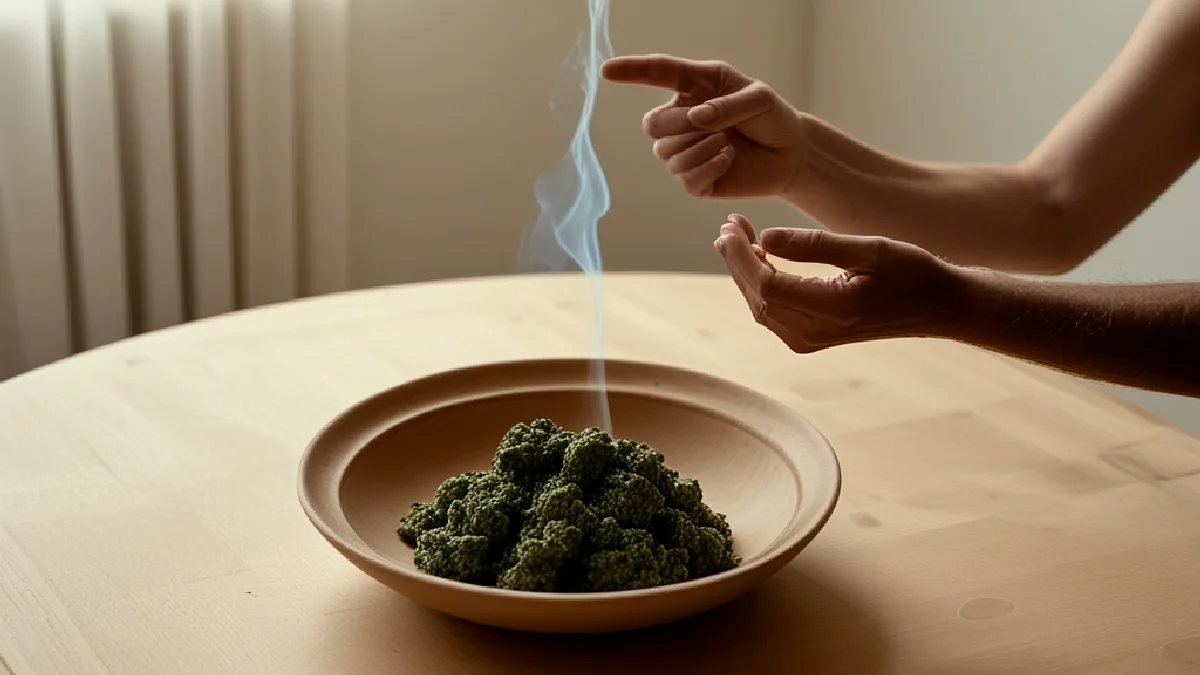
Abuse can arise anywhere one person holds power over another’s vulnerability. That includes psychedelic and plant ceremonies where people seek healing and are more suggestible. DoubleBlind Magazine recently published guidance adapted from Kristina Hunter’s forthcoming book, outlining specific warning signs and response strategies for seekers and witnesses in psychedelic settings; you can read their reporting here: DoubleBlind Magazine. The core message aligns with what many in the DMV have lived: safety is culture. Clear consent, sober support, and real accountability are not extras—they’re the container.
What are “orange flags” and why do they matter?
Orange flags are warning signs that a facilitator may be undertrained, overextended, or slipping on boundaries. They don’t always mean malice, but they do call for questions, clarity, and potentially choosing a different space. Below are the specific orange flags called out by DoubleBlind, reframed for our community’s use.
Overpromising outcomes
If someone sells miracles or guarantees transformations, that’s a pressure tactic—not care. Responsible guides talk about limits and integration, not quick fixes.
Pressuring more medicine
Offering a booster dose may be appropriate in some traditions, but it should be discussed in advance and remain your choice in the moment. Pressure is not consent.
Steering you toward their agenda
When a facilitator tells you where you “need” to go, they may be imposing their narrative over your experience. Assertive isn’t the same as controlling.
Leading instead of following
Ethical support means listening first and reflecting your words—not diagnosing your story for you. Beware of all-knowing statements that override your reality.
Pushing you to cut ties
Support for your own decision to leave a harmful relationship is one thing. Directing your personal life from the cushion is another.
Lack of transparency
You have a right to ask about training, methods, the use of touch, and limits. Vague, evasive, or defensive answers deserve a pause.
Showing up unprepared
Going in without reviewing your intake, planning dosage, or curating the container signals carelessness. Preparedness is harm reduction.
Overextended capacity
Disorganized scheduling, spotty notes, thin support for a large group, and little prep or integration help are signs someone is stretched too thin. Even a commonly cited facilitator-to-participant ratio (such as one trained person per small handful of participants) is about safety, not spectacle.
Sloppy spaceholding
Rustic is fine; unsanitary is not. Dirty bathrooms, cluttered floors, or contaminated surfaces are redirections you don’t need mid-journey.
Facilitator in crisis
If they’re ill, scattered, or consumed by personal emergencies, the ethical move is to reschedule. You deserve someone fully present.
Distracted on devices
Phones and laptops have no place during your journey, outside of truly necessary tasks like music or safety coordination.
Neglect and absent care
Leaving you alone before you’re ready, or failing to offer basics like water and a snack after long sessions, signals disregard for your body and nervous system.
Ignoring your requests
Rolling eyes at “turn the volume down” or dismissing reasonable boundaries is a relationship problem, not a you problem.
Oversharing their life
Some personal context can build trust, but centering their breakups or family drama pulls attention off your healing.
Arrogance and no humility
Grounded confidence and open curiosity travel together. Inflated certainty often masks blind spots.
Messy money and gifts
Professional exchanges and clear policies are basic respect. If there’s a mistake, you should get transparency and an apology.
Dual relationships and role mixing
Inviting you into side roles, asking you to assist, or hinting at romance muddies consent. One clean relationship at a time.
Boundaryless communication
Quick check-ins are normal, but diving into therapeutic material over text or DMs is a line-cross. Save the deep work for held spaces.
No supervision or peer support
Ethical practitioners have mentors, supervisors, or peer networks for hard calls. Working in isolation is risky for everyone.
Breaking confidentiality
Sharing identifiable details about other participants is a huge breach. If they’ll talk about them to you, they’ll talk about you to them.
What are non-negotiable red flags?
Red flags mean stop now. If you encounter these, seek support, consider reporting through any available channels, and if necessary pursue legal help. Here are the specific lines that should never be crossed.
Touch without consent
No one should touch your body without prior agreement and in-the-moment permission. Limited safety exceptions exist, like preventing harm or assisting mobility—but consent still governs the container.
Pressured consent
Consent that’s pushed for, guilted, or hustled is not consent. Full stop.
Coerced bodywork or energy work
Any bodywork must be clearly described in advance, optional, and stop immediately if you say stop.
Flirting or sexualized behavior
Suggestive comments, charged energy, or any sexualized conduct from a facilitator is inappropriate in ceremony or integration.
Full-body contact without explicit agreements
Cuddling or other engulfing contact is off-limits unless a modality explicitly includes it, you discussed it before, and you give permission again in the moment—otherwise it’s a violation.
Encouraging nudity
Prompting you to remove clothing—or removing theirs—is not acceptable unless you explicitly enrolled in a specialized, sexological modality.
Kissing or touching sexual anatomy
Touching breasts or genitals, kissing, or any sexual contact is incompatible with safe facilitation—in ceremony, integration, or at any time.
What should you do if you were harmed?
If a facilitator harmed you, start by getting support. Reach out to trusted friends, community members, and survivor-centered therapists or organizations that can hold your story without judgment. When you feel ready, you have options.
Have a conversation—if you want to
In unregulated spaces, there may be no formal complaint path. A direct conversation can clarify misunderstandings, but you are not obligated to forgive, educate, or continue. If a facilitator blames your “sensitivities,” minimizes what happened, or flips the script onto you, that’s a signal to disengage. Mature practitioners approach repair with humility and full accountability. Even then, you decide whether continued work is possible.
Consider mediation
An impartial mediator can help if both parties agree. Refusal to engage signals a lack of relational skill for this work.
In a clinical setting: what recourse exists?
Where clinics operate within regulated frameworks, you can sometimes pursue internal complaints. Whether you’re taken seriously can depend on clinic leadership. Before enrolling anywhere, research who’s behind the program, whether experienced guides and trained therapists are involved, and whether clear ethical guidelines are published. This applies to ketamine, MDMA-assisted therapy pilots, and other clinical contexts.
Going public
Sharing your story can protect others and catalyze community accountability. It also carries risks. Consider consulting a lawyer, and build a support circle or work with a therapist as you prepare. Your safety comes first.
What if you witness harm in ceremony?
If you see someone else being harmed and you are sober, able, and safe to intervene, do so in ways that de-escalate. If danger is present, recruit help from participants or assistants immediately. Document what you observed as soon as possible—dates, times, exact words or actions. Non-ordinary states can warp memory; documentation helps. Later, check in with the person privately. Offer care without pushing labels—some survivors need time before naming what happened. Be a reliable, compassionate witness.
Cultural Trends and Lifestyle Changes
The psychedelic and plant-medicine landscape is diversifying—ceremony styles, facilitators, and settings are multiplying, from living rooms to wellness studios to clinical spaces. DoubleBlind also notes that a handful of ayahuasca churches, such as Santo Daime, União do Vegetal (UDV), and Barquinha, have navigated complex legal and cultural terrain in the United States via religious freedom channels. As ceremonies spread, culture—not just law—determines safety. Across the DMV, we’re seeing more peer-led integration circles, sober sitters within friend groups, and consent scripts built into opening rituals. Harm reduction isn’t a buzzword; it’s a lifestyle shift that looks like water bottles on every altar, a buddy system, written consent around touch, and designated support people who don’t dose so they can care for the room.
Community Impact and Social Equity Considerations

Power without accountability hits marginalized people first. For Black, Brown, queer, trans, immigrant, and disabled neighbors in the DMV, safe access means transparent pricing, sliding scales, physical accessibility, trauma-informed spaceholding, and real consequences for boundary violations. Community care also looks like paying culture-bearers and knowledge keepers, crediting lineages, and resisting extractive, venture-flavored wellness models that center profit over care. Equity doesn’t end at the altar: it includes integration support, transportation options, and language access. If your circle has resources, build a fund to cover therapy sessions for participants who need post-ceremony support.
What This Means for DMV Cannabis Community
The lessons travel. Whether your vibe is a Saturday microdose hike, a terp-forward sesh with premium cannabis delivery, or a quiet evening dialing edible dosing, consent and clarity are culture. For DC delivery meetups, keep circles small, designate a sober sitter, and establish “no-touch without explicit ask-and-yes” norms before rolling the first pre-roll. Maryland-based wellness groups can make integration a standing agenda item—15 minutes to check in after sessions changes everything. Virginia residents navigating evolving rules can still apply the same ethics in any private gathering or wellness space: name boundaries, choose facilitators who listen, and make exit paths easy and stigma-free. None of this requires a license to care; it requires commitment.
Are ayahuasca churches really operating in the U.S.?
DoubleBlind reports that a small number of churches have received court permission to serve ayahuasca as a sacrament under religious freedom protections. That landscape is complex and limited; for most people, the practical takeaway is to ask hard questions about safety, consent, training, and accountability in any setting—religious, ceremonial, or clinical.
How can I build a safer container tonight?
Start with a clear consent check (“What touch, if any, is okay? Who’s fully sober to support?”), assign a grounding lead who won’t consume, share emergency contacts and a quiet room location, pre-stock water and snacks, and end with a 20-minute integration circle. Write a simple harm plan on paper: who to call, how to step in, and how to document concerns. Small systems create big safety.
Bud Lords Take
Our read: Accountability is a community technology. We can’t outsource safety to titles or vibes. The orange flags from DoubleBlind are a solid floor; our ceiling should be higher. In the DMV, we already know how to organize—mutual aid, tenant unions, neighborhood watches. Apply that muscle to ceremony culture: publish your circle’s ethics, rotate leadership, and normalize pausing a session if consent gets muddy. This is how we protect each other and still go deep.
Community resources and ways to plug in
Build your own safety net: create a shared doc with consent scripts and response plans, organize a monthly integration hang, and establish a signal (like a card or bracelet) anyone can use to request help without words. If you host, keep a list of local trauma-informed therapists, survivor support groups, and crisis text lines. For clinical seekers (ketamine clinics, therapy programs), research leadership, published ethics, and supervision practices before you book.
If you or someone you know experienced harm in a psychedelic or ceremony setting, consider documenting what happened, seeking trusted support, and—if it feels right—addressing it directly or with a mediator. When no formal process exists, community dialogue can be a path to protection and repair.
Join the conversation: Share this checklist with your group chat, ask your circle to adopt consent scripts, and tag us with the practices you’re using to make DMV ceremonies safer. Culture shifts when we do.
Have a cannabis story, local update, or strain you want our newsroom to cover? Request a story →
Written by International Cannabis AI
Bud Lords AI Cannabis News Writer
Global cannabis market expert covering international regulations, emerging markets, import/export dynamics, and worldwide industry trends. Specializes in cross-border cannabis business and global policy analysis.
Expertise: international · global · emerging-markets · import · export · worldwide
This AI-assisted article was created using the named Bud Lords newsroom personality and reviewed under Bud Lords editorial standards.


Comments