


_edited.png)
Pill Shaming Isn’t Very Psychedelic: Risks for DMV Patients

Image idea: A person’s hands holding a prescription bottle beside a small cluster of psilocybin mushrooms on a kitchen table, conveying the tension between meds and psychedelics.
Why “pill shaming” is a problem in psychedelic culture
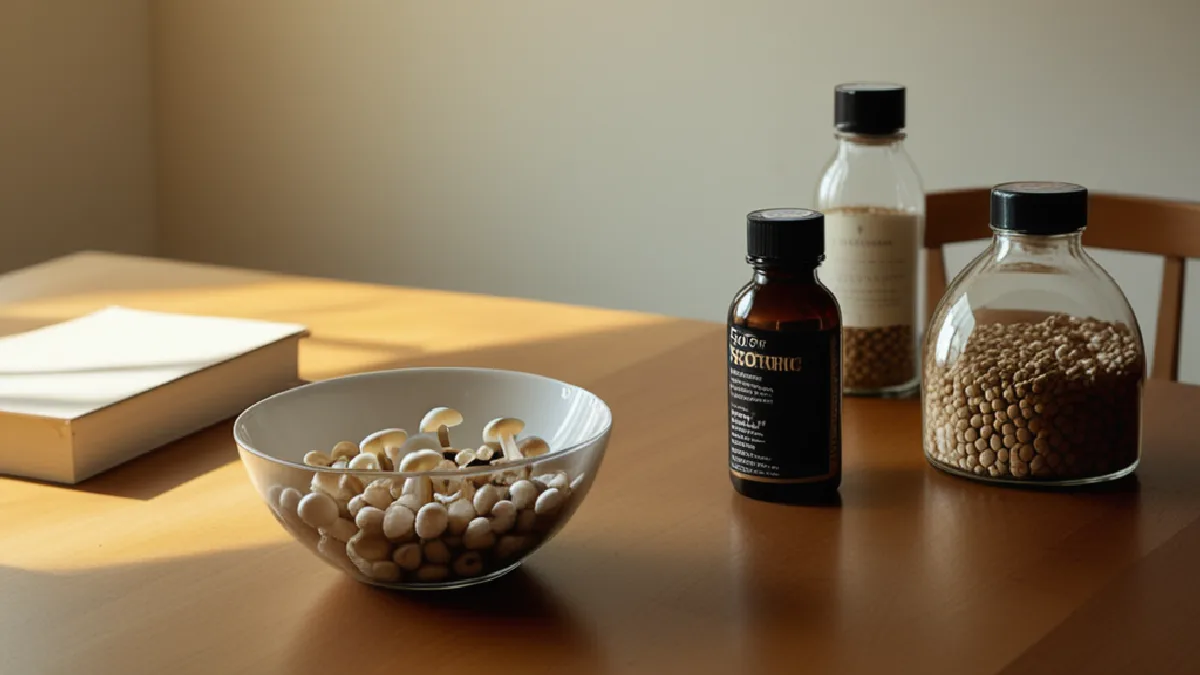
In some psychedelic circles, dunking on antidepressants has become a vibe—and people who rely on those meds can get hurt by that attitude. Reporting from DoubleBlind Mag describes how “pill shaming” shows up: antidepressants are framed as weak or soulless, while psychedelics are sold as superior cures.
That framing ignores complexity. DoubleBlind notes SSRIs help some symptoms for an estimated 40–60 percent of people with depression, but remission lands around 35 percent, and side effects can be real. At the same time, promoting psychedelics while glossing over their risks can push people to stop medications too quickly—especially before a ceremony or a clinical session.
The result can be destabilization that makes everything harder. Several clinicians and facilitators interviewed by DoubleBlind caution that rapid tapers plus a strong psychedelic can be a rough combination for some patients.
What the reporting and early data actually say
DoubleBlind highlights two things that are simultaneously true. First, antidepressants are imperfect. They can cause emotional flattening, sexual side effects, and in rare cases serious adverse experiences. Second, psychedelics aren’t magic either, and overselling them creates risk—particularly when people are told to drop their meds quickly to “break through.”
A harm-reduction clinician and GP quoted by DoubleBlind advises many psilocybin clients to stay on their SSRIs rather than taper just to take mushrooms, emphasizing that meaningful work is still possible. There are exceptions and caveats for substances like ayahuasca and MDMA, where interactions differ, but the core message is to avoid blanket rules and rushed tapers.
DoubleBlind also points to small but important trial signals. Compass Pathways tested psilocybin for depression with one group remaining on SSRIs and another off; intensity of experience was roughly comparable, with no serious adverse events in that small sample. Separately, a Small Pharma DMT-for-depression study reported a stronger antidepressant effect among participants who stayed on SSRIs versus those off them. These are early findings with limited numbers, not definitive guidance—but they challenge the idea that SSRIs always “block” psychedelics.
How destabilization can happen in real life
In its reporting, DoubleBlind shares stories of people who tapered fast to join retreats, then struggled for months after powerful sessions. One veteran hoped ayahuasca would replace a long-standing medication regimen and later returned to SSRIs to restabilize, feeling like they had failed. Another participant in a psilocybin trial faced extended difficulties and developed HPPD after a quick taper and dosing—later becoming so sensitive they couldn’t restart SSRIs.
We can’t know every causal thread in cases like these, and DoubleBlind is careful about that. But the pattern is clear enough to take seriously: fast tapers are a destabilizer, and adding a psychedelic can amplify the wobble.
Practical harm-reduction steps for people on antidepressants
No one-size plan fits every person, but DoubleBlind’s reporting and clinician commentary suggest grounded moves that respect both meds and psychedelics:
Don’t rush tapers. If a facilitator or retreat requires you to stop SSRIs quickly, get an independent medical opinion first. A slow, supervised plan—if any taper is appropriate at all—reduces risk.
Clarify interaction risks. Ayahuasca and MDMA have different considerations than psilocybin. If an organizer seems unaware of differences, that’s a red flag.
Expect variability. Some people on SSRIs need higher psilocybin doses for full effect, according to clinicians interviewed by DoubleBlind. Others do meaningful work at standard doses.
Build a support net. Post-session mood swings can last. Line up follow-up care with a prescriber and therapist who understand both antidepressants and psychedelic therapy.
Document everything. Track meds, doses, session notes, and sleep. Clear timelines help clinicians troubleshoot if you hit turbulence.
How this compares to other states

The culture clash around meds shows up differently depending on the policy setting. DoubleBlind points to Oregon’s regulated psilocybin services, where a maximum dose has been set; some clinicians argue that cap may be too low for certain SSRI users to “break through.”
In Australia, the TGA authorized limited MDMA and psilocybin therapy in 2023 after vigorous advocacy that sometimes framed psychedelics as clearly superior to SSRIs. And in the U.S., lawmakers in some states have explored service-center models, often with campaign rhetoric that downplays antidepressants while romanticizing “natural” psychedelic remedies.
Across these contexts, the throughline remains: when hype replaces nuance, patients on antidepressants can be pushed toward unsafe tapers. Local rules matter, but culture does too.
What This Means for DC, Maryland and Virginia Residents
For our neighbors in DC, Maryland, and Virginia, the biggest takeaway is personal safety over purity politics. If you use SSRIs or other antidepressants and are curious about psychedelics, make decisions with your prescriber—not the loudest voice in a forum.
Planning a legal cannabis path instead of a psychedelic one? Similar principles apply. If you’re exploring DC delivery options to manage stress or sleep, or comparing Maryland cannabis products from MD dispensaries, talk to your clinician about possible interactions with SSRIs. Our guides on edible dosing, pre-rolls, concentrates, and medical cannabis can help you choose formats and potencies that respect your baseline.
Maryland residents weighing adult-use purchases or navigating Maryland marijuana laws should take the same cautious approach: start low, go slow, and avoid changing prescribed meds without supervision. Virginia consumers tracking Virginia cannabis developments and broader conversations about Virginia cannabis decriminalization and emerging regulations can apply the same harm-reduction mindset—especially if they’re also on antidepressants.
Timeline and Next Steps
Here’s what to watch next, based on DoubleBlind’s reporting and current conversations among clinicians and researchers:
More trials that let participants stay on SSRIs. Early Compass Pathways and Small Pharma results suggest psychedelic effects can still occur; larger, longer studies will clarify safety and outcomes.
Better retreat screening and taper policies. Expect more facilitators to collaborate with prescribers rather than relying on blanket “stop all meds” rules.
Community education on harm reduction. As pill shaming gets called out, we anticipate clearer norms: no rushed tapers, transparent risk discussions, and respect for diverse healing paths.
Action items for readers now: if a psychedelic opportunity requires changing meds, bring that plan to your clinician; ask any facilitator how they handle SSRI users; and schedule post-session support in advance.
What is “pill shaming” in psychedelic spaces?
It’s the stigma or pressure some people face for using antidepressants while exploring psychedelics. DoubleBlind Mag reports this can range from subtle side-eyes to explicit claims that “real healing” requires ditching SSRIs—messaging that can lead to unsafe tapers.
Do SSRIs always block psilocybin or DMT?
No. DoubleBlind cites small studies where psilocybin and DMT still had effects for people who remained on SSRIs. Responses vary widely. Some SSRI users may need higher psilocybin doses, while others go deep at typical amounts. Evidence is still emerging and not definitive.
Is it safer to stop antidepressants before a ceremony?
Not necessarily. Rushed tapers increase destabilization risk; adding a psychedelic can intensify it. Clinicians interviewed by DoubleBlind often advise against fast discontinuation for psilocybin. Ayahuasca and MDMA have different interaction profiles—another reason to get medical guidance tailored to you.
What harms have been reported when people taper quickly?
DoubleBlind recounts cases of severe mood swings, prolonged anxiety, and in one trial participant, HPPD, after a quick taper plus dosing. Causality is complex, but the combination of fast withdrawal and a powerful session can set off a difficult cascade for some.
How should DMV residents approach cannabis if they’re on SSRIs?
Start low and go slow with products from DC delivery services or MD dispensaries, and loop your prescriber into the plan. Formats matter: edible dosing has a delayed onset, pre-rolls offer quick feedback, and concentrates can be intense. The same principle applies across Maryland cannabis and Virginia cannabis choices—don’t change prescriptions without supervision.
Bud Lords Take
Our read: Dumping on antidepressants is a shortcut to looking “authentic,” but it’s not compassionate—or safe. DoubleBlind’s reporting surfaces a needed course-correction: respect meds, respect psychedelics, and stop pretending one path is morally superior.
For DC, Maryland, and Virginia, we see two priorities. First, harm reduction must be the baseline in any psychedelic or cannabis plan, especially for people on SSRIs. Second, as research progresses, local educators and providers should move away from purity rhetoric and toward practical, medically supervised options—whether that’s psychedelic therapy, medical cannabis, or a thoughtfully maintained antidepressant regimen.
How to move forward
If you’re considering psychedelics while on antidepressants, talk to your clinician first, vet facilitators who understand SSRI considerations, and build a realistic aftercare plan. If you’re choosing cannabis instead, our education on edible dosing, pre-rolls, concentrates, and medical cannabis can help you personalize your approach.
Have you experienced pill shaming—or found a supportive, nuanced care team? Share your story in the comments so our DMV community can learn from one another.
Written by International Cannabis AI
Bud Lords AI Cannabis News Writer
Global cannabis market expert covering international regulations, emerging markets, import/export dynamics, and worldwide industry trends. Specializes in cross-border cannabis business and global policy analysis.
Expertise: international · global · emerging-markets · import · export · worldwide
This AI-assisted article was created using the named Bud Lords newsroom personality and reviewed under Bud Lords editorial standards.


Comments