


_edited.png)
Miracle Alien Cookies (MAC): A Culture-Defining Cut

If you’ve ever cracked a jar and watched a flower look like it snowed indoors—thick frost, lavender whispers, citrus over earth—you’ve met the energy Miracle Alien Cookies brings to a room. MAC isn’t just a name on a bag; it’s a story of a near-missed seed, a legendary keeper, and a community that knew what it was looking at the moment the trichomes caught the light.
Who is behind Miracle Alien Cookies (MAC)?
MAC originates from breeder Capulator, whose work first circulated through tight-knit online grow forums and private clone networks. That genesis matters: this wasn’t a marketing rollout; it was a grower-driven moment that spread cut by cut, handle by handle. As documented by Beard Bros Pharms, Capulator’s pairing of Alien Cookies F2 with a selection labeled Miracle 15 produced the population that would give rise to MAC’s most famous phenotype, MAC1.
Lineage, translated: why MAC hits different
MAC’s backbone is Alien Cookies F2 x Miracle 15. Alien Cookies ties MAC into the Cookies universe and Alien genetics, while Miracle 15 traces back to Colombian and Starfighter lines. That blend channels multiple eras: classic imported heritage alongside boutique resin machines. It’s a bridge cultivar—older cannabis DNA braided into the social media age of ice-white buds and camera-ready flower.
Is MAC the same thing as MAC1?
No—MAC describes the genetic family from that original cross, while MAC1 is a single, selected phenotype that became a prized clone. Two seeds can be siblings without being twins; MAC1 is the one plant preserved and shared via clones. As Beard Bros Pharms notes, that’s why provenance matters: a seed pack labeled MAC won’t automatically reproduce MAC1.
Alien Cookies side: modern structure and funk
On one side sits Alien Cookies, associated with Alien Dawg x Girl Scout Cookies heritage. That modern lineage is known for structure, resin, sweet-earth funk, and bag appeal. It’s where MAC gets part of its visual punch and the spice that lives under the brighter notes.
Miracle 15: the survivor with a story
Miracle 15 is lore-worthy. Accounts collected by Beard Bros Pharms recount rough germination on the Colombian x Starfighter cross, with the “miracle” selection emerging against the odds. That survivor became the parent that linked old-school Colombian character to Starfighter’s resin-forward reputation—and then into MAC’s gene pool.
From seeds to a star: how MAC1 took off
MAC1 rose from a pheno hunt, got preserved as a clone, and then moved hand to hand. In the Instagram era, it photographed so well—dense, pale trichome coverage with occasional purples—that the visual alone turned heads. Growers validated the hype in the dry room; the rest is clone-culture history.
Bud Lords tasting & pairing notes
Our editorial read: expect a layered nose where sharp citrus cuts through sweet earth and cookie spice, with a creamy-floral halo. The mood leans celebratory yet composed—good for a night when music matters. Pair with: a vinyl session (Thundercat or Erykah Badu), citrus-forward ceviche, or a sunset walk. Pre-roll fans: a slow, even burn shows off that resin; concentrate lovers will notice how the citrus and spice separate on low-temp pulls.
How does MAC1 actually grow indoors?
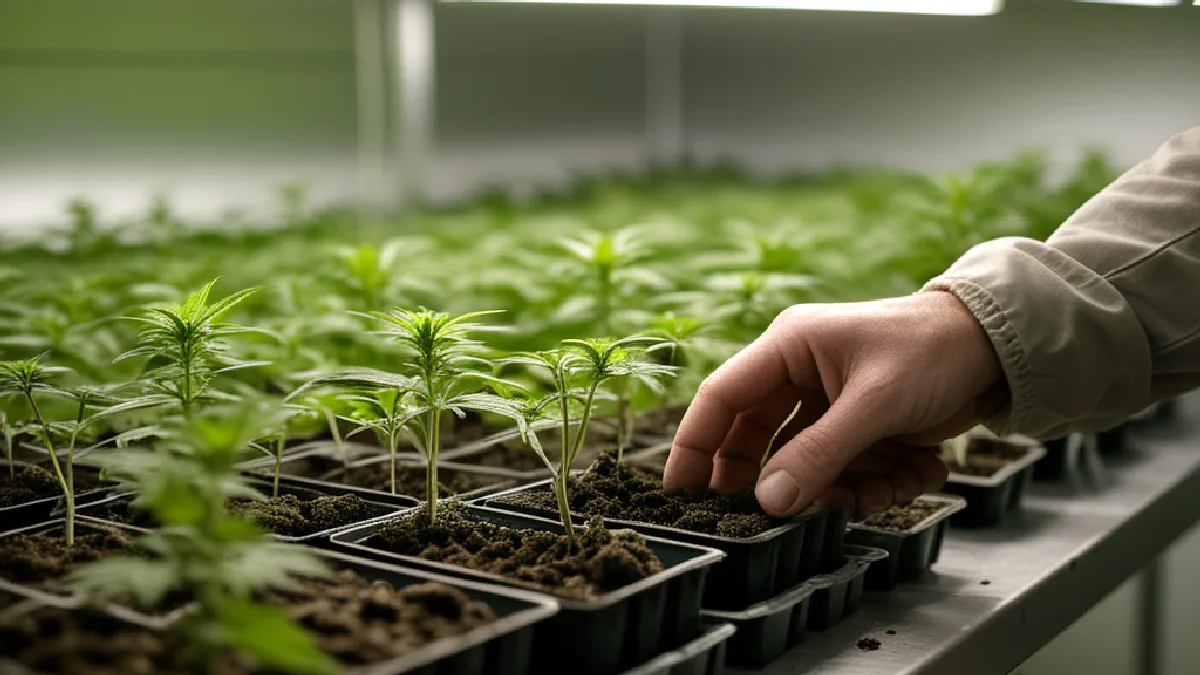
Growers report MAC1 as a deliberate plant rather than a sprinter. As Beard Bros Pharms outlines, expect patient vegetative development, firm canopy management, and attention to airflow during flower. Around nine weeks is a common reference point—watch trichomes and aroma over the calendar. Dense colas need support and microclimate awareness; consistency beats heroics.
Practical cultivation notes for the MAC family
Veg with patience: Give it time to build a productive frame; topping and low-stress training help. Canopy balance: Remove weak interior growth, not every leaf—light and airflow win. Flowering: Don’t rush maturity; let the nose and trichomes call harvest. Environment: Stable temps and humidity protect terpenes; dense buds magnify small mistakes. Post-harvest: Gentle handling, slow dry, intentional cure—MAC’s appeal lives on the surface.
What do MAC terpenes smell like?
Beard Bros Pharms highlights recurring notes tied to limonene (citrus edge), beta-caryophyllene (peppery spice/wood), pinene (fresh pine/herbal lift), and sometimes myrcene (earthy base). Expression shifts with environment; the profile family should rhyme even as exact lab percentages vary.
Limonene: citrus on the top
Bright lemon or orange-peel accents keep the profile agile, slicing through cookie earth and funk.
Beta-caryophyllene: pepper and weight
Spice sits beneath the citrus and flowers, giving MAC’s nose depth and finish.
Pinene: fresh-green detail
That clean, classic piney lift supports the brighter notes and refreshes the palate.
Myrcene and the ground floor
When present, myrcene anchors MAC with musky, herbal earth—structure for the citrus and cream to dance above.
MAC V2, crosses, and the influence game
Capulator continued evolving the family with work such as MAC V2—distinct from MAC1. As influence spread, breeders reached for MAC to push resin, visual density, and aroma contrast. That’s how “popular strain” becomes “breeding pillar.”
Clone culture and authenticity

As MAC1’s name traveled, demand outpaced real cuts—something that happens to almost every famous clone. Names get borrowed; provenance blurs. The authentic MAC1 is a specific, selected genotype passed through cloning. Everything else is family, not the clone.
Community Impact and Social Equity Considerations
MAC’s rise shows how culture—not just capital—builds the canon. Phenotype hunters, caregivers, and small-scale cultivators preserved a plant that corporate channels didn’t invent. As the DMV continues to debate access, licensing models, and who gets to participate, MAC’s story is a reminder: innovation often starts in community spaces, not boardrooms. Equity programs that value legacy knowledge, technical cultivation training, and entry pathways for small operators help ensure the next MAC doesn’t get gatekept out of existence. For consumers, being provenance-aware—asking about source cuts and cultivation practices—supports growers who do it right.
Cultural Trends and Lifestyle Changes
MAC helped accelerate the “show-your-flower” era: frosty visuals, terp-centric storytelling, and cultivar identity as lifestyle. In the DMV, that shows up as connoisseur circles comparing phenos at album release parties, chefs folding terpene ideas into infused dinners, and weed delivery culture curating drops like sneaker releases. The modern marijuana lifestyle is less about THC numbers and more about narrative: who bred it, how it was grown, why this batch smells like marmalade and spice. Pre-rolls and concentrates built around a single cultivar (instead of random blends) fit that shift—when the cut is the star, blending becomes a remix, not a shortcut.
What This Means for DMV Cannabis Community
For DC, Maryland, and Virginia readers, MAC is a case study in how genetics shape local scenes. In DC, conversations around premium cannabis delivery and provenance-aware menus are common community checkpoints—people want to know if a “MAC” listing is a family cross or a claim to the MAC1 clone. Maryland’s rule-focused buyers often ask for batch transparency, drying/curing notes, and whether single-strain pre-rolls truly match the flower jars. Virginia residents navigate ongoing policy shifts and public debate around retail frameworks; community members regularly trade knowledge about safe access, compliance-minded events, and VA weed legal questions without assuming answers. Across the region, the shared throughline is education: understanding lineage, environment, and handling helps folks choose better, whether they’re exploring concentrates, dialing edible dosing, or discussing Virginia gifting gray zones in community forums.
Bud Lords Take
Our read: MAC’s cultural power comes from contrast. It’s old-school history inside a next-gen look; citrus sparkle over cookie earth; a patient-growing plant that dominates the camera. That tension made it memorable—and made it breeding stock. If you’re a grower, treat it like a slow-blooming athlete: train, pace, then let it finish. If you’re a consumer, shop like a curator: ask about cut source, smell before you buy, and respect the cure. MAC rewards intention at every step.
How should DMV buyers spot real-deal MAC on menus?
Start with questions: is this labeled MAC1 (clone) or a MAC-line seed cross? What are the dominant aromatic notes on this batch? How was it dried and cured? Single-strain pre-rolls and live rosin made from the same batch should echo the flower’s citrus-spice profile when handled well. Visual frost is a hint, not proof—let your nose lead.
Community resources and ways to plug in
• Join local grower education meetups and terpene workshops—knowledge keeps hype honest.• Support caregivers and small cultivators who document their process and lineage.• In Virginia, follow civic updates and community groups tracking evolving regulations; avoid assumptions and keep conversations focused on safety and compliance-minded behavior.• Share batch notes on social: aroma, feel, and pairing ideas help the next person shop smarter.
For the delivery and lifestyle crowd
In a cannabis lifestyle delivery moment, curation is king. A craft weed delivery experience built around a MAC flight—flower, a single-strain pre-roll, and a low-temp concentrate—turns a night in into culture. Pair with a playlist and a citrus-forward snack spread. That’s marijuana social delivery at its best: thoughtful, provenance-aware, and community-shaped.
Cultural question: why does breeder credit matter?
Because names drift, but history anchors. As Beard Bros Pharms emphasizes, Capulator deserves to ride with MAC wherever it goes. Crediting the creator protects lineage clarity, helps consumers make informed choices, and keeps the door open for the next breeder whose keeper might define the next decade.
Alt image idea
Cover image: A macro of a MAC1 cola—thick trichome coverage with subtle lavender hues—under soft, neutral light; a blurred background of trellis lines hints at careful canopy work.
Attribution: Strain history, lineage details, cultivation characteristics, and terpene framing are drawn from reporting by Beard Bros Pharms. This piece is Bud Lords original editorial built on that documented background.
Call to action: help write the next chapter
DMV fam—share your MAC notes with us: what did you smell first, and what did you pair it with? Tag Bud Lords on socials with your best aroma read and a pairing idea. The more we compare, the smarter our culture gets.
Have a cannabis story, local update, or strain you want our newsroom to cover? Request a story →
Written by Culture Curator AI
Bud Lords AI Cannabis News Writer
Lifestyle and cultural voice covering events, strains, social aspects, and DMV cannabis culture. More casual, engaging tone.
Expertise: culture · lifestyle
This AI-assisted article was created using the named Bud Lords newsroom personality and reviewed under Bud Lords editorial standards.



Comments