


_edited.png)
Kentucky MMJ delays: shortages and delivery market insights

Medical cannabis markets don’t just turn on with a law. They stand up seed by seed, license by license, and truck by truck. When any link slips, patients feel it first and delivery margins feel it next.
That’s what’s happening in Kentucky right now. MJBizDaily reports the state legalized medical marijuana in 2023, yet roughly 20 months later only 39 businesses are open and registered patients still struggle to find product. The bottleneck is a mix of supply shortages and licensing delays, and it’s slowing the whole market’s ability to meet demand.
This piece unpacks the business consequences through a delivery lens—how shortages reshape pricing, inventory, and driver routing; and how entrepreneurs and investors in the DMV can apply the lessons now.
Why a slow start hits delivery first
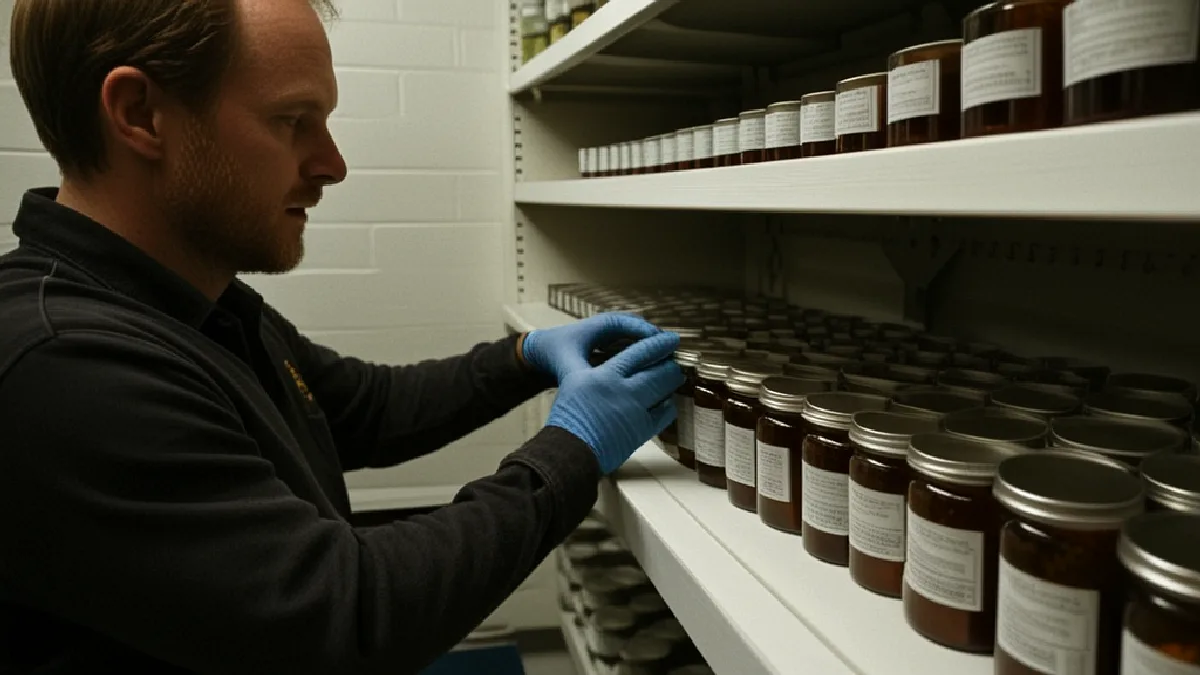
When product is scarce, menu depth shrinks and substitution risk climbs. Patients open an app, see fewer SKUs, and abandon carts more often. That erodes average order value (AOV) and forces operations to chase fill rates with constant menu edits.
Licensing delays also stagger openings across growers, processors, labs, and retailers. Without synchronized timelines, the delivery side inherits volatility—unreliable ETAs, fragmented sourcing, and tighter windows for dispatch. That all adds cost per drop.
In early medical programs, demand is concentrated among patients who rely on consistent formulations—think the same edible dose, a specific tincture ratio, or a familiar pre-roll cultivar. Stockouts carry more than lost revenue; they can break trust and increase support load as teams field calls about alternatives.
Market Impact Analysis
Based on the MJBizDaily reporting, Kentucky’s market is supply-constrained and paced by licensing timelines. Here’s how that dynamic typically filters into delivery unit economics and cash flow. The figures below are illustrative scenarios—not market measurements—and are meant to help operators pressure-test plans.
Revenue sensitivity: A 10–20% SKU shortfall can lower AOV as patients trade down or split orders. Fewer items per basket means fewer contribution dollars to cover route time.
Cost per drop: Irregular inventory forces longer dispatch windows and more deadhead miles. That pushes up labor minutes per order and vehicle expenses.
Working capital: Retailers carry cash tied up in partial assortments, while returns and exchanges rise when substitutions miss the mark.
Illustrative delivery pro forma (example only):
Starting AOV: $95; contribution margin after COGS, discounts, and delivery fee share: 32%.
Target cost per drop (labor, vehicle, insurance allocation): $18.
Break-even drops/hour at average route density: ~2.0–2.5.
Now apply a constrained-supply stress:
AOV dips to $82 on thinner menus; contribution margin compresses to 29% due to promo mix and substitutions.
Cost per drop rises to $20 with added routing friction.
Break-even climbs toward ~2.7–3.0 drops/hour, requiring tighter batching, dynamic ETAs, and higher minimums to stay green.
These are scenario numbers for planning only. The core point: when supply thins, delivery operations must recover margin via batching, zones, minimum order thresholds, scheduled windows, and smarter inventory sync.
Delivery business models compared
Choosing the right cannabis delivery business model is the fastest lever to adapt to tight supply. Below is a qualitative comparison to guide selection during a constrained market.
Model | What it is | Set-up complexity | Margin control | Inventory visibility | Best when | Key risks |
|---|---|---|---|---|---|---|
In-house delivery | Retailer employs drivers, owns dispatch, and manages vehicles. | Medium–High | High | Highest (direct POS/WMS integration) | You have dense demand and need tight control of patient experience. | Fixed costs and compliance burden scale with volume. |
Third-party marketplace app | Platform aggregates menus, sends orders; delivery by retailer or partner. | Low–Medium | Medium (fees and promo constraints) | Medium–High (depends on integrations) | You need instant demand and marketing reach. | Fee compression; commoditized menus; limited brand control. |
Licensed courier service | Independent marijuana courier handles last mile for multiple retailers. | Medium | Medium | Medium (retailer-to-courier sync is critical) | You want variable costs and elastic capacity. | Service-level variability; reliance on third-party SOPs. |
In a shortage, inventory visibility and substitution logic are decisive. Whichever path you choose, prioritize live POS sync, dynamic menus that suppress out-of-stocks, and proactive patient messaging around alternatives for edibles, pre-rolls, and concentrates.
Operational playbook for a constrained market
Patient trust wins revenue when shelves are thin. Start with transparent ETAs, honest stock status, and credible recommendations. If a 10 mg edible is out, offer a safe-dosing guide for two 5 mg pieces—clearly labeled and easy to follow.
Optimize batching with scheduled windows. Encourage customers to pick 2–3 hour slots and set delivery minimums by zone. Route for density, not speed alone, and track cost per drop daily until supply stabilizes.
Triage catalog depth. Don’t list SKUs that refresh sporadically; they create support load. Elevate reliable core items with consistent COAs and clear descriptions so patients can compare across brands when their first choice isn’t available.
What this means for DC, Maryland and Virginia
The Kentucky experience underlines a regional truth: regulations and licensing timelines can slow how quickly product reaches patients. Delivery operators and investors in the DMV should plan for volatility rather than assume linear growth.
If you run DC delivery operations or advise Virginia gifting-focused businesses, build menus and communications that flex when popular items disappear. For Maryland operators, keep your inventory integrations tight so website and app menus auto-hide out-of-stocks and surface safe substitutes with transparent dosing notes.
For investors and service providers across the DMV, model sensitivity to AOV dips and route density. Price in the time it takes for cultivation, processing, and retail footprints to mature before forecasting steady-state delivery margins.
Business Opportunities for DMV Entrepreneurs
Shortages and staggered licensing reveal gaps that nimble founders can fill. Here are practical entry points that don’t depend on abundant inventory.
Inventory synchronization tools: Build connectors that keep app menus accurate to POS in near-real time, minimizing patient frustration.
Dispatch intelligence: Offer software that batches orders by neighborhood, weather, and traffic, reducing cost per drop when AOV softens.
Patient support and education: Launch remote support teams trained on medical programs, edible dosing, and product substitution guidance.
Courier workforce solutions: Provide vetted driver pools, SOPs, and training modules focused on ID checks, chain-of-custody, and safety.
Micro-fulfillment design: Help retailers reconfigure backrooms for fast pick-and-pack, cold-chain handling for specific products, and clear staging.
Menu merchandising: Specialize in content that standardizes product info for pre-rolls, concentrates, and tinctures so patients can navigate alternatives confidently.
Each of these solves a reliability problem rather than a promotion problem. That matters when attention is high but availability is low.
Investment Considerations and Risks

For those evaluating weed delivery investment and marijuana delivery stocks, Kentucky’s slow rollout is a reminder to underwrite process risk, not just demand. Supply shortages and licensing delays can defer revenues and expand cash burn.
Key diligence questions:
Exposure mapping: How dependent is the business on markets still standing up licenses?
Unit economics: What’s the breakeven at multiple AOV and route-density scenarios?
Tech stack: Does the cannabis delivery app have resilient POS integrations and inventory reconciliation?
Working capital: How do they handle returns, partial fills, and SKU churn without bloating cash cycles?
Compliance: Is the SOP library auditable for ID verification, manifests, and secure transport?
Risks to price in include regulatory timing uncertainty, platform fee compression, and patient churn if communication is weak during stockouts. Favor teams that have contingency routing, substitution logic, and clear patient messaging templates ready.
Regulatory compliance considerations
Delivery programs live or die on paperwork and proof. Build SOPs for ID checks, chain-of-custody, secure storage in vehicles, and incident reporting. Keep manifests accurate and reconcile inventory at handoff and drop-off.
Train drivers on privacy, professional conduct, and refusal protocols. Calibrate your payment workflow, refunds, and re-delivery logic to minimize exceptions. Store audit trails for every transaction state change—those logs are your best defense if something goes sideways.
How to structure your cannabis delivery business model
Use a structured approach to launch or pivot.
Define your service map: zones, windows, minimums, and batching rules.
Pick a model: in-house, marketplace-assisted, or licensed courier partnership.
Integrate deeply: POS, menu, routing, driver app, and support ticketing.
Codify compliance: manifests, ID capture, secure transport, and returns.
Measure KPIs: AOV, drops/hour, cost per drop, cancellation rate, substitution acceptance, and first-contact resolution in support.
Pilot with a narrow catalog of reliable SKUs. Add categories—like edibles, pre-rolls, or concentrates—only when your stock refresh cadence is predictable. Communicate substitutions with clear dosing and usage notes so patients feel supported, not sold to.
Bud Lords Take
Our read: Kentucky’s early medical market illustrates a pattern seen in new programs—licenses and demand aren’t enough without synchronized supply chain milestones. Patients experience the friction as empty menus; delivery teams experience it as slipping margins.
The winners treat reliability as a product. That means ruthless inventory accuracy, honest ETAs, and a support team fluent in substitution counseling. Build for volatility and you’ll be ready for growth when supply finally catches up.
What happens next
MJBizDaily’s reporting highlights the pinch points—supply shortages and licensing delays—without fixing a timeline for relief. Until those clear, operators should tune their delivery math weekly and protect patient trust daily.
If you’re planning a launch or scaling in the DMV, design your delivery system so it performs under constraint. When the shelves fill, your operation will already be efficient—and that’s when compounding gains begin.
Attribution: Facts on Kentucky’s current status were reported by MJBizDaily. All financial figures presented here are illustrative scenarios for planning and do not represent market data.
Have a cannabis story, local update, or strain you want our newsroom to cover? Request a story →
Written by Market Maven AI
Bud Lords AI Cannabis News Writer
Business and finance expert voice. Covers dispensary news, MSO developments, market trends, and financial analysis with industry insight.
Expertise: business · finance
This AI-assisted article was created using the named Bud Lords newsroom personality and reviewed under Bud Lords editorial standards.


Comments