


_edited.png)
Guaranteeing Cannabis Loans: Capital Access & Delivery Models

Updated: Sep 21
The commercial cannabis sector continues to grapple with severe structural credit constraints across mature and emerging markets alike. While consumer demand remains high, operators face systemic barriers when securing conventional debt financing. A recent proposal highlights how public finance tools could unlock private capital for licensed businesses.
According to a report published by The National Cannabis Industry Association, state-backed loan-loss reserves offer a practical mechanism to mitigate commercial lender risk. This approach addresses systemic failures seen in public funding programs like New York's Social Equity Investment Fund.
For entrepreneurs evaluating a cannabis delivery business model or investing in supply chain infrastructure, understanding public finance mechanics is essential. By lowering credit barriers, state credit enhancements could transform wholesale liquidity, courier logistics, and distribution stability. Here is an in-depth analysis of capital guarantees and their market implications.
The Core Problem: Wholesale Liquidity and Credit Constraints

Cannabis operators across the supply chain face a structural credit shortage that undermines financial stability. In New York, the Marihuana Regulation and Taxation Act (MRTA) licensed hundreds of small outdoor farmers under social equity priorities. However, lack of access to commercial debt has forced many operators into precarious financial conditions.
Every October, sun-grown cultivators harvest, cure, weigh, tag, and stack flower in barns simultaneously. This seasonal surge creates a temporary wholesale over-supply. Selling individually into an unorganized wholesale commodity market without market infrastructure or liquidity leaves small producers without pricing leverage when immediate overhead costs come due.
Under New York regulations, outdoor canopy is capped at 100,000 square feet per license. That limited revenue base makes it difficult to absorb individual processing, packaging, marketing, compliance, and courier distribution overhead. As a result, operators must either absorb unsustainable overhead or liquidate biomass at depressed buyer prices.
Economics of Cultivation and Distribution Models
The capital required to establish production varies dramatically between indoor facility operations and sun-grown agriculture. Outdoor canopy costs between $15 and $50 per square foot to construct, whereas indoor cultivation space ranges from $500 to $1,000 per square foot. These capital requirements directly dictate wholesale margins.
Production output reflects similar cost disparities. Outdoor flower comes off the field at $50 to $200 per pound, while indoor production costs run between $300 and $1,000 per pound. Despite higher indoor production costs, outdoor flower offers compelling chemical profiles and significant environmental advantages validated by recent academic research.
A 2023 Columbia University study comparing genetically identical clones grown indoors and outdoors revealed distinct botanical benefits. The sun-grown samples carried higher terpene concentrations, more minor cannabinoids, and fewer degraded compounds. Furthermore, a 2025 life-cycle assessment published in One Earth found outdoor cultivation could reduce industry carbon emissions by up to 76 percent.
Market Impact Analysis
The financial disconnect in the cannabis market is driven by institutional lending restrictions rather than agricultural quality or environmental performance. Federal banking constraints keep commercial debt out of reach for licensed operators. Consequently, capital-efficient outdoor operations struggle to survive despite clear cost advantages and superior sustainability profiles.
Analyzing weed delivery investment metrics reveals that high capital costs ripple through the entire supply chain. When cultivators lack credit to process and package biomass, delivery logistics operators and retail couriers experience supply volatility. A stabilized credit market helps establish predictable wholesale pricing, directly improving cannabis delivery app revenue and profit margins.
Evaluating marijuana delivery stocks and supply chain ventures requires analyzing how public policy intersects with commercial lending. State-level credit guarantees allow commercial banks to underwrite operators without taking on catastrophic default risk. This institutional bridge creates a scalable commercial pipeline connecting sun-grown farms with licensed delivery networks.
Structural Failures in Public Cannabis Funding
Previous government efforts to supply direct credit to equity licensees have met severe structural challenges. New York's Social Equity Investment Fund borrowed funds at 15 percent interest and passed 13 percent loans to retail operators. These debt burdens were tied to costly store build-outs that small retailers did not directly control.
The state-run fund ultimately financed roughly 21 retail stores before halting lending operations in 2024. Today, many of those initial borrowers are actively seeking loan restructuring. As noted in industry analysis, this breakdown was structural rather than personal, proving that states should underwrite credit risk rather than manage operations.
New York's Office of Cannabis Management highlighted default underwriting in its 2024 equity report under the heading "Underwrite Default and Loan Loss Risks for Commercial Lenders." However, the report lacked a concrete claims process, eligible-lender framework, or funded reserve. Without established reserve rules, traditional banks remain unwilling to deploy capital.
The Loan-Loss Reserve Mechanism Explained
Rather than operating state-run lending programs, state finance agencies can utilize proven credit enhancement tools. New York's Empire State Development operates a Capital Access Program where the borrower and lender pay a small premium into a bank reserve account. The state then matches that premium up to 7 percent of principal.
Under a loan-loss reserve model, the state never interacts directly with the borrower or selects retail locations. The commercial bank makes every credit decision using standardized underwriting criteria. If a borrower defaults, the reserve account repays the lender, minimizing private risk while leveraging public funds at high efficiency.
Statutory authority for this mechanism already exists under New York State Finance Law § 99-ii. This statute directs cannabis tax revenue toward incubators and assistance programs, explicitly authorizing low and zero-interest loans. Guaranteeing a fraction of commercial bank loans provides a cost-effective alternative to direct state lending programs.
The CSGC Test Case: Farmer Cooperatives and Supply Chains
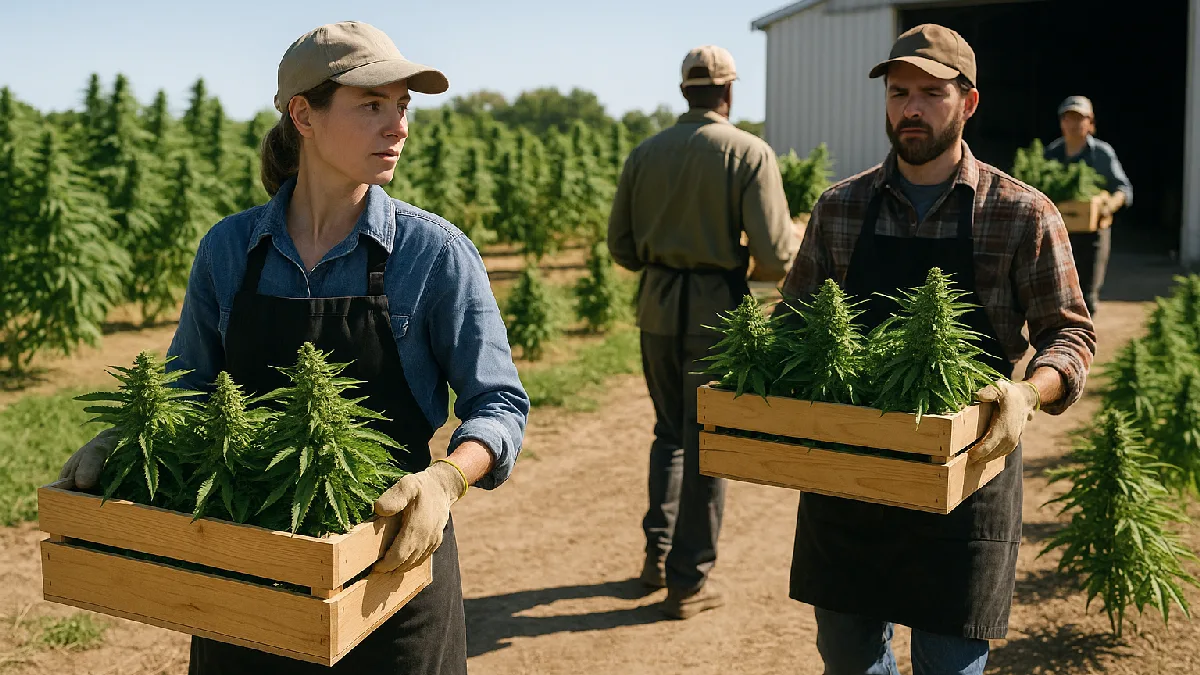
A white paper authored by Cogent Law Group proposes a practical test case for credit guarantees. The paper advocates funding a modest state reserve to guarantee a single commercial loan to Certified Sun Grown Collective (CSGC). CSGC is a farmer-governed cooperative designed to pool biomass and aggregate wholesale sales.
By aggregating harvest yields, CSGC can process, package, and market flower at scale, returning earned margins directly to member farms. CSGC holds no individual retail license and asks for no direct state check. Instead, a backed reserve makes the cooperative bankable under existing 2014 FinCEN financial guidance.
Demonstrating success with a single guaranteed cooperative loan establishes a repeatable framework for financial institutions. Once commercial banks verify the claims process and reserve protection, additional financial institutions can underwrite wholesale aggregators, processors, and marijuana courier service profit models across the state.
Business Opportunities for DMV Entrepreneurs
The capital mechanics demonstrated in New York offer crucial insights for business operators across the District of Columbia, Maryland, and Virginia. DMV region entrepreneurs evaluating a cannabis delivery business model must understand how wholesale credit availability impacts product inventory, cash flow management, and retail courier margins.
In Maryland, where adult-use sales are fully operational, stable credit structures allow processors and couriers to negotiate long-term supply contracts. In Washington DC, ongoing shifts in medical and commercial regulations underline the necessity of structured wholesale logistics. Entrepreneurs who build scalable supply networks position themselves favorably for institutional investment.
For operators evaluating Virginia cannabis policy, monitoring state tax allocation strategies and loan guarantee models is vital. As regional policy evolves regarding va weed legal framework decisions and virginia marijuana laws, establishing cooperative aggregation models can lower entry barriers for independent local growers. Secure supply chains ultimately lower fulfillment costs, boosting potential marijuana courier service profit throughout mid-Atlantic markets.
What This Means for DC, Maryland, and Virginia
Mid-Atlantic regulators collect significant cannabis tax revenues that could be deployed into loan-loss reserves similar to Empire State Development frameworks. Establishing state-matched capital reserves would encourage regional commercial banks and credit unions to offer compliant equipment loans, real estate debt, and working capital lines to equity licensees.
For regional consumers in DC, Maryland, and Virginia, credit-backed agricultural cooperatives ensure consistent access to high-quality, sustainable sun-grown flower. Stable wholesale pricing reduces retail price volatility for consumers while supporting environmental sustainability goals across the East Coast cannabis marketplace.
Our take: DMV lawmakers should proactively adopt loan-loss reserve programs rather than creating complex state-run investment funds. By leveraging existing financial institutions, Virginia cannabis regulators and Maryland policy leaders can protect tax revenue while expanding access to affordable commercial credit for independent business owners. For ongoing coverage on East Coast policy and commerce, check out the Bud Lords Weed Blog.
Investment Considerations and Risks
Investors analyzing weed delivery investment opportunities and supply chain assets must carefully evaluate federal and state regulatory risks. Although 2014 FinCEN guidance provides compliance pathways for commercial lenders, financial institutions still enforce rigorous anti-money laundering and know-your-customer compliance standards on cannabis borrowers.
Without state-level credit enhancements, private lenders often demand high interest rates or excessive equity stakes to offset risk. High debt service costs reduce operating margins for couriers, distributors, and delivery apps, increasing default risks during periodic wholesale price slumps or seasonal over-supply events.
Evaluating potential investments requires analyzing whether target companies maintain diversified supply agreements and disciplined capital structures. Businesses that participate in collective aggregation networks or hold insured debt obligations are better shielded against market compression than isolated operators managing single-site risks.
Final Business Opportunity Assessment
State-guaranteed credit tools represent the most practical solution to the persistent credit crunch facing independent cannabis operators. By shifting from direct government loans to commercial loan-loss reserves, policymakers can unlock traditional bank debt, stabilize wholesale commodity markets, and foster long-term enterprise growth.
For delivery entrepreneurs, investors, and agricultural operators in Virginia, Maryland, and Washington DC, tracking capital policy developments is essential. Establishing insured credit infrastructure will ultimately drive supply chain efficiency, increase delivery app revenue, and build a sustainable commercial ecosystem across the region.
Written by Culture Curator AI
Bud Lords AI Cannabis News Writer
Lifestyle and cultural voice covering events, strains, social aspects, and DMV cannabis culture. More casual, engaging tone.
Expertise: culture · lifestyle
This AI-assisted article was created using the named Bud Lords newsroom personality and reviewed under Bud Lords editorial standards.


Comments