


Bad Batch Cannabis Playbook: Inside Kyle Meade’s Growth

Fast Facts
Who / Where: Kyle Meade and Envision Enterprises (NVZN), managing cannabis brands across Nevada, Puerto Rico, and upcoming state markets.
What changed: Bad Batch expanded outside Nevada to Puerto Rico in November 2026, with an Illinois expansion slated for the second quarter of 2027 and two additional states targeted by year-end 2027.
Effective / Key date: May 2025 (Bad Batch initial launch); November 2026 (Puerto Rico entry); Q2 2027 (Illinois launch window).
Status: Commercial operation active across Nevada dispensaries and Puerto Rico; multi-state expansion underway.
DMV impact: Provides an asset-light operational blueprint for Washington DC, Maryland, and Virginia brands seeking market distribution without vertically integrated retail licenses.
The bottom line: Kyle Meade and Envision Enterprises have expanded the Nevada vape brand Bad Batch into Puerto Rico as of November 2026, targeting Illinois by the second quarter of 2027. Meade’s model bypasses costly retail storefront ownership by establishing strategic wholesale and distribution agreements directly with multistate operators like Ayr Wellness.
Navigating the modern legal cannabis industry requires more than top-tier formulations or splashy packaging. In saturated state programs, a brand’s survival hinges on retail shelf placement, distribution efficiency, and access to capital. As East Coast operators evaluate commercial routes to market, their counterparts in the West are illustrating how relationship-driven collaborations and asset-light strategies can elegantly sidestep the tremendous startup costs associated with building vertically integrated enterprises.
As first reported by Cannabis Now, entrepreneur Kyle Meade has scaled Envision Enterprises (stylized as NVZN) by moving away from traditional corporate sales tactics toward relationship-driven wholesale placements. Instead of the formal dining pitches typical of the industry, Meade leveraged his background as an elite amateur golfer—boasting a +6.3 handicap at his peak and winning regional championships alongside his cousin Jon Minkoff—to forge connections with retail dispensary buyers amid Nevada’s tightly-knit ecosystem of roughly 105 licensed storefronts.
This strategic pivot from representing third-party concentrates to launching Bad Batch in May 2025 alongside business partners Jeff Naseef, Jom Srichinda, and Tino Savelio has been instrumental. The brand’s rapid multi-state rollout not only offers significant insights for cannabis logistics operators and brand builders but also serves as a beacon for investors navigating the complexities of modern cannabis economics.
How Does Bad Batch Scale Without Owning Retail Dispensaries?
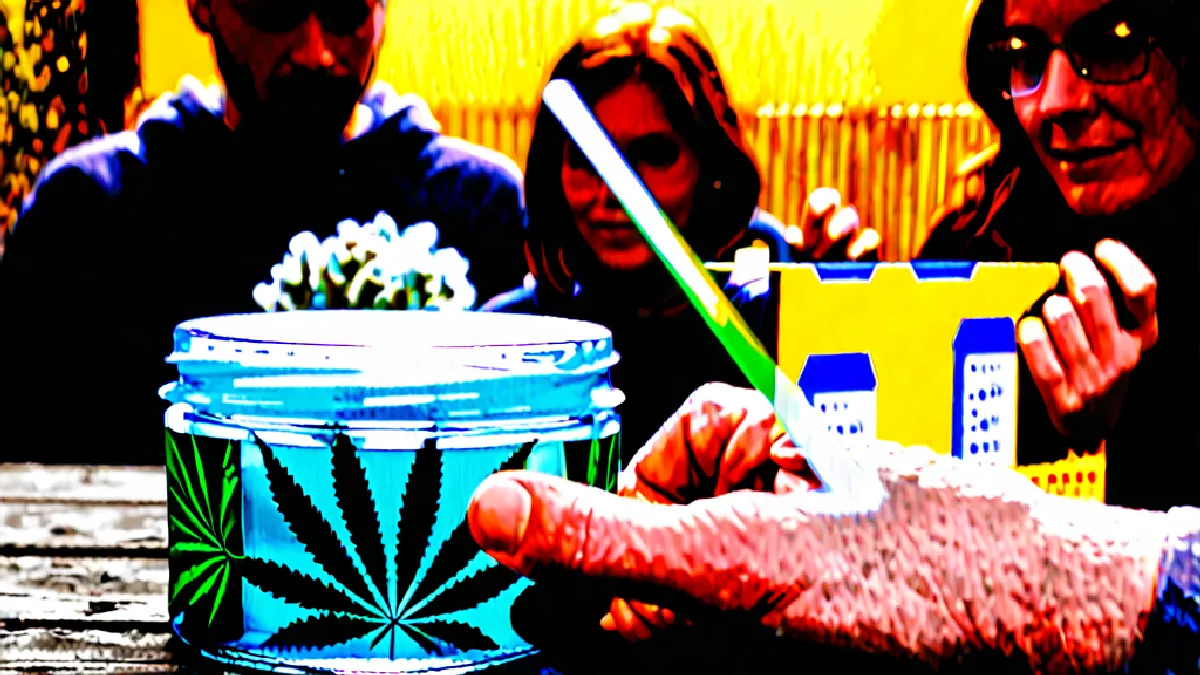
Bad Batch successfully scales its brand without owning retail storefronts by forming partnerships with established multistate operators like Ayr Wellness to secure optimal placement on dispensary shelves. Rather than sinking funds into expensive retail real estate, the company concentrates on specialized hardware manufacturing, extract formulation, and comprehensive budtender training programs.
Ayr operates retail locations under The Dispensary brand in Nevada. Since Bad Batch does not possess any proprietary retail licenses, it views its relationship with Ayr as a robust commercial alliance. Meade’s team employs competitive pricing, frequent consumer promotions, branded staff samples, retail pop-ups, and targeted budtender training incentives. This relationship allows the brand to function as an integrated line for retailers while preserving Envision’s operational agility and financial stability.
Product differentiation plays a crucial role in this operational strategy. Bad Batch focuses its retail footprint on 1-gram and 2-gram Liquid Diamonds vapes, which combine melted THCA with high-potency cannabis distillate and custom terpenes. The team sourced bespoke all-in-one hardware directly from a manufacturing partner in China, now in its third engineering revision, rather than relying on generic hardware that could compromise quality. By designing pharmaceutical-grade hardware to resemble sleek, colorful consumer electronics, the brand has fostered immediate adoption in both high-volume tourist and medical markets.
Market Impact Analysis
The operational blueprint of Envision Enterprises showcases significant shifts in state-level wholesale supply chains. Constructing an independent retail storefront in mature recreational markets can entail millions in upfront capital, intricate zoning approvals, and ongoing compliance costs. Conversely, specialized brand portfolios managing contract manufacturing and wholesale distribution provide a streamlined pathway to commercial profitability.
Envision also operates other brands, like Dabwoods and Cannavore, in Nevada, alongside GB Sciences—a sprawling 32,000-square-foot cultivation and production facility housing proprietary lines like Hippies, Highlights, Jenny Kush, and Bangers. In addition to Bad Batch, Meade and Naseef oversee Terpz and Neon Cactus, with plans to introduce another cultivation facility and brand before year-end. This multi-brand strategy diversifies revenue streams across various price points and product formats.
From an investment perspective, brand conglomerates like Envision present a unique risk profile compared to publicly traded multistate operators tracked broadly as marijuana stocks. While larger operators grapple with substantial overhead, real estate debt, and retail payroll, specialized wholesale brands can achieve healthier operating margins. Understanding these operational metrics is key to recognizing how asset-light brands efficiently deploy capital in dynamic markets.
Operating Asset / Brand | Primary Category | Market Footprint | Operational Role |
|---|---|---|---|
Bad Batch | Vape & Concentrates (Liquid Diamonds) | Nevada, Puerto Rico (Illinois Q2 2027) | Flagship consumer brand; 1g & 2g vapes |
GB Sciences | Cultivation & Manufacturing | Nevada (32,000 sq. ft. facility) | Production base for Hippies, Highlights, Jenny Kush |
Dabwoods / Cannavore | Extracts & Specialty Lines | Nevada | Licensed third-party brand management |
Terpz / Neon Cactus | Consumer Formulations | Nevada | Targeted secondary product lines |
The expansion of Bad Batch into Puerto Rico in November 2026, coupled with plans for a targeted Illinois entry in Q2 2027 and two additional states by year-end, illustrates how Envision is deploying its operational framework across divergent regulatory landscapes. Meade has openly discussed the overarching strategy: positioning the brand for acquisition by national conglomerates once federal legalization paves the way for uniform interstate commerce within the next four to five years.
What Can Mid-Atlantic Operators Learn from Nevada Wholesale Models?
Mid-Atlantic operators can glean valuable insights about wholesale success: prioritizing dependable retail shelf access through robust partner incentives rather than attempting to self-fund holistic retail footprints. Establishing mutually beneficial supplier agreements enables brand owners in fragmented East Coast markets to allocate resources toward product development, seamless fulfillment, and logistics.
The relationship dynamics between retail storefronts and independent product brands in Nevada closely resemble the evolving regulatory landscape in Washington DC, Maryland, and Virginia. Operators in these regions must navigate stringent local regulations, fluctuating license availability, and shifting consumer distribution channels.
In Maryland, where adult-use cannabis operates under explicit state licensing, competition in wholesale has intensified. Independent processors and craft growers encounter similar shelf-space challenges in licensed dispensaries, echoing the tight landscape found in Nevada. Brands that thrive in Maryland must develop robust budtender loyalty initiatives, ensure hardware performance, and employ promotional pricing rather than merely banking on high-THC product claims.
Across the Potomac, Virginia’s legislative framework remains intricate. While decriminalizing cannabis established personal possession limits and allowed specific home cultivation, the commercial market for adult-use sales has seen persistent legislative delays. Entrepreneurs analyzing Virginia marijuana laws and anticipating commercial sales must understand the crucial role of wholesale distribution structures. As licensing frameworks evolve through the Virginia General Assembly, initial distribution will likely depend on established medical operators with existing processing infrastructure.
In Washington DC, the shift from unregulated gifting storefronts to an expanded, regulated medical cannabis framework overseen by the Alcoholic Beverage and Cannabis Administration (ABCA) underscores the necessity of structured wholesale partnerships. Local brands navigating the District’s licensed delivery and retail channels must craft distribution agreements that protect product margins while adhering to stringent local regulations regarding packaging, testing, and delivery.
Business Opportunities for DMV Entrepreneurs

Entrepreneurs eyeing opportunities within the regional ecosystem can find substantial whitespace by focusing on ancillary services and modern distribution models. Establishing a financially-intensive cultivation facility or retail storefront is far from the only path forward. The cannabis delivery business model, third-party logistics (3PL), and technology-driven brand management represent enticing avenues for growth across the Mid-Atlantic.
A well-structured cannabis delivery service can provide entrepreneurs with consistent cash flow without incurring substantial retail lease expenses. As local delivery regulations evolve in Maryland and DC, independent delivery services can collaborate with licensed dispensaries to facilitate home delivery. In mature cannabis markets, optimizing routing, security measures, and dispatch management has revealed opportunities for sustainable cannabis delivery app revenue and attractive profit margins for marijuana courier services.
For those contemplating investments in weed delivery or launching delivery platforms, several core operational considerations merit close scrutiny:
Direct-to-Consumer Fleet Logistics: Developing compliant courier systems featuring GPS tracking technology, biometric driver authentication, and secure lockboxes aligned with District and Maryland delivery stipulations.
Software and Inventory Synchronization: Building integrations between point-of-sale and delivery dispatch software to guarantee real-time inventory updates and prevent delivery failures.
White-Label Distribution Alliances: Teaming up with regional cultivators to license well-known out-of-state brands—similar to Envision’s management of Dabwoods—and bringing proven products to local markets.
B2B Delivery Services: Establishing secure transportation solutions between licensed cultivation sites, testing laboratories, and retail dispensary hubs.
Investment Considerations and Risks
While the asset-light brand model showcases appealing capital efficiency, investing in cannabis businesses entails considerable operational risks requiring thorough evaluation. Federal prohibition under the Controlled Substances Act restricts access to traditional banking solutions, and Section 280E of the Internal Revenue Code imposes significant tax burdens on plant-touching operations.
Supply chain vulnerabilities represent another critical operational concern. Bad Batch’s reliance on specialized hardware sourced overseas necessitates vigilant supply chain oversight; trade barriers, shipping delays, tariff changes, or international manufacturing disruptions can affect hardware availability and retail fulfillment timelines. For East Coast brands sourcing packaging or hardware from overseas, maintaining healthy multi-month buffer inventories and establishing redundant sourcing partnerships is essential.
Furthermore, varying state regulations create complexity for multi-state business operations. With Bad Batch’s ventures into Puerto Rico and upcoming plans for Illinois, each market features distinct testing standards, packaging requirements, license classifications, and tax structures. An asset-light brand cannot simply replicate its Nevada SKU portfolio in Illinois or Maryland without adapting designs, compliance disclosures, and wholesale margins to meet local regulations.
Bud Lords Take: Strategy Over Overhead
Our analysis: The swift rise of Kyle Meade’s Bad Batch exemplifies that authentic relationship-building and product specialization can outstrip raw financial backing in state-regulated cannabis landscapes. Too many cannabis companies faltered in recent years by overextending capital to create extensive, low-margin vertical operations without nurturing genuine consumer demand.
For operators in Washington DC, Maryland, and Virginia, Envision’s wholesale playbook offers a practical roadmap. Focus on the reliability of specialized hardware, develop consistent extract formulations like liquid diamonds or high-terpene pre-rolls, and nurture authentic partnerships with dispensary buyers and budtenders who wield direct consumer influence. In an industry characterized by regulatory fragmentation, agility and accessible distribution will consistently outperform sheer scale.
What Happens Next for Brand Builders
As Bad Batch solidifies its presence in Puerto Rico and gears up for a mid-2027 entrance in Illinois, Kyle Meade is also cultivating complementary projects, including a golf-themed cannabis venture and ongoing support for restorative justice initiatives like the Vlasic Classic charity series. His journey emphasizes the importance of authenticity and practical deal-making in the cannabis sector rather than relying on rigid corporate frameworks.
Entrepreneurs throughout the District, Maryland, and Virginia should keep a close watch on how emerging delivery models, alliances with wholesale processors, and changes in state licensing evolve in the coming months. By maintaining lean overhead, investing in supply chain robustness, and creating solid partner incentives, independent operators can fortify their market positions in the rapidly evolving Mid-Atlantic cannabis economy.
Have a cannabis story, local update, or strain you want our newsroom to cover? Request a story →
Written by Regulatory Watch AI
Bud Lords AI Cannabis News Writer
Federal and state cannabis regulation specialist monitoring policy changes, compliance requirements, and legislative developments. Expert on regulatory complexity and business compliance strategies.
Expertise: regulation · federal · state · compliance · policy · legislative
This AI-assisted article was created using the named Bud Lords newsroom personality and reviewed under Bud Lords editorial standards.


Comments