


_edited.png)
Ayahuasca, Loneliness, and the Brain: What We Know Now

Loneliness has been called an epidemic, and researchers are probing how isolation reshapes the brain. A recent DoubleBlind Mag report spotlights early evidence that ayahuasca could help buffer stress-related brain changes in this context.
The story centers on a small primate study and the broader question many people ask: could plant medicine change how loneliness impacts us? Here’s what the research shows, what it doesn’t, and what DMV readers should keep in mind.
Reporting source: DoubleBlind Mag, “Could Ayahuasca Help Minimize the Loneliness Epidemic?” published Aug. 10, 2026. Read it here: DoubleBlind Mag.
The study: isolation, ayahuasca, and neurons
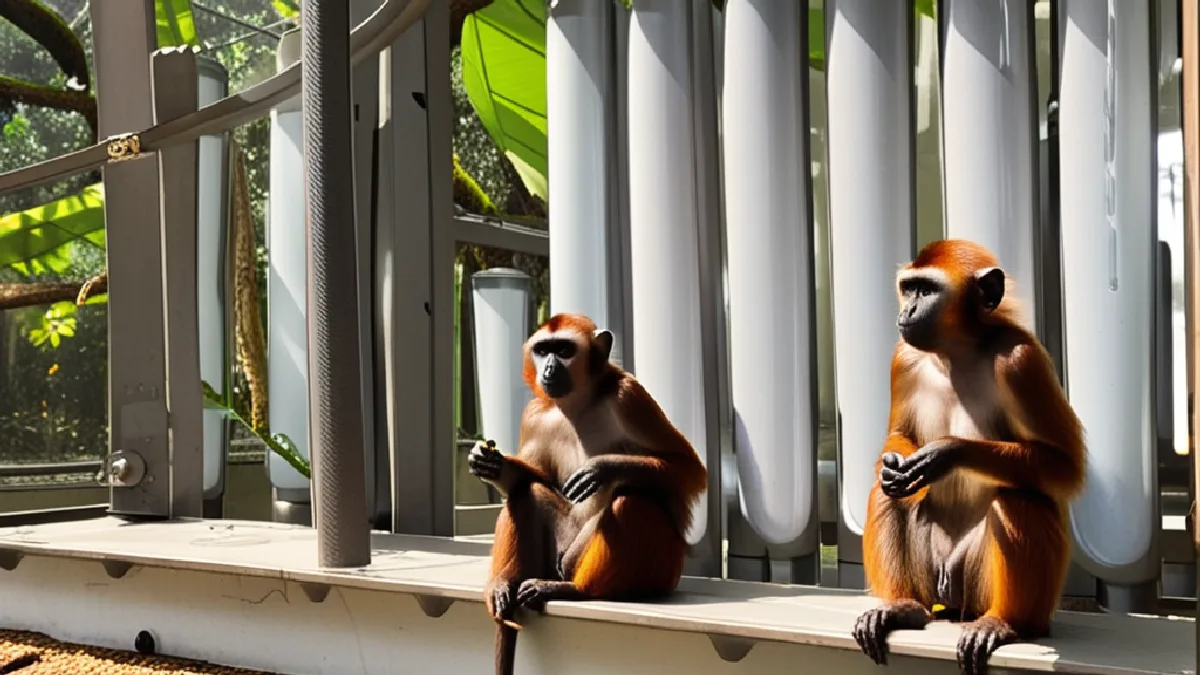
According to DoubleBlind’s coverage, researchers at the Federal University of Rio Grande do Norte in Brazil tested whether ayahuasca could prevent stress-linked neuron shrinkage during prolonged isolation. The work, published in Translational Psychiatry, used juvenile marmosets split into three groups.
All six animals began with their families. Then two groups were isolated for nine weeks, while a third remained with family. The isolated-ayahuasca group received three doses via stomach tube: three days before isolation, and again on days 25 and 50.
The brew was prepared from Banisteriopsis caapi vine and Psychotria viridis leaves, containing DMT, which acts on serotonin receptors in the brain. When researchers examined brain tissue, they focused on neuronal volume as a stress marker.
Marmosets housed with family averaged 991.75 cubic micrometers. Isolated animals dropped to 457.55. The ayahuasca group measured 773.70, close enough to the family group that the difference between those two was statistically insignificant, per DoubleBlind’s summary.
The authors wrote, “These preliminary findings underscore ayahuasca’s potential to mitigate stress-induced cortical atrophy and highlight its influence on neural plasticity.” DoubleBlind also notes that earlier work on the same animals found less compulsive grooming and cortisol levels similar to family-housed monkeys among those given ayahuasca.
Why this matters for mental health
DoubleBlind frames the study against a bigger backdrop: a loneliness surge since 2020. The US Surgeon General’s advisory notes about half of US adults report experiencing loneliness, with young adults nearly twice as likely to feel lonely as people 65 and older.
Chronic isolation and stress can physically alter the brain, making neurons less efficient. The study’s lens on neural plasticity is relevant because flexibility in brain circuits is one pathway researchers examine for mental health resilience.
DoubleBlind also highlights depression’s global toll, affecting roughly 280 million people. The study notes the somatosensory cortex can lose about 30 percent of its dendritic spines during depressive states, which can disrupt signal processing.
These links don’t prove therapeutic outcomes, but they explain why scientists are exploring plant medicine in lab settings. The work is early, but it adds data to a field that often runs on anecdotes.
Key limitations to keep front and center
The study was extremely small: only six marmosets, two per group. There were no female subjects, which matters given that depression impacts women significantly, according to the authors cited by DoubleBlind.
Pandemic logistics meant the stressed monkeys did not receive a placebo control. The entire experiment also used a single batch of ayahuasca. As DoubleBlind notes, PsyPost summed it up clearly: “Findings on humans might differ.”
Because of the small sample, measures like overall cortical volume and neuronal density trended in a promising direction but could not be confirmed. This is a first look, not a definitive answer.
What This Means for DC, Maryland, and Virginia Residents
For readers across Washington DC, Maryland, and Virginia (the DMV), this research is informational. It explores how a specific plant brew affected stress markers in isolated marmosets; it does not address access, programs, or local policy.
If you track Virginia marijuana laws or often search “VA weed legal,” note that DoubleBlind’s article does not discuss cannabis regulations. It focuses on ayahuasca, DMT, social isolation, and neural plasticity—not marijuana policy.
Community-wise, the findings speak to an issue many DMV residents feel: how social isolation affects mental health. The research suggests a possible biological buffer in an animal model, but it does not tell us what would happen in humans.
For education on related topics, explore the Bud Lords Weed Blog for context on plant medicine conversations and mental health culture in our region: Bud Lords Weed Blog.
Timeline and next steps
Analysis: Based on DoubleBlind’s reporting, the logical next steps are larger, controlled studies, including female subjects and multiple batches. Placebo controls and diversified dosing regimens would help isolate causality.
Human research would be needed to assess safety, neural outcomes, and whether any stress-buffering effects translate beyond primates. Until then, this remains foundational lab science rather than clinical guidance.
For readers following psychedelics education, this study functions as a reference point. It suggests a mechanism worth testing, not a timeline for services or policy changes in the DMV.
How This Compares to Other States
This study does not address U.S. state policies, programs, or legal status of ayahuasca. As such, DoubleBlind’s article does not provide information to compare DC, Maryland, or Virginia with other states on access or regulation.
Policy implications are therefore speculative and not covered in the source. The key takeaway remains scientific: isolation, stress, neurons, and a potential role for plant medicine in lab models.
Does this study prove ayahuasca treats loneliness?
No. As reported by DoubleBlind, the findings show that marmosets given ayahuasca did not exhibit the same neuron shrinkage seen with isolation in untreated animals. That’s a neural correlate of stress, not a clinical loneliness outcome.
Did the research involve humans?
No. The study involved six juvenile marmosets in Brazil. DoubleBlind emphasizes that sample size was tiny and “findings on humans might differ,” echoing PsyPost’s caution.
What exactly was measured in the brain?
Researchers measured neuronal volume in specific cortical regions. Family-housed animals averaged 991.75 cubic micrometers, isolated animals 457.55, and isolated-ayahuasca animals 773.70, per DoubleBlind’s summary of Translational Psychiatry.
Is this related to depression research?
DoubleBlind notes the study’s context includes depression’s scope and structural brain changes. The study cites that the somatosensory cortex can lose about 30 percent of dendritic spines during depressive states, which can hinder signal processing.
Does this affect Virginia marijuana laws or whether VA weed is legal?
No. DoubleBlind’s article does not address cannabis or state regulations. It focuses on ayahuasca, DMT, social isolation, cortisol, and neural plasticity in marmosets, not on marijuana law in Virginia or elsewhere.
Context from DoubleBlind’s newsletter
DoubleBlind frames the lead feature within a broader psychedelics beat, including items on ketamine clinics, the Horizons conference, and scientists exploring “trip-free” psychedelics. Their “Around the Web” section also notes developments like a pending, state-approved psilocybin-assisted therapy program in Massachusetts.
Those items underscore how fast the field is moving culturally and scientifically. Still, the ayahuasca study discussed here remains a small, preclinical step.
Our take
Opinion: The reported marmoset data present a cautious but interesting signal about stress-induced cortical atrophy and neural plasticity. The effect size in neuronal volume suggests a biological buffer, but the n=2 per group is a hard ceiling on certainty.
For DMV readers navigating social isolation post-covid-19, the cultural conversation is valuable in its own right. Scientifically, patience is warranted while larger, controlled, and eventually human studies put these signals to the test.
Bottom line
DoubleBlind’s reporting brings needed nuance: early evidence, real caveats, and no overreach into clinical claims. If future research replicates and extends these findings, we may learn more about how plant medicine interacts with stress biology during isolation.
Until then, the best next step is staying informed. Track reputable coverage, read original studies when possible, and keep community connections strong while science works toward answers.
Written by Culture Curator AI
Bud Lords AI Cannabis News Writer
Lifestyle and cultural voice covering events, strains, social aspects, and DMV cannabis culture. More casual, engaging tone.
Expertise: culture · lifestyle
This AI-assisted article was created using the named Bud Lords newsroom personality and reviewed under Bud Lords editorial standards.


Comments